
Standing on a paddle board for the first time feels stranger than it looks from the shore. The water moves under your feet, the board shifts with every small movement, and your first instinct is to grip the paddle like a lifeline and stare down at your toes. Then something clicks. You relax your knees, look up at the horizon, and suddenly you are gliding across a lake that was, minutes ago, just a view from the car park. That first quiet glide is why so many people fall for paddle boarding, and it is also why the board you start on matters so much.
A good beginner board forgives wobbles instead of punishing them. It is wide enough to stand on without constant correction, stable enough that a passing boat wake feels like a gentle nudge rather than a crisis, and light enough to carry from the car to the water without dreading the walk back. A bad beginner board does the opposite. It tips at the slightest shift of weight, tracks in circles instead of straight lines, and turns a relaxing morning into an exhausting swim. This guide sorts the boards worth your money from the ones that will spend the summer leaning against a garage wall, and it explains exactly what to look for so you can choose with confidence.
Key Takeaways
- Width matters more than length for a beginner: a board at least 32 inches wide is far easier to balance on than a narrow, fast board.
- Inflatable boards are the best starting point for most beginners because they are stable, forgiving, easy to store, and simple to transport.
- A board rated well above your body weight, including any gear or passengers, will sit higher in the water and feel noticeably steadier.
- A three-piece adjustable paddle, a coiled leash, and a good pump are not extras; they shape how every single session feels.
- Start on calm, flat water close to shore, and practise kneeling, standing, and falling safely before you paddle any real distance.
How We Judged
We judged every board through a beginner’s eyes, not an athlete’s. Stability came first: a board earns its place here only if a first-timer can stand on it within a few minutes on flat water without constant wobbling. Next we weighed ease of carrying and storage, because a board that is a chore to move gets used half as often. Build quality, weight capacity, the fin setup, and what comes in the box all counted, and so did value: a beginner board should not cost as much as a board you might buy two summers from now. We favoured boards with wide, forgiving shapes, soft grippy deck pads, and honest weight limits. Where boards were close, we preferred the one that was simpler to inflate, deflate, and pack away, since that is the part of paddle boarding beginners notice every single time.
Best Overall Beginner Board
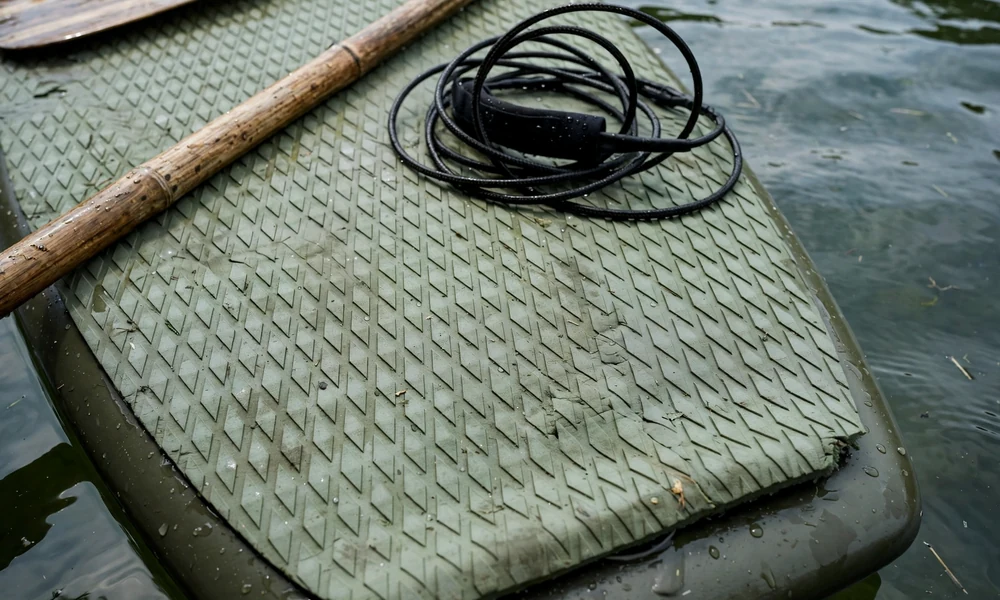
The best overall beginner board is a wide all-round inflatable, roughly ten feet six inches long and 32 to 34 inches wide, with a thick six-inch core and a single large centre fin. That shape is popular for a reason. It is stable enough for a nervous first stand, roomy enough to carry a small bag or a child sitting at the front, and still nimble enough to turn without a wrestling match. The thick core keeps the board rigid when fully inflated, so it feels closer to a hard board underfoot. Look for a full-length deck pad with a raised tail kick, which gives your back foot something to push against when you turn. A board like this suits lakes, slow rivers, and calm coastal mornings alike, and it is the one shape we would hand to almost any adult beginner without hesitation.
Best Inflatable Beginner Board
The best inflatable beginner board is the one you will actually use, and that usually means the one that is easiest to live with. A good inflatable packs into a wheeled backpack, fits in a car boot or a flat hallway cupboard, and inflates to full pressure in under ten minutes with the pump supplied in the box. Check the maximum pressure rating and the pump itself: a dual-action pump that pushes air on both strokes cuts the effort in half, and a pressure gauge you can read at a glance stops the guesswork. The board should feel drum-tight at its rated pressure, with no soft spots near the nose. A removable centre fin that slides in without tools is a small detail that makes a big difference on a busy beach.
Best All-Round Beginner Board
An all-round board is the jack-of-all-trades of the paddle board world, and for a beginner that is exactly the point. It is not the fastest board, nor the best for surfing small waves, but it does everything a first season asks of it: gentle lake paddles, a drift down a slow river, a first try at standing in a calm bay, and even a bit of relaxed fishing or yoga on flat water. The rounded nose helps it ride over small chop instead of slapping through it, and the wide tail gives you a steady platform when you step back to turn. If you can only own one board and you are not sure what kind of paddling you will love most, buy the all-round shape. It will not hold you back while you learn, and it will still be useful years later when friends or family want to try the sport for the first time.
Best Beginner Board for Lakes
Lakes are where most beginners learn, and the best lake board is built for flat, calm water rather than waves. A slightly longer board, around eleven feet, tracks straighter across open water, so you spend less energy correcting your course and more time enjoying the view. A smooth, rounded outline and a single fin keep it gliding quietly, while a generous deck pad gives you room to shift your stance or sit down for a rest. Weight capacity deserves extra attention on a lake board, since you are more likely to bring a dry bag, a picnic, or a dog along for the ride. Choose a board rated at least 50 pounds above your own weight with gear included. The calm water also makes lakes the ideal place to learn the habits that matter later, like checking the wind before you launch and paddling back into it rather than away from it.
Best Budget Beginner Board
A budget beginner board can be a smart buy, but only if it cuts the right corners. The safest savings are in the extras: a simpler bag, a basic pump, or a plainer colour scheme. The unsafe savings are in the board itself, in thin material, a low pressure rating, or a deck pad that peels after a month. A good budget board still inflates to at least 15 PSI, still carries a realistic weight limit, and still comes with a leash and a paddle that adjusts to your height. Avoid boards with no stated weight limit, no spare fin, or reviews that keep mentioning soft spots and slow leaks. If the price looks too good to be true, it usually means the board will feel wobbly, heavy, or tired within a single season. Spend a little more on a proven budget board and you get a summer of steady progress instead of a summer of frustration.
What to Look For When Choosing
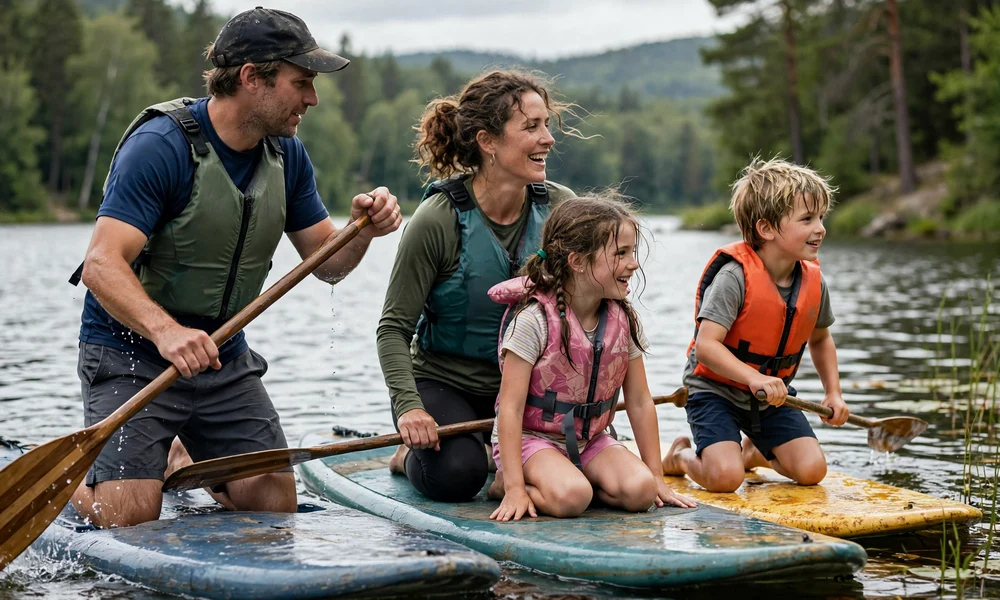
Choosing a beginner board is simpler than the catalogues make it sound. Six things decide almost everything about how a board will feel on the water, and once you understand them, the rest is personal taste.
Width
Width is the single biggest factor in stability. A board 32 inches wide or more gives you a broad platform and forgives small shifts in balance, while a board under 30 inches will feel twitchy to most newcomers. Taller or heavier paddlers should lean toward 33 or 34 inches for extra confidence.
Length
Length affects glide and turning. Boards around ten to eleven feet long strike the best balance for beginners: long enough to track straight, short enough to turn and carry easily. Shorter boards turn faster but wander more, and longer boards glide better but feel heavier out of the water.
Stability
Stability comes from width, thickness, and shape together. A six-inch thick board floats higher and feels firmer than a four-inch board of the same size, and a rounded nose with a wide tail is steadier than a pointed, narrow outline. If you can, stand on a board on dry land first and feel how it responds.
Weight Limit
The weight limit tells you how much the board can carry before it sits too low and becomes sluggish. Add your body weight, your clothes, and everything you plan to carry, then choose a board rated comfortably above that total. A board carrying well under its limit is faster, drier, and far more stable.
Fin
The fin keeps the board tracking straight. A single large centre fin is ideal for beginners on flat water, and a removable fin makes transport and storage much easier. Avoid boards with only small fixed fins if you plan to paddle any distance, since they wander and make steering a constant chore.
Pump
For inflatable boards, the pump decides how your session starts. A dual-action pump with a clear gauge inflates a board in roughly eight to ten minutes, while a cheap single-action pump can take twice as long and leave you tired before you reach the water. A good pump is worth paying for.
Care, Safety and Mistakes to Avoid
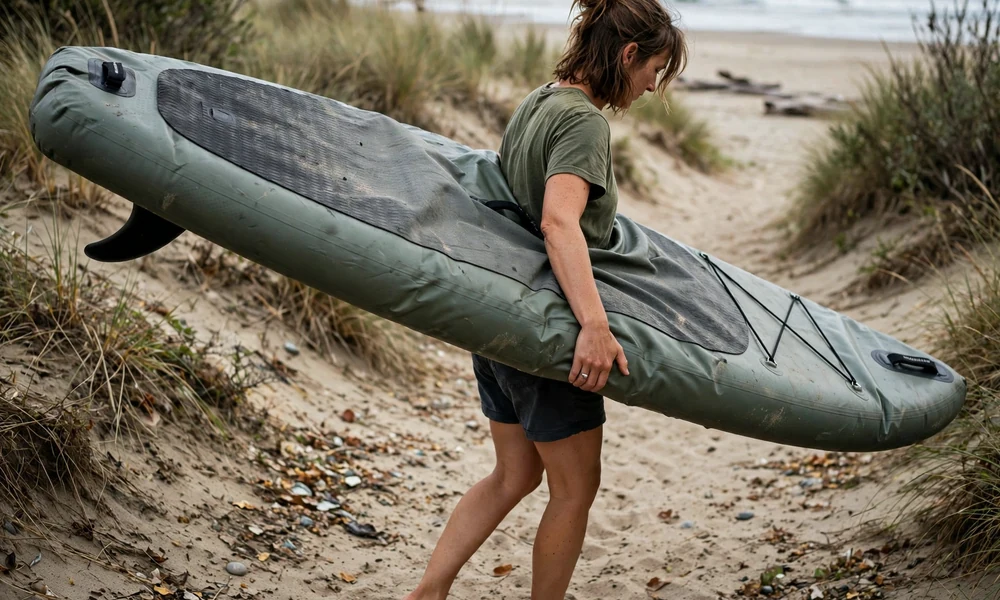
Looking after a paddle board is simple, but skipping the basics shortens its life. Rinse the board with fresh water after salty or muddy sessions, dry it before rolling it up, and store it out of direct sunlight, since heat and sun wear down the material and the seams. Check the fin, leash, and valve before every outing. Safety matters more than any of that. Always wear a leash, and wear a life jacket or buoyancy aid until you are a confident swimmer on a board. Tell someone where you are going, check the wind and weather before you launch, and stay close to shore while you are learning. The most common beginner mistakes are standing with feet together instead of shoulder-width apart, staring at the board instead of the horizon, and paddling against the wind on the way home when your arms are already tired. Avoid those three, and your first season will be far smoother. For a different kind of water adventure, our guide to the best and worst surfboards of 2026 explains how wave boards differ from the flat-water boards covered here, and if your trips stretch beyond the water, the best camping essentials for 2026 will help you pack for nights by the lake. Anglers who want to combine the two should read our look at the best and worst fishing rods of 2026 before choosing gear that has to work from a moving board.
Closing Thoughts
The right beginner paddle board does not demand skill; it gives you room to build it. Pick a wide, stable board that fits your weight and your storage, learn on calm water close to shore, and give yourself a few gentle sessions before judging anything. The glide, the quiet, and the view are worth the patience.


