
Why Canned Mandarin Oranges Belong in Your Pantry in 2026
Canned mandarin oranges are the brightest tin in the pantry: small, sunny segments, sweet and juicy, ready to eat the moment the lid comes off. They need no peeling, no pith to pick away, and no waiting for the season.
Fresh mandarins are lovely but seasonal, and a bag bought on Monday can be dry or sour by Friday. Canned mandarins are packed at ripeness, so every segment tastes the same: tender, sweet and faintly floral. They keep for years, cost very little, and turn up in salads, desserts and lunchboxes.
Key takeaways
- Whole segments are the most useful form: tender pieces that work in salads, desserts, lunchboxes and snacking.
- Juice-packed mandarins taste freshest; light syrup suits desserts, heavy syrup belongs in baking only.
- Look for mandarin oranges, water or juice and a little ascorbic acid on the label.
- Drain segments well before salads or cakes, and save the juice for dressings, drinks and glazes.
- Once opened, move leftovers into a sealed container and eat within three to four days.
Why mandarins can so well
Mandarin oranges are almost made for canning. Their segments are naturally small, tender and seedless, and the thin membranes soften in the canning process without falling apart. The result is fruit gentler than a fresh mandarin but still recognisably itself: sweet, juicy and easy to eat with a spoon.
Canning also fixes the biggest problem with fresh citrus: inconsistency. A fresh mandarin can be sweet or sharp, juicy or dry, and there is no way to tell from the outside. A tin removes the gamble: the fruit is canned at its best and comes out the same every time.
There is a practical point too: peeling six mandarins for a salad or a trifle is a chore, and the pith gets under your nails. A tin does the work for you: open it, drain it, and the fruit is ready.
Segments, whole or broken: what to expect in the tin
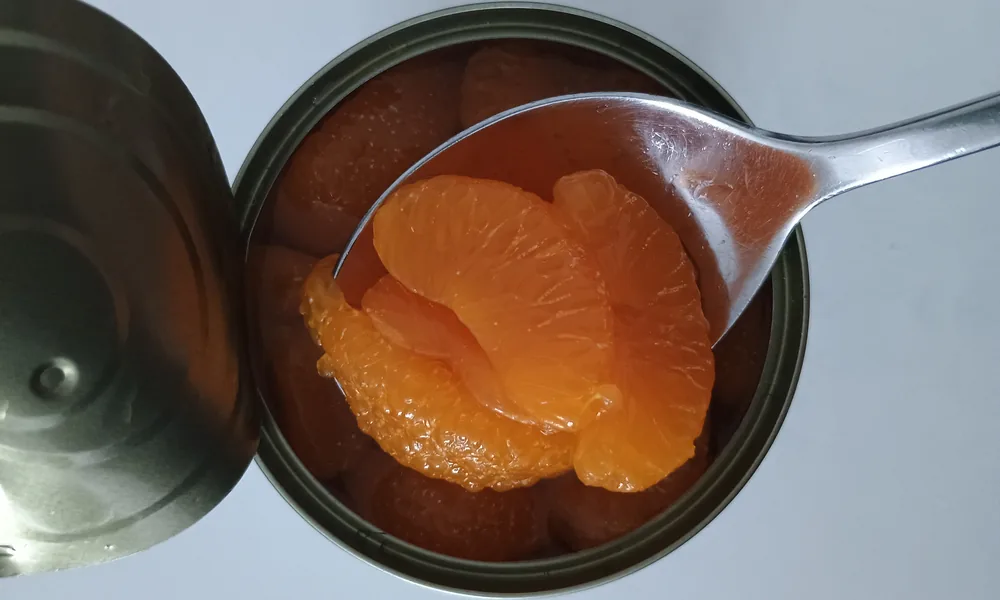
Most tins hold whole segments, and those are the ones to buy: neat, crescent-shaped pieces that look good on a plate and hold together in salads and desserts. A tin full of whole segments was packed with care.
Broken segments are the cheaper end of the tin. The fruit tastes the same, but the pieces are smaller and softer, and less appealing on their own. They are fine for smoothies, sauces and baking, where appearance does not matter, but a poor choice for a salad or trifle.
Some tins mix mandarins with other fruit, usually pineapple or grapefruit. They are convenient for a quick fruit salad, but the mandarin flavour gets lost and you cannot choose the balance. For cooking, a tin of plain mandarin segments is almost always the better buy.
Syrup, juice or water: what the liquid means
The liquid decides how sweet the fruit tastes. Heavy syrup is the sweetest option: the segments come out tasting candied. It suits baking, where the extra sugar joins the recipe, but for snacking or salads it overwhelms the delicate mandarin flavour.
Light syrup is the middle ground and the most common packing: sweet, but the fruit still tastes like mandarin, and good in desserts. Juice-packed mandarins are the closest to fresh fruit: clean, bright and lightly sweet, the best choice for eating straight from the tin, spooning over yoghurt, or adding to a salad.
Water-packed mandarins are the plainest, and the best choice if you watch sugar. They taste mild on their own but pick up flavour from a honey dressing, a splash of juice or a spoonful of yoghurt: plan to add the sweetness yourself.
How to read the label before you buy
A good tin has a short label. Mandarin oranges should be the first ingredient, followed by water, mandarin juice or sugar, and ascorbic acid, vitamin C added to keep the colour bright. If the label lists flavourings, colours or preservatives you do not recognise, choose another tin.
Check the drained weight as well as the total weight: two identical-looking tins can hold very different amounts of fruit. A cheap tin full of syrup is worse value than a slightly dearer tin full of fruit.
Look at the tin itself before it goes in the basket. Avoid tins dented along the seam, swollen or rusty around the rim, and check the date: past its best-before, the segments will be softer and the flavour flatter.
Comparing the packings at a glance
| Packing | Best for | Flavour | Sugar |
|---|---|---|---|
| Juice-packed | Snacking, salads, breakfast | Bright, closest to fresh | Lowest |
| Light syrup | Desserts, trifles, baking | Sweet, still tastes of mandarin | Moderate |
| Heavy syrup | Baking only | Candied, very sweet | Highest |
| Water-packed | Low-sugar diets, cooking | Mild, takes on other flavours | None added |
Salads that start with a tin of mandarins
Canned mandarin segments are a salad ingredient that earns its keep: their sweetness balances bitter leaves, salty cheese and sharp dressings, and their colour lifts a green salad. Mixed leaves, drained segments, toasted almonds and a light vinaigrette takes five minutes and tastes like a cafe lunch.
The classic pairing is mandarin with spinach, feta and walnuts, where sweet fruit plays against salty cheese and bitter leaves. Another is mandarin with chicken, where the fruit lightens a rich main, or with avocado, where citrus cuts the creaminess. Drain the segments well first: wet fruit makes a salad soggy and dilutes the dressing.
Mandarins also belong in fruit salads and grain bowls: tossed with other tinned fruit they add colour and sweetness, and their juice makes a ready-made dressing whisked with oil and vinegar. The same judgement applies to the rest of the shelf: choose the packing for the dish and drain well. Our guide to canned pineapple for the pantry covers the same label-reading habits for another salad favourite.

Desserts, trifles and cakes
Mandarin oranges are a dessert fruit first and foremost. Their sweetness and colour suit trifles, where sponge, custard and cream need something bright to cut the richness. Drained segments sit neatly between the layers, hold their shape, and add a citrus lift that stops a trifle feeling heavy.
They also work in cakes and bakes: fold drained segments into a sponge batter, scatter them over a cheesecake before it sets, or top a pavlova, where orange against white meringue looks as good as it tastes. In baking, light-syrup segments are the better choice, because the extra sweetness joins the recipe.
For the simplest dessert of all, serve cold segments with vanilla ice cream or Greek yoghurt and a drizzle of honey. It takes a minute, needs no cooking, and works on a weeknight when nobody has the energy for baking. Children love it too: the segments are sweet, soft and easy to eat.
Snacking, lunchboxes and drinks
Straight from the fridge, a small tub of mandarin segments is one of the easiest snacks in the house: sweet, juicy and ready in seconds, and a portion with nuts or cheese actually fills you up. They travel well in a lunchbox, packed in a sealed tub with a spoonful of their juice.
Mandarins are a natural lunchbox fruit because they are tidy: no peel, no pips, no juice running down a chin. Pack them beside a sandwich or wrap and they add colour and sweetness to an otherwise beige lunch. For younger children, break segments in half so they are easy to pick up with a fork.
The juice in the tin deserves a second life too. It is light mandarin juice: use it in smoothies, whisked into salad dressings, or stirred into sparkling water for a quick flavoured drink. A splash in a fruit punch or jelly gives a citrus lift without squeezing fresh fruit. For more ideas, see our guide to fresh juice worth keeping in the fridge.
Fresh or canned: how mandarins compare
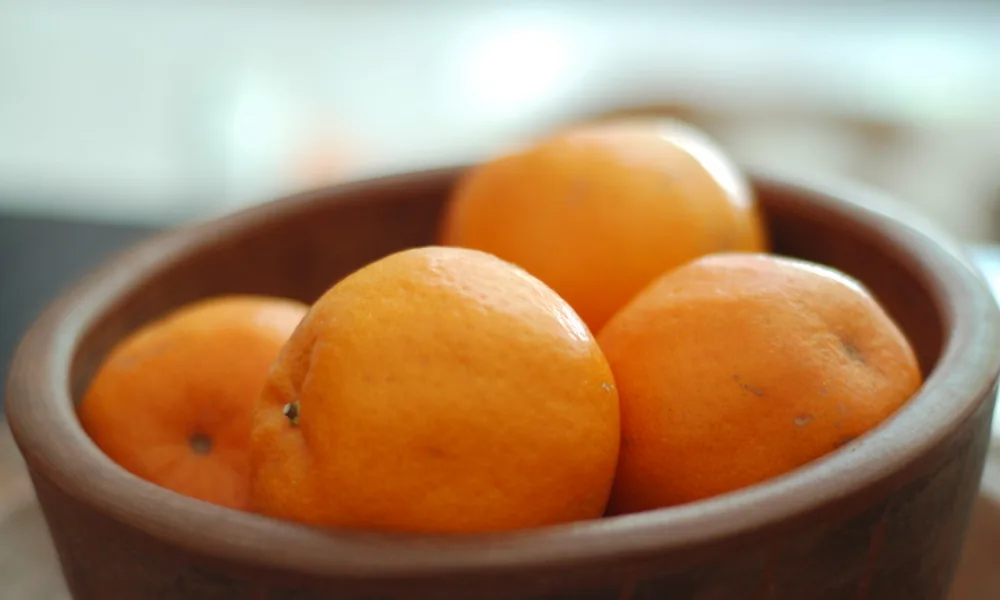
Fresh mandarins win on aroma and texture when in season and perfectly ripe: a fresh mandarin peeled at the table smells wonderful, and the segments have a firm bite canned fruit cannot match. But the season is short, and out of season fresh mandarins are often dry, sour or expensive.
Canned mandarins win on reliability and convenience: every tin tastes the same, the fruit is ready to eat, and there is no peeling or waste. They also win on price out of season, when a tin costs a fraction of a bag of fresh fruit. The trade-off is texture: canned segments are softer, without the snap of a fresh one.
Frozen fruit sits between the two: bright flavour, good in smoothies and baking, but it cannot be spooned into a salad or served as a dessert the way a canned segment can. Keep all three: fresh mandarins in season, frozen fruit for smoothies, and canned mandarins for the rest of the year. For a broader look at what keeps well frozen, see our guide to frozen fruit worth stocking.
Storage, shelf life and keeping opened tins fresh
Unopened tins keep for two to three years in a cool, dark cupboard, making them one of the most reliable pantry staples you can own. Keep them away from heat and damp, and use the oldest tins first.
Once opened, never store leftovers in the tin: tip fruit and liquid into a glass or plastic container, cover it, and refrigerate. Opened mandarins keep for three to four days and taste best on the first two. If the segments smell sharp or the liquid looks cloudy, throw them away.
With more open mandarins than you can eat, freeze them: drain, lay the segments on a tray until firm, then bag them. Frozen canned mandarins are excellent in smoothies and cooked desserts, though they lose the firm texture for salads and snacking. They keep about three months.
Your canned mandarin checklist
- Choose whole segments for salads, desserts and snacking; broken segments only for smoothies and baking.
- Pick juice-packed for snacking and salads, light syrup for desserts, heavy syrup for baking only.
- Read the label: mandarin oranges, water or juice, sugar if any, and ascorbic acid.
- Compare drained weight, not total weight, when judging value between brands and tin sizes.
- Drain segments well before salads or baking; save the juice for dressings and drinks.
- Move leftovers out of the tin into a sealed container; eat within three to four days.
Frequently asked questions
Are canned mandarin oranges healthy?
Juice-packed or water-packed mandarins are close to fresh fruit in nutrition, with vitamin C and fibre largely intact. Heavy syrup adds a lot of sugar, so for everyday eating choose juice-packed tins.
Do I need to rinse canned mandarin oranges?
Rinsing is worth doing for heavy-syrup segments if you want to cut the sweetness. For juice-packed mandarins, a quick drain is enough: rinsing washes away flavour.
Can I use canned mandarins in a salad?
Yes, they are one of the best tinned fruits for salads. Drain them well, pat dry if the salad is delicate, and add them at the last minute so they keep their shape.
How long do canned mandarins last once opened?
Three to four days in the fridge in a sealed container, covered by a little of their liquid. Do not store them in the opened tin.
Are canned mandarin oranges good for children?
Yes: sweet, soft, seedless and easy to eat, they are one of the simplest fruits for lunchboxes. Choose juice-packed tins and break large segments in half for younger children.
Can I bake with canned mandarin oranges?
Yes. Drain them well first: extra liquid makes cakes soggy and pastry soft. Light-syrup segments work best, where the extra sweetness joins the recipe.
The bottom line
Canned mandarin oranges belong in your pantry in 2026 because they do a job no other fruit does as well: bright, sweet, ready-to-eat segments that lift salads, desserts, lunchboxes and drinks with no peeling and no waste. Keep a tin or two in the cupboard, choose juice-packed whole segments, drain them well.


