Frozen fruit deserves a spot in your freezer in 2026, and not just as a backup for smoothies. The best frozen fruit is picked ripe, frozen within hours of harvest, and ready whenever you need it, at a price that barely moves with the seasons. A bag of frozen berries in January tastes of summer, costs less than the fresh punnet, and will not go soft in the fridge drawer by Thursday.
A bad bag, though, is easy to buy. It arrives as a solid icy block, tastes faintly of the freezer, or turns to mush the moment it thaws. The difference is the fruit inside, the way it was frozen, and the few minutes you spend using it properly. This guide explains how frozen fruit is made, how berries, mango, and mixed bags differ, what freezing does to nutrition, and how to use each kind.
Key Takeaways
- Berries freeze best. Blueberries, raspberries, and strawberries hold their flavour, colour, and nutrients far better than watery fruit.
- Buy loose, free-flowing bags. Fruit frozen in a solid clump has thawed and refrozen, and will cook up soft and grey.
- Plain fruit beats sweetened fruit. A bag with added sugar costs more and limits what you can cook with it.
- Use frozen fruit straight from the freezer for smoothies and baking. Thawing it first makes smoothies thin and bakes soggy.
- Keep bags sealed and flat, use within three months, and never refreeze fruit that has thawed.
What Frozen Fruit Actually Is
Frozen fruit is fresh fruit that has been washed, prepared, and frozen very quickly, usually within hours of being picked. The speed matters: fast freezing forms small ice crystals that do little damage to the fruit’s cells, so the texture, colour, and flavour survive far better than with slow freezing.
Most frozen fruit is picked at full ripeness, which is a genuine advantage over fresh fruit shipped long distances. Fresh berries in winter are often picked under-ripe so they survive the journey. Frozen berries were allowed to ripen properly before freezing, so they can taste better than the fresh ones next to them on the shelf, and they cost less too.
Berries vs Mango vs Mixed: The Choice That Matters Most
The single most important choice when buying frozen fruit is which fruit is in the bag, because different fruits freeze very differently. Berries, mango, and mixed bags each have their own strengths, and the right one depends on what you plan to make.
Berries
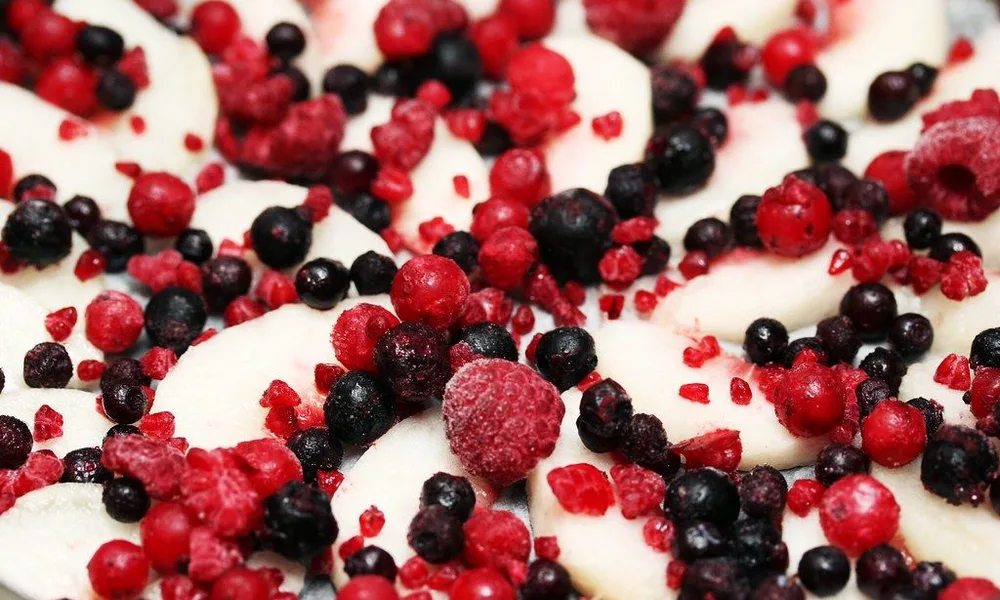
Berries are the safest frozen fruit to buy, and the best place to start. Blueberries freeze almost perfectly: they stay whole, keep their colour, and work in everything from smoothies to muffins. Raspberries are softer and crush easily, but their flavour survives freezing beautifully. Strawberries freeze well when sliced, although whole ones can turn soft when thawed.
Mango
Frozen mango is the sweetest option in the freezer aisle, and the most useful for smoothies. It blends thick and creamy, needs no added sweetener, and gives a smoothie its body. It is also the easiest tropical fruit to use well, because fresh mango is fiddly to peel and cut, while frozen mango arrives ready to use. Its only weakness is that it goes soft quickly when thawed.
Mixed bags
Mixed bags are the convenient option, and the hardest to judge. A good mixed bag has a sensible balance of fruit, with no single cheap filler dominating the bag. A bad one is mostly apple or melon, with a few berries scattered through for colour. Read the ingredients and check the proportions before you buy.
What Freezing Does to Nutrition
The most common question about frozen fruit is whether freezing destroys its nutrition, and the answer is reassuring. Freezing preserves most vitamins and minerals well, because the fruit is frozen quickly at its ripest. Vitamin C drops a little during freezing and storage, but the loss is small, and frozen fruit often ends up with more vitamin C than fresh fruit that has spent a week in transit.
Fibre survives freezing almost completely, and so do the plant compounds that give berries their deep colour. The main nutritional difference between frozen and fresh fruit is not the freezing at all. It is what gets added afterwards: plain frozen fruit has nothing added, while sweetened fruit and fruit in syrup carry extra sugar that fresh fruit does not.
That is also why frozen fruit compares well with dried fruit, which is a different product entirely. Drying concentrates the sugars and shrinks the portion, so it is easy to eat far more sugar than you meant to. Frozen fruit keeps its water, so a portion looks and feels like a portion. If you want the comparison in full, our guide to what makes great dried fruit worth stocking explains when dried fruit earns its place.
Frozen Fruit at a Glance
| Fruit | Best for | Texture frozen | Watch out for |
|---|---|---|---|
| Blueberries | Smoothies, baking, snacking | Firm and whole | Stains hands and clothes |
| Raspberries | Smoothies, desserts | Soft and delicate | Crushes easily in the bag |
| Strawberries | Smoothies, baking | Firm when sliced | Whole berries go soft |
| Mango | Smoothies, desserts | Thick and creamy | Softens fast once thawed |
| Mixed berries | Everyday use | Varied | Cheap fillers in bad bags |
Smoothies: Where Frozen Fruit Earns Its Keep
Smoothies are the best use for frozen fruit, and the reason most people buy it. Frozen fruit does two jobs at once: it flavours the smoothie and it chills and thickens it, so you need no ice. Ice waters a smoothie down. Frozen fruit does not. Use the fruit straight from the freezer, add a liquid such as milk, yoghurt, or juice, and blend until smooth.
The best smoothie combinations are simple. Mango and banana make a thick, sweet smoothie that needs nothing else. Mixed berries with yoghurt and a spoonful of oats make a filling breakfast. Start with a cup of frozen fruit, half a cup of liquid, and a spoonful of yoghurt, then adjust: too thick, add liquid; too thin, add fruit. If you want more ideas, our guide to the best smoothies covers the combinations that work and the ones that do not.

Baking With Frozen Fruit
Baking is the second-best use for frozen fruit, and the one people get wrong most often. The golden rule is to use the fruit frozen, straight from the bag, and never to thaw it first. Thawed fruit leaks juice into the batter, and the bake comes out soggy in the middle and pale on top. Frozen fruit releases its juice slowly as it bakes, and the crumb stays light.
Toss the frozen fruit in a spoonful of flour before folding it into the batter. The flour coating stops the fruit sinking to the bottom, which is the most common fault in berry muffins and cakes. Add two or three minutes to the baking time, because the cold fruit slows the bake, and test with a skewer before taking it out. Blueberries hold their shape best; raspberries need the gentlest handling.
Storage: Keeping Frozen Fruit at Its Best
Frozen fruit keeps for months, but not forever, and how you store it decides how it tastes. Keep bags sealed tightly, squeeze out the air before you close them, and lay them flat in the freezer so they freeze in a thin layer. Flat bags stack neatly, thaw faster, and are less likely to form icy clumps.
Use opened bags within three months for the best flavour, and label each bag with the date you opened it. After three months the fruit is still safe, but the flavour fades and freezer burn sets in: dry, pale patches where cold air has dried the surface out. Freezer-burned fruit is safe to eat, but it tastes tired, so use it in smoothies rather than eating it on its own.
Never refreeze fruit that has thawed. Once thawed, the fruit softens, the ice crystals melt, and refreezing turns it to mush. If a bag has thawed by accident, use the fruit within a day: blend it into a smoothie, cook it into a sauce, or stir it into yoghurt. The same care applies across the freezer, and the guide to the best frozen vegetables for quick, healthy meals makes the same point about keeping bags sealed and flat.
What to Skip and the Mistakes That Ruin It
The worst frozen fruit is not a particular brand. It is a bag bought for the wrong job or used the wrong way. The most common mistake is thawing fruit for a smoothie: thawed berries make a thin, watery smoothie that needs ice to thicken it again, which defeats the purpose. Use the fruit frozen and let the blender do the work.
The second mistake is buying sweetened fruit without noticing. Check the ingredients: if sugar, syrup, or juice concentrate appears on the list, the bag is sweetened, and it will make everything you cook with it sweeter than you planned. Plain fruit is almost always the better buy.
The third mistake is keeping a bag open for too long. An open bag left loose in the freezer absorbs smells, dries out, and forms clumps. Seal it properly every time, use it within three months, and buy smaller bags if you use frozen fruit slowly. A small bag used up quickly beats a large bag that sits open for a year.
Shopping Checklist
- Fruit is the only ingredient on the list, with no added sugar, syrup, or juice concentrate.
- The bag feels loose and free-flowing, not like a single solid block of ice.
- The fruit inside looks whole and colourful, with no pale freezer-burned patches.
- The mix makes sense: no cheap filler fruit dominating a mixed bag.
- The bag is a size you will use within three months of opening it.
- You have a plan for it: smoothies, baking, or breakfast, not just a vague idea.
Frequently Asked Questions
Is frozen fruit as healthy as fresh fruit?
Yes, in most cases. Frozen fruit is picked ripe and frozen quickly, so it keeps most of its vitamins, minerals, and fibre. Fresh fruit that has travelled for days can lose more nutrients than frozen fruit loses in the freezer.
Should I thaw frozen fruit before using it?
It depends on the dish. For smoothies and baking, use it frozen: thawing makes smoothies thin and bakes soggy. For eating on its own or in yoghurt, thaw it in the fridge for an hour first, and eat it the same day.
Why is my frozen fruit one solid block?
A solid block means the bag thawed and refroze somewhere along the way, in the shop, in transit, or in your freezer. The fruit is still safe, but the texture will be soft. Use it in smoothies and buy a fresh bag next time.
Can I refreeze fruit that has thawed?
No. Refreezing thawed fruit turns it to mush, because the ice crystals melt and reform in a way that breaks the fruit down. Use thawed fruit within a day, in a smoothie, a sauce, or stirred into yoghurt.
Is frozen fruit good for baking?
Yes, and it is often better than fresh fruit for baking. Use it frozen, toss it in a spoonful of flour so it does not sink, and add two or three minutes to the baking time. Blueberries are the easiest to bake with; raspberries need the gentlest handling.
How long does frozen fruit last?
Unopened bags keep for six to twelve months in a freezer that stays at a steady temperature. Once opened, use the fruit within three months for the best flavour; after that it is still safe, but freezer burn and flavour loss set in.
The Bottom Line
Frozen fruit deserves a spot in your freezer in 2026 because it is ripe, cheap, and ready whenever you need it. Buy plain bags that feel loose and free-flowing, keep them sealed and flat, use the fruit frozen for smoothies and baking, and use opened bags within three months.