A home sauna used to be a luxury reserved for houses with a spare wing and a generous building budget, but that is no longer the case. Compact cabins now fit into a spare bedroom, a garage corner, or a basement, and barrel models sit happily in an ordinary backyard. The best home saunas in 2026 are the ones that heat evenly, hold their temperature without fuss, feel solid underfoot, and fit the way you actually live. This guide walks through the types worth considering, the sizes that work in real homes, the heaters and woods that matter, and the practical details that separate a sauna you use three times a week from one that quietly becomes a storage cupboard.
Traditional, infrared, and barrel: the three types that matter
Traditional Finnish-style saunas heat the air with a stove, usually electric in a home setting, and the stones on top of the heater hold and release that heat. Temperatures typically run from around 70 to 90 degrees Celsius, and a ladle of water over the stones creates a burst of steam that makes the heat feel deeper. The experience is intense, social, and unmistakably sauna-like, and it is the best choice if you want the classic ritual of heat, steam, and a cool-down afterwards. The trade-off is warm-up time: a well-built two-person unit needs roughly half an hour to reach temperature, and larger cabins take longer.
Infrared saunas work differently. Instead of heating the air, infrared panels warm your body directly, so the cabin air stays milder, usually between 45 and 65 degrees Celsius. Sessions feel gentler, the cabin is ready in about ten to fifteen minutes, and the units run from a standard household socket in many cases. People who find traditional heat overwhelming, or who want a quick session without a long warm-up, often prefer infrared. The trade-off is that there is no steam and no stones, so the experience feels closer to a warm room than a traditional sauna, and some buyers miss the ritual of the ladle and the hiss.
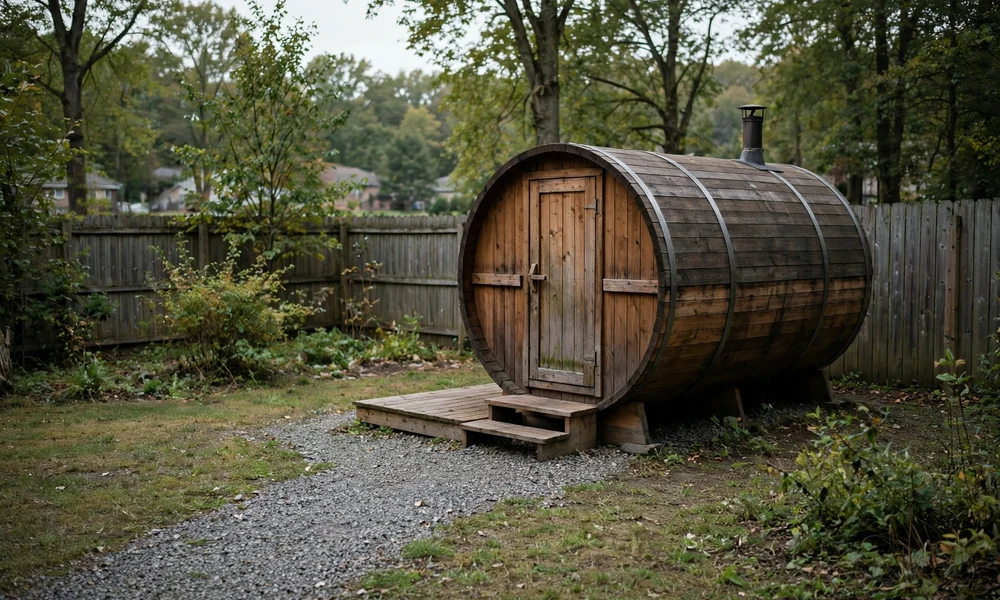
Barrel saunas sit outdoors and bring a different set of pleasures. Their round shape circulates heat efficiently, the cedar smells wonderful in the open air, and stepping out into a cool garden afterwards is half the point. They are usually wood-fired or electric, and they suit households with a garden and a little patience for outdoor maintenance. The trade-off is weather: you will need a level base, a cover or roof overhang, and a willingness to treat the wood once or twice a year. For buyers who want the sauna to feel like a retreat rather than another room in the house, a barrel is often the most satisfying choice of all.

Size first: measure twice, buy once
Sauna sizing is where most buying mistakes happen, so take the tape measure seriously. A one-person cabin sounds economical, but sitting with your knees up and nowhere to stretch your legs gets old fast, and most people who buy the smallest size wish they had gone one step up. A two-person cabin is the sweet spot for most homes: two adults can sit side by side, or one person can lie down with legs stretched out. Three- and four-person cabins suit families and households where the sauna is a shared evening ritual, but they need more floor space, a bigger heater, and a stronger electrical supply.
Heaters, wood, and the details that decide quality
The heater is the heart of a traditional sauna, and it is worth sizing properly. A heater that is too small will run constantly and still leave the upper bench lukewarm, while an oversized one will cycle on and off and produce uneven heat. Manufacturers publish recommended cabin volumes for each heater, so match the heater to your cabin size rather than guessing. Electric heaters are the simplest choice for most homes, with a dial or digital control, a timer, and a safety cut-off. Wood-burning stoves suit outdoor barrels and cabins with a proper flue, but they need more attention and are rarely practical indoors.
Wood choice affects smell, feel, and longevity. Cedar is the classic sauna wood for good reason: it smells warm and resinous, resists moisture, and stays comfortable to touch even at high temperatures. Hemlock and aspen are paler, milder-smelling alternatives that suit buyers who prefer a lighter interior and a lower price. Avoid woods that ooze resin at high heat, and be wary of cabins built from thin panels with a lot of visible knots, since knots can get hot and may weep sap. Good joinery should feel solid: panels should sit flush, benches should not flex, and the door should close with a satisfying, quiet seal.

Power, ventilation, and installation
Electricity is the detail most often underestimated, so check it before you order. Small infrared cabins often run from a standard socket, but most traditional two-person saunas need a dedicated circuit, and larger cabins may need a higher-voltage supply installed by an electrician. Ask the seller for the exact power requirement in writing, then ask your electrician what the installation will cost before you commit. A sauna that needs a new circuit is not a problem, but discovering the cost after delivery is an unpleasant surprise.
Ventilation matters more than most buyers expect. A sauna needs fresh air coming in low, near the heater, and stale air leaving high, on the opposite side, so the heat circulates instead of pooling at the ceiling. Poor ventilation makes a sauna feel stuffy and uneven, and it encourages damp in the wood over time. If the cabin has adjustable vents, use them: start with them partly open and adjust until the heat feels even from bench to ceiling. Outdoor barrels need ventilation too, and a small gap under the door is usually part of the design rather than a flaw.
Installation is usually straightforward for a flat-pack cabin, and two people can often assemble a two-person unit in an afternoon with basic tools. Read the instructions before you start, keep the panels in order, and do not force joints that do not line up. Outdoor cabins and barrels need a level, well-drained base: a concrete slab, a deck, or compacted gravel all work, but bare soil will shift and rot the base. If you are not comfortable with the electrical work, hire a professional for that part even if you assemble the cabin yourself.
Cost: what to expect at each level
Running costs are modest but worth knowing. A typical two-person electric sauna session costs roughly the same as running a kettle for an extended period, and a few sessions a week will show up on the electricity bill without shocking it. Wood-fired barrels cost less to run if you have a cheap source of firewood, but they need more of your time. Factor in the small extras too: a thermometer, a bucket and ladle, towels, a headrest, and perhaps a sand timer, all of which cost little but make the experience far better. A sauna with no accessories feels unfinished, so budget for them from the start.
Using it well: the routine that makes it worthwhile
Pairing heat with cold is where many owners find the deepest satisfaction. A cool shower or a step outside into cold air after a hot session feels bracing and leaves you alert and relaxed at the same time. Some owners go further and add a cold plunge tub to their routine, alternating between heat and cold in a way that makes both feel more rewarding. If that appeals to you, our guide to the best cold plunge tubs covers the tubs that pair well with a home sauna. Start gently, keep the cold exposure short at first, and always warm up properly afterwards.
Children, pregnant people, and anyone with a heart condition or low blood pressure should check with a doctor before using a sauna, and children should only use one briefly, at a lower temperature, with an adult present. Keep sessions short for first-time users and build up gradually. Keep a bottle of water within reach, and never lock the sauna door from the inside. These are simple rules, but they are the ones that keep a pleasant habit safe.
Fitting a sauna into a home that already works
A sauna earns its place when it fits the room it lives in, rather than fighting it. Indoors, a cabin in a spare room, a large bathroom, or a converted garage corner works well, especially if there is a shower nearby for the cool-down. If you are planning a wider home wellness space, it helps to think about the room as a whole: where you will stretch, where you will sit, and how the sauna, the shower, and the rest of the room work together. Our guide to the best home gyms is useful here, since the same planning questions about floor space, flooring, and ventilation apply.
For many owners, the sauna becomes the quiet corner of the house, the place where the day ends properly. A comfortable chair nearby, a place to sit and cool down, and soft lighting in the room make the whole ritual better. Some owners add a massage chair to the same corner, turning a spare room into a small recovery space where heat, rest, and a slow evening come together. Our guide to the best massage chairs covers the chairs that work well in that kind of setup, and the combination suits households that want their wellness corner to do more than one job.
Maintenance: keeping it clean and sweet-smelling
A home sauna needs very little maintenance, but the little it needs matters. Wipe the benches down after each session with a damp cloth, and leave the door ajar afterwards so the cabin dries out properly. Wash the floor regularly, and sand the benches lightly once or twice a year with fine sandpaper to keep them smooth and fresh. Avoid harsh cleaners and never paint or varnish the inside of the cabin, since the heat will release fumes and the finish will not last. A clean sauna smells of warm wood, and that is exactly how it should stay.
Our verdict: the best home saunas of 2026
The best home sauna for most buyers is a well-built two-person traditional cabin with a properly sized electric heater, two-tier benches, and cedar or hemlock timber, placed somewhere convenient with a shower nearby. If you want faster sessions and gentler heat, a two-person infrared cabin is the better pick, and it is the easiest to live with day to day. If you have a garden and want the sauna to feel like an escape, a cedar barrel with a wood or electric heater is the most rewarding choice of the three. Whichever type you choose, spend your money on the heater, the wood, and the build, measure the space twice, sort the power before delivery, and leave room for a proper cool-down. Do that, and the sauna will not be a novelty. It will be the best room in the house.