
Best Cold Plunge Tubs 2026
A cold plunge tub is a simple idea with a demanding job. It has to hold cold water, keep it cold, stay clean between uses, and let you climb in and out safely when your legs feel heavy and your hands feel numb. A tub that leaks, warms up by lunchtime, or wobbles when you step in will sit empty within a month.
Get the tub right, though, and the habit sticks: the water is cold when you want it, the tub is ready without a bag of ice, and getting in feels like a short, sharp reset rather than a chore. These are the best cold plunge tubs of 2026, chosen for size, cooling, cleaning, and build quality.
Key Takeaways
- Buy the tub for the body you have, because a tub that is too small forces you to sit with your knees up and your shoulders out of the water.
- Cooling matters more than looks, since a tub that cannot hold its temperature becomes an expensive paddling pool by the second week.
- Filtration and a cover matter as much as the tub itself, because clean, covered water stays usable for weeks instead of days.
- Check the weight, the floor, and the drain before you buy, since a filled tub can weigh as much as a small car.
- Start short and warm up afterwards, and check with a doctor first if you have a heart condition, high blood pressure, or you are pregnant.
Cold Plunge Tubs 2026 at a Glance
| Best for | Tub type | Water | Standout strength |
|---|---|---|---|
| Best overall | Cedar barrel tub | Chilled | Deep soak, warm look, and a steady temperature |
| Best for small spaces | Compact upright tub | Chilled | Fits a balcony or a small garden corner |
| Best for families | Wide rectangular tub | Chilled | Room to sit properly and share the routine |
| Best on a budget | Metal stock-tank tub | Ice or chiller | Simple, tough, and easy to drain and clean |
| Best for indoors | Insulated indoor tub | Chilled | Quiet chiller and a lid that keeps the room dry |
| Best for beginners | Inflatable tub | Ice | Cheap to try, light to move, and easy to store |
What a Cold Plunge Tub Is Really For
A cold plunge tub is a small, deep tub filled with cold water, usually between about 10 and 15 degrees, that you sit in for a few minutes. People use it after exercise, after a sauna, or as a morning routine, and the point is the short shock of cold followed by the warmth that comes back as you dry off and move around.
Getting the Size Right
Size is where most cold plunge purchases go wrong. A tub that is too small is the most common regret: you sit with your knees bent, your shoulders above the water, and the cold never quite reaches the places you wanted it to. A tub that is too large is the second regret, because it takes longer to chill, costs more to fill, and needs a stronger floor.
Height matters more than width. You need enough depth to sit with the water at chest level, which usually means an inside depth of at least 70 centimetres for most adults. Taller people should look for 80 centimetres or more, and anyone over six foot should sit in the tub before buying if they possibly can.
The Main Types of Cold Plunge Tub
Cold plunge tubs fall into a handful of types, and each suits a different kind of home. The right choice depends less on taste than on how much space you have, how often you will plunge, and whether you want to buy ice or plug in a chiller.
The cedar barrel tub is the classic choice, and it earns its price. A round wooden barrel looks at home in a garden, holds its temperature well once it is cold, and is deep enough for a proper soak. Wood needs care, though: it can dry out and leak if it is left empty in the sun, so it suits someone who will use it most days.

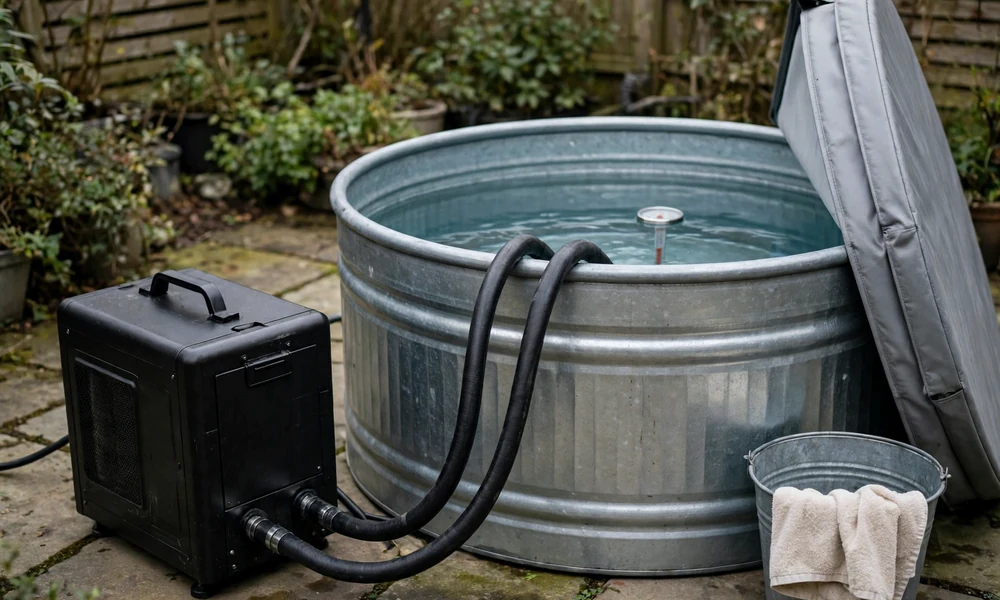
The metal stock-tank tub is the budget choice, and it is tougher than it looks. A galvanised steel tank is cheap, easy to clean, and simple to drain, and it works well with bags of ice or a separate chiller. It loses heat faster than an insulated tub, so it suits cooler climates and people who plunge in the morning before the sun warms it.
How the Water Stays Cold
There are two ways to keep plunge water cold: ice or a chiller. Ice is simple and cheap to start with, but it is a daily job, and in summer you may need several bags for a single plunge. A chiller is a small refrigeration unit that plugs in, circulates the water, and holds it at a set temperature, and it is the difference between a tub you use and a tub you avoid.
A chiller costs more up front, and it needs power and a little space beside the tub, but it pays for itself in convenience. Look for a chiller that can hold the water at 10 to 12 degrees in your climate, and check how loud it is before you buy, since a noisy chiller beside a bedroom window will ruin the calm of the whole routine.
Keeping the Water Clean
Clean water is the difference between a tub you look forward to and a tub you dread. Cold water slows the growth of germs, but it does not stop it, and a tub used by more than one person, or left uncovered in a garden, will need regular care.
A filter is the first line of defence. Many chilled tubs come with a small pump and filter that circulates the water and catches hair, leaves, and skin, and it should run for a few hours a day even when you are not plunging. Change or rinse the filter on the schedule in the manual, since a clogged filter does nothing at all.
Getting In and Out Safely
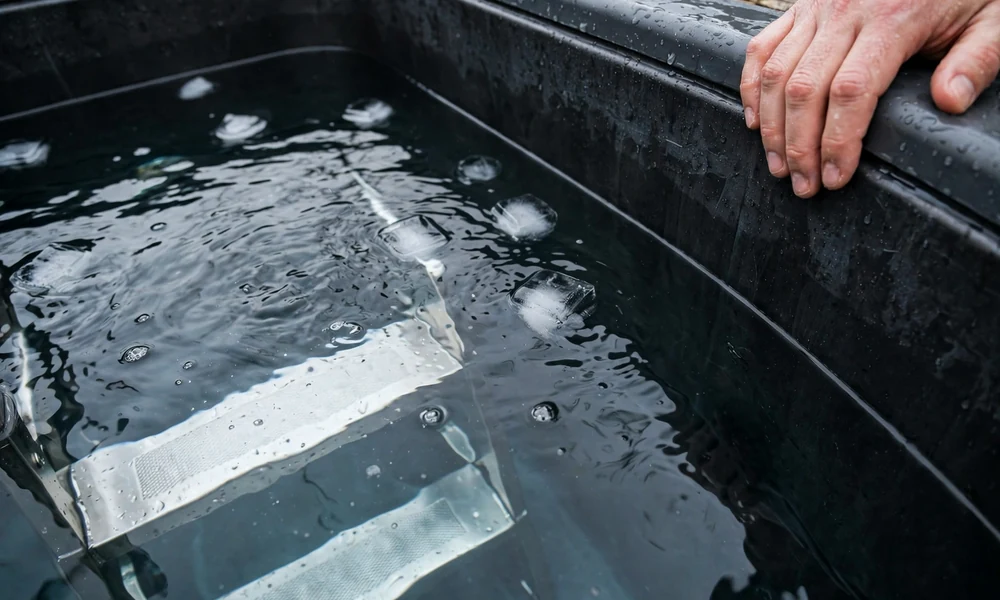
Getting into cold water is a shock to the body, and the first minute is the hardest part. Your breathing speeds up, your heart beats faster, and your instinct is to gasp and climb straight out. The tub should make that first minute as safe as possible, with a step, a handle, and a rim you can grip.
Warm up slowly afterwards. Dry off, put on warm clothes, and move around gently rather than jumping into a hot shower straight away. A warm drink helps, and a short walk is better than sitting still and shivering. If you want to pair the plunge with heat, our guide to the best heating pads of 2026 covers the warm side of the routine, for sore muscles that want heat rather than cold.
Where to Put the Tub
Where the tub lives decides how often you will use it. A tub at the far end of a cold garden, behind a locked gate, will be used far less than a tub a few steps from the back door. Put it where you can reach it in a dressing gown, with a towel and dry clothes waiting nearby.
Outdoors is the natural home for most tubs, and it suits the habit best. A flat, level spot on concrete, paving, or a strong deck works well, with a drain or a garden bed nearby for emptying the water. Keep the tub out of direct sun if you can, since shade keeps the water colder and the chiller quieter, and keep it away from overhanging trees that drop leaves into the water.
Recovery After the Plunge
A massage chair is the natural partner for a plunge, and our guide to the best massage chairs of 2026 covers the chairs that suit a home recovery corner. Plunge first, dry off, warm up, and then sit in the chair for ten minutes while your muscles loosen. The order matters: cold first, warmth second, and rest last.
Common Mistakes to Avoid
The most common mistake is buying a tub that is too small, and discovering it only when you try to sit in it properly. The second is buying a tub with no plan for cooling, and discovering that bags of ice cost more in a month than a chiller would have cost in a year. The third is forgetting the weight, and finding a filled tub sinking into soft ground or straining a deck.
Before You Buy: A Short Checklist
- Sit in the tub, or measure it against your height, so the water reaches your chest.
- Decide how the water will stay cold: chiller, ice, or both, and check the running cost.
- Check the weight when full, and confirm the floor or the ground can take it.
- Look for a filter, a lid, a drain, and a step, and check the chiller noise level.
- Measure the gate, the path, and the doorway, and confirm the delivery route.
- Plan where the power socket, the hose, and the drain will be.
- Check the cleaning routine, and be honest about whether you will follow it.
Frequently Asked Questions
How cold should a cold plunge tub be? Most people aim for 10 to 15 degrees. Start at the warmer end, around 15 degrees, and work down slowly over weeks. Colder water is a bigger shock, not a better result, and a tub you can use comfortably is better than a tub you dread.
How long should I stay in a cold plunge tub? One to three minutes is enough for most people, and beginners should start with one minute. Longer sessions are not automatically better, and you should get out at once if you feel dizzy, numb, or short of breath that does not settle.
Do I need a chiller, or is ice enough? Ice is enough to try cold plunging, and it suits small tubs and occasional use. A chiller is better if you plunge most days, since it holds the temperature without a daily trip for ice, and it keeps the water cleaner by circulating it through a filter.
What should I do after a cold plunge? Dry off, put on warm clothes, and move around gently. A warm drink helps, and a short walk is better than sitting still. Many people finish their routine with a warm soak or a gentle stretch, and our guide to the best bath foams of 2026 covers the warm, foamy end of a bathing routine for days when cold is not what you need.
The Bottom Line
The best cold plunge tub of 2026 is the one that fits your body, holds its temperature, stays clean without a fight, and sits close enough to the back door that you will actually use it. It is deep enough for a chest-deep soak, strong enough for its own weight in water, and simple enough to drain and clean.
Start with the tape measure and the floor, not the photograph. Measure yourself, measure the space, decide how the water will stay cold, and then choose the type that fits: a cedar barrel for a deep daily soak, a wide rectangular tub for a family, a compact tub for a small space, or a simple metal tank to find out whether the habit suits you at all.


