
A child who cannot see properly on a ski slope will not enjoy skiing, however good the snow is and however patient the instructor is. Bright sun bouncing off white snow, wind on a chairlift, snowflakes in the eyes and lenses that steam up the moment a child starts working hard all turn a fun morning into a miserable one. The best kids ski goggles of 2026 solve those problems before they start, with a small frame that actually fits a young face, a lens that handles glare without turning the world dark, and ventilation that keeps the inside of the lens clear. They are not simply smaller adult goggles. They are built around smaller faces, shorter noses, narrower heads and the way children actually behave on snow.

What Makes Kids Ski Goggles Different
An adult goggle is designed for an adult face, and that is exactly why it fails on a child. The frame is too wide, so it presses on the temples and leaves gaps at the sides where cold air rushes in. The nose bridge sits too high, so the goggle slides down or presses uncomfortably on a small nose. The strap is made for a larger head and a larger helmet, so it slips or needs to be pulled so tight that it hurts. A child wearing an adult goggle will spend the whole day pushing it back into place, and every time they do, snow and cold air get in and the lens starts to fog.
The lens is the second difference. Children have more sensitive eyes than adults, and snow reflects far more ultraviolet light than most people realise. A proper kids ski goggle blocks all ultraviolet light, and the lens should be rated for full protection rather than simply tinted dark. Dark does not mean protective. A cheap dark lens without proper ultraviolet filtering can be worse than no lens at all, because the dark tint makes the pupil open wider and lets more harmful light in. Look for full ultraviolet protection stated clearly, and treat a goggle that does not state it as a goggle to avoid.
Fit Comes First, Before Anything Else
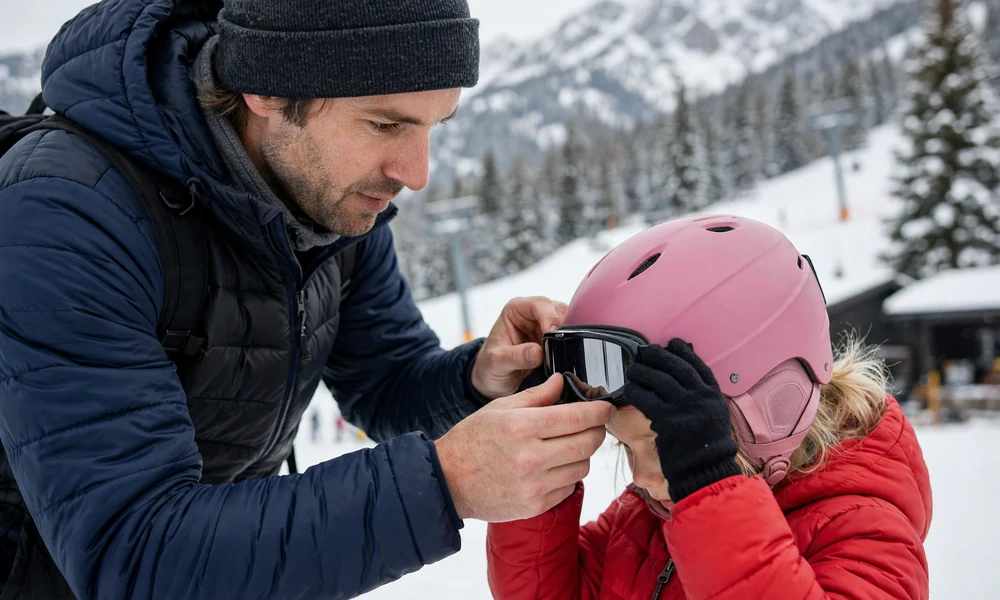
Fit is the single most important thing about kids ski goggles, and it is the thing most often got wrong. A goggle that fits should sit flat against the face all the way around, with no gaps at the sides and no pressure on the nose. The child should be able to blink comfortably and look up, down and sideways without the frame digging in. The strap should hold the goggle in place without needing to be tight, and the goggle should stay put when the child shakes their head gently. If it slides, it is too big. If it leaves deep marks after a minute, it is too small or too stiff.
Always try goggles with the helmet the child will actually wear. A goggle and a helmet are a pair, not two separate purchases, and a goggle that fits perfectly on a bare head can gap badly once a helmet is on. The top of the frame should meet the front of the helmet with no bare forehead showing, because that strip of skin is where cold wind hits hardest and where a sunburn forms on a bright day. The strap should sit flat over the helmet or through its clip, not twisted or bunched. If your child is still growing into their helmet, take the helmet with you when you shop, and check the fit again at the start of each season. Sizing for children changes fast, and a goggle that fitted last winter may not fit this one. The same care with sizing applies to other kids gear too, and our guide to the best kids swim goggles of 2026 shows how a small frame and a soft seal matter just as much in the water as they do on snow.
Lens Colour and Light: What Actually Helps
Lens colour is where most parents get confused, because the choice looks technical and the names sound similar. The truth is simpler than the labels suggest. On a bright, sunny day, a darker lens with a mirror coating cuts glare and keeps the snow from looking painfully white. On a cloudy day or in flat light, a lighter lens, often amber, rose or yellow, lets more light through and helps the child see bumps and changes in the snow. A single lens cannot do both jobs perfectly, so the best kids ski goggles of 2026 either come with a versatile all-round lens or with a spare lens that can be swapped in seconds.
For a first pair, a medium-tint lens is the safest choice. It handles a sunny morning and a cloudy afternoon well enough that the child is never struggling to see, and it avoids the two real dangers: a lens so dark that the child cannot see in flat light, and a lens so pale that bright sun hurts their eyes. If your child skis mostly on sunny holidays, lean darker. If they ski mostly in the United Kingdom or on cloudy northern slopes, lean lighter. And remember that a mirrored coating is about glare, not about protection. A mirror finish looks impressive, but it is the ultraviolet filtering underneath that protects the eyes, so never choose a lens for its mirror alone. The wider world of adult lenses is covered in our guide to the best ski goggles of 2026, and the same principles of tint and light apply, just scaled down to a smaller face.
Anti-Fog and Ventilation: The Difference Between Fun and Misery
Fogging is the most common reason a child hates their goggles, and it is almost always a ventilation problem rather than a lens problem. Warm, damp air from the face and breath rises into the goggle, hits the cold lens and turns to condensation. A good kids goggle fights this in three ways: vents at the top and bottom of the frame that let air move through, a double lens with a sealed air gap between the two layers, and an anti-fog coating on the inside of the inner lens. All three matter, and a goggle missing any of them will fog sooner.
Teach your child the habits that keep goggles clear, because even the best goggle will fog if it is treated badly. The goggle should never be pushed up onto a warm forehead, where it fills with damp air, and the inside of the lens should never be wiped with a glove, a sleeve or a tissue, because that removes the anti-fog coating and scratches the lens. If the lens does fog, the child should take the goggle off, let it dry in the air for a few minutes, and put it back on. Wiping the inside only makes it worse, and it is the single most common way a good pair of goggles is ruined in a single day. Carry a soft lens cloth in a pocket and show the child how to use it on the outside of the lens only.
Helmet Compatibility and the Strap
The strap is the part of a kids ski goggle that gets the least attention and causes the most trouble. It needs to be wide enough to stay flat on a helmet, grippy enough not to slide, and adjustable enough to fit over a helmet in winter and a hat on a warmer day. A silicone grip on the inside of the strap helps enormously, because it stops the strap creeping up the back of the helmet when the child moves. A strap that slides means a goggle that slides, and a goggle that slides means a child who cannot see.
Choosing by Age: Toddlers, Young Children and Older Kids
A toddler on skis for the first time needs a goggle that is small, light and very forgiving. The frame should be soft all the way around, the strap should be easy to adjust, and the lens should be a medium tint that works in most light. At this age, comfort matters more than any technical feature, because a toddler who finds their goggles uncomfortable will simply refuse to wear them, and a toddler without goggles on a bright slope will be miserable within minutes. Choose a bright colour the child likes, let them pick between two good options, and keep the first sessions short.
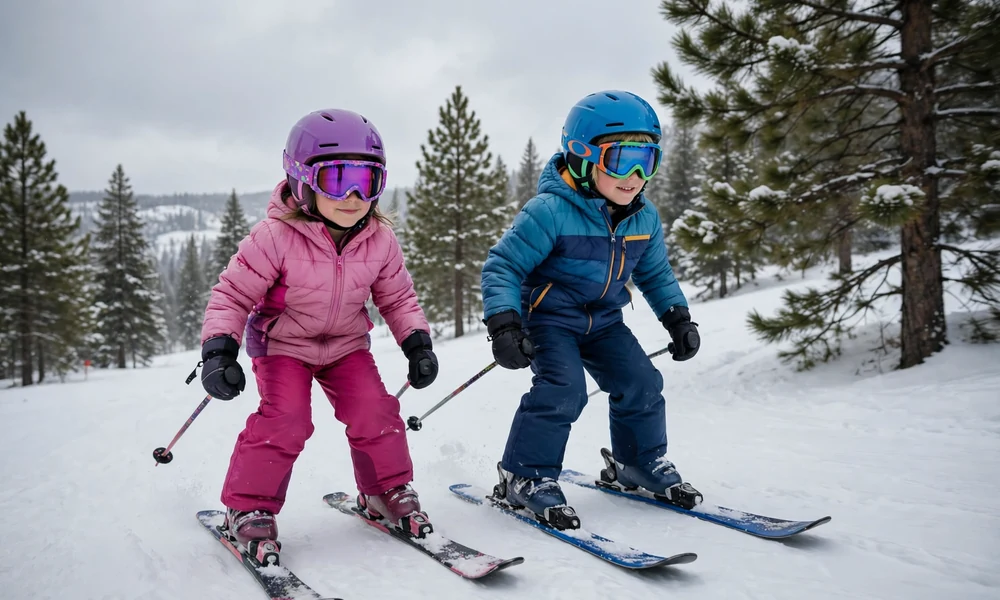
Children between five and eight are usually skiing properly, falling over often and getting snow everywhere. For this age, durability and anti-fog matter most. The goggle will be dropped in the snow, sat on in the lift queue and wiped with a glove despite everything you have taught them, so a tough frame and a replaceable lens are worth paying for. A spare lens in the bag is a good idea at this age, because a scratched lens can be swapped in a minute and the day can carry on. This is also the age when children start to care about how their goggles look, and a pair they are proud of is a pair they will actually wear.
Children between nine and twelve are close to adult sizes, but they are not adults yet. Their faces are still narrower and their heads are still smaller, so an adult goggle will still gap and slide, even if it looks as though it fits. A youth or small adult frame is usually right at this age, and it is worth checking the fit again every season because growth is fast. Older children also ski faster and in worse weather, so a darker lens for sunny days and a lighter spare for flat light become genuinely useful rather than a luxury. If your family is planning the trip itself, our guide to the best ski resorts of 2026 is a good place to start, because the right resort makes the right goggles matter even more.
What to Avoid: The Signs of a Bad Pair
Looking After Kids Ski Goggles
Good care makes a pair of kids ski goggles last for years, and it is mostly a matter of drying and storing them properly. After skiing, take the goggles off, shake off loose snow, and leave them to dry in the open air, not on a hot radiator and not in a sealed bag. Heat damages the anti-fog coating and warps the frame, and a damp goggle in a closed bag grows mould on the foam. Once dry, keep them in a soft case or a goggle bag, with the lens facing away from anything hard. A scratched lens is the most common reason a pair is thrown away, and a soft case prevents it.
The Verdict
The best kids ski goggles of 2026 are the ones that fit a small face properly, protect young eyes fully, stay clear in cold air and work with the helmet your child already owns. Fit comes first, then ultraviolet protection, then ventilation and a double lens, then a tint that suits the light your child actually skis in. Get those four things right and the brand and the colour are details, not decisions. Get them wrong and no amount of style will make a ski day enjoyable. Buy the pair that fits, teach the child how to look after it, and let them get on with the best part of skiing: seeing where they are going, and enjoying the way there.


