
Mulch That Keeps Soil Moist and Weeds Down in 2026
The best mulch of 2026 does two jobs at once: it keeps the soil underneath it moist for days after watering, and it smothers weeds before they ever see the sun. A good mulch is not decoration, though it certainly makes a bed look finished. It is a working layer of bark, straw, compost or stone that sits on the soil surface and changes how that soil behaves. Water evaporates more slowly, roots stay cooler in summer and warmer in winter, and weed seeds that need light to germinate simply never get their chance. This guide compares the mulches that actually deliver on those promises, explains how thick to lay each one, and shows you the mistakes that turn a helpful layer into a soggy mess.
Key Takeaways
- Bark mulch is the best mulch overall in 2026, holding moisture for days, blocking weeds effectively, and lasting a full season or more before it needs topping up.
- Straw mulch is the best mulch for vegetable beds, because it is cheap, light, breaks down fast, and feeds the soil as it rots.
- Compost mulch is the best mulch for feeding hungry plants, adding nutrients with every watering while it keeps the soil damp.
- Gravel and stone mulch are the best mulches for paths and dry beds, where they never rot, never blow away, and keep weeds down for years.
- Lay mulch five to eight centimetres thick, keep it clear of plant stems, and water the soil thoroughly before you spread it, not after.
The Best Mulches of 2026 at a Glance
| Mulch | Best For | Moisture Holding | Weed Control | How Long It Lasts |
|---|---|---|---|---|
| Bark mulch | Best overall | Excellent | Excellent | 12 to 18 months |
| Straw mulch | Vegetable beds | Very good | Good | One season |
| Compost mulch | Feeding plants | Very good | Good | 3 to 6 months |
| Wood chip mulch | Paths and large beds | Good | Very good | 18 to 24 months |
| Gravel mulch | Dry beds and paths | Fair | Excellent | Many years |
| Leaf mould | Woodland plants | Excellent | Fair | 6 to 12 months |
What Mulch Actually Does to Your Soil
A layer of mulch changes the soil underneath it in several ways at once. The first is shade. Bare soil in summer sun can dry to dust within a day, while a mulch layer absorbs that heat instead, so the soil below stays cool and damp. In winter the same layer works in reverse, insulating the ground against frost and protecting shallow roots from freeze and thaw cycles that heave plants out of the ground.
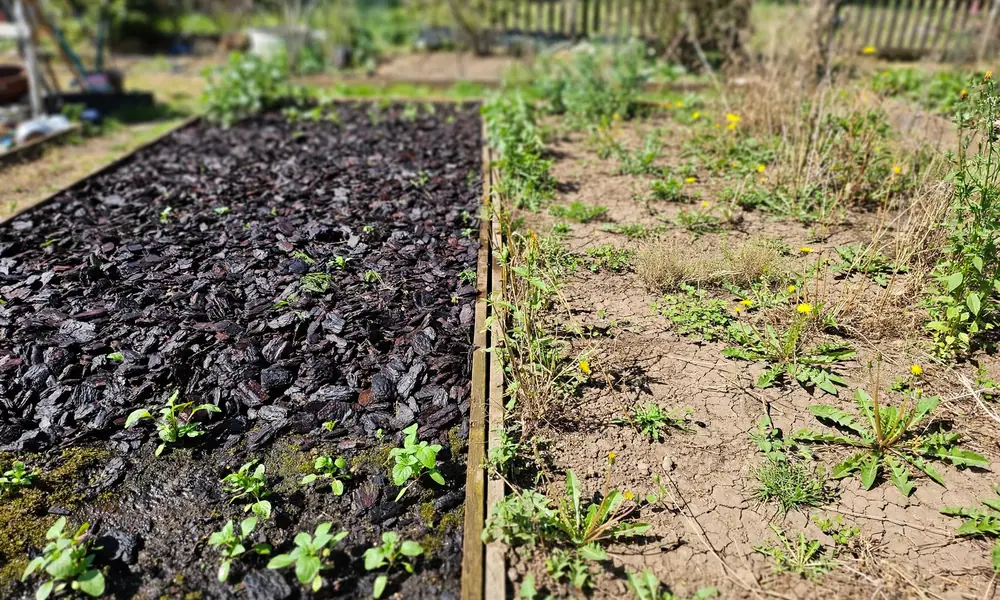
The second effect is moisture. Water that falls on bare soil evaporates quickly, and heavy rain can compact the surface into a crust that sheds the next shower. Mulch breaks the fall of rain, lets water soak in slowly, and then covers the damp surface so evaporation slows to a crawl. A mulched bed can go three or four days longer between waterings than an identical bare bed, which matters most during holidays and hosepipe restrictions. The third effect is weed suppression. Most weed seeds need light to germinate, and a mulch layer five centimetres thick or more simply blocks that light. The few weeds that do push through are rooted in loose mulch rather than firm soil, so they pull out with one gentle tug.
Bark Mulch: The Best Mulch Overall
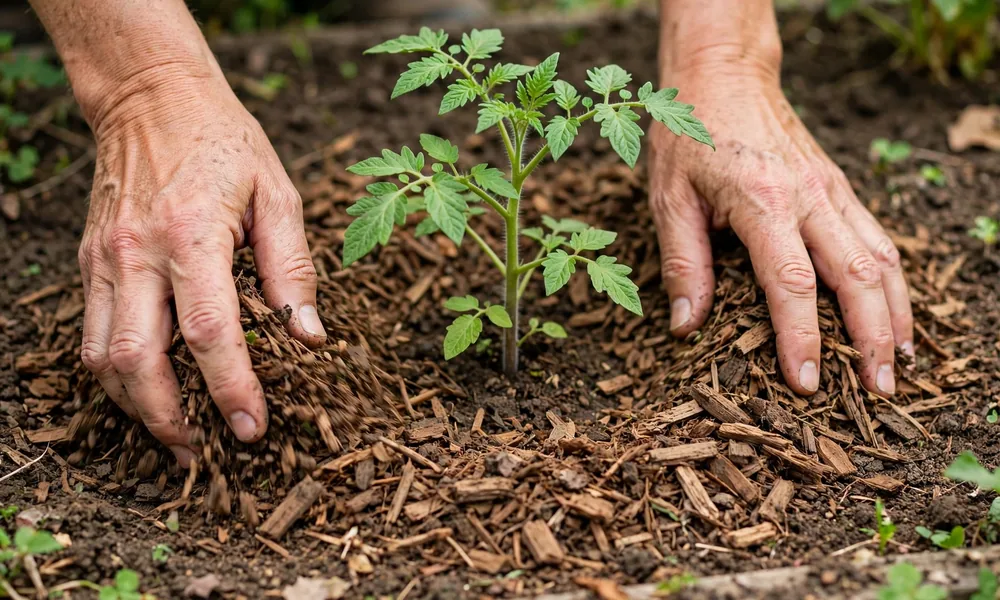
Bark mulch is the best mulch overall in 2026 because it does everything well and lasts longer than any other organic mulch. It comes in grades from fine shredded bark to large nuggets, and the grade matters. Fine bark knits into a mat that blocks weeds brilliantly but can shed heavy rain, while large nuggets let water through easily but leave gaps where weeds can sneak in. For most beds, a medium grade of bark chips, roughly two to four centimetres across, is the sweet spot: it stays put in wind, lets rain through, blocks light, and looks tidy for a year or more.
Bark is at its best around shrubs, roses, fruit bushes and perennial borders, where it can sit undisturbed for a season or two. It is less suited to annual vegetable beds, where you will be digging it in or clearing it away every few months. Fresh bark can briefly borrow nitrogen from the soil as it rots, so spread compost underneath first or use aged bark, which has already done most of its borrowing.
How to lay bark mulch properly
Start by weeding the bed thoroughly, because mulch will not kill established perennial weeds with deep roots; it only stops new seeds. Water the soil deeply, then spread the bark five to eight centimetres thick, pulling it back a few centimetres from every stem and trunk. Mulch piled against a stem traps moisture against the plant itself, and that is how rot starts. Top up once a year in spring. Bark also suits raised garden beds, where it keeps the loose soil inside the frame moist far longer than bare soil stays.
Straw Mulch: The Best Mulch for Vegetable Beds
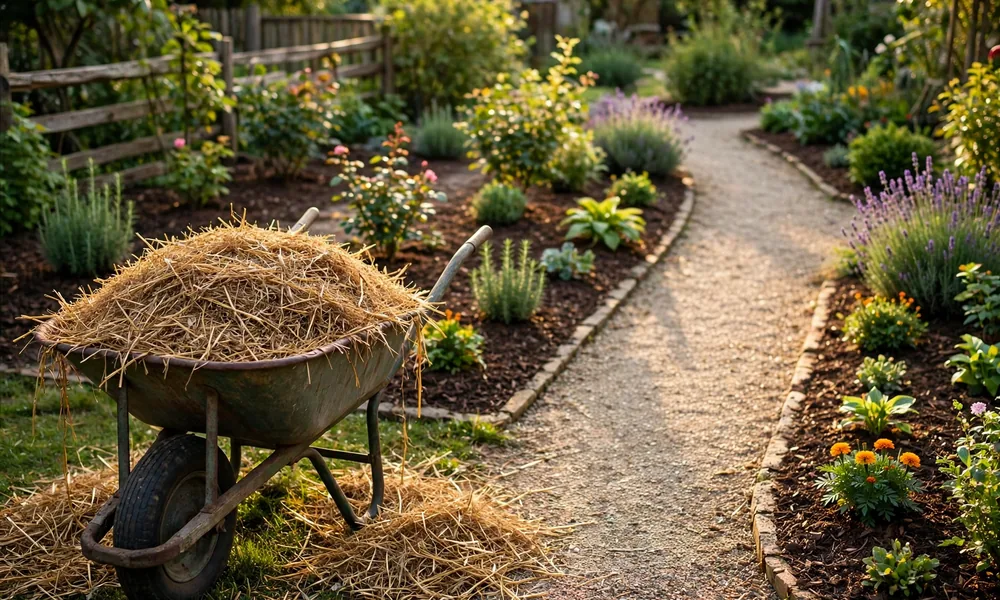
Straw is the best mulch for vegetable beds because it is light, cheap, easy to spread, and it rots down into the soil within a season. A bale of straw covers a surprising area, and a thick layer around potatoes, squash, courgettes and strawberries keeps the soil cool and moist while keeping the fruit clean and off the damp ground. Strawberries in particular repay the effort: berries resting on straw instead of wet soil stay clean, dry, and far less likely to rot.
Straw has one weakness: straw that still carries seed heads can sow wheat or barley in your bed, so buy seed-free straw and check each bale. It also blows around when first laid, so water it lightly after spreading; once rained on a couple of times it stays put, and at the end of the season you can dig the remains straight in.
Compost Mulch: The Best Mulch for Feeding Plants
Compost used as a mulch is the best way to feed hungry plants while keeping the soil moist. A three to five centimetre layer of well-rotted garden compost spread over a bed in spring does the work of both a mulch and a feed: it shades the soil, holds moisture, suppresses small weeds, and releases nutrients every time it rains or you water. Roses, vegetables, fruit bushes and hungry perennials all respond visibly, putting on stronger growth and better flowers within weeks.
The catch is that compost mulch does not last: within three to six months much of it has been absorbed into the soil. It also needs topping up more often than bark and, on its own, is not the best weed blocker, since its fine texture lets tough weeds through. Use compost as the bottom layer under bark or straw, so the compost feeds the soil while the top layer blocks weeds. Your own compost bin is the cheapest source, turning kitchen scraps and garden waste into exactly what your beds need.
Gravel and Stone Mulch: The Best Mulch That Never Rots
Gravel mulch is the best mulch for dry beds, Mediterranean planting and paths, because it never rots, never blows away, and keeps weeds down for years. A layer of gravel over a weed-proof membrane gives you a bed that needs almost no attention: rain drains straight through, the stones warm up in the sun, and weeds that do appear are easy to spot and pull. Lavender, rosemary and sedums thrive in gravel, partly because the stones keep their crowns dry and reduce the rot that kills them in wet winters.
Gravel has downsides: it does not feed the soil, so plants in it need feeding separately, and it is heavy, expensive in bulk, and hard to move or remove once laid. Use it where its strengths matter most, on dry sunny beds and paths, and use organic mulch everywhere else.
Leaf Mould: The Free Mulch Hiding in Your Garden
Leaf mould is simply autumn leaves rotted down for a year or two into a dark, crumbly material that holds water like a sponge. It is the best mulch for woodland plants, ferns and shade beds, because it mimics the forest floor those plants evolved in. Pile leaves in a wire bin, leave them for a year, and use the result. Gather them with one of the best leaf rakes and shred them with a mower first to speed things up.
What Not to Do With Mulch
Most mulch problems come from a few avoidable mistakes. The first is piling mulch against stems and trunks, which traps moisture against bark and invites rot and pests, so always leave a clear ring around every stem. The second is laying mulch on dry soil and expecting it to do the watering for you. Mulch slows evaporation, but it cannot add water that was never there, so soak the soil first. The third is laying it too thin: a two centimetre layer looks tidy and does almost nothing for weeds, while five to eight centimetres is the depth that works. The fourth is using fresh grass clippings as a thick mulch, which mat into a slimy layer that smells and sheds water. Grass clippings are fine in thin layers, or mixed into compost, but never as a deep mulch on their own.
Slugs are the other worry, and there is some truth in it: a damp mulch layer is good slug habitat. Gravel and coarse bark are less slug-friendly than straw and leaf mould, and keeping mulch clear of stems removes the hiding places closest to your plants.
Mulch Checklist: Before You Spread a Single Handful
- Weed the bed thoroughly first, pulling out perennial weeds by the root.
- Water the soil deeply so the mulch locks moisture in rather than locking dryness in.
- Choose the mulch for the bed: bark for shrubs, straw for vegetables, compost for hungry plants.
- Spread five to eight centimetres thick, no thinner, and rake it level.
- Keep a clear gap around every stem and trunk to prevent rot.
- Top up once a year in spring, and check the depth again after heavy rain.
Frequently Asked Questions
How thick should mulch be?
Five to eight centimetres. Thinner and weeds push through; much thicker than ten and you risk smothering shallow roots and creating a soggy layer that sheds water.
Should I put mulch on wet or dry soil?
Always on wet soil. Water deeply first, then spread the mulch over the damp surface, or the mulch will absorb the first watering before any of it reaches the roots.
Does mulch attract slugs?
It can, especially straw and leaf mould in wet weather. Coarse bark and gravel are less inviting, and the benefits of moist soil and fewer weeds still outweigh the extra slugs.
Can I mulch in winter?
Yes. A mulch layer in late autumn insulates roots against frost and is already in place when spring growth starts; just make sure the soil is moist before you lay it.
Is bark mulch safe for vegetable beds?
Aged bark is safe, but fresh bark can borrow nitrogen and slow hungry vegetables. For vegetable beds choose straw or compost, and keep bark for shrubs, roses and borders.
How often should I replace mulch?
Bark and wood chip need topping up once a year, straw and compost need replacing every season, and gravel lasts for years. Check the depth each spring and top it back up to five centimetres.
The Bottom Line
The best mulch of 2026 is the one that matches your bed: bark for shrubs and borders, straw for vegetables, compost for hungry plants, and gravel for dry sunny spots. Lay it thick, lay it on wet soil, keep it off the stems, and top it up each spring. Do that and your soil will stay moist through the hottest weeks, your weeds will be few and easy to pull, and your garden will quietly get better every year.


