
Leaf rakes that clear leaves fast in 2026 turn an autumn afternoon from a chore into satisfying work. A good leaf rake gathers a lawn in broad, even sweeps. A poor one scatters as much as it collects.
The best leaf rakes are not the heaviest or the most expensive. They have a wide, flexible fan of tines and a handle long enough to let you stand upright. This guide explains what makes a leaf rake fast and how to pick one for your garden.
Key Takeaways
- A wide fan of flexible tines clears leaves faster than a narrow head, because each sweep gathers more.
- Spring steel or strong nylon tines beat thin plastic on wet leaves and rough ground, where weak tines bend or snap.
- Match the rake to the surface: wide for lawns, narrower for paths and beds, and a small shrub rake for tight corners.
- Handle length matters more than weight: long for tall users and big lawns, shorter for small gardens.
- Check the head fixing and the grip before you buy, and retire a rake when its tines start to snap.
Leaf Rakes That Clear Leaves Fast in 2026 at a Glance
| Best for | Rake type | Tines | Standout strength |
|---|---|---|---|
| Best overall | Wide fan rake | Spring steel | Broad sweeps, fast on open lawns |
| Best for large gardens | Extra-wide fan rake | Nylon | Covers ground quickly, light to carry |
| Best for wet leaves | Steel tine rake | Spring steel | Strong tines that bite through damp leaves |
| Best for paths and patios | Medium fan rake | Nylon | Neat edges, gentle on paving |
| Best for beds and borders | Shrub rake | Steel or nylon | Reaches between plants without damage |
| Best value | Adjustable fan rake | Nylon | One rake that widens and narrows |
What Makes a Leaf Rake Fast
Speed comes from width, tine flex, and weight working together. A wide head gathers more leaves per sweep, so you cross the lawn in fewer passes. Flexible tines follow the bumps of the ground and scoop leaves up. A light rake lets you keep a steady rhythm for an hour without tiring.
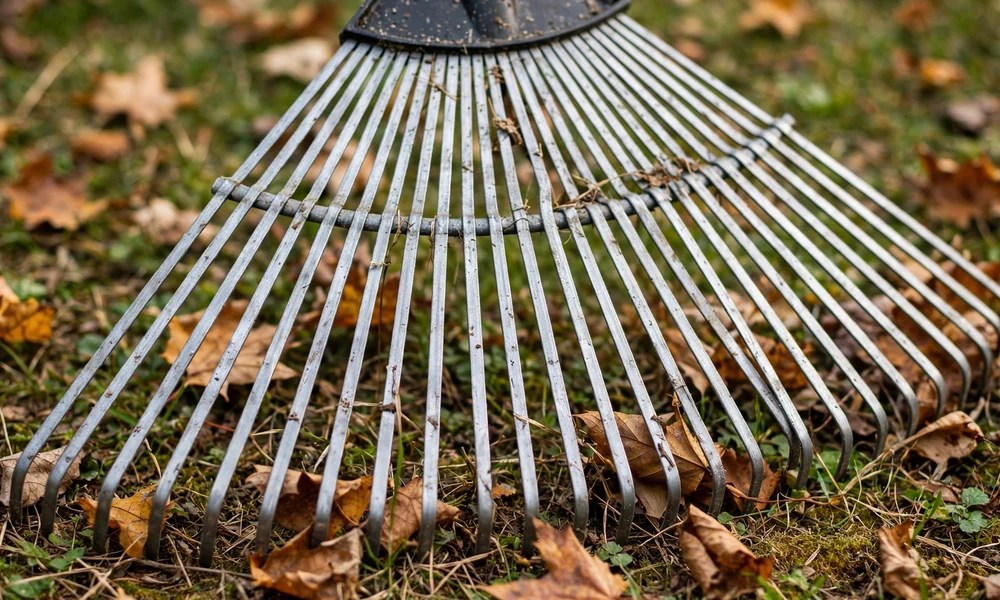
The fan shape matters as much as the width. A good rake spreads its tines in a broad, even fan, so leaves funnel towards the middle and stay there. Long tines also help: they reach into the grass and lift settled leaves, while short tines only skim the surface.
The Main Types of Leaf Rake
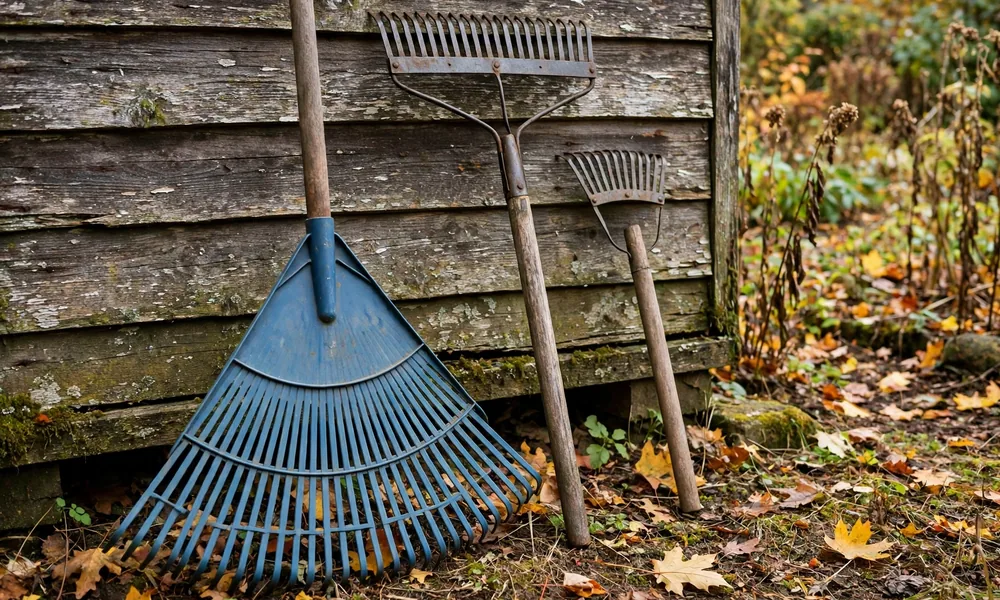
Most leaf rakes fall into six groups, and the right one depends on your garden and the surfaces you clear.
Wide fan rakes
The wide fan rake is the household standard and the best overall choice. Its head is usually sixty to seventy-five centimetres across, with twenty or more flexible tines. It clears an open lawn faster than anything else in the shed, though a wide head is hard to turn on a narrow path.
Extra-wide fan rakes
Extra-wide rakes stretch the fan to eighty centimetres or more, and they suit large gardens where the lawn is the main job. They move leaves in big waves and can clear a large lawn in half the time. The catch is weight: a very wide head catches the wind and feels heavy on wet leaves.
Steel tine rakes
A steel tine rake uses spring steel tines instead of plastic or nylon, and it is the best choice for wet leaves and rough ground. Steel tines flex without snapping, bite through a damp mat of leaves, and last for years. They are heavier than nylon and can scratch soft paving if you press too hard.
Medium fan rakes
A medium fan rake, with a head around fifty centimetres across, is the best choice for paths, patios, and smaller lawns. It is light, easy to turn, and neat along edges, where a wide rake would scatter leaves onto the beds. It takes more passes on a big lawn, but on a patio it is faster than a wide rake.
Shrub rakes
A shrub rake is a small, narrow rake with a short handle, made for working between plants in beds and borders. Its head is only fifteen to twenty-five centimetres wide, so it slips between shrubs without tearing leaves or snapping stems. It is not a lawn tool: clearing a whole lawn with one would take all day.
Adjustable fan rakes
An adjustable fan rake lets you slide the head wider or narrower, usually with a collar or a lever on the handle. Wide for the lawn, narrow for the path: one rake does both jobs. The mechanism is the weak point, so check it carefully. A good one locks firmly at every width; a cheap one creeps narrower as you work.
Tine Materials Compared
Spring steel tines are the strongest and most durable. They flex and spring back, bite through wet leaves, and survive being caught on a root or a stone. Their weakness is weight and rust: the tines need drying after use or they will spot with rust.
Nylon tines are light, quiet, and gentle on paving and decking. The best ones use thick, well-spaced tines that hold their shape for years. Cheap nylon is the problem: thin tines bend permanently after a few uses, and once they bend, the rake gathers leaves unevenly. If you buy nylon, buy the thickest tines you can find.
Plastic tines are the cheapest, and it shows. They snap on twigs, bend on wet leaves, and go brittle in cold weather. A plastic rake that looks like a bargain in October is often in the bin by December.
Handle Length and Grip
A leaf rake handle should let you work standing upright, with your back straight. For most adults, that means a handle around one hundred and fifty centimetres long, but taller users need longer. A handle that is too short is the fastest way to an aching back.
Wooden handles are the classic choice: warm in cold weather, strong, and easy to replace. Fibreglass handles are lighter and will not rot, but they can feel slippery when wet. The head fixing matters most: a good rake has a solid socket, with the head riveted or bolted on and no wobble when you twist it.
Wet Leaves, Dry Leaves, and the Right Technique
Dry leaves are the easy job: a light, wide rake and long, smooth strokes will clear a lawn quickly. Wet leaves are different. They stick to the grass, mat together, and weigh far more than they look. For wet leaves, use a steel tine rake, take shorter strokes, and clear little and often rather than waiting for a thick, sodden mat to build up.
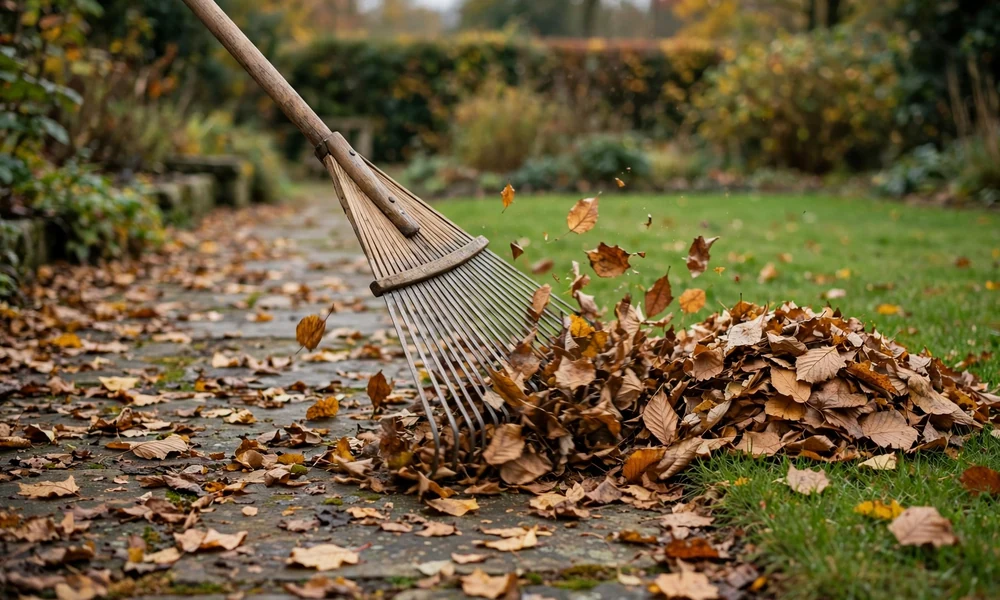
Technique matters as much as the tool. Rake with the wind, so the leaves drift towards the pile. Pull in long, steady strokes and overlap each stroke by a third, so no strip is missed. Keep the pile on a tarp, so you can drag it to the compost heap in one go. Do not rake a frozen or waterlogged lawn: wait for a dry spell.
Lawns, Paths, and Beds
An open lawn is where a leaf rake earns its keep, and a wide fan rake is the right tool there. A path or patio needs a different approach: use a medium rake, work along the edges first, and gather the leaves into a pile. A stiff broom can finish the job on paving, but a rake is faster for the main clearing.
Beds and borders need the gentlest touch. A thin layer of leaves left in a flower bed acts as a mulch and protects the soil, so many gardeners leave the leaves under shrubs on purpose. Where you do clear them, use a shrub rake and lift the leaves out slowly, rather than dragging them across the plants.
Leaf Rakes, Blowers, and Vacuums: Which Is Fastest
A leaf rake is the quietest and cheapest way to clear leaves, and for a small or medium garden it is often the fastest too, because there is nothing to charge, nothing to fuel, and nothing to start. A powered tool only wins on a very large garden, or where the leaves are so thick that raking would take all afternoon.
The powered alternatives each have their place. Our guide to the best vs worst leaf blowers of 2026 shows how a good blower moves leaves in broad waves, but also how a weak one scatters dry leaves and dies after fifteen minutes. Our guide to the best leaf vacuums of 2026 covers machines that suck leaves up and shred them, which is ideal if you compost. Our guide to garden tools that last more than a season puts the rake in context with the rest of the shed.
Care and Storage
A leaf rake lasts for years if you look after it. After each use, knock the leaves and soil off the tines and hang the rake head-down in a dry shed. Never leave a rake lying flat with the tines down: the tines will bend, the head will warp, and the rake will never gather evenly again.
Steel tines need a wipe with an oily cloth at the end of the season, to stop rust forming over winter. Wooden handles benefit from a rub with linseed oil once a year. Check the head fixing each autumn before the leaves fall, and retire the rake if the socket has cracked.
Leaf Rake Checklist: Before You Buy
- Choose a head width that suits your garden: wide for open lawns, medium for paths, narrow for beds.
- Test the tines by pressing the head against a hard floor: they should flex and spring back, not bend.
- Check the handle length by holding the rake as you would in the garden: you should stand upright.
- Twist the head firmly: a good rake has no wobble at all between head and handle.
- Pick the tine material for your leaves: steel for wet leaves and rough ground, nylon for patios and decking.
- Make sure the grip is comfortable in wet hands, with a slight swell at the end to stop it slipping.
Frequently Asked Questions
What is the best leaf rake for a large lawn?
A wide or extra-wide fan rake with spring steel or strong nylon tines is best for a large lawn. The wide head covers more ground with each sweep, and the strong tines gather wet and dry leaves without bending.
Are steel tines better than plastic tines?
Steel tines are stronger, last longer, and bite through wet leaves that plastic tines slide over. Plastic tines are lighter and cheaper, but they snap on twigs and go brittle in cold weather.
How wide should a leaf rake be?
A head sixty to seventy-five centimetres wide suits most gardens and most lawns. Go wider, to eighty centimetres or more, only if your garden is large and open, and narrower, around fifty centimetres, if it is mostly paths and small beds.
Can I use a leaf rake on a patio or deck?
Yes, but choose nylon tines rather than steel, and use a medium head. Nylon is gentle on paving and decking, while steel tines can scratch soft surfaces.
How do I clear wet leaves faster?
Clear little and often, before the leaves form a thick, sodden mat. Use a steel tine rake, take shorter strokes, and let the leaves dry for a day after rain if you can.
When should I replace my leaf rake?
Replace it the moment the tines start to snap, the head wobbles, or the handle cracks. A rake with missing tines gathers leaves unevenly and leaves stripes, and a wobbling head scatters as much as it collects.
The Bottom Line
The best leaf rake for clearing leaves fast in 2026 is a wide fan rake with strong, flexible tines and a handle long enough to let you stand upright. Match the head to your garden, choose steel for wet leaves and nylon for patios.


