
A kids sock is a small thing that does a big job. It sits between a growing foot and a shoe for hours every day, through school, play, sport and the walk home, and when it is wrong a child notices it at once. A seam rubs, a heel slips, a cuff slides down into a shoe, and suddenly a perfectly good morning turns into a complaint that will not stop. The best kids socks of 2026 are the ones that disappear: soft, well fitted, hard wearing and comfortable enough that a child forgets they are wearing them at all.
That is a higher bar than it sounds. Children grow quickly, their feet change shape from one term to the next, and they are far less willing than adults to put up with discomfort. A sock that fitted in September can be too tight by Christmas, and a pair that survived the washing machine in January can be thin at the heel by March. Parents end up buying socks more often than almost any other item of clothing, which is why it pays to choose well rather than simply buying the cheapest multipack on the shelf.
What Makes a Kids Sock Different
An adult sock is made for a foot that has stopped growing. A kids sock is made for a foot that has not. The heel pocket is smaller and shallower, the leg is shorter in proportion to the foot, and the elastic has to hold without squeezing, because a cuff that is too tight leaves marks and a cuff that is too loose slides down. The best kids socks are knitted on a smaller last, with a narrower heel and a leg shaped for a child’s calf rather than simply a scaled-down adult shape.
How to Choose: The Three Things That Matter Most
Start with fit, because nothing else matters if the sock does not fit. Measure your child’s foot, or trace it on paper and measure the tracing, and check it against the maker’s size chart rather than guessing from age. Sock sizes are usually given as a shoe size range, and children often sit between two sizes. When that happens, choose the smaller size for a neat everyday sock and the larger size for a thick winter or sports sock, which needs more room.
Next, look at the fabric. Cotton is the everyday favourite: soft, breathable and easy to wash, and it suits most children for school and play. A little stretch, usually from elastane, helps the sock keep its shape and stay up, so look for a blend rather than pure cotton, which can sag and lose its fit. Wool blends are warmer and handle moisture well, which makes them a good choice for cold weather and outdoor days, while synthetic blends dry quickly and suit sport, though they can feel less soft against the skin.
Then check the height. Ankle socks sit low and suit trainers and warm weather, but they can slip down inside the shoe if the elastic is weak. Crew socks rise to mid-calf, stay up better, and suit school shoes, boots and cooler days, which is why they are the most useful height for most children. Knee-high socks suit school uniforms and cold mornings, but they need good elastic at the top or they will slowly slide down through the day.
The Best Kids Socks by Age
For children aged four to six, simplicity wins. The sock should be easy to pull on without help, with a wide opening, a soft cuff and no fiddly details. Bright colours and patterns help here, because a child who likes their socks is a child who will put them on without a morning argument. Choose a crew height that stays up, a flat toe seam, and a fabric that is mostly cotton with a little stretch, and buy the same style in several colours so there is always a pair ready.
If your child is heading out on the trails rather than to the classroom, the demands change again, and our guide to the best hiking socks for kids covers cushioned, moisture-wicking pairs built for walking and climbing. A hiking sock is thicker, taller and more heavily cushioned than an everyday sock, and it is worth having a few pairs for outdoor days even if the school drawer is full of ordinary crew socks.
Everyday, School and Sport: Getting the Mix Right
Everyday socks are the workhorses of the drawer. They should be soft, comfortable, easy to wash and cheap enough to replace, because they will be worn, washed and worn again more than any other pair. A plain crew sock in a dark colour hides playground dirt, a white crew sock suits a sports kit, and a bright pair makes a grey morning a little easier. Keep at least seven everyday pairs, so there is always a clean pair even when the laundry is behind.

Sports socks are a different tool altogether. They need to manage sweat, cushion impact and stay in place, which is why a synthetic or wool-blend sports sock often beats a plain cotton pair for training and matches. Look for a cushioned sole, a snug arch band that stops the sock twisting, and a heel grip that keeps it from sliding into the shoe. A child who plays sport several times a week needs at least three sports pairs, so there is always a dry pair ready.
Fabrics: Why Cotton Blends Work Best
Cotton is the default for a reason. It is soft, it breathes, it washes well, and most children find it comfortable all day. Pure cotton has one weakness: it absorbs moisture and holds on to it, so a cotton sock can feel damp after a long active day, and it can lose its shape after many washes. A cotton blend with a little elastane, and sometimes a little nylon for strength, keeps the comfort of cotton while holding its fit far better, and it is the safest choice for most children most of the time.
Fit and Sizing: How to Get It Right
A sock that is too big bunches up inside the shoe, and a bunched sock causes blisters faster than almost anything else. A sock that is too small pulls tight across the toes, squeezes the foot and wears through at the heel, because the fabric is stretched thin. The right fit is a sock that lies smooth over the foot, with the heel pocket sitting on the heel, the toe seam sitting flat across the toes, and no loose fabric anywhere.
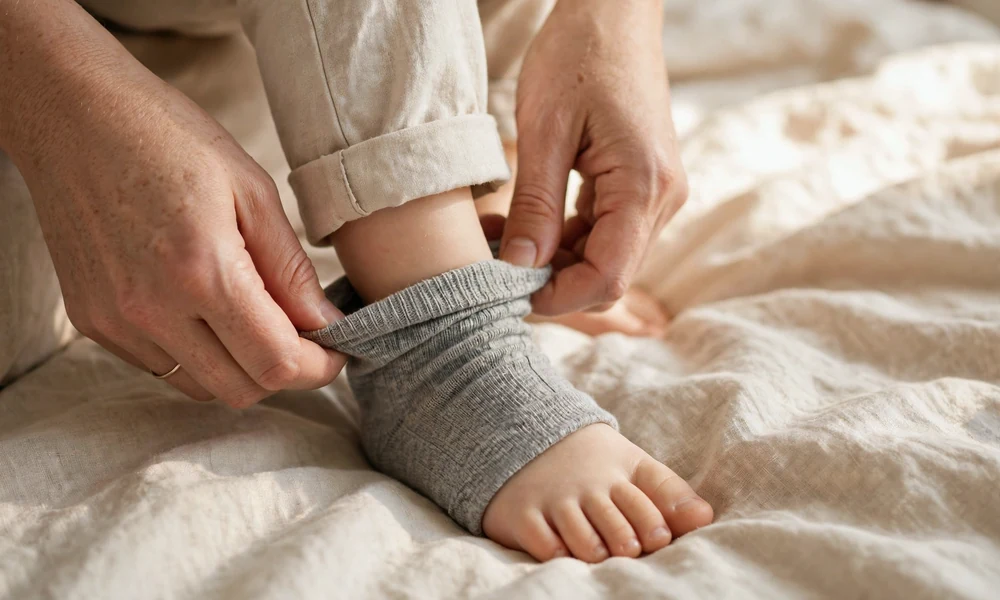
Check the fit the way you would check a shoe. Put the sock on, then run a finger along the toe seam: it should sit straight across the toes, not twisted to one side. Look at the heel: the reinforced heel patch should sit on the heel, not halfway up the ankle. Ask the child to walk a few steps and then check the cuff: it should stay where it was, not slide down. If the child keeps pulling at the sock, believe them, because a child who fiddles with a sock is telling you it does not fit.
Comfort Details That Make the Difference
The toe seam is the detail that causes the most complaints. A raised seam across the toes rubs with every step, and for some children it is unbearable. A flat seam, sometimes called a hand-linked or seamless toe, lies smooth and is barely noticeable, and it is the single most useful feature to look for if your child hates socks. If you are not sure, turn the sock inside out and run your finger along the seam: if you can feel a ridge, your child will feel it too.
Washing and Care: Making Socks Last
Socks last longer when they are washed well, and the rules are simple. Wash them inside out, so the inside of the sock, where the wear happens, gets the most cleaning, and use a normal warm wash rather than a very hot one, which can shrink wool and wear out elastic. A laundry bag keeps small socks together and stops them disappearing into the machine, which is a real problem in a family wash.
What to Avoid When Buying Kids Socks
Avoid socks with a thick raised seam across the toes. It is the most common reason children hate socks, and it is easy to miss when you are buying a multipack online, because the seam is rarely mentioned in the description. If you cannot check the seam in person, buy one pair first and test it before buying a whole pack, because a pack of socks your child refuses to wear is money wasted.
Matching Socks to Shoes
Socks and shoes work as a pair, and the wrong combination causes trouble. A thick sock in a snug shoe makes the shoe feel tight and can cause blisters, while a thin sock in a roomy shoe lets the foot slide around. When you buy new shoes, take the socks your child will wear with them, because a shoe that fits with a thin ankle sock may not fit with a thick crew sock, and it is the combination that matters.
If your child is due new trainers as well as new socks, it is worth choosing the two together, and our guide to the best kids sneakers of 2026 looks at comfortable, hard-wearing trainers for school and play. A trainer that fits well with the right sock is a combination a child can wear all day without thinking about their feet, which is exactly what you want.
Setting Up the Sock Drawer
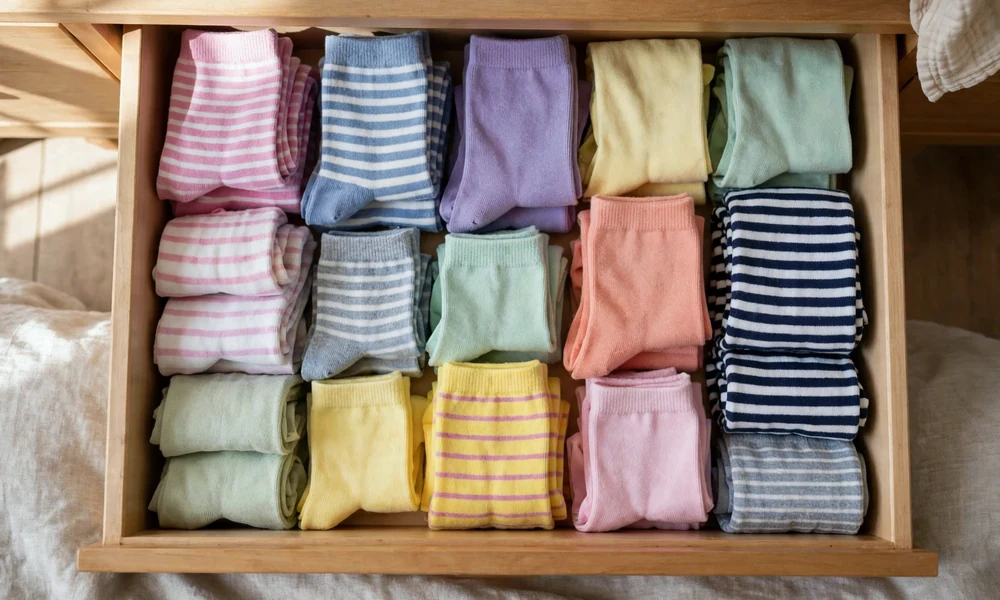
Set up the drawer once, and school mornings get easier. Sort socks by use rather than by colour: everyday pairs in one section, school pairs in another, sports pairs together, and smart pairs kept aside. A small drawer divider, or even a few boxes inside a larger drawer, stops the pairs getting mixed up and means a child can find what they need without emptying the whole drawer on the floor.
Frequently Asked Questions
How many pairs of socks does a child need? At least ten pairs, and twelve is more comfortable. That covers a fresh pair every day, a few in the wash, a spare in the school bag and a couple of sports pairs, without needing to do laundry every day. Children who play sport several times a week, or who get their socks wet often, will need a few more.
What about younger children? Toddlers and babies need different socks, with softer cuffs, grippy soles and smaller sizes, and our guide to the best toddler socks of 2026 covers that age group in detail. The socks in this guide are aimed at children aged about four to twelve, who are walking, running and playing in shoes every day.
The best kids socks are the ones your child forgets they are wearing. Choose a soft fabric, a flat toe seam, a fit that lies smooth on the foot and a heel and toe that can survive the playground, and the socks will do their job quietly, day after day. Get the fit and the fabric right, keep a few spares in the drawer, and the smallest item in the wardrobe will stop being the biggest complaint of the morning.


