Terrariums That Bring the Outdoors In in 2026
Terrariums are small glass gardens that bring the outdoors into the room in a way no ordinary houseplant can. Inside a sealed or open glass vessel, ferns unfurl, moss stays soft and green, and a miniature landscape grows on a shelf, a desk or a windowsill. The best terrariums of 2026 are not ornaments that fade after a month: they are living displays that thrive with very little care, because the glass holds in the humidity ferns and mosses love.
This guide explains what a terrarium actually is, which type suits your home, and how to build and care for one that lasts. We judged them the way you would live with one: how easy it is to plant, how often it needs watering, and whether it still looks good after six months.
Key Takeaways
- A terrarium is a sealed or open glass garden, not a pot: the glass creates its own humid microclimate, which is why ferns and mosses thrive in it.
- Closed terrariums suit humidity-loving plants and need watering only a few times a year; open terrariums suit succulents and cacti.
- Match the plants to the vessel: ferns, mosses and fittonia love closed glass, while succulents need open glass and dry air.
- Drainage layers matter more than soil: pebbles, charcoal and moss stop water pooling at the roots.
- Place a terrarium in bright, indirect light, never in direct sun, where the glass can overheat in minutes.
What a Terrarium Actually Is
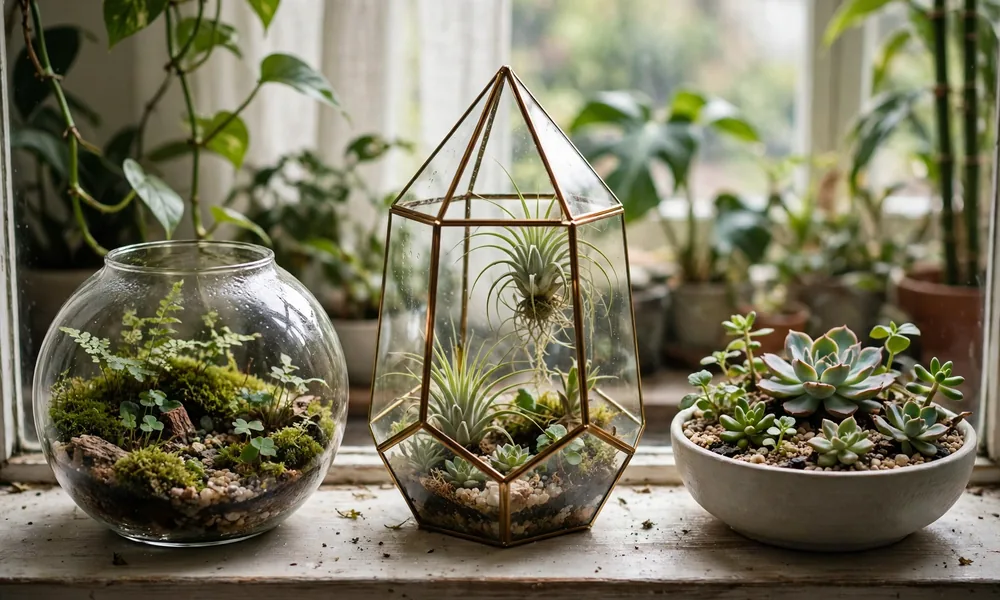
A terrarium is a garden grown inside a glass container. The container can be a jar, a globe, a geometric vessel or a large glass case, and the plants inside are chosen to suit the conditions the glass creates. In a closed terrarium, moisture evaporates from the soil, condenses on the glass, and drips back down, so the plants water themselves for weeks at a time. In an open terrarium, the glass shelters the plants from draughts while letting excess moisture escape, which suits plants that like dry air.
It is not the same as a plant pot, where the plant lives in the room’s air, and it is not a greenhouse, a structure for growing vegetables outdoors. A terrarium is a complete miniature landscape, usually with layers of pebbles, charcoal, soil and moss, and often small stones or a piece of wood to give it shape. You are not just keeping a plant alive; you are building a small world and watching it grow.
A terrarium also needs very little space. A collection of pots soon fills a windowsill, while a terrarium holds several plants in one vessel and sits happily on a desk, a shelf or a side table. For a small flat or a desk at work, it is often the most practical way to keep plants at all.
The Main Types of Terrarium
Most terrariums fall into four groups, and the right one depends on the plants you want to grow and the light your home offers. Choosing the wrong type is the most common reason a terrarium fails, so get this decision right before you buy.
Closed terrariums
A closed terrarium has a lid or a narrow opening, creating a warm, humid world inside the glass. Ferns, mosses, fittonia and small tropical plants love it, because the humidity stays high and the soil rarely dries out. It needs watering only a few times a year, sometimes not at all once it settles, because water cycles inside the glass. Its weakness is balance: too much water and the glass fogs permanently, mould appears and plants rot; too little light and the plants stretch. Keep it in bright, indirect light, opening the lid if condensation never clears.
Open terrariums
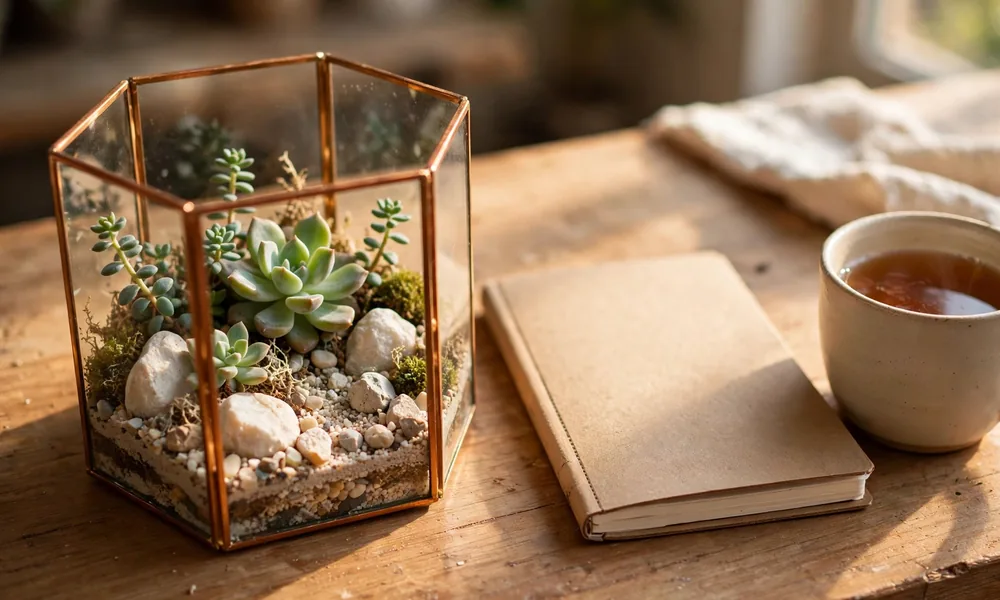
An open terrarium has a wide opening, and the air inside stays close to the air in the room. Succulents, cacti and air plants suit it, because they need dry air and good airflow. It is easier to plant and to fix, because you can reach in and rearrange the plants. Its weakness is that it dries out faster, so it needs watering more often. If you love succulents and have a sunny sill, an open terrarium is the natural choice.
Globe and hanging terrariums
Globe terrariums are round glass vessels, sometimes hung from a hook or a stand. A hanging globe with a single air plant draws the eye and uses no surface space, but it is hard to plant through a small opening, hard to water without spilling, and hard to clean when algae grows inside.
Large display terrariums
Large terrariums, often the size of a small aquarium, are the most ambitious option. A big glass case can hold a real landscape — ferns of different heights, a carpet of moss, stones, wood and even a tiny path — and the larger volume makes conditions more stable and forgiving. Their weakness is weight, cost and space: a large terrarium is heavy, needs a strong table, and is not something you move often.
How to Build a Terrarium That Lasts
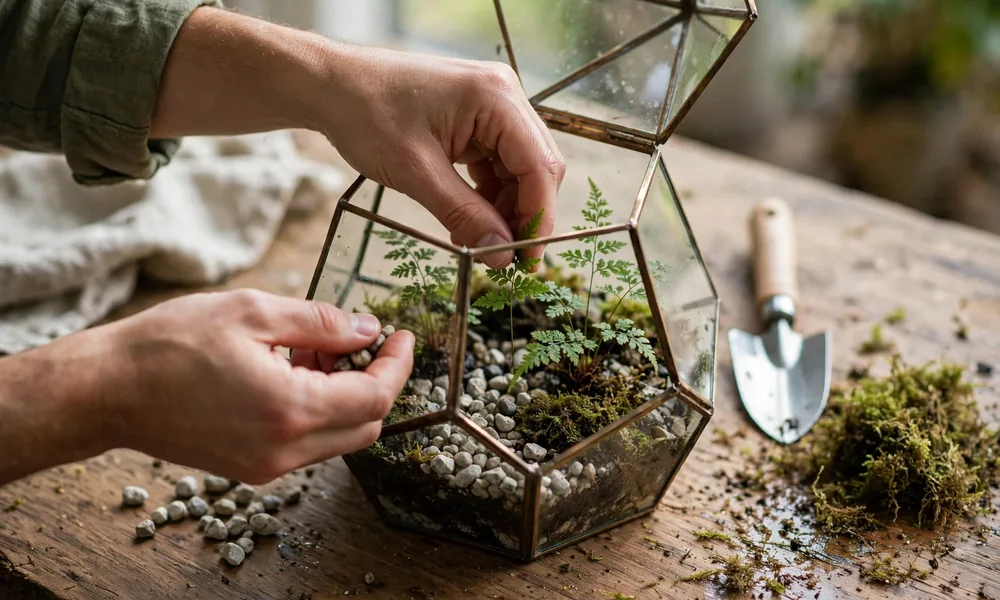
Building a terrarium is simple, but the order of the layers matters, and skipping one is the most common reason a new terrarium fails. Start with a clean, dry vessel and a layer of small pebbles at the bottom, about two to three centimetres deep, giving excess water somewhere to go instead of sitting around the roots. On top, add a thin layer of activated charcoal, which keeps the soil fresh and stops smells developing in a closed vessel.
Next comes sphagnum moss, which stops soil washing into the pebbles, then the soil itself: a light, free-draining mix, five to eight centimetres deep, because deep soil stays wet and rots roots. Plant the tallest at the back, the smallest at the front, and leave space between them, because terrarium plants grow towards the light and fill gaps fast. Finish with moss, a few stones or a piece of wood, and a light misting.
Watering is where most people go wrong, and the rule is simple: less is more. A newly planted closed terrarium needs only a light misting, then the lid goes on and you watch. If the glass fogs in the morning and clears by the afternoon, the moisture is right; if it never clears, open the lid for a few hours, and if no condensation appears after a week, add a spoonful of water. An open terrarium needs watering when the soil feels dry, usually every week or two. Always water sparingly, because it is easy to add more water and almost impossible to take it out.
Terrariums Compared
| Type | Best plants | Watering | Light | Price in 2026 |
|---|---|---|---|---|
| Closed | Ferns, moss, fittonia | A few times a year | Bright, indirect | Low to mid |
| Open | Succulents, cacti, air plants | Every one to two weeks | Bright, some sun | Low to mid |
| Globe or hanging | Air plants, single fern | Mist weekly | Bright, indirect | Low |
| Large display | Mixed ferns and moss landscape | Monthly, light misting | Bright, indirect | Mid to high |
Where to Put a Terrarium
Light decides where a terrarium belongs, and the rule is bright but indirect. One on a north-facing windowsill or a few feet back from a sunny window is usually happy, because it gets plenty of light without the glass heating up. In direct sun, the glass acts like a lens, the temperature inside climbs fast, and delicate ferns can scorch in a single afternoon. If your only sunny spot is a south-facing sill, move it back from the glass or shade it with a sheer curtain, and keep it away from radiators and draughts, because most terrarium plants like the same temperatures people do, roughly fifteen to twenty-five degrees.
A terrarium is a display, and it deserves a place at eye level, where you can see the layers, the moss and the new growth. A plant stand can lift it into view, and a grow light on a timer can keep it growing through the darkest winter days.
Caring for Your Terrarium
Day-to-day care is light. A closed terrarium mostly looks after itself, and the main job is watching: check the condensation each morning, open the lid if the glass stays fogged, and trim any plant pressing against the glass, because leaves touching wet glass will rot. Remove dead leaves as soon as you see them, because they are the first place mould starts, and if mould appears, open the lid, let it dry for a day, and remove the affected moss.
An open terrarium needs a little more attention: water when the soil is dry, rotate the vessel every week or two so plants grow evenly, and wipe the outside of the glass. Succulents will tell you when they are unhappy — soft, pale leaves usually mean too much water, shrivelled leaves too little — so adjust in small steps and give the plant a week to respond.
Every few months, check the drainage layer through the glass: if water is sitting in the pebbles, it has been overwatered and needs to dry out with the lid off. Trim or replace any plant that has outgrown its space before it crowds its neighbours, and prune twice a year to keep it looking like a landscape instead of a jungle.
Terrarium Checklist
- Drainage layer of pebbles, then charcoal, then moss, then soil.
- Plants matched to the vessel: ferns and moss for closed, succulents for open.
- Bright, indirect light, never direct sun on the glass.
- Water sparingly and watch the condensation before adding more.
- Stable temperature away from radiators, draughts and vents.
- Trim and remove dead leaves promptly to keep mould away.
Frequently Asked Questions
How often should I water a closed terrarium?
Most closed terrariums need water only a few times a year, and some need none at all once they settle. Fog that clears by afternoon means the moisture is right; glass that never clears means it is too wet and needs the lid off for a few hours.
Why is my terrarium fogging up all the time?
Constant fog usually means too much water or too little light. Open the lid for a few hours to let excess moisture escape, and move the terrarium to a brighter spot out of direct sun. Fog that clears and returns only in the morning is normal and healthy.
Can I put succulents in a closed terrarium?
No. Succulents and cacti need dry air and good airflow, so they rot quickly in a closed terrarium. They belong in an open terrarium with a wide opening, free-draining soil and bright light, where excess moisture can escape.
What plants are easiest for a first terrarium?
For a closed terrarium, start with a small fern, a cushion of moss and a fittonia. For an open terrarium, start with two or three small succulents of different shapes. Buy small plants, because terrarium plants grow fast in humid glass.
Do terrariums need direct sunlight?
No, and direct sun can harm them: the glass magnifies the heat, and delicate plants can scorch in minutes. Bright, indirect light is ideal, and a grow light on a timer is safer than moving the terrarium into the sun in a dark home.
How long does a terrarium last?
A well-built terrarium can last for years, and some closed terrariums have thrived for a decade with almost no care. The plants will need trimming and occasional replacing, but the vessel and layers can keep going indefinitely if the moisture stays in balance.
The Bottom Line
The best terrarium is the one that matches your home and your habits: a closed terrarium with ferns and moss suits a busy person who wants a living display with almost no watering, while an open terrarium with succulents suits a sunny sill and a hands-on plant keeper. Build the layers properly, keep it out of direct sun, water sparingly, and your small glass garden will bring the outdoors in for years.