
Best Grow Lights 2026
A good grow light is the difference between a windowsill of leggy, pale seedlings and a shelf of plants that actually thrive. In a flat with a north-facing window or in the middle of a dark winter, it stands in for the sun, and the best ones do it so well that your tomatoes, herbs and houseplants never notice the difference. A bad one does the opposite: it burns leaves, hums loudly, washes the whole room in an eerie purple glow, and leaves seedlings stretching toward a light that was never strong enough.
We spent weeks growing under the grow lights of 2026 to find the ones worth buying, starting seeds and raising herbs through the darkest weeks of the year. We measured brightness, checked how evenly the light spread, and watched which plants stayed compact and green and which ones stretched and sulked. This guide covers the best grow lights of 2026: LED bars, full-spectrum panels, clip-on bulbs, and the small lights that keep a kitchen herb garden going.
Key Takeaways
- A full-spectrum LED is the safest buy for most growers, because it covers seedlings, leafy greens and flowering plants in one light instead of needing a separate bulb for each stage.
- Wattage matters less than coverage, because a bright light that only covers a small patch leaves the plants at the edges stretching toward the centre.
- Hanging height is a setting, not an afterthought, so a light on adjustable cords beats a fixed one as your plants grow taller.
- A built-in timer pays for itself in the first month, because plants need a consistent day length and most people forget to switch lights off on time.
- Buy the light for the space you actually have, not the garden you dream of, because a panel sized for a grow tent is wasted above a single shelf of basil.
How We Judged
We judged every grow light the way it will be used, in a real home, on ordinary days. The first test was plant response: we started the same seeds under each light and watched them for three weeks. A good light kept seedlings short, sturdy and deep green, with tight spacing between leaves. A poor one produced tall, pale, floppy stems that leaned hard toward the bulb, the classic sign of a plant starving for light.
The second test was coverage and evenness. We held a light meter at the centre and at the corners of each light’s claimed footprint and noted how much the brightness dropped off at the edges. We also checked heat after four hours running, because a light that runs hot can scorch leaves and warm a small room more than you want. The third test was everyday living: noise from any fan, the colour of the light in a living room, how easy the light was to hang, and whether the timer and dimmer were simple enough to use without the manual.
The Four Types of Grow Light
Almost every grow light you can buy in 2026 is one of four types, and the right choice depends on what you grow and where. LED bars are long, slim fixtures that sit above a shelf or a row of trays. They spread light evenly across a rectangle, run cool, and suit seedlings, leafy greens and houseplants better than anything else. Most of the best lights for beginners are bars, because they are simple to hang and hard to get wrong.
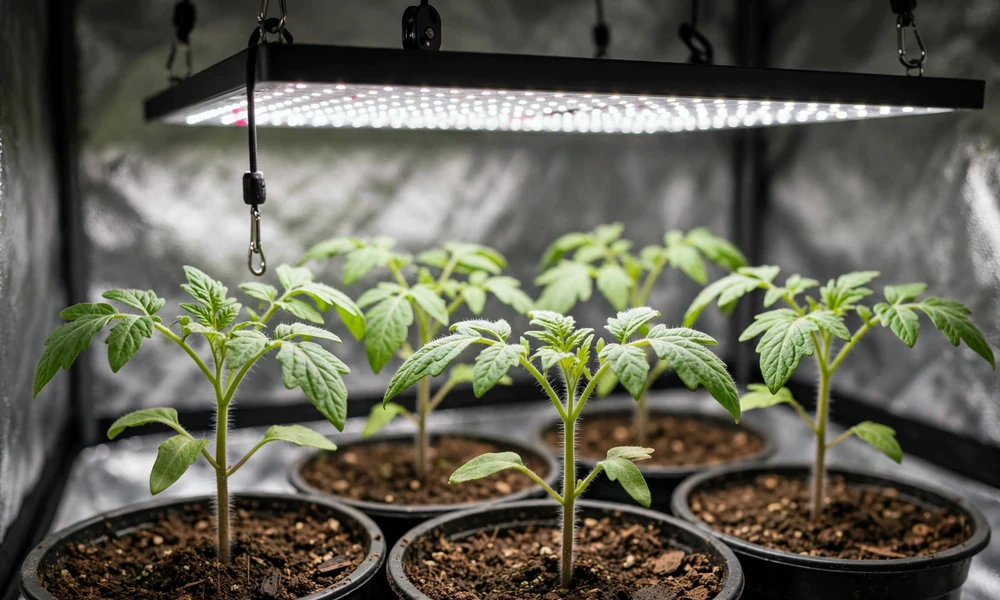
Full-spectrum panels are flat squares or rectangles packed with diodes, hung by cords inside a grow tent or above a larger bed. They are the strongest option, and the right choice if you want to grow tomatoes, chillies or flowers indoors to fruit. They cost more and need more headroom, but nothing else matches their output per square foot.
Clip-on bulbs and gooseneck lights are the smallest type: a single bulb on a flexible arm that clamps to a shelf or a pot. They are perfect for one or two plants, a windowsill herb, or a houseplant that needs a boost in winter. They cannot light a whole shelf, and that is fine, because they were never meant to.
Best Overall: A Full-Spectrum LED Bar
Our best overall pick is a full-spectrum LED bar, and the reason is simple: it does everything well. The white light looks natural in a living room instead of tinting the walls pink or purple. The bar shape spreads light evenly across a standard shelf, so the plants at the ends get almost as much light as the ones in the middle. Seedlings stayed compact and sturdy under it, and basil grew bushy rather than leggy.
What sealed it was the everyday detail. The bar runs cool enough to sit a few inches above young leaves without scorching them, the dimmer lets you turn it down for seedlings and up for fruiting plants, and the built-in timer runs a steady sixteen-hour day without any fiddling. It hangs from cords that adjust in seconds as the plants grow.
Best for Serious Growing: A Full-Spectrum Panel
If you grow to harvest, a panel is the upgrade that changes everything. Our best panel pick is a full-spectrum board with a dimmer and a footprint that covers a two-by-two-foot bed at full strength. Tomatoes fruited indoors under it, and chillies ripened weeks earlier than the same varieties on a sunny windowsill.
A panel is not for everyone. It needs headroom, because it should hang at least a foot above the canopy, and it is overkill for a shelf of houseplants. But if you have the space and you want real harvests, a panel pays for itself in a single season of homegrown produce. Pair it with a proper structure and our guide to the best greenhouse kits will help you plan the space around it.
Best for Small Spaces: A Clip-On Grow Bulb
Not everyone has a shelf to spare, and that is where a clip-on bulb earns its place. Our best small-space pick is a full-spectrum bulb on a gooseneck arm with a strong clamp and a simple timer built into the cord. Clamped to a windowsill, it keeps a pot of basil alive through winter.
The trick with a clip-on is placement. The bulb needs to sit six to twelve inches from the plant, aimed straight down at the leaves, and the plant needs to be turned every few days so it grows evenly instead of leaning toward the bulb. Used that way, one small bulb does a surprising amount of work, and it is the cheapest way to find out whether indoor growing suits you before you spend more on a bar or a panel. If your herbs live in a kit rather than a pot, our guide to the best herb gardens for the kitchen shows which kits have the best built-in lighting, and when a separate clip-on is the better buy.

Wattage, Spectrum and Coverage: What the Numbers Mean
Grow light packaging is full of numbers, and most of them are less useful than they look. Wattage tells you how much electricity the light uses, not how much light reaches your plants. A modern LED can put out far more useful light per watt than an old blurple panel, so a 40-watt bar can easily outperform a 100-watt light from five years ago. Ignore the “equivalent to” claims on the box and look for the coverage area instead.
Spectrum is the mix of colours in the light. Full-spectrum white light, around 4000K to 6500K, suits almost everything and looks pleasant in a home. Blurple lights, the old pink-purple panels, do grow plants, but they make it impossible to judge leaf colour, which is how you spot problems early, and they tint a whole room an odd colour.
The number that matters most is PPFD, how much usable light actually lands on the leaves. It falls fast with distance, which is why adjustable hanging height matters so much, and why a light that is too far away is almost as useless as no light at all.
Setting Up: Height, Hours and Timing
Getting a grow light right is mostly about three settings, and none of them is difficult. Height comes first. Seedlings want the light close, six to twelve inches above the leaves for a bar, a little further for a powerful panel. As plants grow, raise the light to keep the same gap. If leaves look bleached or curl at the edges, the light is too close; if stems stretch and lean, it is too far away.
Hours come second. Most vegetables and herbs want fourteen to sixteen hours of light a day, and houseplants are happy with twelve. A timer keeps this steady, because plants respond to a consistent rhythm. Set it once and forget it.
Finally, think about where the light lives. A shelf of seedlings in a spare room is easy, but a light in a living room needs to look decent and stay quiet. Keep cords tidy and give the setup a drip tray or a waterproof mat, because watering under a light is how accidents happen. If your growing ambitions extend beyond a shelf, the plants you raise under lights will eventually want real soil and real space, and our guide to why raised garden beds grow better vegetables is a good next step when you are ready to move seedlings outside.

Mistakes That Kill Indoor Plants
The most common mistake is hanging the light too far away. A bar mounted on the ceiling above a shelf looks tidy, but the plants below it get a fraction of the light they need and stretch toward it until they flop over. Keep the light close, and raise it as the plants grow, rather than fixing it high and hoping for the best.
The second mistake is leaving the light on around the clock. Plants need darkness just as they need light. Sixteen hours on and eight off is a good default for most edible plants, and twelve on and twelve off suits most houseplants. More light is not always better.
Quick Checklist Before You Buy
Before you spend anything, measure your space. A light wider than its shelf wastes light over the edges, and a powerful light needs room above the plants, so a low shelf suits a slim bar far better than a panel.
Then check the practical details: a timer and a dimmer are worth paying for, a detachable power supply keeps heat out of a small tent, and a light with a standard plug and a long cord is easier to place than one that needs an extension lead. Finally, be honest about what you will grow. Herbs and houseplants need a small light; tomatoes and chillies need a strong one. Buy for the plants you have, not the harvest you imagine, and upgrade later if your ambitions grow.
The best grow lights of 2026 are better, cooler and easier to live with than anything that came before them. A simple LED bar will carry most growers through seedlings, herbs and houseplants, a panel will turn a spare corner into a real vegetable patch, and a clip-on bulb will keep a single pot of basil alive through the darkest weeks of winter. Pick the light that fits your space, hang it close, and let your plants do the rest.


