Why Raised Garden Beds Grow Better Vegetables in 2026
Raised garden beds grow better vegetables than flat ground for a simple reason: they give you control over the soil, the drainage and the warmth, the three things that decide whether a vegetable thrives or struggles. A raised garden bed is a box of good soil sitting above the ground, and that small change solves the most common problems in a home vegetable garden, from heavy clay and waterlogged roots to aching backs. This guide explains why raised beds work, how to build and fill one, and what to plant in it.
Key Takeaways
- Raised garden beds warm up faster in spring, drain better after rain, and let you grow in perfect soil even where the ground is clay, sand or rubble.
- A bed about one hundred and twenty centimetres wide and thirty to forty-five centimetres deep suits most vegetables and lets you reach the middle from either side.
- Fill the bed in layers with topsoil, compost and organic matter, and never fill it with plain garden soil.
- Grow what your household eats most, plant in succession, and rotate crops each year to keep the soil healthy.
- Water deeply and less often, mulch the surface, and check the bed often, because a raised bed dries out faster than flat ground in hot weather.
What a Raised Bed Actually Does
A raised garden bed is a frame, usually wood or metal, filled with soil and standing above the surrounding ground. The frame can be four planks screwed together or a metal kit, but the principle is the same: the growing area is lifted out of the native ground and given its own soil.
Most garden soil is a compromise: heavy clay that holds water until roots rot, light sand that dries out by midday, or thin topsoil over builders rubble. A raised bed lets you ignore all of that and start with soil designed for vegetables.
The lift matters too. Soil in a raised bed warms up earlier in spring, because the sun reaches the sides as well as the top, and that extra warmth can bring sowing forward by two or three weeks.
Why Vegetables Grow Better in Raised Beds
The first advantage is drainage. Vegetable roots need both water and air, and flat ground after heavy rain can stay saturated for days. A raised bed drains from the bottom and the sides, so excess water leaves quickly, and root vegetables like carrots grow straight and clean instead of forking in wet clay.
The second advantage is soil structure. Because you never walk on a raised bed, the soil never gets compacted, so it stays loose and crumbly and roots spread easily. Loose soil also means easier weeding.
The third advantage is control. You decide the soil, the depth and the feeding, and you can garden where flat ground is impossible: on a concrete yard, a rooftop, or a slope that would wash away every time it rained.

Choosing the Right Size and Material
Size is the first decision, and the width matters more than the length. A bed one hundred and twenty centimetres wide lets an adult reach the centre from either side without stepping in. Narrower beds suit children, while a bed against a wall should be no wider than sixty centimetres, because you can only reach it from one side.
Depth depends on what you grow. Thirty centimetres is enough for salads, herbs and radishes, while forty-five suits most vegetables, including beans and courgettes. Root vegetables want at least forty-five centimetres of loose, stone-free soil, and a bed on concrete needs ten centimetres more, because there is no soil below.
Length can be whatever fits your garden, but beds longer than three metres are hard to walk around, so build two shorter beds with a path between them, at least sixty centimetres wide for a wheelbarrow.
Wooden Beds
Wood is the classic material: cheap, easy to work with, and warm-looking. Cedar and larch resist rot naturally and can last a decade, while cheaper softwood lasts three to five years. Never use old railway sleepers or treated timber of unknown origin for vegetables.
Metal Beds
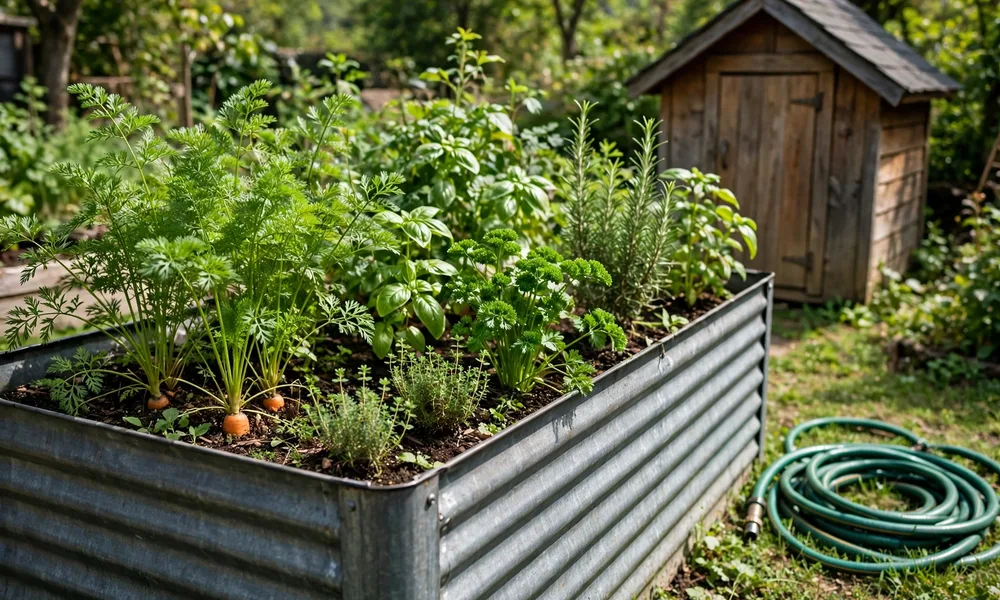
Metal beds, usually galvanised steel, last longer than wood and suit a modern garden, and they bolt together in minutes. They warm up even faster in spring, but they can get hot in a heatwave, so mulch the surface and water more often.
Stone, Brick and Other Materials
Stone and brick beds are permanent and handsome, but they cost more and need real building skill. Recycled plastic never rots but can look plain. Whatever material you choose, the bed must be level, sturdy and open at the bottom.
Comparing Raised Bed Materials
| Material | Lifespan | Cost | Best for | Watch out for |
|---|---|---|---|---|
| Cedar or larch wood | 8–12 years | Medium | Traditional gardens, easy DIY | Needs lining to slow rot |
| Softwood | 3–5 years | Low | First bed, tight budgets | Rots quickly when untreated |
| Galvanised metal | 15+ years | Medium–high | Modern gardens, long life | Heats up in summer sun |
| Brick or stone | Decades | High | Permanent gardens | Needs building skill, costly |
| Recycled plastic | 15+ years | Medium | Low maintenance | Plain looks, can flex |
How to Fill a Raised Bed Properly
Filling is where most raised beds succeed or fail, and the biggest mistake is filling the bed with ordinary garden soil, which compacts, drains badly, and brings weed seeds with it. Instead, fill in layers: cardboard over the ground to smother weeds, then coarse material such as small branches or straw, which breaks down slowly and keeps the bed draining.
Next comes the bulk of the fill, a mix of about sixty percent good topsoil and forty percent well-rotted compost, which holds moisture and feeds the plants. Finish with five centimetres of fine compost on top. Fill the bed to the top and water it well, because the mix will settle by five to ten centimetres, then top it up before planting and again every spring.
What to Plant in a Raised Bed
Raised beds suit almost every vegetable, but they shine with the crops that struggle in ordinary ground. Root vegetables grow straighter, salads grow cleaner, and tender crops like courgettes enjoy the extra warmth. Plant what your household eats, and sow in succession, a row of lettuce every three weeks rather than a whole bed at once, so the harvest stretches across the season.
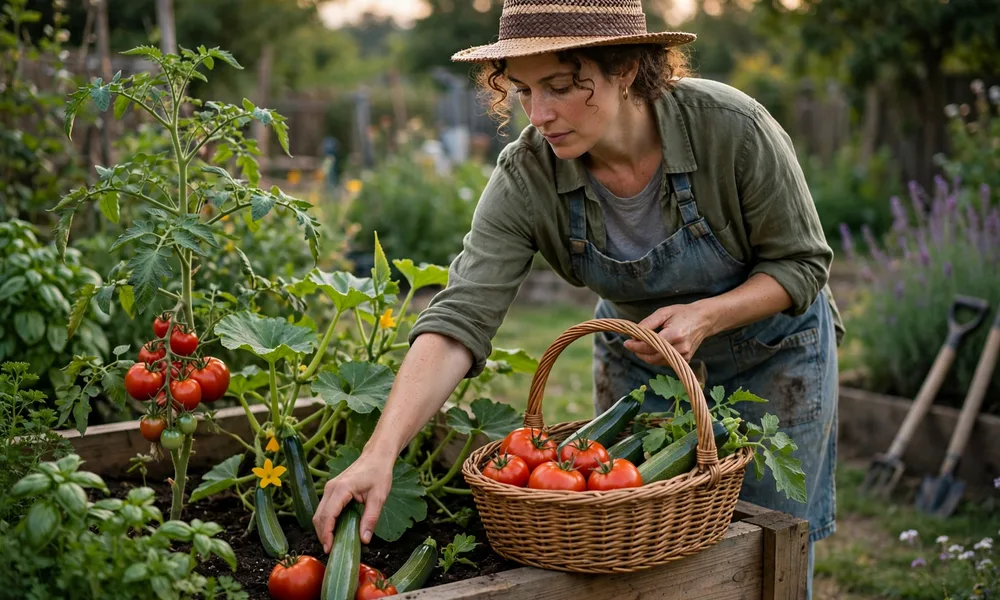
Use the space well. Plant tall crops like tomatoes and climbing beans on the north side, so they do not shade the shorter crops, and tuck herbs and flowers around the edges. Marigolds attract pollinators and distract pests. A herb garden beside the bed means the cook never walks far for basil, parsley or chives.
Rotate your crops each year. Never grow the same family of vegetables in the same bed two years running, because pests and diseases build up in the soil. A simple four-year rotation keeps the soil healthy, so keep a notebook of what went where.
Watering and Feeding
A raised bed dries out faster than flat ground, because water drains from the sides as well as the bottom. In hot weather, check the soil daily; if it feels dry, water deeply and less often, because deep watering encourages roots to grow down into the bed.
A watering can with a rose is ideal for seedlings, giving a gentle rain that does not wash seeds away, while a hose suits a large bed in midsummer. Water in the morning or evening, and water the soil, not the leaves, because wet leaves invite disease. A five-centimetre layer of mulch cuts evaporation dramatically.
Feed the bed as well as watering it. Add compost every spring, feed heavy crops like tomatoes with a liquid feed every two weeks once they fruit, and grow beans and peas in rotation, because they fix nitrogen from the air.
Keeping Pests and Weeds Under Control
Raised beds are easier to protect than flat ground. Hoops and netting keep pigeons off brassicas, and copper tape around the base slows slugs. A daily glance while watering catches aphids or mildew before they spread.
Weeds are less of a problem in a raised bed, because the soil starts clean and the bed is small enough to weed in minutes. Pull weeds while they are small, and never let them set seed.
Work with the right protection. A pair of good garden gloves keeps hands safe from splinters and blisters during the heavy work of filling and planting.
Common Mistakes to Avoid
The most common mistake is building the bed too wide. A bed you cannot reach across without stepping in gets compacted, and a compacted raised bed is worse than flat ground. Keep the width to one hundred and twenty centimetres or less, and build two beds instead of one wide one.
The second mistake is filling the bed with poor soil and expecting good vegetables. Soil is the whole investment in a raised bed, so spend the money on good topsoil and compost, and the bed will pay it back in harvests for years.
The third mistake is forgetting to water. A raised bed needs more frequent watering, especially in its first summer, so mulch, check daily in hot weather, and water deeply. The fourth mistake is planting too much, too close together: crowded plants compete for light and air, and the harvest is smaller, not larger. Follow the spacing on the seed packet and thin seedlings ruthlessly.
Before You Build Checklist
- Pick a sunny spot with at least six hours of direct sun and a water supply nearby.
- Keep the bed no wider than one hundred and twenty centimetres so you can reach the middle from either side.
- Choose a safe material: untreated cedar or larch, galvanised metal, or brick, never unknown treated timber.
- Fill in layers with topsoil and well-rotted compost, and top up the level after it settles.
- Plan a simple crop rotation and a succession of sowings so the bed produces all season.
- Set up watering and mulch from day one, because a raised bed dries faster than flat ground.
Frequently Asked Questions
How deep should a raised garden bed be?
Thirty centimetres suits salads and herbs, forty-five suits most vegetables, and root vegetables need at least forty-five centimetres of loose soil. Add ten centimetres on concrete.
Do raised beds need a bottom?
No, and a bottom usually causes more harm than good by blocking drainage. Leave the bottom open so water drains and worms can move in, and lay cardboard underneath first to smother weeds and grass.
What is the best soil mix for a raised bed?
A mix of about sixty percent good topsoil and forty percent well-rotted compost works for most vegetables, finished with five centimetres of fine compost on top. Never fill a bed with plain garden soil, which compacts and drains badly.
How often should I water a raised bed?
Check the soil daily in hot weather and water deeply whenever the top five centimetres feel dry. Mulch cuts watering needs sharply, and morning watering is best.
Can I put a raised bed on concrete or a patio?
Yes. Build the bed deeper, at least forty-five centimetres, line the base with cardboard and coarse material for drainage, and water more often, because there is no ground moisture below. Patio beds are ideal for salads and herbs.
Do raised beds really grow more vegetables?
Yes, in most gardens. The warmer, looser, better-drained soil usually gives earlier harvests and heavier yields, as long as the bed is watered and fed properly.
The Bottom Line
Raised garden beds grow better vegetables because they give you the soil, drainage and warmth that flat ground so often denies. Build the bed no wider than you can reach across, fill it with good topsoil and compost, mulch it, water it deeply, and rotate your crops. Do that, and a simple wooden or metal box will out-produce the same patch of open ground year after year.