
Best Wheelbarrows 2026
A good wheelbarrow is the hardest-working tool in the garden, and the one most people buy without thinking. It carries soil, compost, prunings, paving sand, and autumn leaves, trip after trip. A bad one tips on the first slope, wobbles with every load, and leaves you with sore arms.
That is the difference this guide is built around. We tested wheelbarrows the way gardeners use them: loaded with wet soil and dry leaves, pushed up slopes and over lawns, tipped, emptied, and left outside through a wet winter. These are the best wheelbarrows of 2026, chosen for balance, strength, and a tray that holds a useful load without fighting you.
Key Takeaways
- Balance matters more than size, because a well-balanced barrow carries a heavy load easily and a badly balanced one fights you empty.
- A single pneumatic wheel turns tightest and handles slopes best, while two wheels are steadier for heavy loads on flat ground.
- Steel trays take knocks and carry bricks, while plastic trays resist rust and are lighter to lift and tip.
- Match the tray to your jobs, since an 85-litre barrow suits a small garden but not a building project.
- Keep the tyre pumped and the tray clean, because a soft tyre and rust kill a good barrow faster than hard use.
Wheelbarrows 2026 at a Glance
| Best for | Tray size | Wheel setup | Standout strength |
|---|---|---|---|
| Best overall | 85 litres | Single pneumatic | Balance and all-round strength |
| Best for heavy loads | 120 litres | Two wheels | Stability under bricks and rubble |
| Best budget | 65 litres | Single pneumatic | Light, cheap, and easy to tip |
| Best for small gardens | 55 litres | Single pneumatic | Narrow enough for tight paths |
| Best for builders | 110 litres | Single pneumatic | Thick steel and a deep tray |
| Best plastic tray | 90 litres | Single pneumatic | Rust-proof and easy to clean |
How We Picked the Best Wheelbarrows
We judged every barrow on balance first. A barrow that tips or wobbles was out, however strong its tray, because balance is the whole job when you are carrying a heavy load across uneven ground. We loaded each one with wet soil, dry leaves, and bricks, and pushed it up a slope and across a lawn.
Strength came next, because a wheelbarrow is a carrying tool and a weak tray or frame will bend under the first heavy load. We looked for thick steel or tough plastic, solid handles, and a wheel that runs true. Our picks were matched to the gardens people actually work in, and to the rest of the kit — a barrow full of prunings is only useful if the cuttings are dealt with properly, as our guide to the best compost bins of 2026 explains.
1. Best Overall: The Steel Barrow That Does Everything Well
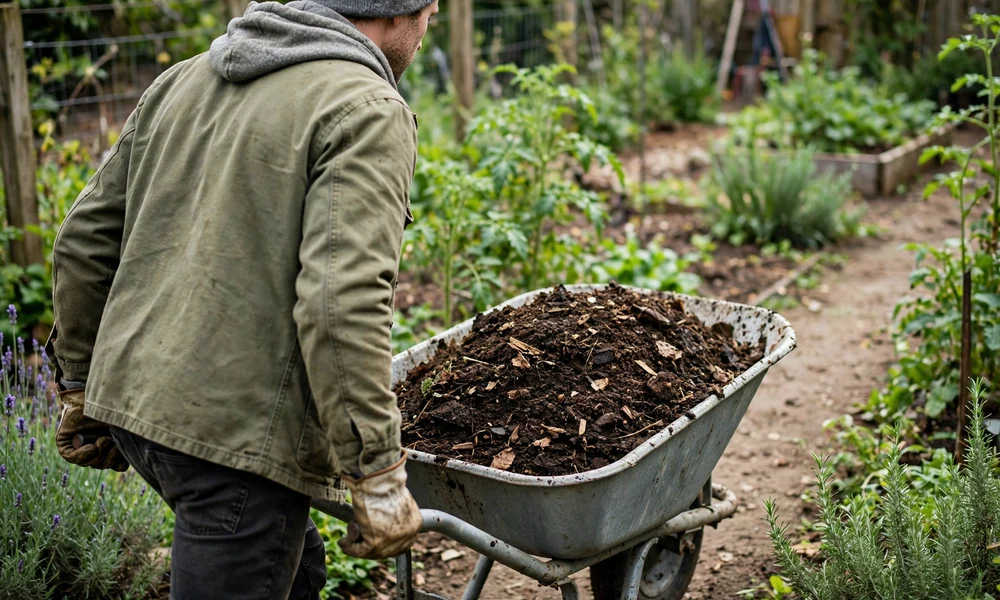
The best overall wheelbarrow is a single-wheel steel barrow with an 85-litre tray, a pneumatic tyre, and tubular steel handles with comfortable grips. It carries a full load without feeling heavy, and it turns in a tight space between the beds. It is the barrow to buy if you only want one.
What sets it apart is balance. The tray sits low over the wheel, so the load feels centred rather than tipped forward, and the handles sit naturally in the hands. The steel tray takes knocks from bricks and spades without denting badly, and the pneumatic tyre rolls over lawns and rough ground without jarring your wrists.
2. Best for Heavy Loads: The Two-Wheel Barrow That Stays Upright
Two-wheel barrows are the steady option for heavy loads. With a wheel on each side, the barrow stands on its own when you let go of the handles, which makes loading it far easier: you can shovel soil in without holding the barrow steady at the same time.
The best two-wheel barrow we tested has a 120-litre steel tray, a sturdy frame, and two pneumatic tyres that spread the weight across the ground. It is less nimble than a single-wheel barrow and needs a wider path to turn, so it suits larger gardens and building work rather than tight beds. But for sheer carrying capacity and stability, nothing else comes close. On flat ground it feels almost effortless.
3. Best Budget: Light, Simple, and Honest Value
A good budget wheelbarrow does not pretend to be a builder’s tool. It is a straightforward single-wheel barrow with a 65-litre tray, a pneumatic tyre, and a price that makes it easy to buy without thinking twice. The best budget option we tested carried a full load without flexing and tipped cleanly.
The tray is thinner steel than the premium picks, so it will dent if you drop bricks into it, and the handles are simpler, without the padded grips of the best overall barrow. But for ordinary garden work — moving soil, carrying prunings, clearing leaves — it is more than enough. Keep the tyre pumped and do not overload it, and it will serve a small garden for years.
4. Best for Small Gardens: Narrow, Light, and Easy to Store
Small gardens need a small barrow. A full-size barrow is too wide for a narrow side path, too heavy to lift over a step, and too big to store in a shed that already holds a mower and a stack of pots. A 55-litre single-wheel barrow solves all three problems: it fits through a standard garden gate, it is light enough to carry when empty, and it tucks into a corner of the shed.
The best small barrow we found is narrow without being tippy, because the tray is deep rather than wide, so the load sits low and centred. It carries enough soil for a vegetable bed, and it is the easiest barrow here to tip and empty. It will not move paving slabs, but for a courtyard or a small town garden it is the right size. The same thinking applies to the beds it serves — our guide to the best raised garden beds of 2026 covers the beds that make a small space grow far more than it should.

5. Best for Builders: Thick Steel Built for Rubble
Building work asks more of a wheelbarrow than gardening does. The loads are heavier, the ground is rougher, and the tray gets hit with bricks, rubble, and wet concrete. A builder’s barrow needs a thick steel tray, a reinforced frame, and a wheel that can take a pounding.
The best builder’s barrow we tested has a 110-litre deep steel tray, a heavy-gauge frame, and a wide pneumatic tyre that rolls over rubble and mud without sinking. It will not bend under a load of bricks. The handles are long, which gives real leverage when tipping a full tray of concrete, and the tray is deep enough that wet loads do not slop over the sides. It costs more than a garden barrow, and that is the point: this is a tool bought for hard work, and it is built to take it.
6. Best Plastic Tray: Rust-Proof and Easy to Clean
Plastic trays have a bad reputation among gardeners who remember the brittle barrows of twenty years ago, but the best modern ones are a different tool. A tough moulded plastic tray will not rust, it is lighter than steel, and it cleans with a hose in seconds. Wet concrete and manure slide out of it rather than sticking.
The best plastic-tray barrow we found has a 90-litre tray, a single pneumatic wheel, and a steel frame that gives it the rigidity the tray alone cannot. It carries soil, compost, and leaves happily, and it is the easiest barrow in this guide to keep clean. It is not the choice for bricks or sharp rubble, which can gouge the tray, but for garden work it is the lowest-maintenance option. Keep it out of strong sun and it will last as long as a steel barrow.
Single Wheel, Two Wheels, or a Cart: Which Type Do You Need?
Most gardeners need a single-wheel barrow first, and that is where almost every buyer should start. A single wheel turns tightly, handles slopes well, and fits through narrow gaps, which is what most garden work is. Buy a two-wheel barrow second, for heavy loads on flat ground, or if you struggle to balance a loaded barrow.
The mistake is buying the wrong type for the ground and then blaming the tool. A single-wheel barrow will tip on a steep slope with a heavy load, and a two-wheel barrow will not turn on a narrow path. Match the barrow to your garden, keep the tyre firm, and the tool will do the rest. The same thinking applies to the rest of the kit — our guide to the best pruning shears of 2026 covers the cutting tools that fill a barrow fastest in spring and autumn.
Getting the Size Right
Tray size is the most overlooked part of buying a wheelbarrow. A tray that is too small means twice as many trips, and a tray that is too big means a load you cannot lift or steer. The test is simple: fill the barrow with the heaviest thing you move regularly, lift the handles, and walk ten steps. If you can steer it comfortably and stop without it pulling you forward, the size is right.
For most gardens, 85 litres is the sweet spot: big enough for a useful load of soil or leaves, small enough to handle when full. Go larger only if you regularly move heavy loads across flat ground, and go smaller if your paths are narrow or your strength is limited.
Keeping Your Wheelbarrow Working
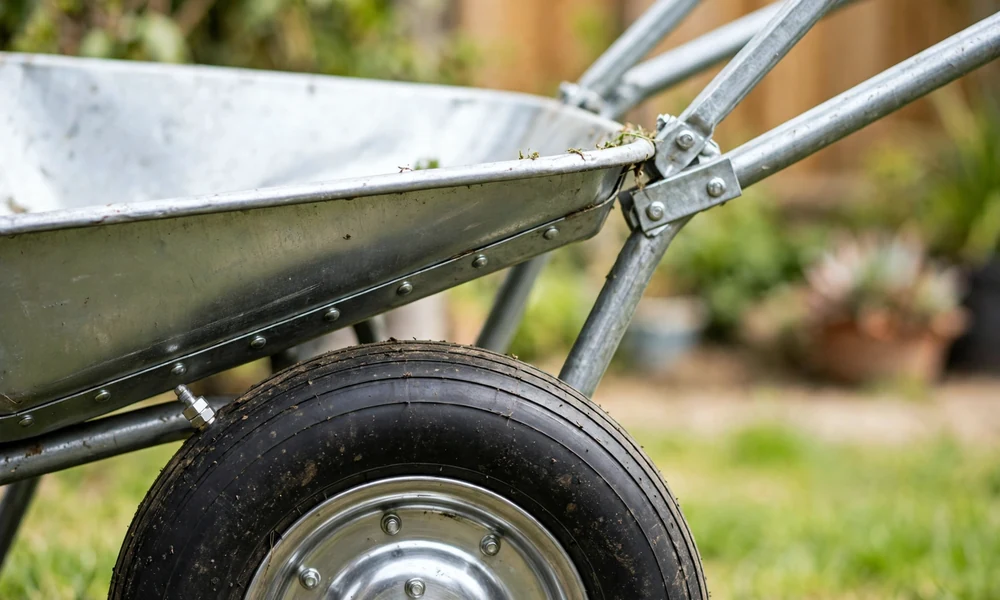
A wheelbarrow is a simple tool, and simple care keeps it working for a decade. Keep the tyre pumped, since a soft tyre makes every load feel twice as heavy. Oil the axle now and then, and tighten the tray nuts, which loosen with vibration.
Cleaning matters as much as pumping. Soil and manure hold moisture against the steel, so hose the tray out after wet work and let it dry before putting it away. A wipe of oil on bare steel scratches keeps rust from starting.
Mistakes That Ruin Good Wheelbarrows
The most common mistake is overloading the barrow past the tray rim. A heaped load shifts as you walk, tips the barrow sideways, and strains the handles and the axle. The second is leaving a barrow full of wet soil or concrete overnight, which sets hard and rusts the tray.
The third mistake is ignoring a slow puncture. A tyre that goes soft over a week has a thorn or a nail in it, and pushing on flat wrecks the wheel and axle.
Frequently Asked Questions
What size wheelbarrow should I buy? For most gardens, an 85-litre barrow is the right size. It carries a useful load of soil, compost, or leaves, and it is small enough to handle when full. Go larger for heavy loads on flat ground, and smaller for narrow paths.
Are two-wheel wheelbarrows better than single-wheel ones? Two wheels are steadier and stand on their own when loaded, which makes them better for heavy loads on flat ground. Single wheels turn tighter and handle slopes better, so most gardeners should start with one.
The Verdict
The best wheelbarrows of 2026 balance well, carry a useful load, and stand up to hard work. Start with a good single-wheel steel barrow, add a two-wheel one for heavy loads, and consider a plastic tray if you want the lowest maintenance. Buy the size that fits your garden, keep the tyre pumped, and never load past the rim.


