A good compost bin is the difference between a kitchen habit that sticks and one that quietly dies in a cupboard. The best bins hold scraps without smelling, empty without a mess, and turn what would have been rubbish into dark, crumbly compost that a garden actually wants. The worst ones leak, attract fruit flies, and make the whole idea feel like a chore.
Key Takeaways
- Odour control matters most, because a bin that smells is a bin that gets abandoned, however clever its design.
- Buy the bin for the space you have, not the garden you imagine, since a tumbler is useless if you have nowhere to turn it.
- Balance green and brown material roughly by feel, because too much wet kitchen waste makes compost slimy and sour.
- Empty a kitchen caddy every two or three days, because small and frequent beats large and forgotten.
- Budget for liners or a spare charcoal filter, since the first year of composting always costs a little more than the price on the box.
How We Judged
We judged each bin on five things that matter more than any specification sheet. First, smell: whether a bin full of peelings and coffee grounds stays inoffensive for several days with its lid shut. Second, ease of emptying: whether scraps slide out cleanly or need scraping and shaking. Third, pest resistance: whether fruit flies, mice, and larger visitors can get in. Fourth, build quality: whether lids, hinges, and handles survive daily use and a year outdoors. Fifth, size honesty: whether the stated capacity matches what a real household actually fills.
We also weighed daily life. A bin that is awkward to carry, hard to clean, or too big for the cupboard under the sink is a poor fit for a small flat, however well it composts. Our guide to raised garden beds that grow better vegetables in 2026 is the natural next step once your compost is ready, because finished compost is what turns an ordinary bed into a productive one.
Best Overall: The Stainless Steel Kitchen Bin
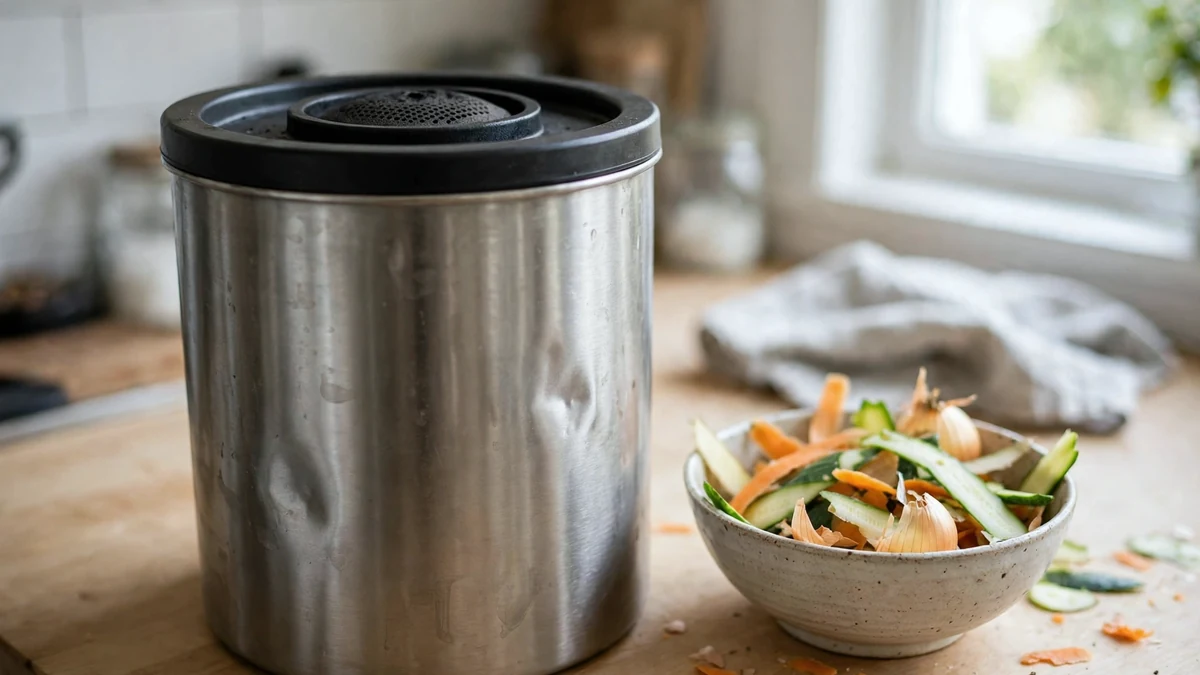
The best overall compost bin is a stainless steel kitchen bin with a tight-fitting lid and a replaceable charcoal filter. It holds around five litres, enough for two or three days of peelings for a family, and it sits on the worktop without looking like a piece of waste equipment. The steel body does not absorb smells the way plastic can, and it wipes clean with a damp cloth.
What sets this design apart is the filter. A charcoal filter in the lid traps the gases that make a bin smell, and a fresh filter lasts several months before it needs replacing. The lid matters just as much: it should close with a firm seal and open with one hand, because you will be opening it while holding a chopping board full of peelings. A lid that needs two hands, or one that flops open and stays open, is a small annoyance that grows into a reason to stop using the bin.
The steel bin is also the easiest to live with day to day. It takes compostable liners, so emptying it is a matter of lifting a bag and tying it off, with no scraping and no rinsing every time. Without liners it still works, but you will need to wash it out every week or two, and the inside will stain eventually.
Best Garden Tumbler: The Dual-Chamber Spinner
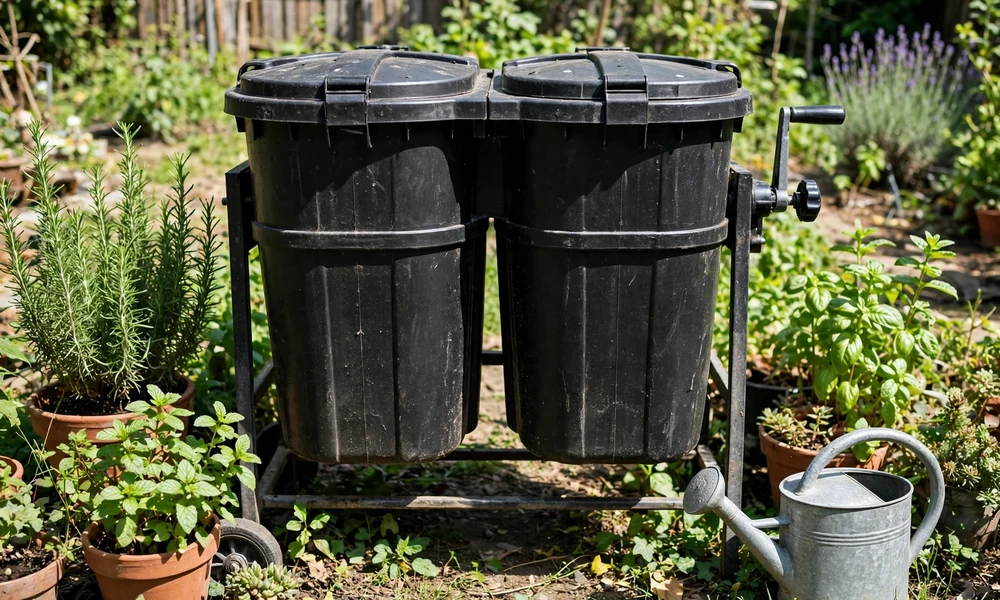
For the garden itself, the best pick is a dual-chamber tumbler on a steel frame. Two chambers mean you can keep adding fresh scraps to one side while the other side finishes undisturbed, which is the single biggest reason home compost succeeds or fails. A single-chamber bin forces a choice: stop adding, or keep adding and never finish a batch.
The tumbler works because turning it is easy. A crank handle or a simple spin of the drum mixes air through the pile, and air is what keeps compost sweet rather than sour. A static heap needs forking over by hand, which is hard work and easy to postpone; a tumbler takes ten seconds, and ten seconds is a job that actually gets done.
Build quality is where cheap tumblers fail. Look for a frame that does not flex when the drum is full, lids that latch properly, and a drum that turns smoothly when loaded. A tumbler that jams, or whose lid pops open in wind, will spill its contents across the lawn and end the experiment. The better models also have small air vents in the drum and a sliding door wide enough to scoop finished compost out without a struggle.
Best Countertop Caddy: The Small Ceramic Pot
Not every kitchen wants a steel bin on the worktop. The best small caddy is a ceramic pot with a wooden lid, holding about two litres, made for a single person or a couple who cook a few times a week. It looks like a kitchen container rather than a bin, which matters in a small kitchen where everything is on display.
The ceramic body has a practical advantage: it is heavy enough not to slide around when you scrape peelings into it, and it stays cool, which slows the smell a little. The wooden lid fits snugly and lifts off easily, and the whole pot can go in the dishwasher when it needs a proper clean. It takes small compostable liners, and because it is small, it forces the habit that makes composting work: emptying it often.

Best Budget Pick: The Simple Plastic Caddy
The cheapest good compost bin is a simple plastic caddy with a flip lid, holding about five litres, for the price of a takeaway coffee or two. It does not have a charcoal filter, it is not beautiful, and it will stain over time. It does, however, hold scraps, close properly, and empty cleanly, which is everything a compost bin fundamentally needs to do.
The budget caddy works best as a trial. If you are not sure composting will stick, spending very little to find out is sensible, and a plastic caddy will tell you within a month whether the habit fits your kitchen. Buy it with compostable liners from the start, because liners are what keep a cheap bin pleasant to use and easy to clean, and our roundup of trash bags that do not rip, leak or smell in 2026 covers the bags that make emptying it far less messy.
What the budget bin cannot do is control smell as well as a filtered bin, so it needs emptying more often, especially in summer. Keep it away from radiators and sunny windowsills, empty it every two days at most, and rinse it weekly. Treated that way, a cheap caddy can serve a household perfectly well for a year or more.
What to Look For Before You Buy
Capacity is the first decision, and it should follow your cooking, not your optimism. A household that cooks most meals at home fills a five-litre bin in two or three days; a household that eats out often may take a week. A bin that is too big lets scraps sit and smell; a bin that is too small needs emptying so often that it becomes a chore. Five litres suits most families, two to three litres suits one or two people, and anything larger belongs in the garden rather than the kitchen.
Odour control comes next. A charcoal filter is the most effective feature a kitchen bin can have, and it is worth paying for. A sealed lid helps, but a lid alone does not stop smells from building up inside; the filter does. Check that replacement filters are easy to buy for the model you choose, because a filter you cannot replace is a feature that stops working after a few months.
Ease of cleaning matters more than it seems. A bin with a smooth inside, no awkward corners, and a removable inner bucket will be washed far more often than one with a fiddly shape. Stainless steel and glazed ceramic wipe clean; rough plastic holds stains and smells. If the bin is dishwasher-safe, that is a genuine advantage, because it removes the one job nobody wants to do by hand.
What Not to Put In
A compost bin is not a second rubbish bin, and what goes in decides whether the result is rich compost or a smelly mess. Vegetable peelings, fruit skins, coffee grounds, tea leaves, eggshells, and shredded paper are all welcome. So are garden trimmings, leaves, and grass cuttings in moderation, mixed in with the kitchen waste.
Keep out meat, fish, dairy, and cooked food, which smell badly and attract rats. Keep out bread in large quantities for the same reason, and keep out anything glossy, coated, or plastic, including so-called compostable packaging unless your local system specifically accepts it. Fat and oil should stay out too: a little is harmless, but a lot coats everything and slows the whole pile down.
The rule of thumb is greens and browns. Greens are wet and nitrogen-rich: peelings, coffee grounds, fresh grass. Browns are dry and carbon-rich: shredded paper, dry leaves, cardboard. Mix roughly equal amounts by feel, and add a little water if the pile is dry. The comparison of the best and worst plant pots of 2026 is worth a look once your compost is ready, because finished compost is only as useful as the pots and beds you put it in.

Keeping a Bin Smell-Free
Smell is the fear that stops most people from composting, and it is almost entirely preventable. The first rule is to empty the kitchen bin often, every two or three days, before scraps have time to break down and smell. The second is to use liners, which keep the bin itself clean and dry. The third is to keep the filter fresh: a charcoal filter that has been in place for a year is doing nothing at all.
Common Mistakes
The most common mistake is buying too big. A large kitchen bin looks practical in the shop and then sits half-full for a week, growing flies and smells. Start small, empty often, and let the habit settle before you size up. The second mistake is the opposite: buying a tumbler for a garden that generates almost no material, and then wondering why it never heats up. A compost pile needs a critical mass to get going, roughly a full wheelbarrow of mixed material, and a half-empty tumbler will simply sit there.
The Verdict
The best compost bin for most households in 2026 is a stainless steel kitchen bin with a charcoal filter, paired with a dual-chamber tumbler if there is a garden to feed. The steel bin handles the daily work quietly and without smell, the tumbler turns those scraps into compost in weeks, and together they cover the whole journey from chopping board to garden bed.
Whichever bin you choose, the habit matters more than the hardware. Start small, empty it every few days, mix your greens and browns, and give it time. In a few months you will be scooping dark, sweet-smelling compost onto your garden beds, and the bin that made it possible will feel like the most ordinary, useful thing in the kitchen.