
A plant pot looks like the simplest thing you will ever buy for your home, and it is the purchase most likely to quietly kill a plant you loved. The pot is not a decoration that happens to hold soil. It is the whole world the roots live in, and it decides whether water drains away or sits and rots, whether the soil breathes or turns sour, and whether the plant stands upright through a windy afternoon or tips over and snaps a stem. A good pot disappears into the background and lets the plant do the talking. A bad pot fights the plant every single day, and the plant usually loses.
The gap between the best and the worst plant pots in 2026 is wider than the price tags suggest. Two pots can sit side by side on a shelf, the same size, the same colour, and almost the same price, yet one will still be holding a thriving plant in five years while the other has cracked in the frost, stained the windowsill, or drowned the roots of everything planted in it. This guide puts the two ends of the market side by side, across every type of pot, so you can tell them apart before you spend anything.
Key Takeaways
- The best plant pots drain freely, fit the plant with a little room to grow, and last for years; the worst trap water, dwarf or swamp the plant, and crack or fade within a season.
- Terracotta is the best plant pot overall in 2026, because its breathable clay walls stop overwatering, the most common way houseplants die.
- Glazed ceramic is the best plant pot for looks, turning a healthy plant into a feature of the room, as long as it has a real drainage hole.
- The worst plant pots are the sealed decorative pots with no drainage hole, the oversized pots that stay wet for weeks, and the paper-thin plastic pots that crack in the sun.
- Check the drainage hole, the weight, and the wall thickness before you buy, and repot a plant the moment its pot starts working against it.
How We Judged the Best and Worst Plant Pots
A plant pot earns its place at the good end of this guide by doing four things well: draining properly, fitting the plant, lasting through seasons of use, and looking good in a real room rather than only on a shelf. Drainage comes first, because it is the thing that kills most houseplants. Roots sitting in water rot, and a pot without a drainage hole is a plant slowly drowning, no matter how careful you are with the watering can.
The Best Plant Pots of 2026
Terracotta: The Best Plant Pots Overall
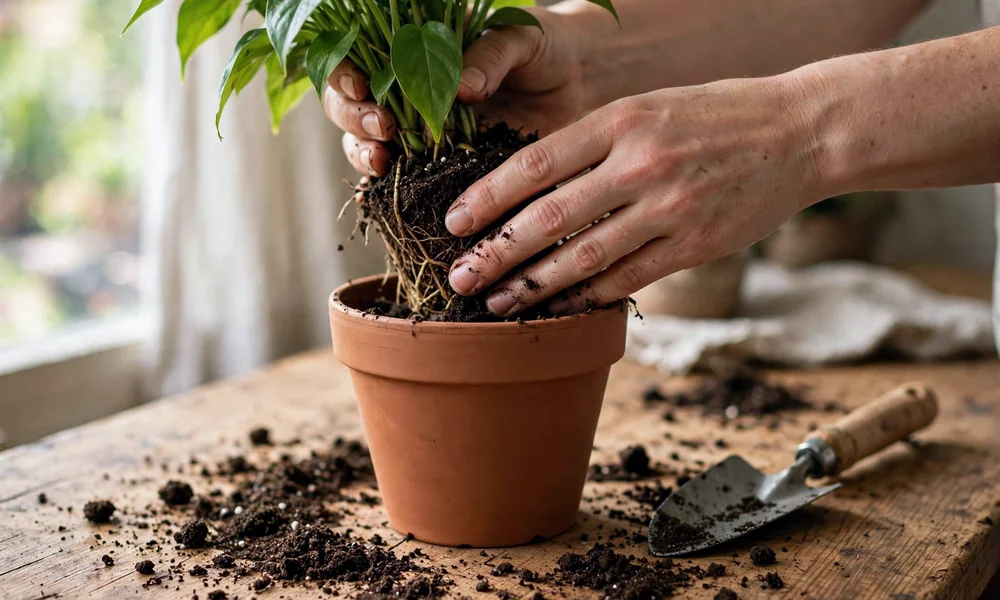
Terracotta is the classic clay pot, and it is the best plant pot overall because its porous walls do something no other material does: they breathe. Water evaporates through the clay, air reaches the roots, and the soil dries out evenly between waterings. That makes terracotta the most forgiving pot for anyone who tends to overwater, which is the most common way houseplants die.
Terracotta dries out fast in a sunny window, so check the soil with your finger, use a saucer underneath, and bring it in for hard frost. Our guide to plant pots that make your plants look better covers the same materials in more detail.
Glazed Ceramic: The Best Plant Pots for Looks
A glazed ceramic pot is the best plant pot for making a plant look its best, because the glaze gives you colour, shine, and finish in a way plain clay never will. A deep green ceramic pot makes a monstera look like a piece of furniture, a white glazed pot makes a trailing plant look clean and modern, and a handmade speckled pot can carry a whole corner of a room. If the plant is the star, the pot is the frame, and ceramic gives you the widest choice of frames. Good ceramic is heavy, which is a genuine advantage for tall or top-heavy plants, and it holds moisture longer than terracotta, which suits ferns, peace lilies, and anything that likes steady damp soil.
Self-Watering Pots: The Best Plant Pots for Busy People
A self-watering pot has a water reservoir at the bottom and a wick that lets the soil draw up moisture as it needs it, and it is the best plant pot for busy people and frequent travellers. Fill the reservoir and the plant waters itself for one to three weeks, depending on the size of the pot and the thirst of the plant. For anyone who has come home from a holiday to a dead plant, a self-watering pot is a genuine solution rather than a gimmick, and it is especially good for thirsty plants like peace lilies, ferns, and herbs in a sunny kitchen.
Concrete and Stone: The Best Plant Pots for Outdoors
Concrete and stone pots are the best plant pots for outdoor use. They are heavy enough that wind cannot topple them, they survive frost that would crack terracotta and ceramic, and they age gracefully, softening and weathering in a way that suits a garden.
Good Plastic: The Best Plant Pots for Large Plants
Well-made plastic pots are the best plant pots for large plants and balconies, because they are light. A big plant in a ceramic pot can weigh more than one person can lift, while the same plant in a thick plastic pot can be moved by one person, which matters every time you rearrange a room or bring plants in for winter.
The Worst Plant Pots of 2026
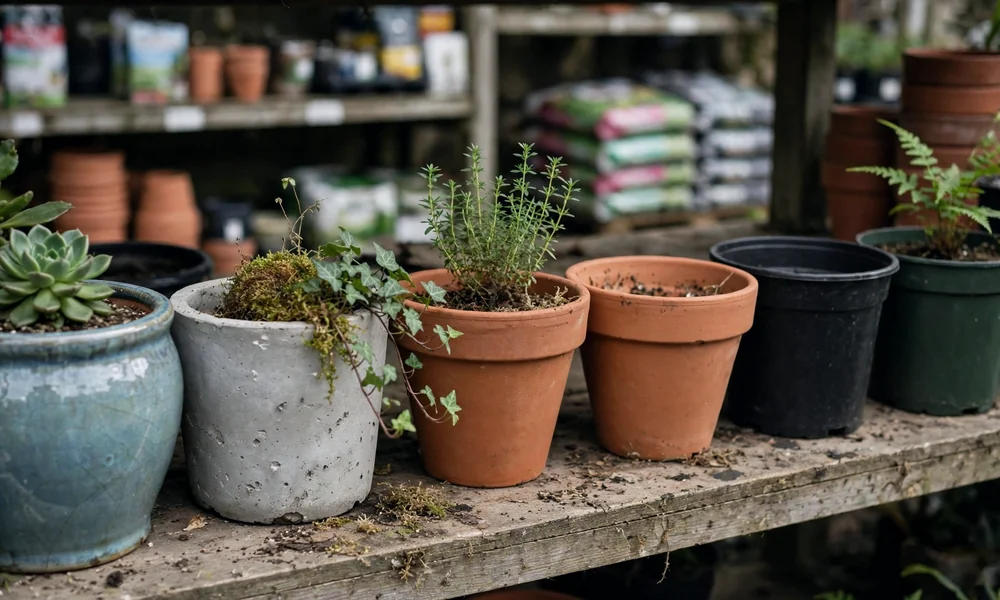
Sealed Decorative Pots With No Drainage
The single worst plant pot is the beautiful sealed pot with no drainage hole. It is everywhere, from gift shops to supermarket plant displays, and it kills more houseplants than any other product on this list. The plant sits in a puddle at the bottom of the pot, the roots rot, the leaves yellow and drop, and the owner blames themselves for overwatering when the pot gave them no chance at all.
Oversized Pots That Stay Wet for Weeks
The second worst pot is the one that is far too big for the plant. It looks generous and it feels kind, giving the roots plenty of room, but a small plant in a big pot cannot drink the water held in all that extra soil, and the wet soil turns sour and airless. The plant sits in cold, wet compost, the roots rot, and growth stalls for months. Beginners make this mistake constantly, repotting a small plant into a pot three sizes up and wondering why it sulks.
Thin, Cheap Plastic That Cracks in the Sun
Thin plastic pots are the worst value in the garden centre. They feel flimsy in the hand, they bend when you lift them full of soil, and after one summer in the sun they go brittle, crack, and split, spilling soil across the patio. They fade to a chalky grey within months, and their thin walls do nothing to insulate the roots, so the soil inside swings from baking hot to cold with the weather.

Glazed Pots Sold as Planters That Are Really Vases
A close cousin of the sealed pot is the tall, narrow glazed pot sold as a planter that is really a vase. Its shape works against the plant: the narrow opening makes watering and repotting a struggle, the deep, narrow body holds wet soil far below the roots, and the glazed inside never dries.
Rusting Metal and Flaking Paint
Metal pots look striking, but untreated metal is one of the worst homes for a plant. Cheap metal pots rust from the inside within a season, and rust stains everything they touch, from windowsills to patios. Painted metal is no better when the paint is thin: it flakes off in damp soil, the exposed metal rusts, and the flakes mix into the compost. Metal also heats up fast in the sun, cooking the roots on a hot afternoon, and cools fast at night, which stresses the plant twice a day.
Getting the Size and the Drainage Right
The two mistakes that kill the most plants are a pot with no drainage and a pot that is far too big, and both are easy to avoid once you know the rules. Always check for a drainage hole before you buy, and if a pot you love has none, either drill one if the material allows it, or use it as a cover with the plant kept in a separate pot inside. Always use a saucer or a tray under indoor pots, because even a good pot will drip after watering,
On size, go one step at a time: a pot about an inch wider than the old one, with fresh soil around the root ball, and no more. Watering follows the pot as much as the plant, so check the soil with your finger and water only when the top inch is dry. A good garden hose comparison helps outdoors, but indoors the pot and your finger are the only tools that matter.
Before You Buy: A Quick Checklist
Run through this list in the shop and you will avoid almost every bad pot on the shelf. First, turn the pot over and check for a drainage hole, and check that it is a real hole and not a faint mark in the clay. Second, squeeze the walls: a good pot feels stiff and solid, and a pot that flexes, bends, or feels papery is a pot that will crack. Third, lift it: a pot that is too light for its size will tip over with a tall plant in it, and a pot that is too heavy to carry up the stairs is a pot you will regret.
Think about where the pot will live and what the plant needs: a succulent wants a breathable pot that dries fast, a fern wants one that holds moisture, and a tall plant needs a heavy base. Gloves help with the messy work of repotting, and our guide to why good garden gloves are worth more than you think covers what to look for. Buy the pot for the plant you have, not the plant you wish you had.
Verdict: The Best vs Worst Plant Pots in 2026
The best plant pots in 2026 are the honest ones: terracotta for plants that like to dry out, glazed ceramic with a real drainage hole for plants that deserve to be shown off, self-watering pots for busy owners with thirsty plants, concrete for the garden, and thick, solid plastic for anything large that still needs moving. They share the same virtues, and they are simple ones: they drain, they fit, they last, and they get out of the plant’s way. Buy one of those, in the right size, and the plant has every chance.
The worst plant pots are the pretty traps: the sealed decorative pot with no hole, the pot three sizes too big, the paper-thin plastic pot that cracks in a summer, the tall glazed vase pretending to be a planter, and the unlined metal pot that rusts and cooks the roots. The plant will do the rest, and a good pot will still be holding a thriving plant years after the bad ones have gone in the bin.


