Garden gloves are the cheapest tool in the shed, and the easiest to get wrong. Most people buy the first pair they see, wear them until they tear, and blame their hands when the job hurts. But a good pair of garden gloves does far more than keep the dirt off your skin. It protects you from thorns, blisters, splinters and stings, it gives you grip when your hands are wet, and it lets you work for an hour instead of ten minutes. Cheap gloves fail at all of those jobs, often on the first thorny stem. This guide explains why good garden gloves are worth more than you think — and how to choose a pair you will actually enjoy wearing.
The mistake most gardeners make is treating gloves as an afterthought. They will spend fifty pounds on a pair of secateurs and two pounds on the gloves they use with them, then wonder why their hands are cut, sore and dry by the end of the afternoon. Hands are the part of you that touches everything in the garden: soil, thorns, nettles, rough bark, cold water and sharp tools. A glove is the only thing between your skin and all of that. Buy it well, and gardening gets easier, safer and more comfortable in the same afternoon. Buy it badly, and every job takes longer and hurts more than it should.
Key Takeaways
- A good pair of garden gloves protects against thorns, blisters, splinters, stings and soil-borne infections — cheap gloves often fail on the first thorny stem.
- Match the glove to the job: leather for thorns and heavy work, nitrile-coated fabric for wet and muddy tasks, and long gauntlet cuffs for roses and brambles.
- Fit matters more than brand — gloves that are too loose slip and snag, while gloves that are too tight cut off circulation and tire your hands.
- One pair cannot do everything; two or three task-specific pairs cost little and cover the whole garden year.
- Look after them and they last for years: brush off the soil, let them dry naturally, and replace them when the palms wear thin.
What Cheap Gloves Actually Cost You
The cheapest gloves in the shop are usually made from thin cotton or flimsy synthetic fabric with a light plastic coating. They look fine on the shelf, and for carrying a watering can they are fine. But put them to real work and the problems start quickly. The fingertips wear through within a few sessions, the seams split at the thumb, and the coating peels off in damp soil. Worse, they give a false sense of protection: a thorn goes straight through thin cotton, and a rose stem can scratch through a cheap gauntlet as if it were not there. The result is cut hands, and a gardener who stops wearing gloves altogether — which is the worst outcome of all.
Bad gloves also make the work itself harder. A loose, baggy glove slips on the handle of a fork and snags on twigs, so you grip harder and tire faster. A stiff, sweaty glove leaves your hands damp and cold, and damp skin blisters far more easily than dry skin. And when gloves are uncomfortable, they come off — usually at exactly the moment you reach into the thorny bush. The true cost of cheap gloves is not the two pounds you paid for them. It is the blisters, the scratches, the lost afternoon and the pair you have to buy again next month. Our roundup of the worst garden tools for beginners makes the same point about tools in general: buy cheap, buy twice, and pay for the mistake in comfort.
The Materials, and What Each One Is For
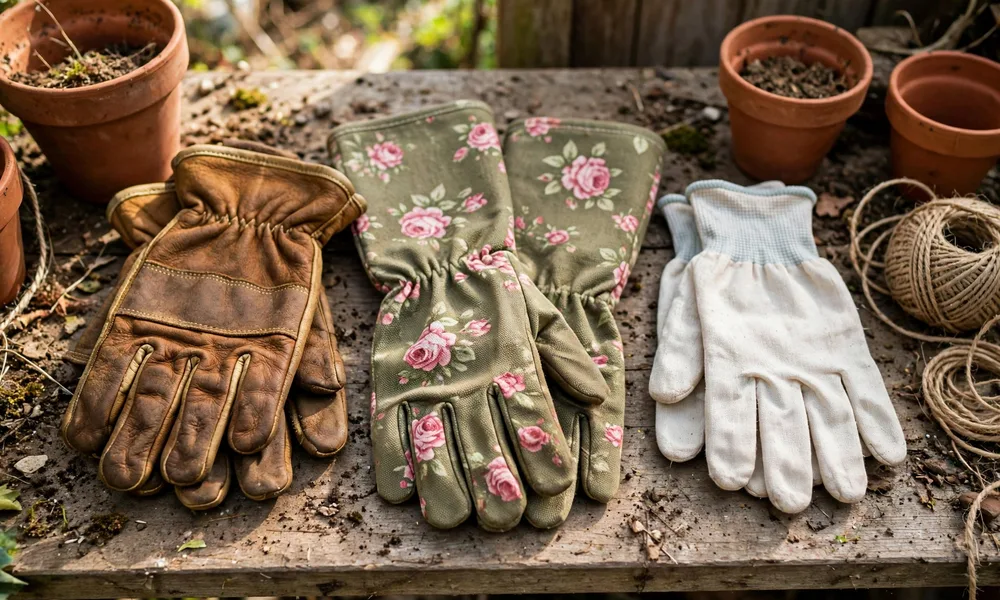
Leather is the classic garden glove material, and for heavy work it is still the best. Goatskin is supple and gives good feel for secateurs and small tools, while cowhide is tougher and better for hauling, digging and handling rough timber. Leather resists thorns better than any fabric, it moulds to your hand with wear, and a good pair can last for years. Its weaknesses are water — leather stiffens and shrinks if it dries badly after soaking — and heat, so it is not the glove for a sweaty summer afternoon of weeding. Keep leather gloves for the hard, dry, thorny jobs, and they will repay you many times over.
Nitrile-coated fabric gloves are the modern workhorse, and for most everyday gardening they are the pair to reach for. A breathable fabric back keeps your hands cool, while the thin nitrile palm gives grip in wet soil and protects against abrasion without killing your sense of touch. They are cheap enough to own several pairs, they wash easily, and they dry fast. Their limit is puncture protection: a sharp thorn can still get through, and they wear out faster than leather on rough work. For planting, weeding, potting and harvesting, though, they are hard to beat.
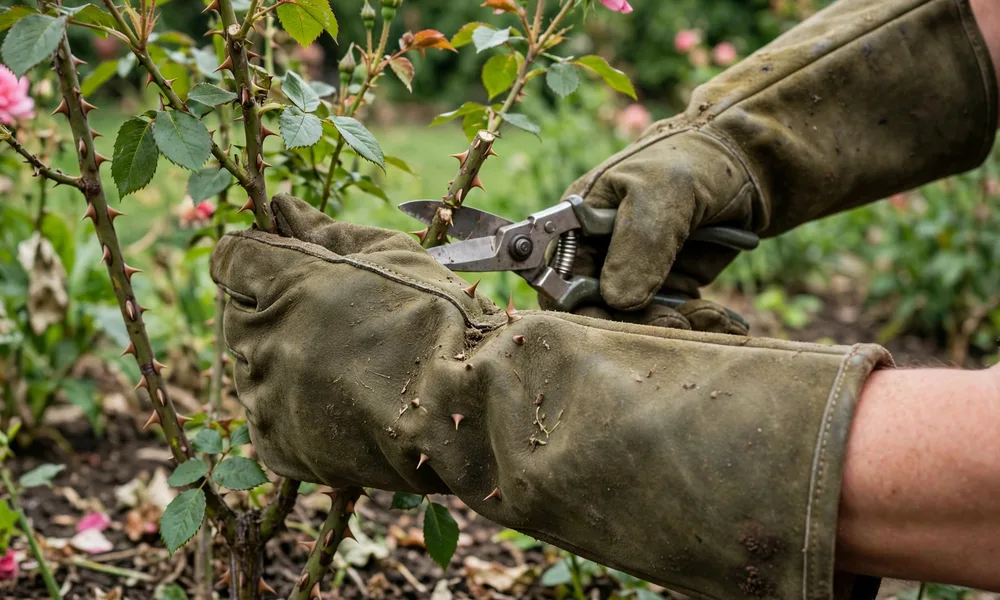
Then there are the specialists. Gauntlet gloves, with cuffs that reach halfway up the forearm, are made for roses, brambles and anything else that fights back. Long-cuffed leather gauntlets are the only sensible choice for cutting back a thorny climber. Rubber and waterproof gloves suit pond work, washing pots and anything involving standing water, though they make hands sweat on a warm day. And for delicate work like pricking out seedlings or handling small plants, a thin, close-fitting fabric glove gives the dexterity that leather never will.
| Glove type | Best for | Strengths | Weak points |
|---|---|---|---|
| Leather (goatskin) | Thorns, pruning, heavy work | Best thorn protection, moulds to hand, lasts years | Stiffens when wet, hot in summer |
| Nitrile-coated fabric | Weeding, planting, potting | Grip when wet, breathable, cheap, washable | Thorns can pierce, wears faster |
| Gauntlet (long cuff) | Roses, brambles, climbers | Protects wrists and forearms | Bulky, poor feel for fine work |
| Waterproof rubber | Ponds, washing, wet work | Fully waterproof, easy to clean | Sweaty, no breathability |
| Thin fabric | Seedlings, delicate planting | Dexterity, light, cool | Almost no protection |
Fit: The Difference Between Protection and Frustration
Fit is the part of buying garden gloves that most people skip, and it matters more than the material or the brand. Gloves that are too big slip on tool handles, catch on twigs, and let soil in through the cuff. Gloves that are too small pinch at the fingertips, cut off circulation, and tire your hands within minutes. The right fit feels like a second skin: the fingertips reach the end of the glove without pressing, the palm is snug without being tight, and you can pick up a small seed or a screw without taking the gloves off. If you cannot do that, the gloves are too bulky for the job.
Try gloves on before you buy them, and try them on both hands — most people have one hand slightly larger than the other, and a pair that fits the smaller hand will pinch the larger one. Flex your fingers, make a fist, and mime gripping a tool handle. If the glove pulls tight across the knuckles or the fingertips go white, go up a size. Women’s and men’s sizing differ, and so-called one-size gloves fit almost nobody well; a glove made in your size, in a cut shaped for your hand, is worth more than any feature on the label. Hands that are looked after also recover faster, and once the gloves come off, a good hand cream makes a real difference — our guide to why hand cream matters more than you think explains what to look for.
Matching the Glove to the Job
One pair cannot do everything, and the gardeners who enjoy their gloves most usually own two or three pairs. Keep leather gauntlets for roses, brambles and thorny climbers — they are the only gloves that let you reach into a rose bush with confidence. Keep a nitrile pair by the back door for everyday weeding, planting and potting, the jobs that make up most of a gardening year. And keep a waterproof pair for pond work and washing pots, plus a thin fabric pair for seedlings and delicate work. Three pairs, bought once, cost less than a single cheap pair replaced every few months, and each one does its own job properly.
Wet work deserves a mention, because wet hands are where blisters start. If you garden in the rain or work with a hose, a nitrile-coated glove keeps its grip when leather would go slippery and heavy. A hose that kinks and pulses makes the job worse, so it is worth having one that holds its pressure — our best vs worst garden hoses for 2026 covers what to look for. The same logic applies to the gloves: the right pair for wet work is the one that stays grippy when everything else is soaked.
How to Make Good Gloves Last
Good gloves last for years if they are looked after, and the care is simple. Brush the soil off after every use, shake them out, and let them dry naturally away from radiators and direct sun — heat is what makes leather stiff and fabric brittle. Wash nitrile and fabric gloves in the machine on a cool cycle, and wash leather gloves by hand with saddle soap, then let them dry slowly and work a little leather balm into them. Store them dry, somewhere they will not be chewed by mice or crushed under a pile of pots. Replace a pair when the palm wears thin or a seam splits: a glove with a hole in it protects nothing, and a thorn will find the hole.

The Six Mistakes That Waste Good Gloves
- Buying the cheapest pair. Thin gloves tear on the first thorn and cost more in replacements than one good pair.
- Using one pair for everything. Leather for thorns, nitrile for wet work, gauntlets for roses — each job has a glove.
- Ignoring the fit. Gloves that slip or pinch make every job harder; try both hands on before you buy.
- Working bare-handed after gloves fail. A torn glove is worse than no glove if it makes you careless — replace it.
- Drying gloves on a radiator. Heat stiffens leather and weakens fabric; dry them naturally, away from sun.
- Keeping gloves when the palm wears through. A hole is an open door for thorns, soil and infection.
Frequently Asked Questions
Are expensive garden gloves worth it?
Usually, yes. A well-made leather or nitrile pair lasts years, protects against thorns and blisters, and costs less over time than replacing cheap pairs every few months.
What gloves are best for roses?
Long-cuffed leather gauntlets. They protect your hands, wrists and forearms from thorns, which no short fabric glove can do.
Can I wash garden gloves?
Yes. Machine-wash nitrile and fabric gloves on a cool cycle. Wash leather by hand with saddle soap, dry naturally, and add a little leather balm.
Should gloves be tight or loose?
Snug, like a second skin. The fingertips should reach the end without pressing, and you should be able to pick up a small seed without taking them off.
Do I need different gloves for wet work?
Yes. Nitrile-coated gloves keep their grip when wet, while leather goes slippery and heavy. Keep a waterproof pair for ponds and washing pots.
How often should I replace garden gloves?
When the palm wears thin, a seam splits, or a thorn gets through. A good pair lasts years with care; a cheap pair may last a single season.
The Bottom Line
Garden gloves are the cheapest upgrade in the garden, and one of the most useful. A pair that fits, suits the job and lasts for years protects your hands, saves your time and makes every hour outside more enjoyable. Spend a little more, choose for the work you actually do, look after them — and your hands will thank you every time you garden.