Every spring, garden centres fill up with brightly coloured tool sets promising to turn anyone into a gardener overnight. The worst garden tools for beginners are almost always the cheapest and the most heavily promoted: flimsy trowels that bend on first contact with real soil, pruners that jam after a week, and gadget-filled kits that look impressive in the box and fall apart in the border. They cost little up front, but they cost beginners something far more valuable — time, confidence, and the will to keep gardening.
The problem is not that beginners need expensive tools. It is that bad tools make gardening harder than it needs to be. A trowel that flexes instead of digging turns a ten-minute job into a frustrating half hour. Gloves that tear on the first thorny stem leave hands cut and sore.
This guide names the worst offenders, explains exactly why each one fails, and shows what to buy instead. Spend a little more on a few good tools and you will enjoy gardening far more than someone who bought a twenty-piece set for the same money.
Key takeaways
- Cheap plastic and thin-metal tools bend, snap, or rust within weeks, and replacing them costs more than buying one decent tool once.
- A forged hand trowel, sharp bypass pruners, and a sturdy fork cover most beginner jobs — you do not need a twenty-piece set.
- Gimmicky multi-tools and folding gadgets do several jobs badly instead of one job well.
- Buy fewer tools, buy them once, and look after them — clean, dry, and sharpened tools last for years.
Why Beginners Buy the Wrong Garden Tools
Beginners usually shop for garden tools by price, by appearance, and by how many pieces come in the box. A set of twelve tools for the price of one good trowel feels like a bargain, and the bright handles and shiny packaging suggest quality. Manufacturers know this, and they design starter sets to sell, not to last. Thin steel is painted to look forged, plastic handles are moulded to look like wood, and the set includes tools most gardeners will never use.
The same trap appears in every hobby that needs equipment. The pattern is familiar from the kitchen, where the worst kitchen tools beginners should skip are also the cheap, gimmicky ones that promise everything and deliver nothing. In the garden, the cost of the mistake is higher, because a failed tool does not just sit in a drawer — it breaks while you are using it, mid-task, with soil under your nails and daylight running out.
The Worst Garden Tools for Beginners
These are the tools that cause the most trouble for new gardeners, ranked by how often they disappoint and how much they put people off. If you already own one, do not throw it away in a panic — but do not buy another one, and consider replacing it when it fails.
Flimsy Plastic Hand Trowels
The plastic hand trowel is the single worst garden tool a beginner can buy. In real garden soil — especially clay, or soil that has dried out in summer — the blade flexes, the neck cracks, and the handle snaps off in your hand. A trowel that cannot dig is not a trowel; it is a toy. The fix is simple: a forged steel trowel with a solid socket handle. Forged steel does not bend under normal use, and a proper handle gives you the grip to push the blade into the ground. One good trowel will outlast a dozen plastic ones.
Cheap Bypass Pruners That Jam
Bad pruners are worse than no pruners at all. Cheap bypass pruners often arrive blunt, and their soft steel loses its edge after a few cuts. The blades go out of alignment, the spring pops out or weakens, and the locking catch either sticks shut or refuses to stay closed. Instead of a clean cut, you get crushed stems that invite disease into your plants — the opposite of what pruning is supposed to achieve. Worse, stiff, jamming pruners hurt. A decent pair of bypass pruners with replaceable blades and a comfortable grip is the best money a new gardener can spend.
Telescopic and Folding Garden Tools
Telescopic handles and folding blades sound clever: one tool that adjusts to any length, or folds away for storage. In practice, every joint is a weak point. Telescopic handles slip under load, wobble sideways, and eventually jam with grit. Folding tools develop play at the hinge until the blade moves more than the handle does. A tool that flexes and rattles gives you no control, and no control means poor results and sore wrists.Buy tools at the right fixed length for the job.
Gimmicky Multi-Tools
The garden multi-tool — a trowel with a serrated edge, a bottle opener, a ruler stamped on the blade, and a handle that unscrews to reveal a secret compartment — is designed for gift shops, not gardens. Each added feature makes the main job worse: the serrated edge catches on roots, the hollow handle flexes, and the whole thing is heavier and more awkward than a plain trowel. You pay extra for features you will never use and get a worse tool in return.If you want versatility, buy a hori-hori knife — a single, honest blade that genuinely does several garden jobs well.
Thin Metal Rakes and Hoes
Lightweight rakes and hoes made from thin stamped metal look tidy and feel easy to carry, which is exactly why beginners buy them. The problem appears the first time they meet resistance: the tines bend, the head twists on the handle, and the socket works loose. A rake that sheds tines across the lawn is not just useless — it is a hazard for lawnmowers and bare feet.Check the socket before you buy: it should be deep, tight, and fixed with a proper rivet or screw, not just pressed on. A well-made rake will last decades, while a cheap one rarely survives a single autumn.
Novelty Watering Cans and Hose Gadgets
Watering should be the simplest job in the garden, yet novelty watering cans make it needlessly hard. Decorative cans with narrow spouts pour slowly and unevenly. Cans with poor balance tip forward when full and strain your wrist. Hose gadgets — expanding hoses, multi-pattern spray guns with eight settings, and clip-on fertiliser dispensers — add failure points to a system that only needs to deliver water where you point it. Expanding hoses are the worst of the lot. They kink, burst, and lose pressure, and their thin walls puncture on the first sharp stone. A standard reinforced hose with a simple adjustable nozzle will outlast several expanding hoses.
Bargain Gloves That Tear
Gloves are the beginner’s first line of defence, and bargain gloves fail at exactly the wrong moment. Thin fabric gloves tear on the first rose stem. Cheap leather gloves stiffen when they get wet and crack when they dry. Gloves with poor stitching split along the seams, and gloves that are too big bunch up and cause blisters, while gloves that are too small cut off circulation and make your hands ache. Good gloves do not need to be expensive, but they do need to fit. Try them on before you buy, and choose a pair that lets you pick up a seed without taking them off.
The Worst Garden Tools at a Glance
| Tool | Why it fails beginners | Buy this instead |
|---|---|---|
| Plastic hand trowel | Bends and snaps in real soil | Forged steel trowel |
| Cheap bypass pruners | Blunt, jam, crush stems | Quality bypass pruners with replaceable blades |
| Telescopic tools | Joints slip, wobble, and jam | Fixed-length tools in the right size |
| Gimmicky multi-tools | Many features, none done well | A plain trowel or a hori-hori knife |
| Thin metal rake or hoe | Tines bend, head works loose | Solid head with a deep, riveted socket |
| Expanding hose | Kinks, bursts, loses pressure | Reinforced hose with a simple nozzle |
| Bargain gloves | Tear, split, fit badly | Well-fitting gloves in two weights |
What Beginners Should Buy Instead
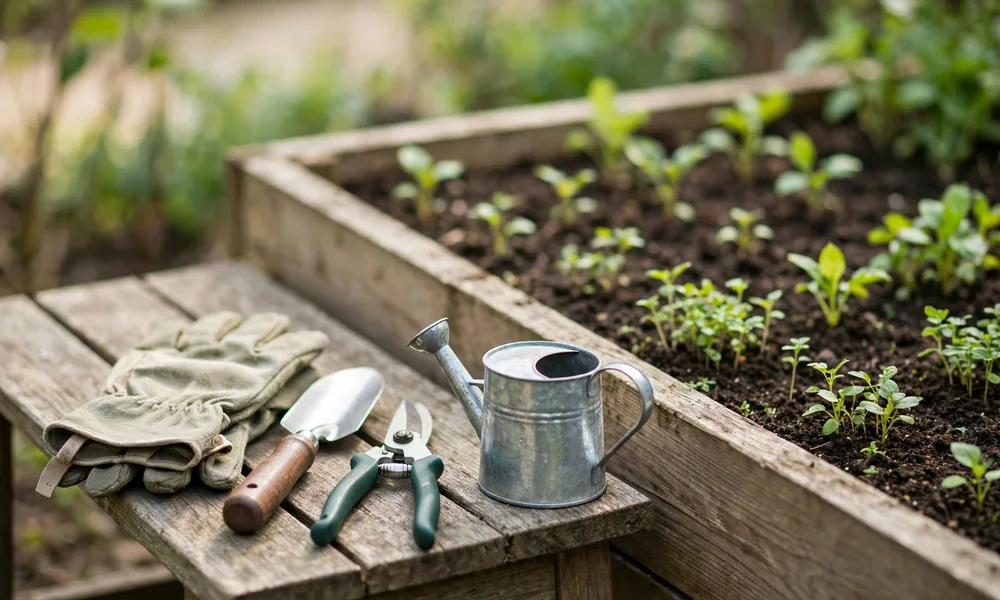
A beginner needs far fewer tools than the garden centre suggests. Start with five: a forged hand trowel, a hand fork, a pair of bypass pruners, a watering can with a rose, and a pair of gloves that fit. Add a spade and a rake when your garden grows beyond containers and raised beds. That small kit will handle planting, weeding, pruning, and watering for years, and each piece earns its place.
The same discipline applies to any outdoor kit. Buying cheap, over-promising gear and replacing it again and again is a pattern that shows up everywhere, and the worst camping gear for beginners makes exactly the same mistake: too many pieces, too little quality, and a miserable first experience that puts people off for good. Gardeners and campers both do better starting small and buying well.
Beginner Gardener’s Checklist
Use this checklist before you spend anything on tools. It takes five minutes and can save you a season of frustration — and the same “buy less, buy better” thinking saves money on every kind of gear, as the worst home gym setups that waste money show all too clearly.
- Measure your garden and your storage space before buying anything long-handled.
- Test the soil: if it is heavy clay, you need forged steel, not plastic or thin metal.
- Try every handle in your hand — if it feels awkward in the shop, it will feel worse after an hour.
- Start with five core tools and add one at a time only when a job genuinely needs it.
- Check the guarantee and whether blades and springs are replaceable.
- Budget for care: a bucket of sand, some oil, and a sharpening stone cost little and double a tool’s life.
Frequently Asked Questions
How much should a beginner spend on garden tools?
A good starter kit costs roughly the same as one cheap twenty-piece set, but it lasts far longer. Expect to spend a modest amount on a forged trowel, a hand fork, bypass pruners, a watering can, and gloves.
Are expensive garden tools worth it for beginners?
Expensive is not the same as good. The best beginner tools sit in the middle: forged steel, solid handles, and replaceable parts, without the premium price of professional brands.
Can I start gardening with just a trowel and pruners?
Yes. A trowel and a pair of pruners cover planting, weeding, and trimming in a small garden or on a balcony. Add a watering can and gloves, and you have a complete kit for your first season.
Why do my garden tools keep rusting?
Most rust comes from tools being put away wet or dirty. Knock off the soil, wipe the blade dry, and store tools under cover. A quick wipe with an oily rag after use prevents almost all rust, and it takes less than a minute per tool.
Should beginners buy tool sets or individual tools?
Individual tools are almost always better. Sets include tools you will never use, and the quality is usually set by the cheapest piece in the box.
What is the most important garden tool for a beginner?
The hand trowel. You will use it for planting, transplanting, weeding, and mixing compost more than any other tool. A forged steel trowel that fits your hand is the single best purchase a new gardener can make.
The Bottom Line
The worst garden tools for beginners are the ones that look like bargains and behave like toys: plastic trowels, jamming pruners, folding gadgets, and hoses that burst when you need them most. Start with five solid tools, look after them, and add to your kit only when a job proves you need something more.