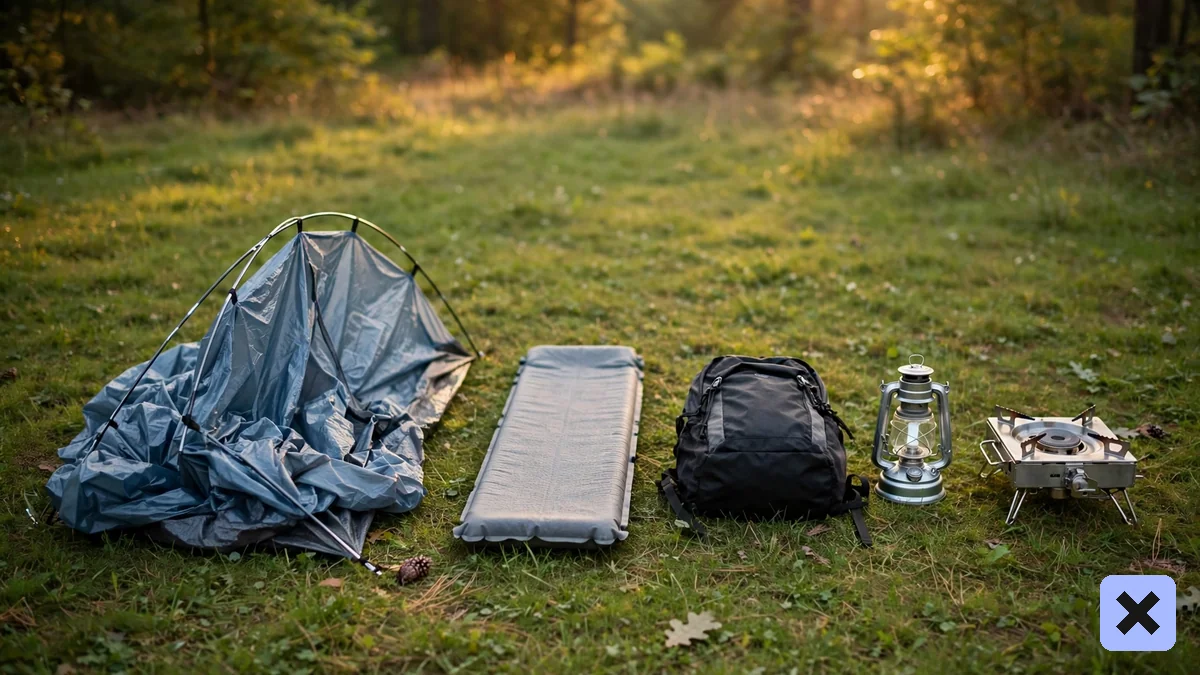
The worst camping gear for beginners is not just disappointing. It is the difference between a first trip that sparks a lifelong love of the outdoors and a cold, sleepless night that puts someone off camping for years. Cheap tents leak, thin sleeping pads leave every stone pressing into your back, and bargain stoves sputter out just when dinner is half cooked. None of it looks like a problem in the shop, where everything is neatly folded, but out in a field, in wind and rain, the weaknesses show up fast.
Beginners are easy targets because they do not yet know what matters. They buy the cheapest bundle or the flashiest gadget without checking weight or weather rating. Shelves are full of starter kits that look complete yet leave out the very things that keep a camper warm, dry, and fed.
This guide names the worst offenders, explains why each one lets beginners down, and shows what to look for instead. Skip the traps below and your first camp will be far cheaper, lighter, and more comfortable than the person in the next pitch who bought the bargain bundle.
Key takeaways
- Cheap dome tents are the worst first buy: they leak, flap in wind, and are hard to pitch alone.
- Thin foam or air-only sleeping pads ruin sleep; insulation and thickness matter more than packed size.
- Heavy starter bundles look like value but add weight you will carry and never use.
- Novelty gadgets waste money and space that a simple knife and head torch cover better.
- Test every piece at home first, and borrow or hire the big items until you know what suits you.
Why Beginners Get Camping Gear So Wrong
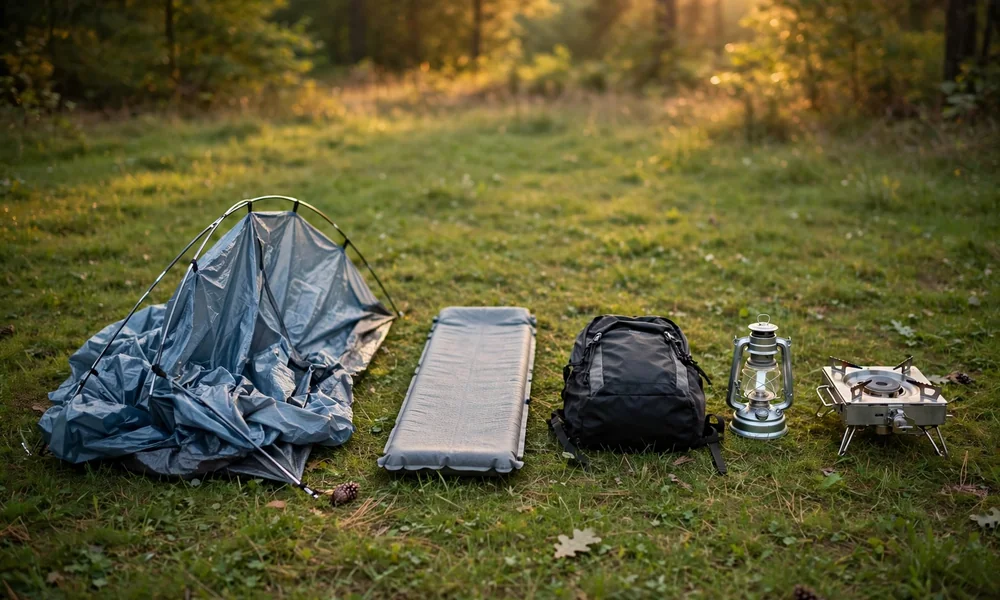
First-time campers usually shop backwards, starting with the fun items, the lantern, the chairs, the mugs, and leaving shelter and sleep until last, when the budget is nearly gone. A tent and a sleeping setup decide whether you stay dry and sleep at all. Spend where failure hurts most, and save on the things you can live without.
Marketing makes it worse. Starter kits show smiling families beside a perfect tent on a sunny meadow, never the same tent in a downpour. A seasoned hiker can manage with a featherweight tarp because they can read the weather and improvise. A beginner needs forgiving kit: a tent that pitches quickly, a pad that insulates, and a stove that lights first time.
The Worst Tents for Beginners
Nothing ruins a first trip faster than a bad tent, because it is your only shelter. Beginners choose by price or by how many people the box claims it sleeps, and both mislead: a tent rated for four usually fits two adults and their bags at a squeeze.
Ultra-Cheap Dome Tents
The ultra-cheap dome tent is the classic beginner mistake. Its thin poles splinter in a strong gust, its flysheet has a low waterproof rating, and its seams are often unsealed, so water creeps in along the stitching. In wind the floppy fabric fights you, and once up it flaps all night. A better first tent is a simple two- or three-person tent from a known brand, rated at least 3,000 millimetres, with taped seams. It costs more, but it lasts for years instead of one miserable weekend.
Oversized Family Tents for a First Trip
Buying a tent far bigger than you need is another error. A six-person tent for two people is heavier, harder to pitch, harder to keep warm, and far more exposed to wind. Start small: a tent rated one person larger than your party is the sweet spot, with room for bags without the weight of a family palace.
The Worst Sleep Gear for Beginners
Sleep is where beginners suffer most. A sleeping bag and pad look simple, but their ratings are confusing, and a cold night is the fastest way to end a camping habit. Many blame the tent or the weather, when the culprit is a pad with no insulation or a summer bag used on a chilly night.
Thin Foam Pads and Air-Only Mattresses
The cheapest pads are a wafer of foam or an air mattress with no insulation. The foam pad lets every root and stone press through, and offers almost no warmth from the cold ground. The air mattress feels comfortable for ten minutes, then the air inside cools and quietly steals your body heat all night. A good beginner pad is insulated, at least five centimetres thick, with an R-value of three or more.
Summer Bags Used in Cold Weather
Bag ratings are another trap. The printed temperature is often the extreme rating, not the comfort rating, so a bag labelled for five degrees may only keep an average sleeper comfortable at ten. Check the comfort rating, and choose a bag rated a few degrees colder than the coldest night you expect. A three-season bag around zero degrees covers most beginners, and a liner adds warmth cheaply.
The Worst Cooking and Camp Kitchen Gear
Cooking outdoors should be simple: boil water, fry breakfast, and make a hot drink. Beginners often arrive with a kitchen that would shame a small flat, then discover none of it works well on a wobbly table in the wind.
Single-Burner Stoves With No Wind Protection
A tiny single-burner stove looks neat, but without a windshield it struggles in anything more than a light breeze. The flame blows sideways, the pot takes twice as long to boil, and the gas empties fast. Choose a compact stove with proper wind protection, test it at home, and make sure your pots sit stably on it.
Novelty Gadgets and Multi-Tools That Do Nothing Well
Every camping aisle is full of novelty gadgets: a spork with a built-in whistle, a folding barbecue the size of a briefcase, a solar shower that never gets warm. Beginners buy them because they look clever, then carry them once and use them never. The same money spent on a head torch, a knife, and a lighter would improve every trip. Much of the worst travel gear follows the same pattern, and the travel gadgets that waste packing space show how quickly clever-looking kit becomes dead weight.
The Worst Clothing and Footwear Mistakes
Beginners often pack for the weather they hope for, not the weather they get. Cotton hoodies, fashion trainers, and a thin waterproof all fail the same way: they get wet, stay wet, and leave the wearer cold.
Cotton Layers That Stay Wet
Cotton is comfortable at home and useless outdoors. It absorbs sweat and rain, loses all insulation when wet, and takes hours to dry. Synthetic or merino base layers wick moisture, dry quickly, and keep insulating even when damp. The rule is simple: no cotton next to the skin when rain is possible.
Heavy Starter Bundles and Overpacking
The starter bundle is the most expensive mistake beginners make, because it looks like a bargain: one box, one price, everything included. The problem is that every item is the cheapest possible version, so the tent leaks, the bags are cold, and the chairs collapse. The bundle also weighs far more than the same kit bought separately.
Overpacking follows the same logic: three torches, two stoves, and enough food for a week on a two-night trip. Many of the worst road trip mistakes start the same way, with a car loaded so heavily that the journey becomes a chore. Pack light, and leave just-in-case items at home.
What to Buy Instead: A Sensible First Kit
A good first kit is smaller and simpler than most beginners expect: a reliable tent, an insulated sleeping pad, and a three-season sleeping bag, plus a stove with wind protection, a head torch, a knife, and a waterproof jacket. Everything else is optional, and much of it can be borrowed for a first trip.
| Gear | Worst beginner choice | Better first buy |
|---|---|---|
| Tent | Ultra-cheap dome, low waterproof rating | Known-brand 2–3 person tent, 3,000 mm rating, taped seams |
| Sleeping pad | Thin foam or air-only mattress | Insulated pad, 5 cm thick, R-value 3 or more |
| Sleeping bag | Summer bag used in cold weather | Three-season bag, comfort rating near 0°C, plus liner |
| Stove | Single burner with no windshield | Stove with wind guard, tested at home |
| Clothing | Cotton layers and fashion trainers | Synthetic or merino layers, broken-in walking boots |
| Kit overall | Heavy all-in-one starter bundle | Core kit first, borrow or hire the rest |
The sensible kit costs more up front, but far less over three or four trips, because nothing needs replacing after the first weekend. Beginners who buy well once tend to keep camping; beginners who buy cheap twice often give up.
Beginner Camping Checklist
Use this checklist before you leave, and tick every item off at home rather than at the campsite, while there is still time to fix anything missing.
- Pitch the tent at home first, check every pole and peg, and time yourself doing it.
- Lie on the sleeping pad and bag, and check the comfort rating against the forecast low.
- Boil a litre of water on the stove outdoors, and confirm the gas canister is full.
- Pack synthetic or merino layers, a proper waterproof, and broken-in walking boots.
- Charge the head torch, pack spare batteries, and carry a lighter and a first-aid kit.
- Check the forecast, the campsite rules, and your packing list the night before.
The checklist is deliberately short, forcing a decision about what really matters. The same discipline helps with luggage, and the luggage choices that travellers regret warn what happens when packing is driven by fear instead of need.
Frequently Asked Questions
What is the worst camping gear for beginners?
The ultra-cheap tent, the thin uninsulated sleeping pad, and the heavy all-in-one starter bundle. Each fails at the job that matters most: keeping you dry, warm, and rested.
How much should a beginner spend on camping gear?
Spend a moderate amount on the core items, tent, sleeping pad, and sleeping bag, and very little on everything else. Borrow or hire the big items first, and spend more on shelter and sleep than on gadgets.
Can beginners camp comfortably with cheap gear?
Yes, if it is chosen carefully, but not with the cheapest gear. A mid-range tent, an insulated pad, and a properly rated bag will serve for years, while a bargain bundle fails on the first wet night.
Should beginners buy a starter bundle?
Usually, no. Every item inside is the cheapest version, and the bundle is heavier and bulkier than the same kit bought separately. Buying the core items well and borrowing the rest costs less over time.
What should a beginner pack first?
Pack shelter and sleep first: tent, sleeping pad, sleeping bag, and a waterproof jacket. Then add a stove, a head torch, food, and water. Everything else comes last, and only if there is room and a genuine use for it.
How can beginners test camping gear before a trip?
Test it at home. Pitch the tent in the garden, sleep on the pad and in the bag for a night, boil water on the stove outside, and wear the boots on a long walk. A problem found at home is a minor fix; the same problem at midnight on a campsite is a ruined trip.
The Bottom Line
The worst camping gear for beginners is cheap, heavy, and clever-looking, and it fails exactly when it matters: in rain, in wind, and in the cold hours before dawn. Skip the bargain tent, the thin pad, and the all-in-one bundle, and spend instead on a reliable tent, an insulated pad, a properly rated bag, and a stove that works in a breeze. Test everything at home and pack light. Do that, and your first camp will be the start of something, not a warning never to try again.


