The best electric scooters of 2026 are faster, smoother and far more practical than the first machines on city streets. What was once a novelty has become a serious way to get around, with longer ranges, better suspension, stronger brakes and batteries that cover a working week of short journeys.
Choosing well still takes care: two scooters can look identical and feel completely different on the road. Motor power decides how a scooter climbs hills, tyre size decides how it handles rough tarmac, and brake quality decides how safe you feel when traffic stops without warning.
This guide names clear winners for different riders, judged on real-world range, comfort, build quality, braking, portability and value, not headline figures alone. If you are still deciding between two wheels and a pedal, our comparison of the e-bike vs scooter for city commuting will help you weigh the trade-offs first.
Key takeaways
- The best all-round scooter balances range, comfort and build quality over top speed.
- Real-world range is usually 60 to 70 percent of the figure on the box, so buy more range than you need.
- Good brakes, 10-inch pneumatic tyres and suspension matter more than extra motor power.
- A scooter you cannot carry upstairs or fit in a car boot soon goes unused.
- Budget models suit short flat rides; commuters should pay more for better brakes and weather sealing.

How We Picked the Best Electric Scooters of 2026
A good scooter is a package, and judging one means looking past the two numbers every box shouts about: top speed and maximum range, both measured in ideal conditions. Neither tells you how a scooter behaves on a wet Tuesday morning. We weighed everyday riding most: range at a normal pace, handling over potholes and speed bumps, stopping speed, and comfort after twenty minutes in the saddle.
Build quality mattered too: we favoured solid folding mechanisms, sealed electronics and frames that do not flex or rattle, plus portability for trains and stairs, and honest value.
The Best Electric Scooters of 2026
These five picks cover the riders we hear from most: daily commuters, best-of-everything buyers, budget buyers, long-distance riders and those who need something light to carry.
Best Overall: Segway Ninebot Max G2
The Segway Ninebot Max G2 is our pick for most people: it gets the fundamentals right and adds the comfort cheaper scooters skip. Its claimed range tops the commuter class, and in everyday riding it covers a ten to fifteen mile return commute with charge to spare. The 10-inch self-sealing tyres and hydraulic suspension smooth rough roads, the wide deck suits larger riders, and the brakes are strong and predictable. It is neither the lightest nor the cheapest here, but for one scooter to do everything well for years, it is the safest choice.
Best for Commuters: Xiaomi Electric Scooter 4 Pro
The Xiaomi Electric Scooter 4 Pro is built for the daily grind. It folds in seconds, its display is clear in sunlight, and its range covers most city journeys without a midday charge. The motor handles gentle hills without drama, and the 10-inch pneumatic tyres keep the ride comfortable over broken city surfaces. Ownership is easy too, with a good app, widely available spare parts and dealers who make servicing straightforward.
Best Budget: NIU KQi2 Pro
The NIU KQi2 Pro proves a budget scooter need not feel like a compromise. Neatly designed and solidly built, it is simple to ride, with a smooth throttle, a clear display and a folding mechanism that feels far more expensive than its price. For flat journeys of a few miles, it is all most riders need. The trade-offs are honest: a shorter range, so it suits riders who can charge at home or at work, and less suspension, so rough roads feel rougher. But for short journeys on a tight budget, it delivers a genuinely good ride for the money.
Best for Long Range: Apollo City
The Apollo City is for riders with longer than average journeys, or who hate thinking about battery levels. Its large battery delivers a claimed range well beyond the commuter class, and even at a brisk pace it covers distances that leave most rivals flashing a low-battery warning. Dual suspension and 10-inch pneumatic tyres make long rides comfortable, and the strong motor holds speed on hills. It is bigger, heavier and pricier, suiting confident riders, but for ten miles or more a day it is the most capable long-distance option here.
Best Lightweight: Unagi Model One Voyager
The Unagi Model One Voyager is for riders who carry their scooter as much as they ride it. Light enough for most adults to lift with one hand, it goes up stairs, onto buses and into car boots without a struggle, and folds to a package that tucks under a desk. The price of that lightness is a shorter range and solid tyres, hence a firmer ride on rough roads. It suits smooth streets and shorter trips best, and for train commuters and anyone short on storage, no other scooter here is as easy to live with.
Range, Speed and Battery: What the Numbers Really Mean
Range is the number buyers worry about first, and the one most often misunderstood. Manufacturers measure it at a steady low speed, on flat ground, with a light rider and no wind. In the real world, with hills, stops, cold weather and a heavier rider, most scooters deliver around 60 to 70 percent of the claimed figure. So choose a claimed range at least half as much again as your longest regular journey.
Speed matters less than most people expect. In many places, road-legal scooters are limited to around 15 miles per hour, and most riders cruise well below the maximum. What matters more is acceleration and hill climbing, which come from motor power and torque rather than top speed. A strong motor pulls away from traffic lights and climbs slopes confidently, while a weak one feels sluggish when you need it most. The shift from petrol to electric is changing two-wheeled transport well beyond scooters, as our look at electric vs petrol motorcycles shows.
Batteries last longest when not regularly run flat or left fully charged for weeks, and most good scooters manage several hundred charge cycles before range drops noticeably. Charging takes four to six hours from empty, so overnight charging is the norm.
Portability and Everyday Practicality
A scooter that is awkward to carry will spend more time at home than on the road, so weight and folded size deserve as much attention as speed. The lightest scooters here weigh around 12 kilograms, while the most capable can weigh twice that. Before buying, think honestly about your route: stairs, a train, a lift or a car boot? If any apply, a lighter scooter may serve you better than a more powerful one.
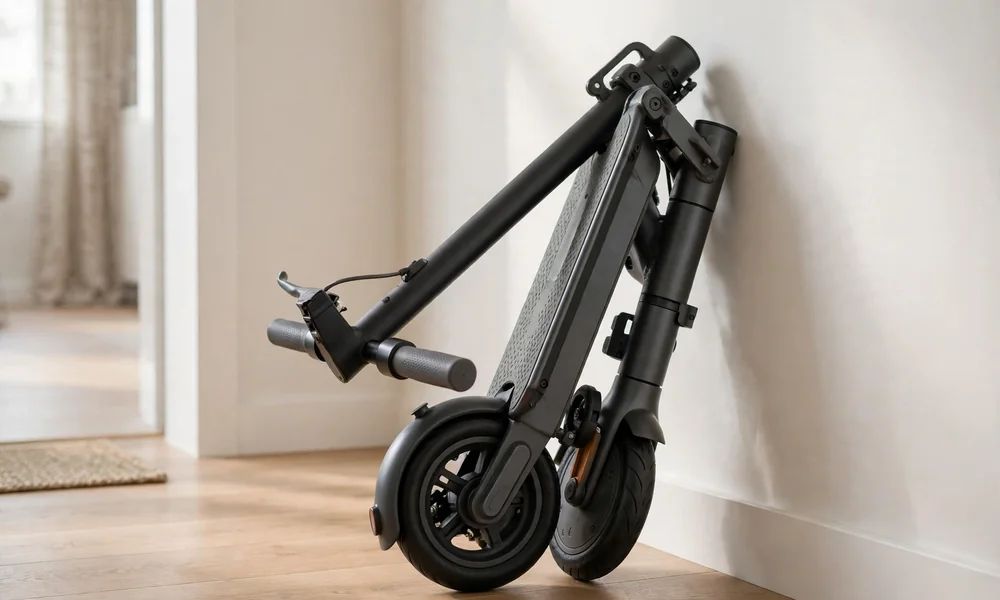
The best folding mechanisms lock with a single lever, stay locked while you carry the scooter, and unfold just as quickly. Storage counts too: a scooter that stands upright in a hallway or tucks under a desk beats one left outside, where rain and theft are constant worries.
Safety, Brakes and Tyres
Safety starts with stopping, and not all scooter brakes are equal. The best setups pair a disc or drum brake with electronic regenerative braking, giving strong, predictable stopping in wet and dry conditions. Cheaper scooters may rely on electronic braking alone, which feels vague and stops more slowly, so practise emergency stops in a quiet place before your first ride.
Tyres are the other half of the story. Pneumatic tyres grip better and absorb bumps far more effectively than solid tyres, which is why they appear on every premium pick here. The trade-off is the occasional puncture, though self-sealing tyres now make that less of a worry. A bright front light and a visible rear light are essential after dark, and a helmet is not optional in our view, whatever the local rules say.
How to Choose the Right Scooter for You
Start with your journey, not the scooter: measure your route, count the hills, and note the surfaces. A flat three-mile commute needs a very different machine from a hilly eight-mile ride over rough tarmac. Then think about storage, and set a budget that leaves room for a helmet and a good lock. The table below compares the five picks at a glance, and if you are also considering a pedal-assisted option, our guide to the best electric bikes of 2026 covers the strongest alternatives.
| Scooter | Best For | Claimed Range | Top Speed | Weight |
|---|---|---|---|---|
| Segway Ninebot Max G2 | Most riders | Up to 43 miles | 22 mph | 24 kg |
| Xiaomi Electric Scooter 4 Pro | Daily commuting | Up to 34 miles | 22 mph | 17 kg |
| NIU KQi2 Pro | Budget buyers | Up to 25 miles | 18 mph | 17 kg |
| Apollo City | Long distances | Up to 40 miles | 32 mph | 29 kg |
| Unagi Model One Voyager | Portability | Up to 25 miles | 20 mph | 12 kg |
Your Pre-Purchase Checklist
- Range buffer: choose a claimed range 50 percent higher than your longest regular journey.
- Weight test: lift the folded scooter and carry it up stairs before you commit.
- Brakes: insist on a mechanical brake, disc or drum, not electronic braking alone.
- Tyres: prefer 10-inch pneumatic tyres for grip and comfort.
- Weather sealing: check the water resistance rating for wet rides.
- Support: buy from a seller with local servicing and available spare parts.
Charging, Care and Running Costs
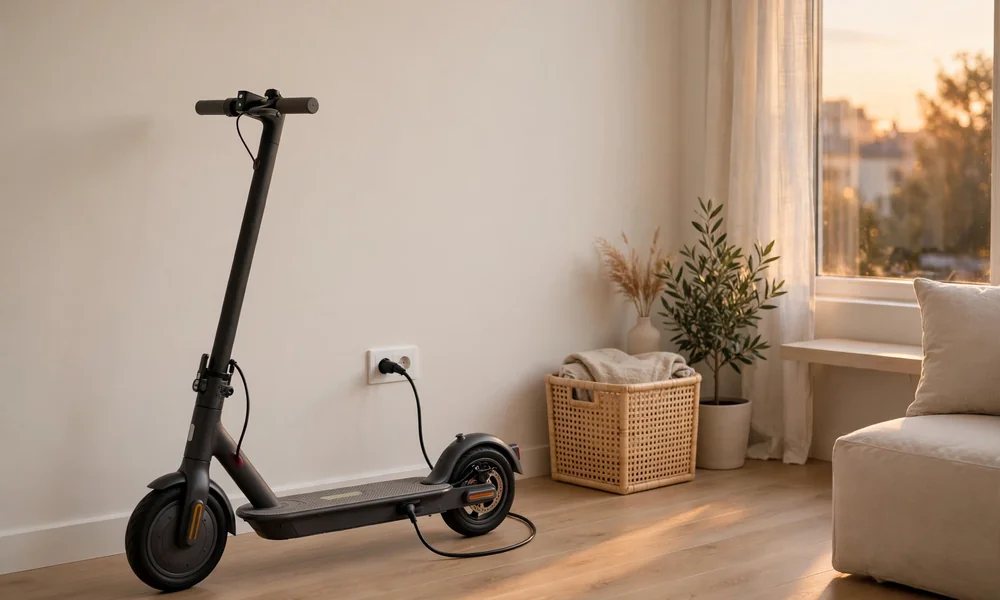
One quiet pleasure of owning an electric scooter is how little it costs to run. A full charge typically uses less electricity than running a kettle a few times, so the cost per mile is a fraction of driving or taking the bus. There is no fuel, no oil and no road tax in most places.
Basic care keeps a scooter reliable for years: keep the tyres at the recommended pressure, wipe it down after wet rides, and check the brakes and folding mechanism every few weeks. Store the battery at around half charge if you will not ride for a while, and avoid freezing garages or baking cars.
Frequently Asked Questions
How fast can an electric scooter go?
Most road-legal scooters are limited to around 15 miles per hour, though some reach 20 or more where the rules allow. In practice, 12 to 15 miles per hour feels brisk in a city.
How far will an electric scooter go on one charge?
Commuter scooters typically cover 15 to 30 miles in real-world riding, while long-range models can manage 30 miles or more.
Can I ride an electric scooter in the rain?
Most modern scooters handle light rain without trouble, especially with a water resistance rating, but none are designed for deep puddles or heavy downpours. Dry the scooter after wet rides.
How long does an electric scooter battery last?
A good lithium battery should last several years, typically hundreds of full charge cycles, before its range drops noticeably. Charging little and often helps it last longer.
Do I need a licence to ride an electric scooter?
Rules vary by country and city, and they change often. Some places allow private scooters on roads and cycle lanes, others restrict them to private land, and a few require a licence or insurance. Check the current rules where you ride.
Are electric scooters good for hills?
Yes, if you choose a model with enough motor power. Stronger motors climb moderate hills comfortably, while weaker budget models slow to a crawl on steep slopes. If your route is hilly, motor power matters more than top speed.
The Bottom Line
The best electric scooter of 2026 for most riders balances range, comfort, braking and build quality, and the Segway Ninebot Max G2 does that better than any rival here. Budget commuters will be well served by the NIU KQi2 Pro, long-distance riders should look at the Apollo City, and anyone who carries their scooter daily will love the Unagi Model One Voyager.