
Choosing between an e-bike and a scooter for city commuting is one of the most practical transport decisions a city dweller can make. Both will carry you past traffic jams, both cost far less to run than a car, and both can turn a dull daily journey into something you actually enjoy. Yet they suit very different people, routes, and budgets, so the right choice depends on far more than which one looks better in the shop window.
An e-bike is a bicycle with a motor that helps you pedal, which means it feels familiar, keeps you active, and handles longer distances with ease. A scooter, whether electric or petrol, is a machine you ride without pedalling at all, which makes it quicker to hop on, easier to park, and simpler to store in a small flat.
This guide compares the two on the things that actually matter to a commuter: speed, range, comfort, cost, safety, storage, and the rules of the road. By the end, you will know which one fits your route, your body, and your budget.
Key takeaways
- An e-bike is the better choice for longer commutes, hilly routes, and riders who want exercise as part of their day.
- A scooter is the better choice for short trips, tight storage, and riders who want the simplest possible journey.
- Running costs are low for both, but e-bikes usually win on servicing, while scooters can win on purchase price.
- Comfort favours the e-bike on rough roads, while the scooter wins on convenience and parking.
- Check your local rules before buying, because speed limits, licensing, and where you may ride vary widely.
How Each One Actually Works
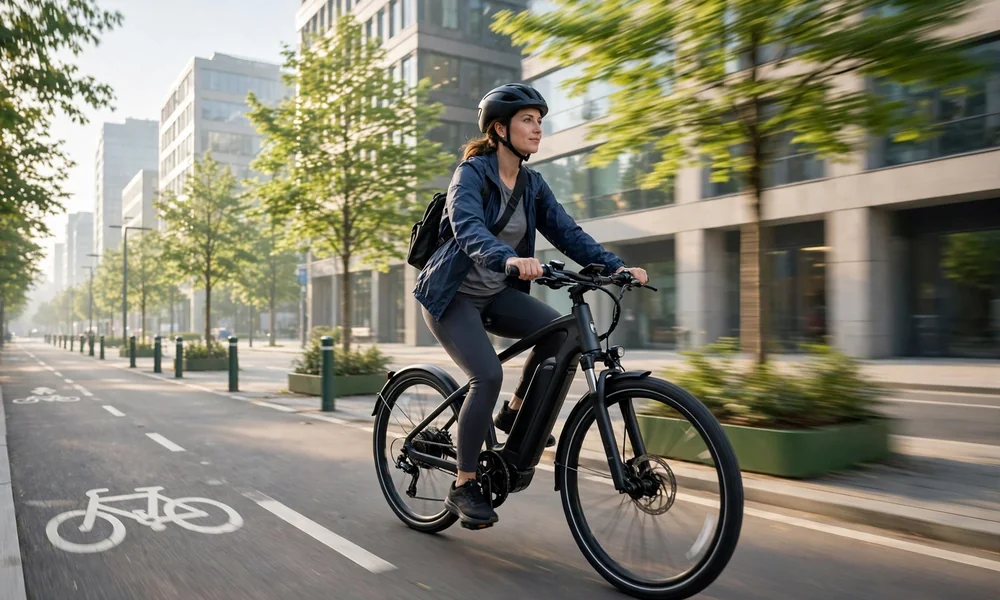
An e-bike looks and rides like an ordinary bicycle, with one important difference: a small motor and battery that assist your pedalling. Most city e-bikes use pedal assist, which means the motor only works while you pedal, and it stops helping at around 25 kilometres per hour. You still get exercise, you still steer and balance like a cyclist, and you arrive at work without the sweat that puts many people off cycling. The battery usually sits in the frame and can be removed for charging indoors.
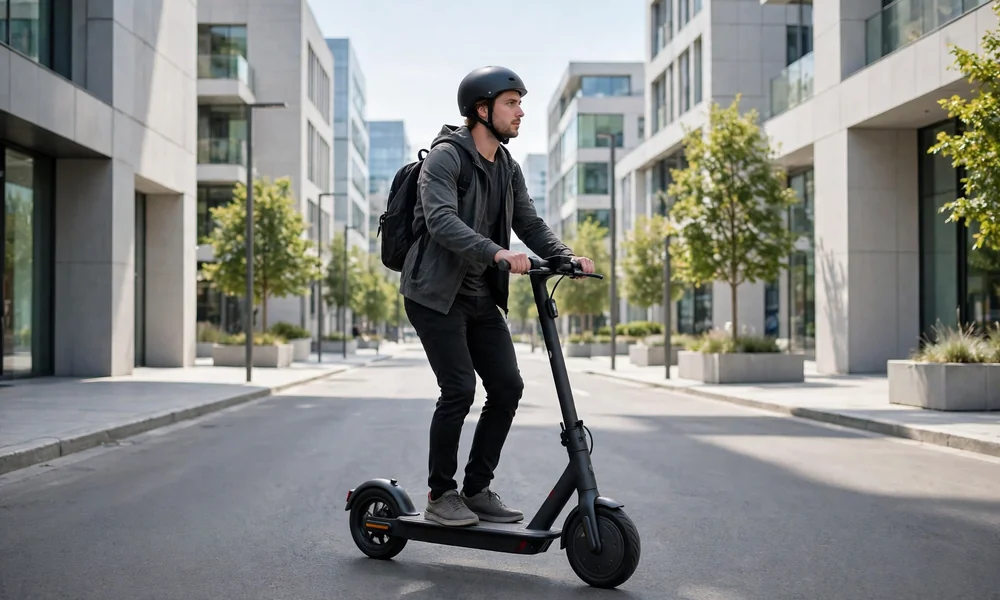
A scooter is a different kind of machine. An electric scooter is a narrow platform with two small wheels, a handlebar, and a throttle you press with your thumb. You stand, you steer, and the motor does all the work. A petrol scooter is larger, with a seat, a twist throttle, and an engine that needs fuel and servicing. Both are quick to start and need no pedalling, which is the scooter’s greatest strength and, for some riders, its greatest weakness, because you get no exercise at all.
Speed and Range in Real City Traffic
In a busy city, the fastest vehicle is rarely the one with the highest top speed. Traffic lights, junctions, and congestion matter far more than raw power, and here the two machines are surprisingly close. An e-bike cruises at 20 to 25 kilometres per hour, while an electric scooter typically manages 20 to 30, and a petrol scooter can go faster still. Over a five-kilometre commute, the difference in journey time is often less than two minutes.
Range is where the e-bike pulls ahead. A typical city e-bike covers 50 to 100 kilometres on a single charge, depending on the battery and the level of assist. An electric scooter usually manages 25 to 45 kilometres, which is plenty for a short commute but leaves less margin for detours and errands. A petrol scooter can cover well over 100 kilometres on a tank, which makes range anxiety a non-issue, though it brings fuel costs and emissions with it. Hills change the calculation too: an e-bike’s motor and gears climb steep streets without exhausting the rider, while a scooter slows noticeably and drains its battery faster. For a broader look at electric two-wheelers, our comparison of electric versus petrol motorcycles explores how battery and engine power compare on the road.
Comfort and the Daily Ride
Comfort is not a luxury on a daily commute; it decides whether you keep riding in month six or give up by month two. The e-bike has a clear advantage here. Larger wheels roll over potholes with far less jolting, the saddle and handlebars adjust to fit your body, and suspension forks on many models smooth out rough roads. You sit in a natural cycling position, and a long ride leaves you tired in a healthy way rather than shaken and sore.
The scooter is less forgiving. Small wheels transmit every bump directly to your feet and knees, and standing for twenty minutes can ache in ways that sitting never does. Some scooters have suspension and wider decks that help, and a seated petrol scooter is far more comfortable than a standing electric one, but neither matches a well-fitted e-bike. Riders with bad knees, back trouble, or long commutes usually notice this within the first week.
Carrying bags, shopping, and work gear
A commuter rarely travels empty-handed, and e-bikes win clearly on carrying capacity. Panniers, baskets, and rear racks are standard equipment, and a loaded e-bike still rides steadily. A laptop, a change of clothes, and a bag of shopping fit easily on a rack. Scooters offer far less: a small hook, a backpack, or a top box on a petrol model. An electric scooter with a heavy backpack can feel unbalanced, and there is nowhere sensible to put a week’s shopping.
Cost: Buying, Running, and Repairs
Purchase price is often the first thing a buyer checks, and here the scooter usually looks cheaper. A good electric scooter costs a few hundred pounds or dollars, while a decent city e-bike starts higher and a high-quality model can cost several times as much. A petrol scooter sits somewhere in between, though insurance and licensing can add to the bill. If your budget is tight and your commute is short, the scooter’s lower entry price is hard to ignore.
Running costs tell a different story. Charging an e-bike costs pennies per ride, and servicing is simple: tyres, brakes, chains, and a battery replacement after several years. Electric scooters are also cheap to charge, but their small tyres wear faster and their batteries are harder to replace. Petrol scooters need fuel, oil, and engine servicing, which makes them the most expensive of the three to run. Over three years of daily commuting, the e-bike’s total cost often ends up lower, even though it costs more on day one, the same pattern our sedan versus SUV for daily driving comparison shows for cars.
| Factor | E-Bike | Electric Scooter | Petrol Scooter |
|---|---|---|---|
| Typical range | 50–100 km | 25–45 km | 100+ km per tank |
| Top speed | 25 km/h assisted | 25–30 km/h | 45–90 km/h |
| Purchase price | Higher | Lower | Mid-range |
| Running cost | Very low | Very low | Moderate |
| Carrying capacity | Excellent | Limited | Good with top box |
| Exercise | Yes | No | No |
Storage, Charging, and Theft
Where you keep your ride matters as much as how it rides. An e-bike is large, heavy, and awkward to carry upstairs, which makes it a poor fit for a small flat without ground-floor storage. It needs a secure shed, a garage, or a sturdy lock at a bike rack, and good locks are essential because e-bikes are attractive to thieves. A removable battery helps, because you can charge it indoors while the bike stays locked outside.
An electric scooter is the clear winner for storage. Most models fold in seconds, weigh between 12 and 20 kilograms, and slide under a desk, into a cupboard, or beside a coat rack. You can carry it onto a train, into an office, or up a flight of stairs, and because it lives indoors, theft is far less of a worry. That single advantage convinces many city renters to choose a scooter, even when an e-bike would ride better.

Safety and the Rules of the Road
Safety should shape every commuting decision, and the e-bike has some natural advantages. Larger wheels are more stable over rough surfaces, proper bicycle brakes are strong and predictable, and the rider sits in a position other road users recognise. A helmet, lights, and reflective clothing make an e-bike rider highly visible, and the ability to pedal away from trouble is a small but real benefit.
Scooters demand more care. Small wheels can catch in tram tracks, drain covers, and potholes, and a sudden stop on a standing scooter can throw a rider forward. Braking distances are longer than many new riders expect, and the upright standing position gives less control in an emergency swerve. None of this makes scooters unsafe, but new riders should practise in a quiet area, wear a helmet, and keep speeds modest until the handling feels second nature.
Who Should Choose Which
Choose an e-bike if your commute is longer than five kilometres, if your route includes hills, if you want exercise built into your day, or if you need to carry bags, shopping, or work gear. It is also the better choice if you have a secure place to store a full-size bike and want a machine that can handle weekends and errands as well as the daily commute. The higher purchase price buys versatility, comfort, and range that a scooter cannot match. If you are still comparing models, our guide to the best electric bikes is a useful starting point for shortlisting.
Choose a scooter if your commute is short, flat, and simple, if you live in a small flat with no bike storage, if you combine your ride with a train or a bus, or if your budget is tight and you want the lowest possible entry price. A scooter is also ideal if you simply want the easiest journey: unfold, ride, fold, and walk into the office. It will not give you exercise or carry a week’s shopping, but for a quick hop across town, it is hard to beat.
Your Commuting Checklist
- Measure your real route, including hills, and test ride both machines on it before buying.
- Check local rules on speed, licensing, insurance, and where each machine may legally ride.
- Confirm where you will store and charge your ride every night, especially in a flat.
- Budget for a good helmet, lights, a lock, and waterproof clothing, not just the machine.
- Try carrying your usual bag, laptop, and shopping to see how each machine handles the load.
- Ask about warranty, battery replacement cost, and local servicing before you commit.
Frequently Asked Questions
Is an e-bike or a scooter faster for city commuting?
Over a typical commute of three to five kilometres, the difference is usually under two minutes.
Which is cheaper to run every day?
Both electric options cost very little to charge, often just a few cents per ride.
Can I ride a scooter in the rain?
Yes, but with care. Wet roads reduce grip, small wheels are more affected by puddles, and your shoes will get wet quickly on a standing scooter.
Do I need a licence for an e-bike or a scooter?
It depends on where you live. Most pedal-assist e-bikes need no licence, while petrol scooters almost always need one.
Which is better for a hilly commute?
The e-bike is the clear winner on hills.
Can I take a scooter or an e-bike on public transport?
A folding electric scooter is usually welcome on trains and buses, since it folds small and can sit beside your seat.
The Bottom Line
For most city commuters, the e-bike is the stronger all-rounder: it covers longer distances, climbs hills, carries your gear, keeps you fit, and stays comfortable day after day. The scooter wins for short, flat trips and tight living spaces, where its low price, tiny footprint, and sheer simplicity are hard to argue with. Measure your route, test ride both, and choose the one that fits your life rather than the one that looks best on paper, because the best commuter is the one you will happily ride tomorrow morning.


