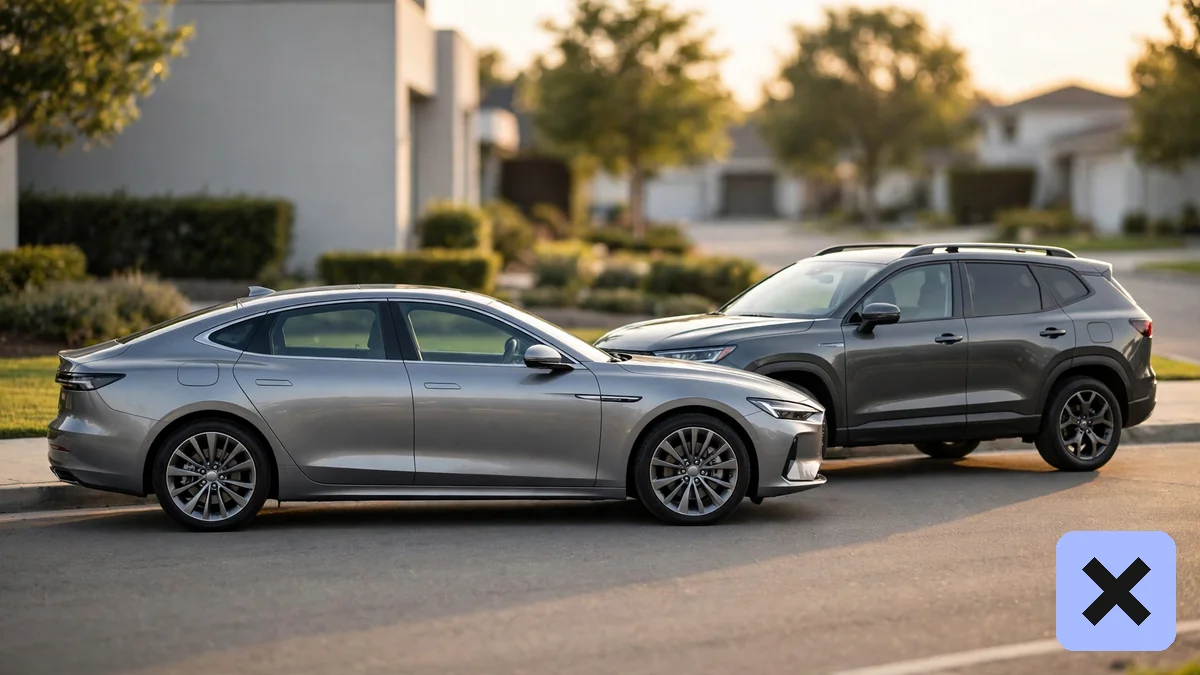
Sedan vs SUV for daily driving is one of the most common questions facing car buyers today, and the answer is less obvious than the sales figures suggest. SUVs now dominate showroom floors, yet sedans remain the quiet default for millions of commuters who value efficiency, comfort and easy parking. Both will get you to work and handle the weekly shop, but they do it in noticeably different ways.
The truth is that neither body style is better in every situation. A sedan usually wins on fuel economy, handling and price, while an SUV wins on space, seating height and versatility. The right choice depends on your roads, your passengers, your parking and your budget, not on which shape happens to be fashionable this year.
This comparison looks at the two body styles the way daily driving actually works: the morning commute, the tight car park, the school run, the weekend shop and the occasional longer trip. By the end, you should know exactly which one fits your life, and which trade-offs you are happy to accept.
Key takeaways
- Sedans are usually cheaper to buy, cheaper to fuel and easier to park than equivalent SUVs.
- SUVs offer a higher driving position, more headroom and more flexible cargo space for families.
- For most solo commuters and couples, a sedan covers daily driving with lower running costs.
- For families with car seats, bulky gear or regular long trips, an SUV is often the more practical choice.
- Test both on your own daily route before deciding, because seat comfort and visibility matter more than specifications.
The Short Answer
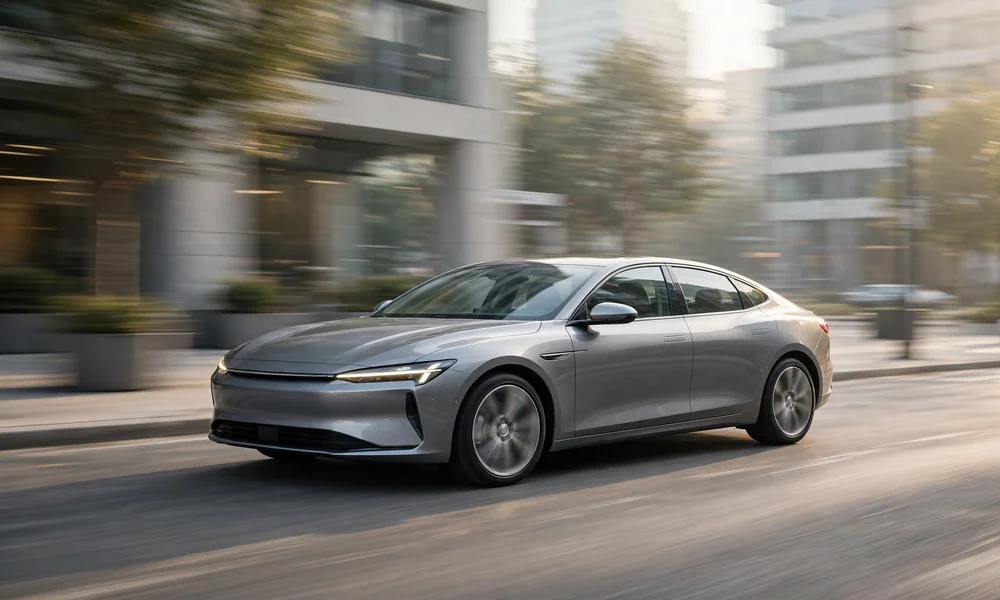
If your daily driving is mostly commuting, school runs on paved roads and trips to the shops, a sedan will almost certainly do the job for less money. It sits lower, uses less fuel, costs less to insure in many cases and slips into parking spaces that make SUV drivers circle the block. For a large share of drivers, the sedan is the sensible, economical answer.
An SUV earns its keep when space is the limiting factor. If you regularly carry three passengers in the back, fit child seats, load a pushchair, a dog crate or sports equipment, or drive on rough or flooded roads, the extra height and cargo flexibility genuinely help. The higher seating position also makes getting in and out easier, which matters more than most buyers expect.
What Daily Driving Actually Demands
Daily driving is not about top speed. It is about repetition: the same roads, the same junctions, the same parking spaces, day after day. Small differences in comfort, visibility and running costs add up quickly when they repeat hundreds of times a year.
Comfort on the Commute
A comfortable daily driver needs a supportive seat, a quiet cabin and suspension that absorbs potholes without drama. Sedans, with their lower centre of gravity, tend to feel more settled and planted on the road. They lean less in corners and often ride more smoothly at motorway speeds, which makes a long commute less tiring.
Visibility and Confidence
The SUV driving position gives a clear view over hedges, parked cars and traffic ahead, which helps when pulling out of junctions or judging gaps in busy traffic. That confidence is real, and it is one of the main reasons drivers switch to SUVs and never look back.
Space for People and Luggage
Space is where the two body styles diverge most clearly. A typical family sedan offers a generous boot, usually between 450 and 550 litres, which is plenty for shopping and luggage. The limitation is the shape of that space: a fixed boot opening and a lower roofline make tall or bulky items awkward.
Sedan vs SUV: Head-to-Head Comparison
The table below summarises the main differences for everyday use. Individual models vary, so treat these as typical patterns rather than guarantees, and always check the figures for the exact cars you are comparing.
| Factor | Sedan | SUV |
|---|---|---|
| Purchase price | Usually lower for the same size and equipment | Usually higher, with a premium for the body style |
| Fuel economy | Better, thanks to lower weight and sleeker shape | Lower, due to weight and taller frontal area |
| Driving position | Lower, sportier feel | Higher, commanding view of the road |
| Passenger space | Good legroom, less headroom | More headroom and easier access |
| Cargo space | Deep boot, narrow opening | Taller, wider, more flexible load area |
| Handling | More agile, less body lean | More body lean, heavier feel |
| Parking | Easier in tight spaces | Harder in tight spaces, needs more room |
| Running costs | Lower tyres, insurance and servicing in many cases | Higher tyres, insurance and servicing in many cases |
Comfort and Space for Real Families
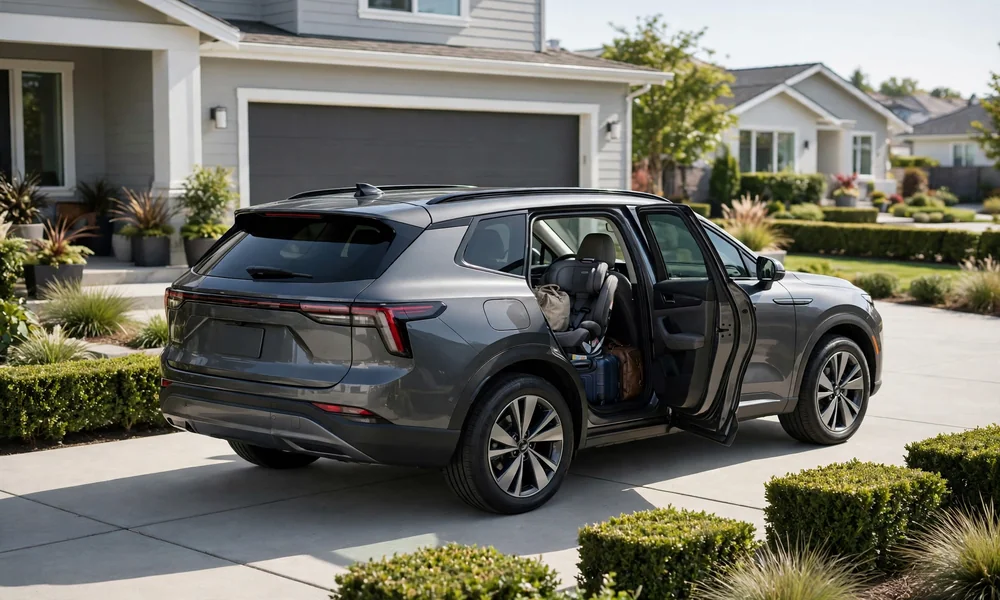
For families, the daily test is not the brochure figure but the morning routine. Can you fit two child seats and still sit comfortably in the front? Can you load the pushchair without removing the parcel shelf? Can a grandparent climb in without a struggle? These small moments decide whether a car feels helpful or obstructive.
That said, many modern sedans are surprisingly roomy. A large family sedan can carry four adults in comfort, and its boot will swallow a weekly shop and suitcases. If you are comparing family-sized options, our guide to the best family SUVs for 2026 shows what the strongest SUV choices offer.
Running Costs and Fuel Economy
Running costs are where the sedan quietly wins the daily driving argument. A lighter, more aerodynamic car uses less fuel on every journey, and the difference compounds over a year of commuting. A sedan that returns five miles per gallon more than an equivalent SUV can save hundreds in fuel over twelve months, depending on mileage and fuel prices.
Electric and hybrid versions narrow the fuel gap, but they do not erase it. A hybrid sedan will still usually be more efficient than a hybrid SUV of similar size. If running costs matter, compare real-world figures for the exact models on your shortlist, and remember the fuel type changes the maths; our comparison of electric vs petrol cars on cost explains how to work it out.

Parking, Manoeuvring and City Life
City driving exposes the SUV weakness most clearly. Multi-storey car parks, narrow residential streets and tight supermarket bays were not designed for tall, wide vehicles. An SUV driver needs more space to open doors, more care to avoid kerbing large wheels, and more patience when a bay looks generous until the neighbouring car arrives.
Sedans are simply easier to place. Their lower height fits under every car park barrier, their narrower body leaves more room in a bay, and their lighter steering at low speed makes three-point turns less of a chore. If your daily route includes a city centre, a hospital car park or a school gate at peak time, the sedan advantage is something you will feel every single day.
Safety and Driving Confidence
Safety is often cited as a reason to choose an SUV, and there is some truth in it. In a collision with a smaller car, the heavier vehicle generally fares better, and the higher seating position helps drivers spot hazards earlier. For many buyers, that sense of protection is a decisive factor.
The picture is more balanced than it first appears. Sedans have a lower centre of gravity, which reduces the risk of rollover, and their lighter weight means shorter braking distances in many cases. Modern safety ratings show that a well-designed sedan can be just as safe as an SUV in crash tests, and active safety systems such as automatic emergency braking and lane keeping are now common in both body styles.
Which One Suits Your Life?
The best way to decide is to be honest about your daily routine. A car that suits a retired couple in a village will not suit a family of five in a city, and a car that suits a sales representative covering motorways will not suit a parent doing three school runs a day.
Use the checklist below to see which body style matches your life. The more items that point one way, the clearer your answer becomes.
Your Daily Driving Checklist
- Choose a sedan if your driving is mostly commuting, motorways and town trips with one or two passengers.
- Choose an SUV if you regularly carry three rear passengers, child seats or bulky equipment.
- Choose a sedan if fuel economy, purchase price and running costs are your top priorities.
- Choose an SUV if easy access, a high driving position and flexible cargo space matter most to you.
- Choose a sedan if you park in tight spaces, multi-storey car parks or narrow streets every day.
- Choose an SUV if you drive on rough, unpaved or flooded roads, or tow regularly.
Whichever way the checklist points, take both body styles for a proper test drive on your own daily route, not just around the dealership. Sit in the back, load the boot with your usual luggage, and try your regular parking space.
It also pays to avoid the common traps that catch buyers of either body style. Overpaying for options you will never use, skipping a proper inspection on a used car, and rushing a decision under dealership pressure are mistakes that cost real money. Our guide to car buying mistakes to avoid covers the pitfalls worth knowing before you sign anything.
Frequently Asked Questions
Are SUVs safer than sedans for daily driving?
In some situations, yes. An SUV is heavier and sits higher, which can help in a collision with a smaller vehicle. However, sedans have a lower centre of gravity, which reduces rollover risk and often means shorter braking distances. The safest car is the one with the best crash test rating, regardless of body style.
Do sedans really save that much fuel compared with SUVs?
Yes, in most like-for-like comparisons. A sedan of similar size and engine will usually return noticeably better fuel economy, because it is lighter and more aerodynamic. Over a year of daily driving, that can amount to a substantial saving.
Is an SUV better for families than a sedan?
For most families with young children, yes. The higher seats, wider doors and more flexible cargo space make child seats, pushchairs and luggage easier to manage. A large sedan can still work well for a family of four, but an SUV is usually more practical once bulky gear is part of daily life.
Are sedans easier to park than SUVs?
Generally, yes. Sedans are lower and often narrower, which makes them easier to fit into tight bays, multi-storey car parks and narrow streets. Compact SUVs close the gap, but a like-for-like comparison still favours the sedan for everyday parking.
Do SUVs cost more to maintain than sedans?
Usually, yes. SUVs often need larger tyres, and their extra weight can increase wear on brakes and suspension. Insurance and purchase prices also tend to be higher. The difference is rarely dramatic for a single service, but it adds up over the years of ownership.
Should I choose a sedan or an SUV if I drive on motorways every day?
A sedan is often the better motorway car, thanks to its quieter cabin, more settled ride and better fuel economy at speed. An SUV can still be comfortable on long journeys, but for pure motorway commuting the sedan usually wins on comfort and cost.
The Bottom Line
For most daily drivers, the sedan is the smarter buy: cheaper to purchase, cheaper to run, easier to park and more enjoyable to drive on ordinary roads. Its only real weakness is a lack of bulky cargo space.
The SUV earns its place when space, access and versatility genuinely matter every day. If you carry child seats, bulky equipment or three rear passengers regularly, or you drive on rough roads, the SUV is the more practical choice, and the extra running costs are a fair price for the convenience.
Choose the car that fits the life you actually live, test both on your own roads, and let your daily routine make the decision.