
Every experienced camper has a story about a first trip that went wrong. The tent leaked, the food ran out, the fire would not light, and the night felt far longer than anyone expected. The worst camping mistakes for beginners are rarely dramatic. They are small decisions made in a hurry, and they add up fast.
The good news is that almost every beginner mistake is easy to avoid once you know what to watch for. Camping needs a little planning, a short test run, and packing for the conditions you will actually face.
This guide covers the mistakes that catch first-time campers most often, from bad campsites to forgotten essentials. Fix these, and your first trip will feel like the holiday you imagined.
Key takeaways
- Arrive with two hours of daylight left to pitch camp calmly.
- Practice pitching your tent at home before the trip.
- Pack for the coldest night you might face, not the warmest afternoon you expect.
- Plan every meal and litre of water before you leave, and store food properly.
- Check the forecast twice and leave the site cleaner than you found it.
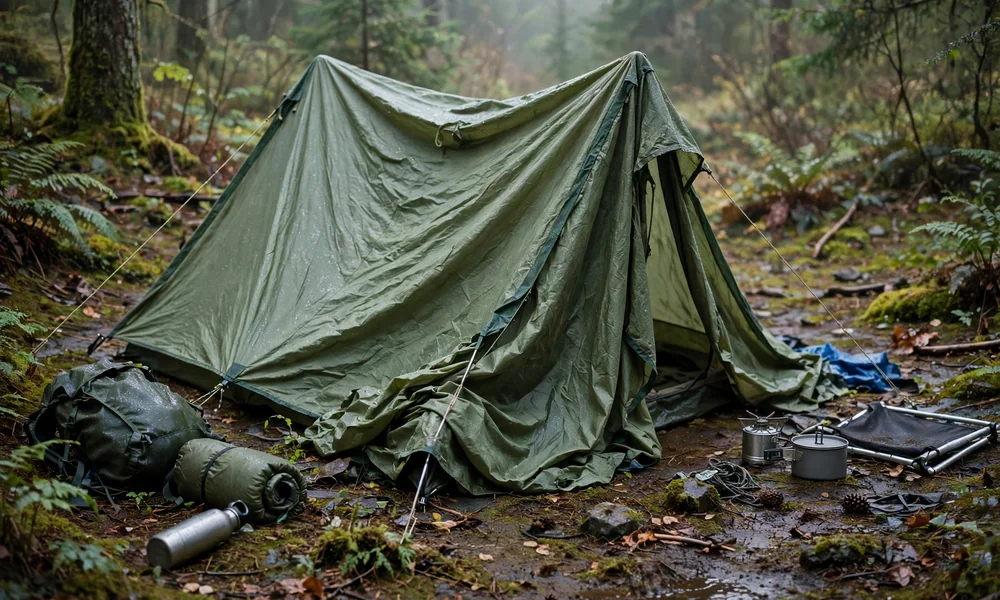
The Worst Camping Mistakes at a Glance
The errors that ruin more first trips than any others, and the simple fix for each one.
| Mistake | What goes wrong | The fix |
|---|---|---|
| Arriving after dark | Bad pitch, missed hazards | Arrive two hours before sunset |
| Never practising the tent | Confusion, leaking shelter | Pitch it at home first |
| Camping in a dip | Rain pools under the tent | Choose flat, slightly raised ground |
| Overpacking | Heavy bag, sore back | Pack light and lay everything out first |
| Underpacking food and water | Hunger, dehydration | Plan meals and water per person per day |
| Ignoring the forecast | Wrong clothes, cold night | Check it twice and pack for the worst case |
| Skimping on sleep gear | Cold ground and no rest | Insulated mat and a warm rated bag |
| Leaving rubbish behind | Damaged site and fines | Bag all waste and carry it out |
Arriving After Dark
The most common beginner mistake is leaving home too late. Traffic or a wrong turn can eat the afternoon, and suddenly you are pitching a tent by torchlight. In the dark you cannot see the slope, the stones, or the branch above. Guy lines tangle and poles go in the wrong sleeves.
Give yourself a two-hour buffer
Plan to reach the campsite at least two hours before sunset. That leaves time to choose a good pitch, set up the tent properly, and cook without rushing. A relaxed arrival is worth more than any piece of gear.
Pitch the tent at home first
Pitch your tent in the garden or a local park before the trip. It takes twenty minutes and removes the biggest source of first-night stress. You will learn which pole goes where, how the rainfly attaches, and how many pegs you need. A tent that has never been out of its bag is a gamble.
Choosing the Wrong Campsite
Where you pitch matters as much as what you pitch. Beginners often choose the first flat-looking patch they see, or the spot closest to the car park. A hollow can become a pond in the first rain shower.
The low ground trap
Water follows the shape of the land, and a tent pitched in a dip will collect it. Choose a spot where water runs away from the tent, and never pitch in a dry stream bed or a drainage channel.
Wind, trees and water
A little shelter from the wind helps, but do not pitch under large trees in a storm, where falling branches are a risk. Keep a sensible distance from rivers and lakes, which bring damp air and insects. A pitch with morning sun dries the dew off the tent.
Tent Mistakes That Ruin the Night
Most first-trip misery starts with the tent. The most frequent error is buying one that is too small: a four-person tent sleeps four shoulder to shoulder, with no room for bags. As a rule, buy a tent rated for one more person than will sleep in it.
The second error is treating the rainfly as optional. Many beginners leave it off on a clear evening, then wake to rain dripping through the mesh. Fit the rainfly every night, tensioned so water runs off. Some of the worst camping gear choices for beginners come down to exactly this kind of shortcut.
Stakes and guy lines matter
Stakes and guy lines hold the tent’s shape and stop it flapping in the wind. Peg every point and pull the guy lines taut before bed. Without guy lines the tent sags and rain seeps through. Carry a few spare pegs.
Condensation is not a leak
Many beginners wake to a damp tent and assume it leaked. Often the culprit is condensation: moisture from your breath collecting on the cold flysheet overnight. Leave the vents open. A well-ventilated tent stays far drier than a sealed one. When choosing a shelter, a roundup of the best camping tents for beginners can help you pick one with proper vents.
Packing Too Much, or Far Too Little
Beginners make one of two opposite errors. Some pack everything they own, just in case. Others pack almost nothing and assume the campsite will provide. Both come from packing without a list.
Overpacking is the more common problem, especially for walk-in sites. A bag stuffed with three changes of clothes and a full-size pillow becomes a burden within the first mile. Underpacking is rarer, but a forgotten sleeping bag cannot be improvised at midnight.
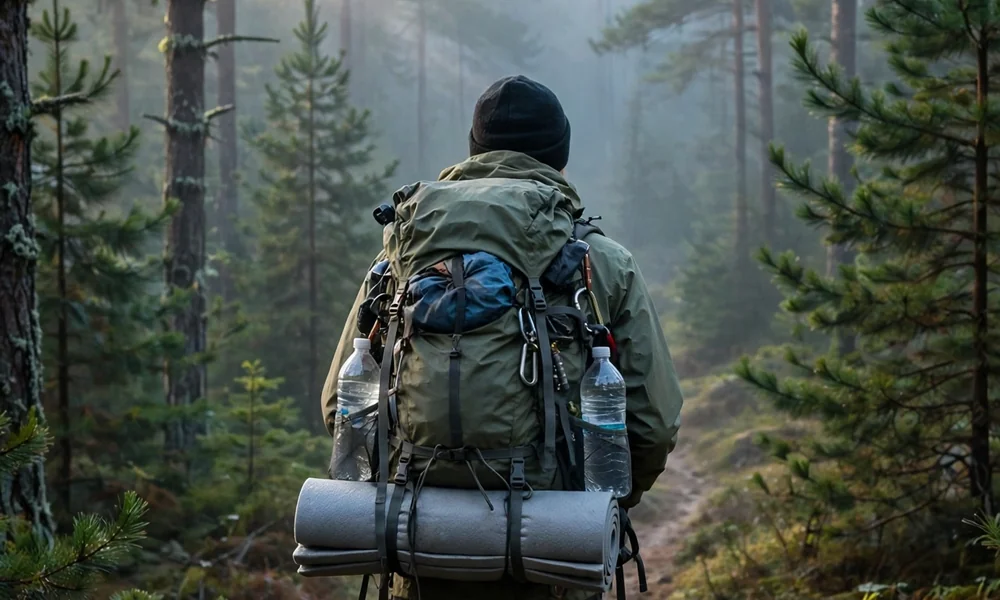
The overloaded pack
Before you pack, lay everything on the floor and ask whether each item earns its weight. Do you need three jumpers, or will one warm layer do? Pack the bag, lift it, and walk around the house with it. If it feels heavy at home, it will feel twice as heavy on a hill. Leave just-in-case items behind.
The forgotten essentials
A short written checklist prevents the classic forgotten items: the tent pegs, the lighter, the head torch batteries, the water bottle, the medication, and the phone charger. Write the list a week ahead and tick items off as they go in. Keep torch and water on top and the first aid kit easy to reach.
Food, Water and Fire
Food planning is where many first trips quietly fall apart. Beginners either bring too little, or bring food that needs a full kitchen to prepare. Food that needs a full kitchen is a poor plan at a site with one small stove. Plan simple, filling meals: one-pot pasta, wraps, tinned food, and no-cook snacks.
Water deserves its own plan. A person needs several litres a day, and more in hot weather. Find out before you go whether the site has drinking water. If it does not, carry enough in, and bring a way to purify stream water if you plan to use it. Running out of water is entirely avoidable.
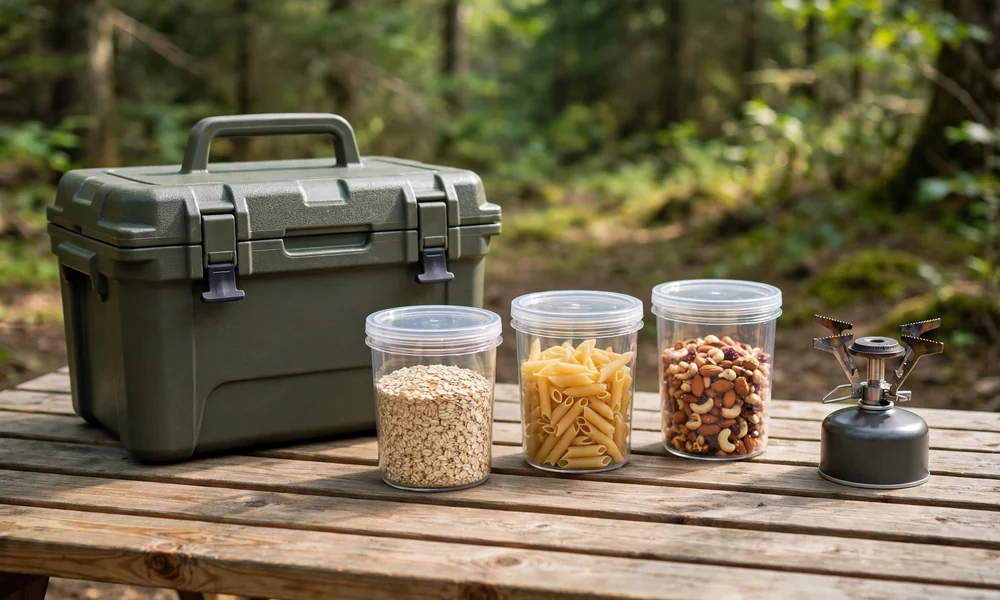
Storing food safely
Food left out overnight invites trouble. Animals and insects will investigate an open bag of food, and a torn tent is a common result. Keep food in sealed containers in the car or a hung bag, never inside your sleeping tent. Clean up after every meal.
Fire mistakes to avoid
A campfire is one of the great pleasures of camping, but it is also where beginners make dangerous mistakes. Never leave a fire unattended, even for a few minutes. Use the designated fire pit, keep the fire small, and keep water nearby. Never use petrol, and make sure the fire is completely cold before you sleep or leave.
Ignoring the Weather
The forecast is not a suggestion. Beginners often check the weather once, days before the trip, and then never look again. Mountain and forest weather changes quickly, and a sunny forecast can turn into a cold, wet weekend with little warning. Check it the day before you leave and again on the morning of departure, and look at the night-time low.
Dressing in layers
Layering is the simplest way to stay comfortable outdoors. A wicking base layer, a warm middle layer, and a waterproof outer layer handle almost any weather. Cotton is the fabric to avoid: it holds sweat, stays wet, and chills you once the temperature drops. Always pack a waterproof jacket.
Comfort and Sleep Mistakes
Sleep is where a camping trip is won or lost. Beginners often bring a thin sleeping bag and nothing between them and the ground, then wonder why they shivered all night. The ground steals body heat far faster than the air does, so an insulated sleeping mat matters more than a thick bag. A good mat and a bag rated for the expected low will transform your nights.
Comfort during the day matters too. Sitting on wet grass gets old quickly. A lightweight chair turns the campsite into a place you want to spend time in. A guide to the best camping chairs can help you compare light, sturdy models that pack down small.
The sleeping setup that actually works
Test your sleeping setup at home the night before you go. If the mat feels thin, add a foam pad underneath. Wear dry socks and a warm hat to bed, and keep water and a torch within reach.
Leaving No Trace, or Leaving a Mess
Every campsite is shared. Beginners sometimes assume a small piece of litter does not matter. It does: rubbish attracts animals, damages the site, and spoils the place for the next campers. Bring bin bags and carry every scrap out, including food waste.
Noise is the other half of camp etiquette. Sound carries a long way in the woods at night. Keep music and conversation quiet after dark and respect the site’s quiet hours.
Beginner Camper’s Pre-Trip Checklist
- Tent pitched at home once, rainfly fitted, all poles and pegs counted.
- Forecast checked twice, layers and waterproofs packed for the coldest night.
- Meals planned for every day, water supply confirmed, stove tested at home.
- Sleeping bag, insulated mat, pillow and torch packed.
- First aid kit, medication, phone charger and head torch batteries in the bag.
- Someone at home knows the site and when you expect to return.
Frequently Asked Questions
What is the biggest mistake beginner campers make?
Arriving late and never having practised pitching the tent. Together they make for a stressful first night and a poor night’s sleep. Arrive early and practise at home.
How much water should I bring camping?
Plan on at least three litres per person per day, and more in hot weather or on long walks. Check whether the site has drinking water before you go, and carry extra if it does not.
Do I need a rainfly if the forecast is clear?
Yes. Fit the rainfly every night. Weather can change overnight, and the fly also guards against dew.
What should I do if my tent leaks?
First, check whether it is condensation rather than a leak, and open the vents. If it is a real leak, check the seams and the flysheet tension. At home, re-seal the seams before the next trip.
Is it safe to keep food in my tent?
No. Keep food in sealed containers away from your sleeping area, ideally in the car or a hung bag where the site requires it. Food in a tent attracts animals and insects.
What is the easiest way to make a first trip go well?
Keep it short and close to home. One night at a site an hour away, with good facilities and a simple meal plan, is the ideal first trip. You will learn what works.
The Bottom Line
The worst camping mistakes for beginners are not about skill or strength. They are about preparation: arriving early, practising the tent, choosing a good pitch, packing with a list, and planning food and water. Your first camp does not need to be perfect, just comfortable enough that you want to go again.


