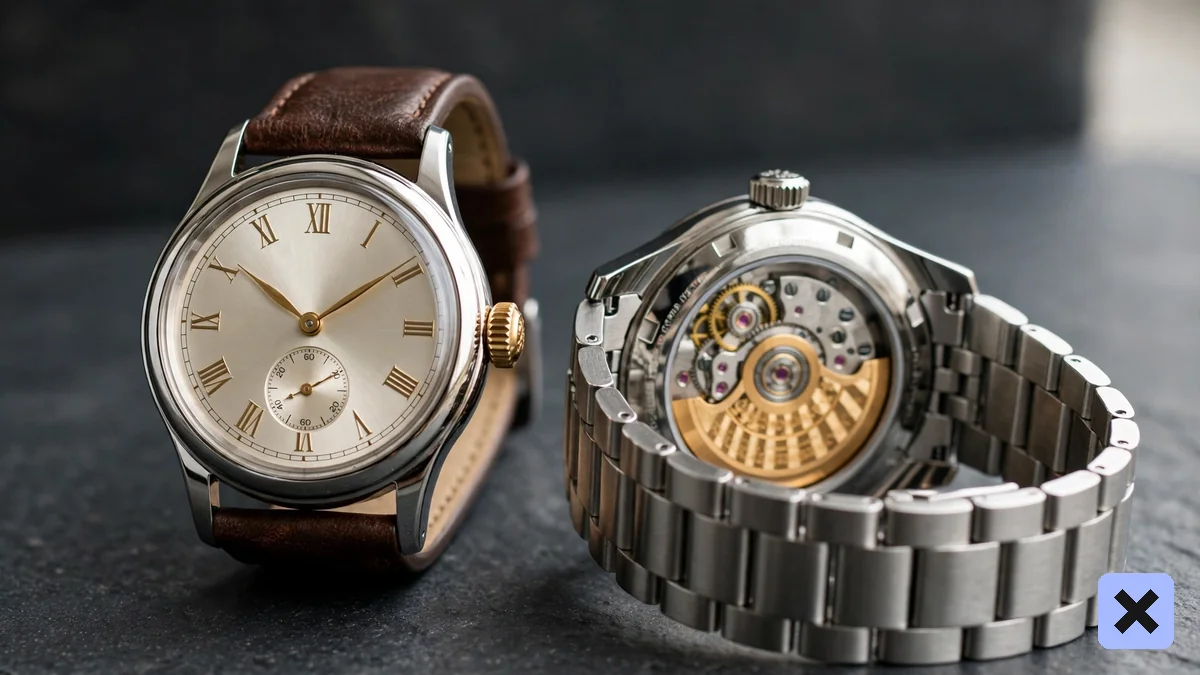
Choosing between manual vs automatic watches is one of the most satisfying decisions in the world of fine timepieces, because there is no wrong answer, only a better answer for the way you live. Both are powered by the same idea, a tiny mechanical engine of gears, springs and jewels that ticks without a battery, and both can last a lifetime when looked after. The difference is how that engine gets its energy, and that shapes how often you touch the watch, how it feels on the wrist, and how it fits into your routine.
A manual watch asks for a small daily ritual: you wind it by turning the crown for twenty or thirty seconds each morning, and in return you get a thinner case and the pleasure of keeping a machine alive with your own hands. An automatic watch winds itself from the motion of your wrist, so it is ready whenever you are.
This guide compares manual vs automatic watches across accuracy, power reserve, comfort, maintenance, cost and character, so you can decide which type matches your habits, your budget and your taste.
Key takeaways
- Manual watches are wound by hand through the crown; automatics wind themselves from wrist movement.
- Automatics are the easier daily companion, staying running as long as you wear them regularly.
- Manual watches are usually thinner, simpler and closer in spirit to traditional watchmaking.
- Both types need servicing every four to six years, and both can last for decades with proper care.
- For most first-time buyers, the automatic is the best choice; the manual suits collectors who enjoy the ritual.

How Each One Works
At the heart of both watches sits a mainspring, a coiled ribbon of metal that stores energy and releases it slowly through a train of gears. The balance wheel divides time into tiny beats, and the hands move as a result. The difference is simply how the mainspring is wound.
The Manual Watch
A manual watch, sometimes called a hand-wound watch, has no rotor and no self-winding mechanism. The only way to store energy is to turn the crown by hand. A full wind usually gives between 36 and 72 hours of power reserve, and when it runs out, the watch stops until you wind it again.
With no rotor on top, manual movements are often thinner and simpler, and the case back can show off the full architecture. Many of the most beautiful movements ever made are manual. The daily winding ritual defines owning one: it takes less than a minute, and for many owners it becomes a small moment of calm.
The Automatic Watch
An automatic watch, also called a self-winding watch, adds a weighted rotor that swings freely as your wrist moves. Every swing winds the mainspring a little, so the watch stays charged while you wear it. Most automatics can also be wound by hand through the crown, useful after a few days unworn, but on a normal day you never need to think about it.
The rotor makes the movement thicker and heavier, and partly hides the gears, though modern makers decorate rotors with engraving and openworked designs. For everyday life, the automatic is the more forgiving of the two: put it on in the morning and it keeps going. Leave it in a drawer for a couple of days and it will stop, but a few turns of the crown bring it back.
Manual vs Automatic Watches at a Glance
| Feature | Manual Watch | Automatic Watch |
|---|---|---|
| How it winds | By hand, turning the crown daily | By wrist movement, plus hand winding |
| Power reserve | Usually 36 to 72 hours | Usually 38 to 80 hours |
| Case thickness | Thinner, often under 10 mm | Thicker, often 11 to 14 mm |
| Daily effort | About 30 seconds of winding each day | None while worn regularly |
| Accuracy | Within 10 seconds a day | Within 10 seconds a day |
| Maintenance | Service every 4 to 6 years | Service every 4 to 6 years |
| Typical cost | Often lower | Often higher |
| Best for | Collectors and ritual lovers | Everyday wearers and first-time buyers |
Accuracy and Power Reserve
Accuracy is where the two types are closest. A well-made manual and a well-made automatic of the same quality will keep time to a similar standard, typically within ten seconds a day, and certified chronometers of either type can do far better. The movement does not care how it was wound; it cares how well it was made and how recently it was serviced.
What differs is consistency. An automatic worn daily stays near full wind, and a mainspring delivers its most even power when well wound. A manual slowly loses power through the day, and its rate can drift slightly, though only by a few seconds. Power reserve is similar: modern movements of both types offer 60, 72 or even 80 hours, so a watch wound on Friday can still run on Monday morning. Do not choose on accuracy alone; choose on the experience you want.
Daily Life: Which Is Easier to Live With
A watch lives on your wrist through commutes, meetings, weekends and holidays. How each type behaves in ordinary life matters more than any specification sheet, and this is where the two diverge most clearly.
Living With a Manual Watch
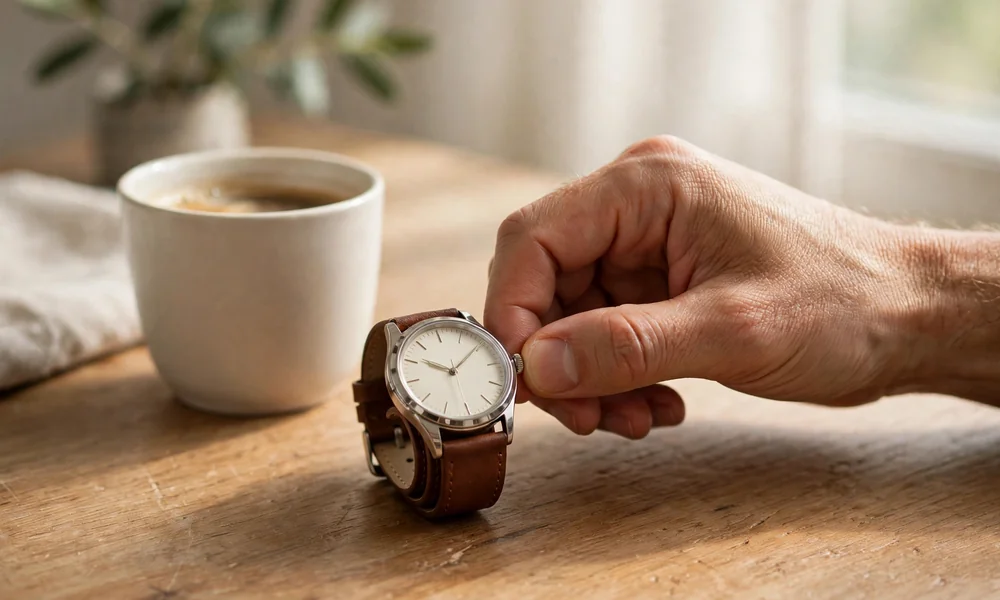
A manual watch rewards routine. Wear the same watch daily, wind it each morning, and it becomes second nature. It is lighter and slimmer, so it slips under a shirt cuff easily. The risk is forgetfulness: skip a day and the watch stops, and you must reset the time and date before wearing it. For one-watch owners this is rarely a problem; for collectors, it can become a regular annoyance.
Living With an Automatic Watch
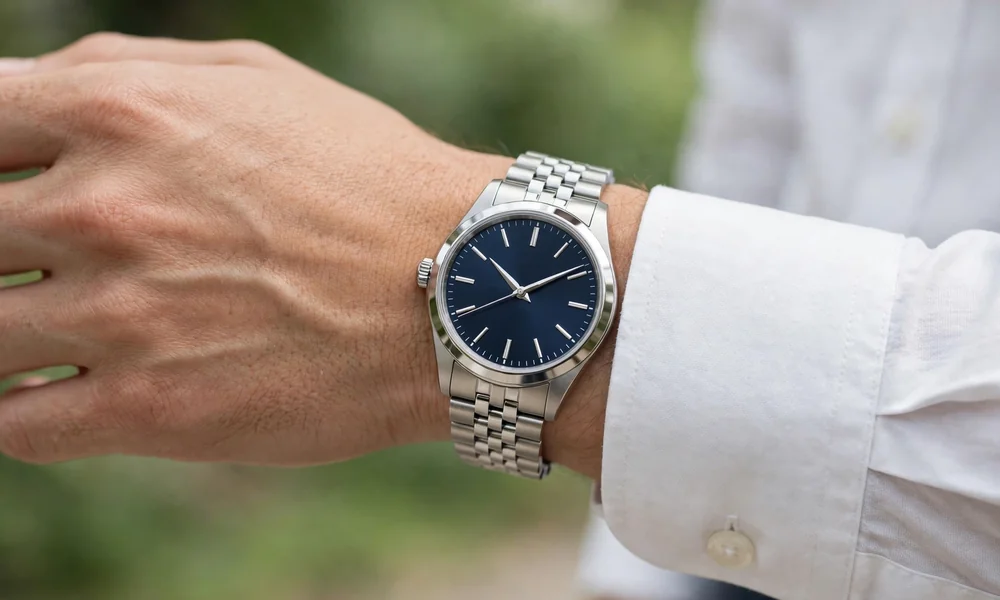
An automatic rewards simply wearing it. Anyone with an active day will keep it wound without trying, and it is always ready. It is heavier and thicker than a comparable manual, but modern cases have slimmed down considerably. Its weakness is the quiet weekend: leave it unworn from Friday to Monday and it will have stopped, and resetting it takes a minute or two. Some owners use a watch winder; others accept the reset.
Comfort is personal, but the pattern is clear: if you want a watch you can forget about, choose automatic; if you enjoy a small daily ritual and a slimmer case, choose manual. The same logic shapes the manual vs automatic motorcycles debate.
Craftsmanship, Character and Collecting
Mechanical watches are not bought on logic alone. They are objects of craft, and how a watch makes you feel is part of the purchase. Here, the manual watch has a genuine edge in romance, while the automatic has an edge in everyday charm.
Manual movements are the older tradition. Without a rotor in the way, the bridges, gears and screws are fully visible through a display back, and watchmakers often finish manual movements to a higher standard because they know the owner will look at them. Automatics offer a different pleasure: watching the rotor swing as you move, knowing the watch harvests energy from your own life.
Collectors tend to own both: a manual dress watch for formal occasions, an automatic for daily wear, and perhaps a vintage piece of each for the weekends. The instinct is the same one that draws people to analogue formats elsewhere, where the older way wins on ritual and feel rather than convenience, as our guide to vinyl vs CD collecting shows. If you are buying your first serious watch, character should follow lifestyle rather than lead it. The same instinct behind a good leather vs suede jackets choice applies here: pick the version that suits how you actually live.
Cost, Maintenance and Long-Term Value
Price is often the deciding factor. At the same level of finishing and brand, a manual watch is usually cheaper than its automatic equivalent, because the movement has fewer parts and is simpler to make. The difference can be a few hundred pounds at entry level, or several thousand at the top end.
Maintenance is similar for both. A mechanical watch should be serviced every four to six years, typically for one to five hundred pounds depending on brand and complexity. Automatics have more parts, so a service can cost a little more, but the difference is modest. Long-term value depends more on brand, rarity and condition than on winding type. Neither is a reliable investment, so buy the watch you love, keep it serviced, and keep the box and papers.
Which One Should You Choose?
The honest answer depends on your habits, not on the watches. Work through this checklist and the right choice becomes obvious.
- One watch worn every day, always ready: choose automatic.
- A slim dress watch that slides under a cuff: choose manual.
- Own several watches and rotate them: choose manual, because it waits patiently and costs less per watch.
- No patience for daily routines: choose automatic.
- Love rituals, craft and a hands-on connection: choose manual.
- First mechanical watch, easiest start: choose automatic.
If you ticked mostly automatic answers, trust that. If you ticked mostly manual answers, trust that instead. The checklist works because it measures your life, not the marketing of either type.
The Verdict: Which Is Best?
Manual vs automatic watches is a close contest, and the manual deserves its devoted following. It is thinner, simpler, often cheaper, and it offers the purest connection between owner and machine. For collectors and dress-watch lovers, and for anyone who finds joy in a daily ritual, it is genuinely the better watch.
But the verdict for most people goes to the automatic watch. It delivers the same mechanical soul with far less friction: it winds itself, stays ready through a normal week, and asks nothing of you beyond wearing it. The best watch is the one you actually wear, and the automatic is the one most people will wear every day, for years. So our verdict is clear: the automatic is the best choice for most buyers, and the best first mechanical watch you can buy. The manual remains the best second watch, for moments when you want to slow down and enjoy the machine itself. Own an automatic first, then add a manual when the ritual starts calling to you.
Frequently Asked Questions
Do manual watches need winding every day?
Yes, once a day, usually in the morning. A full wind gives roughly 36 to 72 hours of power, so skipping a day will often stop the watch, but winding takes less than a minute.
Do automatic watches ever need winding by hand?
Most modern automatics can be wound by hand; do so after the watch has been unworn for a few days. Give the crown twenty or thirty turns, set the time, and let your wrist keep it running.
Which type is more accurate?
No. Both typically run within ten seconds a day. Accuracy depends on the quality of the movement and how recently it was serviced, not on how it is wound.
Which type lasts longer?
Both can last for decades; many mechanical watches from the last century are still running. Manual movements have fewer parts, so there is slightly less to wear out. Servicing every four to six years matters far more than winding type.
Are automatic watches better for beginners?
Yes. An automatic stays running while you wear it, with no daily routine to remember. A manual is a wonderful second purchase once you know you enjoy the ritual.
Can you overwind a manual watch?
Modern manuals have a slipping clutch that prevents damage, so wind until you feel firm resistance and stop. Older vintage watches need more care: stop as soon as resistance increases sharply, and never force the crown.
The bottom line: the automatic watch is the best choice for most people, giving you the craft and character of a mechanical watch with none of the daily effort. Buy an automatic first, and let a manual be the thoughtful second addition when you are ready for the ritual.


