
Key Takeaways
- Ceramic wins on easy nonstick cooking and low-fat meals; stainless steel wins on searing, browning and durability.
- Ceramic coatings wear out in one to three years, while a good stainless steel set can last for decades.
- Stainless steel handles high heat and metal utensils; ceramic needs gentle heat and soft tools.
- Neither is unsafe when used properly, but a ceramic pan must be replaced once its coating chips or flakes.
- The best setup for most kitchens is a mix: ceramic for eggs and delicate foods, stainless steel for the rest.
Ceramic vs stainless cookware is one of the most common questions in any kitchen shop, and the answer matters more than most people expect. The pan you reach for every morning shapes how your food cooks, how long dinner takes, and how much scrubbing waits afterwards. Both materials have loyal fans, and both can serve you well, but they behave very differently on the hob.
Ceramic cookware promises easy, low-fat cooking with a slick surface that eggs slide across. Stainless steel promises the opposite: a tough, long-lasting workhorse that sears, browns and deglazes like a professional kitchen tool. Neither is perfect, and the best choice depends on how you cook, what you cook, and how much care you are willing to give your pans.
This guide compares them on heat control, nonstick performance, safety, durability, cleaning, cost and everyday practicality. By the end, you will know which material belongs in your kitchen.
What Ceramic Cookware Really Is
When people say ceramic cookware, they usually mean a metal pan, most often aluminium, coated with a ceramic nonstick layer. The coating is a silica-based finish applied over the metal core and cured at high temperature. It is not the same as a solid ceramic pot, and that matters, because the coating is the part that does the work and the part that eventually wears out.
How Ceramic Coatings Work
A ceramic coating creates a smooth, glass-like surface that food struggles to grip. The surface is naturally slick without the fluoropolymer chemicals used in traditional nonstick pans, which is one reason many buyers choose it. Eggs, pancakes and fish release easily, and you can cook with very little oil or butter. It works best at low to medium heat; push the heat too high and it degrades faster, developing sticky patches.
What Ceramic Does Best
Ceramic shines at breakfast and other delicate cooking. Eggs slide out of a fresh ceramic pan with almost no fat, pancakes brown evenly without sticking, and fish fillets lift cleanly instead of tearing. Ceramic pans are also light and easy to handle, which suits smaller hands, older cooks and anyone who finds heavy steel pans tiring. They need no seasoning, just gentle heat and a soft sponge.

What Stainless Steel Cookware Really Is
Stainless steel cookware is made from an alloy of iron, chromium and nickel, most commonly the 18/10 grade that resists rust and staining. The best pans use a layered, or clad, construction, with an aluminium or copper core sandwiched between steel layers, so heat spreads evenly instead of pooling in hot spots.
How Stainless Steel Is Built
A good stainless steel pan is a piece of engineering. The outer steel layer gives it strength and a polished finish, the aluminium core carries heat quickly and evenly, and the inner steel surface stays stable at high temperatures. Tri-ply construction, with three layers running through the whole pan, is the standard to look for. The cooking surface is not nonstick, and that is a feature rather than a flaw. Food grips the steel and browns deeply, leaving behind caramelised residue that becomes the base of a pan sauce.
What Stainless Steel Does Best
Stainless steel excels at high-heat cooking. It sears steaks with a deep crust, browns chicken skin until crisp, and handles the kind of heat that would damage a ceramic coating in minutes. It goes from hob to oven without worry and tolerates metal utensils and scouring pads. With no coating to wear away, a good steel pan can last for decades.

Ceramic vs Stainless Cookware: The Full Comparison
| Feature | Ceramic Cookware | Stainless Steel Cookware |
|---|---|---|
| Nonstick performance | Excellent when new, fades with use | None, food sticks without technique |
| High-heat cooking | Poor, coating degrades above medium heat | Excellent, built for searing and browning |
| Durability | One to three years of regular use | Decades with basic care |
| Cleaning | Easy at first, harder as coating wears | Needs soaking and scrubbing, dishwasher safe |
| Utensils | Wood, silicone or plastic only | Metal utensils are fine |
| Oven safety | Often limited to around 200°C | Usually safe to 260°C or higher |
| Weight | Light and easy to handle | Heavier, especially fully clad sets |
| Price | Lower upfront, replaced often | Higher upfront, rarely replaced |
Cooking Performance Head to Head
Heat Control and Searing
Stainless steel wins the heat contest by a wide margin. It heats quickly when clad properly, holds temperature well, and can take the fierce heat needed for a proper sear. Ceramic pans heat evenly and gently, which suits delicate food, but they should never be preheated empty on high heat. The coating can crack and the core can warp.
Choosing the right cooking fat matters too, since every oil has a smoke point where it starts to break down. Our guide to the best olive oils for cooking explains which oils suit high-heat searing and which are better kept for dressings and gentle frying.
Nonstick and Easy Release
This is where ceramic earns its place. A new ceramic pan releases eggs, fish and pancakes with almost no effort and very little fat. For lighter meals, that slick surface makes breakfast faster and less messy. Stainless steel demands technique instead. The pan must be preheated, the oil must be hot enough to shimmer, and the food must be left alone until it releases naturally. Once you learn the rhythm, it works well, but beginners will stick food to steel while they learn. Ceramic asks for no skill at all.
Everyday Cooking Tasks
For the daily round of eggs, vegetables, sauces and reheating, ceramic is the easier companion. It asks little of the cook and forgives a rushed morning. For the bigger jobs, roasting, searing, deglazing and building sauces, stainless steel is the better tool, and it is the one professional cooks reach for. Matching the tool to the task beats owning one expensive pan for everything, as our look at air fryer vs oven for roasting shows. Precision helps too, and if you bake or portion carefully, a reliable set of best kitchen scales will improve your results more than a new pan ever will.
Health and Safety
Coatings and Chemicals
Ceramic coatings are marketed as free from PTFE and PFOA, the chemicals associated with traditional nonstick pans, and that claim is genuine. The silica-based coating does not release the fumes that overheated PTFE can produce. Once the coating chips, cracks or flakes, the metal underneath is exposed and the pan should be replaced.
Metal Leaching and Allergies
Stainless steel can leach small amounts of nickel and chromium into food, particularly with acidic ingredients such as tomatoes or vinegar cooked for a long time. For most people the amounts are tiny and harmless, but anyone with a nickel allergy should know about it, since prolonged contact can trigger a reaction in sensitive individuals.
Durability and Lifespan
How Long Each Lasts
The lifespan gap is the biggest difference between the two materials. A ceramic pan used daily will typically lose its nonstick performance within one to three years, and many owners notice sticking within the first year if they cook on high heat. A stainless steel pan, by contrast, has no coating to fail. A quality stainless pan can last twenty years or more.
Cleaning and Care
Daily Cleaning
A new ceramic pan is the easiest pan in the kitchen to clean. A wipe with a soft sponge and warm soapy water is usually enough. Stainless steel is harder to clean from the start: food sticks, sauces bake on, and the pan usually needs a soak and a firm scrub. You can scrub it as hard as you like, and most stainless pans are dishwasher safe.
Cost and Value
Ceramic pans are cheaper to buy, often costing a third of an equivalent stainless steel pan. For a first kitchen or a tight budget, that is a genuine advantage. The catch is replacement: if you buy a new ceramic pan every eighteen months, the cost adds up, and over a decade you may spend more than the price of one good stainless set. Stainless steel costs more upfront, but a set that lasts twenty years costs very little per year.
Which Cookware Is Best for Different Cooks
Best for Beginners
Ceramic is the friendlier choice for a new cook. It needs no technique and makes eggs, vegetables and reheating simple. A beginner who buys stainless steel first often gets frustrated by sticking food before learning the technique.
Best for Serious Home Cooks
Stainless steel is the clear winner for anyone who cooks seriously. It sears, browns, deglazes and goes into the oven. A serious cook will outgrow a ceramic pan quickly, but will keep a good stainless set for life.
Best for Small Kitchens
Small kitchens benefit from a mixed approach rather than a full set of either material. One ceramic frying pan for eggs and delicate food, one stainless steel saucepan and one stainless steel sauté pan for everything else, covers almost every meal without filling the cupboards.
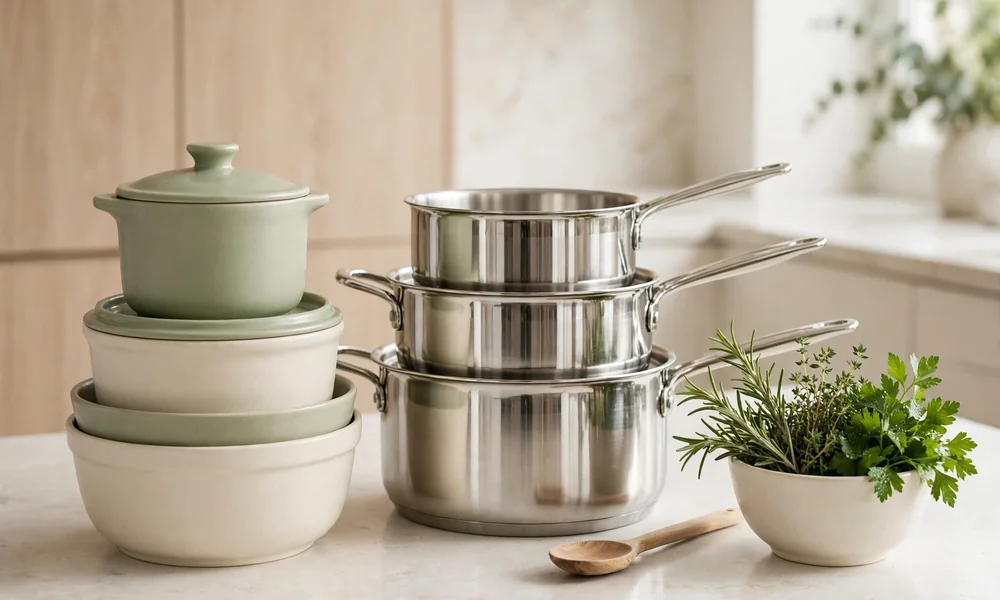
Ceramic vs Stainless Cookware Checklist
- Choose ceramic if your priority is easy nonstick cooking with little oil.
- Choose stainless steel if you sear meat, brown food or build pan sauces.
- Never use high heat or metal utensils on a ceramic pan.
- Buy fully clad stainless steel for even heat, not a base-disc pan.
- Replace a ceramic pan as soon as its coating chips, flakes or stops releasing food.
- Consider owning both: ceramic for delicate foods, stainless steel for the rest.
Frequently Asked Questions
Is ceramic cookware safer than stainless steel?
Both are safe when used properly. Ceramic is free from PTFE and PFOA, which appeals to many buyers, while stainless steel has no coating to degrade. Replace a ceramic pan once its coating is damaged, and note that steel can leach small amounts of nickel into acidic foods.
Can ceramic cookware go in the oven?
Many ceramic pans are oven safe only to around 200°C, so always check the manufacturer’s rating first. Stainless steel pans are usually safe to 260°C or higher.
Why does food stick to my stainless steel pan?
Food sticks when the pan or the oil is not hot enough. Preheat the pan, add oil, wait until it shimmers, then add the food and leave it alone until it releases naturally.
How long does ceramic cookware last?
With daily use, a ceramic pan usually keeps its nonstick performance for one to three years. High heat, metal utensils and harsh cleaning shorten that life, while gentle heat and soft tools can stretch it.
Can I use metal utensils on stainless steel?
Yes, stainless steel tolerates metal utensils without damage. You can use metal spatulas, tongs and whisks freely, and scrub the pan with a scouring pad, which is part of why it lasts so long.
Should I buy a full set or mix ceramic and stainless steel?
Mixing is usually the smarter choice. A ceramic frying pan covers eggs, fish and delicate foods, while stainless steel saucepans and a sauté pan handle searing, sauces and high-heat cooking.
The Bottom Line
Ceramic vs stainless cookware comes down to what you value most in the kitchen. Ceramic is best for easy, low-fat, everyday cooking. Stainless steel is the best choice overall, because it sears better, lasts for decades, handles high heat and metal utensils, and costs less per year of use. For most kitchens, the winning answer is a small, well-chosen mix of both.


