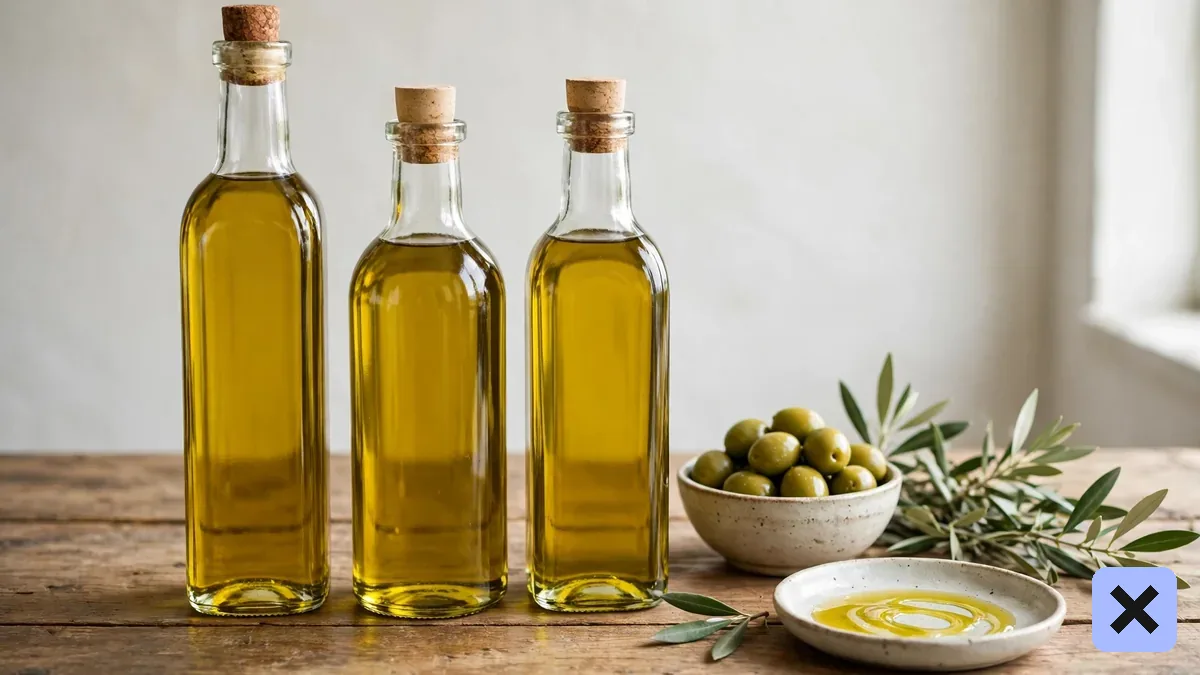
The best olive oils for cooking are the ones that match the job. A peppery extra virgin oil can turn a simple salad into something memorable, while a milder refined oil handles a hot pan without smoking or tasting bitter. Choosing well is less about finding one perfect bottle and more about knowing which oil belongs in the pan, which belongs on the plate, and which is worth the price.
Supermarket shelves make the choice harder than it should be, with labels promising cold-pressed, first-pressed and single-estate oils while many bottles hide blends and old harvests behind beautiful packaging. A few simple checks, a clear sense of smoke point and an honest look at flavour will steer you to the right bottle almost every time.
This guide covers the best olive oils for cooking in 2026, from everyday workhorses to special finishing oils: how to read a label, match an oil to a dish, store it properly and avoid the mistakes that waste money and flavour.
Key takeaways
- Extra virgin olive oil is the best choice for most cooking, including sautéing and roasting, despite old myths about its smoke point.
- Match the oil to the job: mild oils for frying and baking, bold peppery oils for finishing and dressings.
- Check the harvest date, not just the best-before date, and buy oil harvested within the past year.
- Dark glass, a sealed cap and a cool, dark cupboard keep olive oil fresh far longer than a sunny windowsill.
- Price is a clue, not a guarantee: taste and freshness matter more than a famous label.
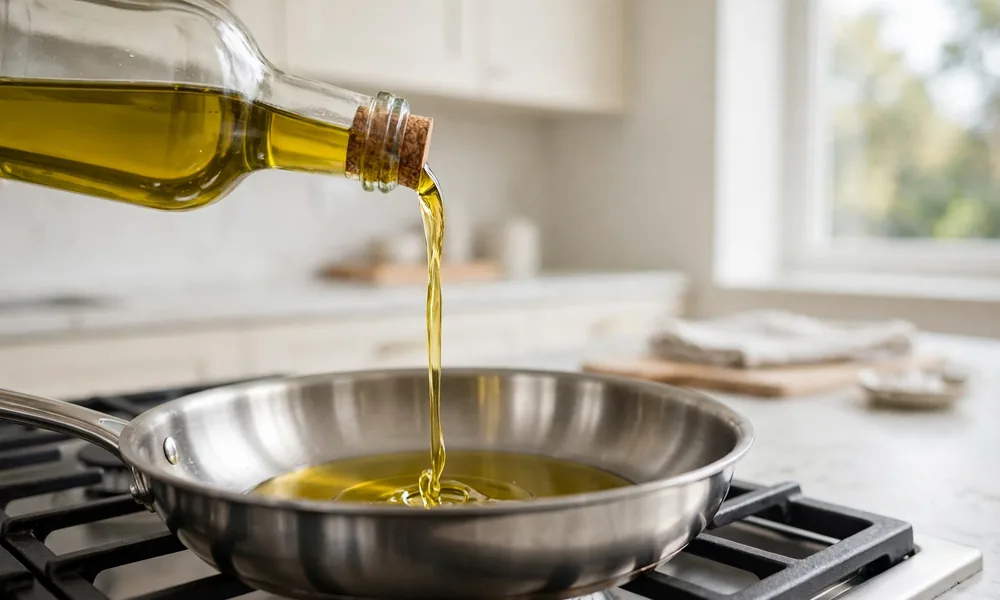
What Makes an Olive Oil Great for Cooking
A great cooking oil does three things well: it adds flavour or stays out of the way when the dish needs it, it holds up under heat, and it stays fresh long enough to finish the bottle. Olive oil can do all three, but only when you pick the right grade and treat it properly.
Extra Virgin vs Virgin vs Pure Olive Oil
Extra virgin olive oil is the highest grade, made by mechanically pressing olives without heat or chemicals, and it must pass strict tests for acidity and flavour. A good one tastes fresh, green and slightly peppery, with a clean finish that catches the back of the throat. That peppery bite is a sign of fresh polyphenols, the compounds that give olive oil much of its character.
Virgin olive oil is made the same way but to slightly looser standards, so it may taste a little less bright. Pure olive oil, sometimes labelled simply olive oil, is a blend of refined oil and a small amount of virgin oil. It is neutral, pale and mild, which makes it useful for high-heat cooking where you do not want the oil to add flavour. Light olive oil is not lower in calories; light refers only to its mild taste and pale colour.
Smoke Point: What the Numbers Really Mean
The smoke point is the temperature at which an oil starts to break down and produce visible smoke. Extra virgin olive oil smokes at around 190 to 210 degrees Celsius, refined olive oil at around 220 to 240. For most home cooking, including sautéing, roasting and shallow frying, the pan rarely stays above 200 degrees for long, so a good extra virgin oil is well within its comfort zone.
The old warning against cooking with extra virgin olive oil does not hold up. Heated for long periods, it stays more stable than many seed oils thanks to its antioxidants and high share of monounsaturated fat. What matters more is not overheating an empty pan, not reusing oil many times and not buying oil that is already stale.
The Best Olive Oils for Cooking in 2026
The oils below cover the full range of home cooking, from a reliable everyday bottle to a bold finishing oil for special dishes. Each one earns its place for a different reason, so the best choice depends on how you cook.
| Oil | Best for | Smoke point | Flavour |
|---|---|---|---|
| California Olive Ranch Everyday | Everyday sautéing and roasting | About 210°C | Fresh, grassy, mild pepper |
| Filippo Berio Extra Virgin | Everyday cooking and dressings | About 200°C | Smooth, balanced, fruity |
| Colavita Extra Virgin | Pasta, grilling and marinades | About 205°C | Medium fruit, gentle bite |
| Lucini Italia Premium Select | Finishing and dipping | About 200°C | Bold, green, peppery |
| Kirkland Signature Organic | High-volume everyday cooking | About 210°C | Mild, clean, versatile |
| Bertolli Mild Taste | Frying and baking | About 230°C | Very mild, neutral |
California Olive Ranch Everyday is the strongest all-rounder here: widely available, honestly priced and consistent, with a fresh grassy flavour that works in a pan and in a dressing. For cooks who want one bottle that does almost everything, this is the safest pick.
Filippo Berio and Colavita are the classic Italian pantry staples for good reason: smooth and balanced rather than aggressive, they suit pasta sauces, marinades and roasted vegetables. Lucini sits at the other end of the range: bold, green and peppery, it is best saved for finishing, where its flavour can shine instead of being cooked away.
Kirkland Signature Organic is the value pick for households that cook with olive oil every day: mild and clean in large bottles, it performs well across sautéing, roasting and baking. Bertolli Mild Taste is best when you want the cooking properties of olive oil without its flavour, such as in delicate cakes or high-heat frying.
How to Choose the Right Olive Oil for Each Dish
Matching oil to dish is simpler than it looks. Ask two questions: how hot will the pan get, and do you want to taste the oil? High heat and delicate flavours call for a mild oil, while low heat and simple dishes reward a bold one.
Everyday Sautéing and Frying
For everyday sautéing, a good extra virgin oil is the best default. Heat the pan first, add the oil and let it shimmer before the food goes in. Measuring the oil instead of pouring freehand keeps dishes from turning greasy, and a reliable set of best kitchen scales for 2026 helps with precise cooking, from weighing ingredients to portioning meals evenly. For shallow frying, a refined or mild-tasting olive oil handles the heat more calmly and costs less per litre, so save the expensive bottle for another day.
Roasting Vegetables
Roasting is where olive oil earns its place. Toss vegetables in oil before they hit the tray so every surface is coated. A medium-flavoured extra virgin oil adds a fruity note that suits potatoes, courgettes, peppers and root vegetables. When the grill is involved instead of the oven, comparing gas vs charcoal grills and which cooks better can help you plan the cooking method before you choose the oil.
Baking with Olive Oil
Olive oil works beautifully in baking, especially in citrus cakes, focaccia and chocolate bakes, where it keeps the crumb moist for days. Use a mild oil so the flavour does not overpower the bake, and replace butter with about three quarters of the amount of oil. Focaccia is the exception: a generous pour of bold extra virgin oil on top is exactly what makes it taste like focaccia.
Finishing and Dressings
Finishing is the one place where spending more genuinely pays off. A spoonful of peppery extra virgin oil over grilled fish, ripe tomatoes, burrata or bean soup adds a flavour no other ingredient can copy. For dressings, a three-to-one ratio of oil to acid is a reliable starting point, and a bold oil stands up well to lemon juice or sherry vinegar. A great finishing oil also pairs beautifully with a well-chosen wine, and knowing how red vs white wine pairs with steak shows the same principle: match intensity to intensity and let the stronger flavour lead.
How to Taste Olive Oil Like a Pro
Tasting olive oil takes two minutes and tells you more than any label. Pour a small amount into a glass, warm it in your hand and breathe in deeply. Fresh oil smells green and alive, like cut grass, green banana or tomato leaf. Stale oil smells flat or waxy, and rancid oil has a crayon-like smell that is hard to miss once you know it.
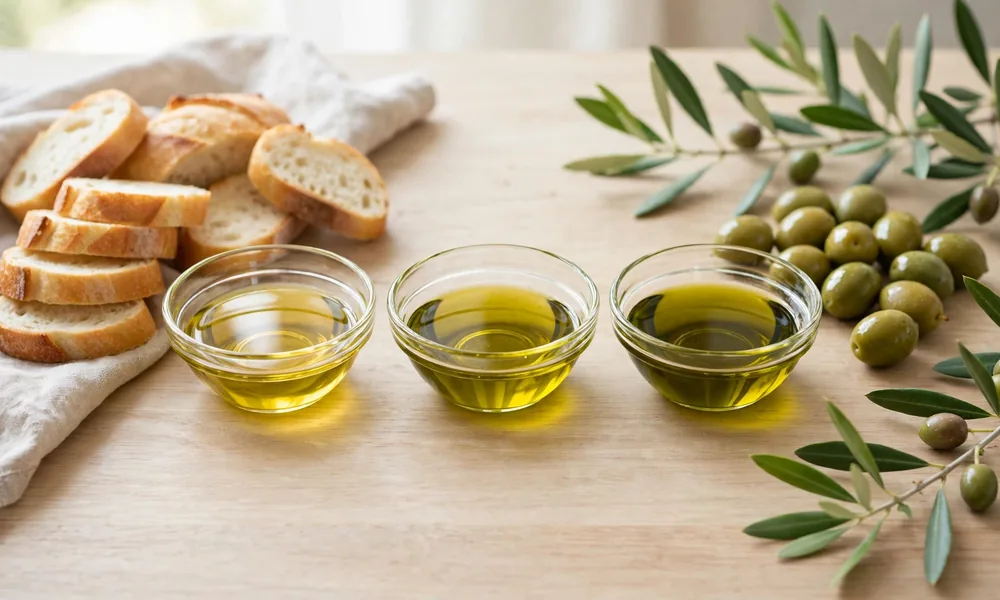
Take a small sip and draw in a little air, letting the oil coat your mouth. Good oil tastes fruity first, then bitter, then peppery at the back of the throat. That peppery cough is a good sign, not a flaw. If the oil tastes greasy and flavourless, or sharp in a vinegary way, it is past its best.
Storing Olive Oil So It Stays Fresh
Olive oil has four enemies: light, heat, air and time. A bottle left beside the hob or on a sunny windowsill loses its fresh flavour within weeks, no matter how good it was. The best home is a cool, dark cupboard away from the cooker, with the cap screwed on tightly after every use.
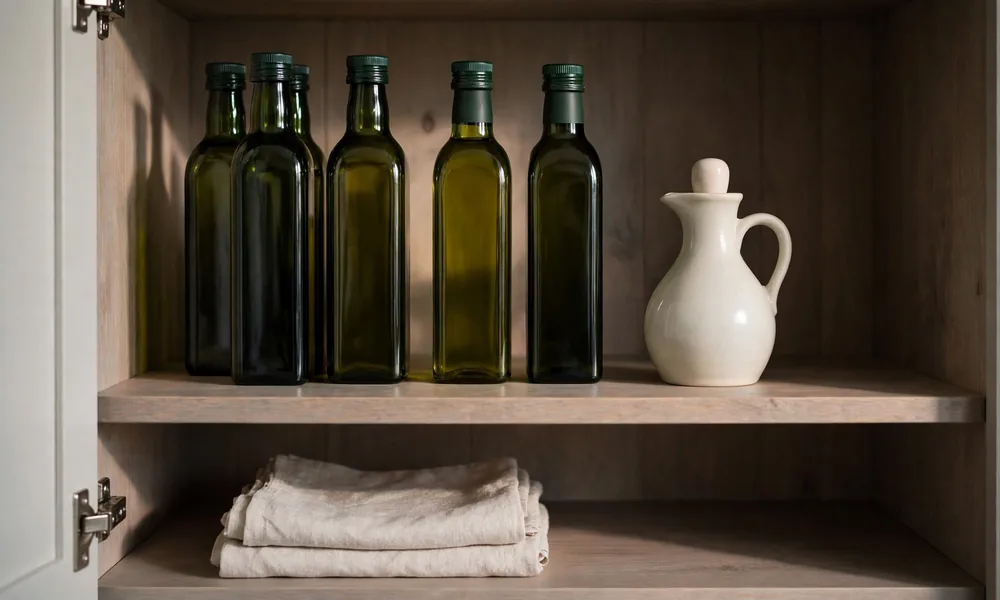
Buy sizes you can finish within six to eight weeks of opening, and look for a harvest date on the label. Oil harvested within the past year is the freshest choice. Dark glass or a tin protects the oil far better than clear glass, and decanting into a small cruet is fine as long as the main bottle stays sealed and cool.
Olive Oil Buying Checklist
Run through this checklist before any bottle goes into your basket.
- Choose extra virgin for flavour and everyday cooking, and a mild refined oil for high-heat frying.
- Look for a harvest date within the past twelve months, not just a best-before date.
- Pick dark glass or a tin, and avoid clear bottles sitting under bright shop lights.
- Check the origin on the label and prefer a named country or estate over a vague blend.
- Buy a size you can finish within two months of opening.
- Taste before you trust: fresh oil smells green and finishes with a gentle peppery bite.
Frequently Asked Questions
Can you cook with extra virgin olive oil?
Yes. Extra virgin olive oil is stable for sautéing, roasting and shallow frying. Its smoke point of around 190 to 210 degrees Celsius covers most home cooking, and its antioxidants help it resist breakdown better than many seed oils.
What is the best olive oil for high-heat cooking?
A refined or light-tasting olive oil is best for high-heat cooking, with a smoke point around 220 to 240 degrees Celsius. It stays neutral in flavour and costs less, so it is the sensible pick for frying and searing.
How long does olive oil last once opened?
An opened bottle stays at its best for about six to eight weeks in a cool, dark cupboard with the cap on. Unopened oil keeps for up to two years from harvest, but flavour fades steadily, so fresher is always better.
Should olive oil be kept in the fridge?
The fridge is not the best home for olive oil: it can go cloudy and thick in the cold, and repeated warming and cooling speeds up flavour loss. A cool, dark cupboard is better for everyday use.
Why does my olive oil taste bitter or peppery?
Bitterness and a peppery finish are normal signs of fresh, high-quality extra virgin olive oil, coming from polyphenols in fresh olives. If the taste is harsh, stale or like crayons, the oil is likely old or rancid and should be replaced.
Is expensive olive oil worth it?
For finishing dishes, dressings and dipping, a premium oil is worth the price because you taste every drop. For everyday frying and roasting, a good mid-priced oil performs just as well, so save the expensive bottle for the plate.
The Bottom Line
The best olive oil for cooking in 2026 fits how you actually cook. Keep a reliable extra virgin oil for everyday sautéing and roasting, a mild oil for high heat and baking, and one bold bottle for finishing. Buy fresh, store it in the dark, and let flavour, not marketing, decide which bottle stays in your kitchen.