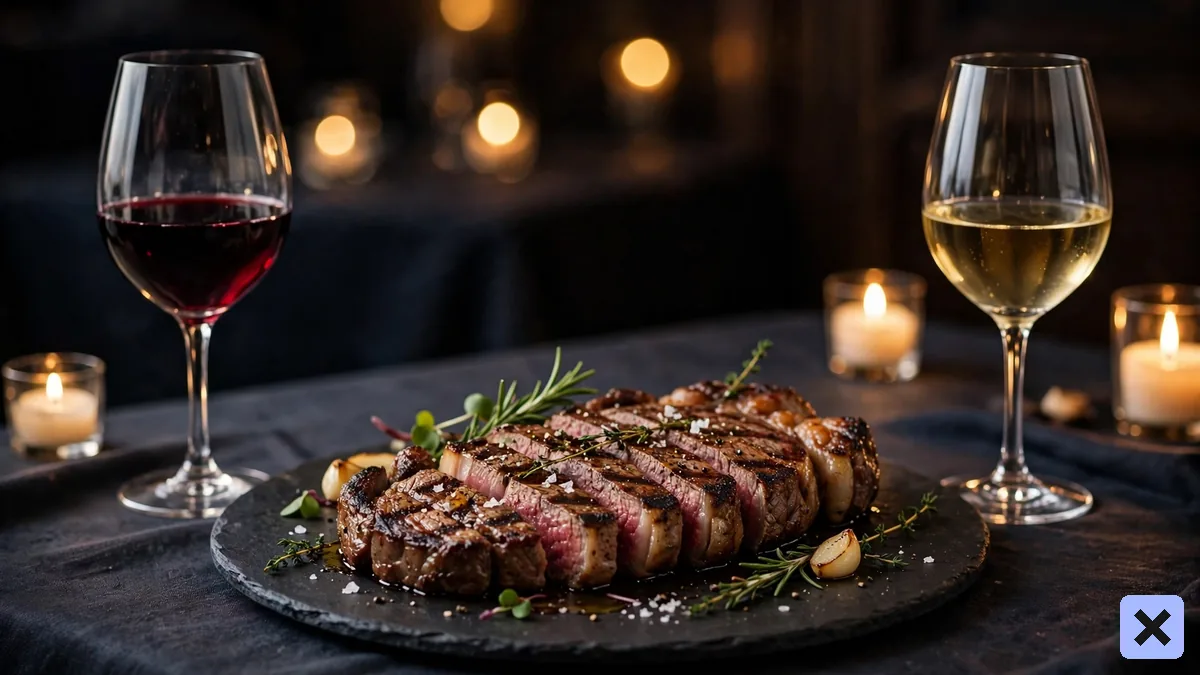
Order a steak at any good restaurant and the next question arrives almost before the menu closes: red or white wine? For decades, the default answer has been red, and for good reason. A full-bodied red and a well-cooked steak are one of the great partnerships in food, with tannin cutting through fat and dark fruit flavours standing up to char and smoke. But the best pairing depends on the cut, the cooking, the sauce, and your own taste.
Red vs white wine with steak is a fair contest, not a foregone conclusion. White wine brings acidity and freshness that can lift a lean cut or a buttery sauce in ways a heavy red cannot. The trick is knowing when each wine earns its place and which bottles to reach for. This guide compares both options honestly, cut by cut, so you can order and pour with confidence.
Below, you will find the case for each wine, the best bottles for different steaks, a side-by-side comparison, a serving checklist, and answers to the questions diners ask most. The right glass makes the meal better, and the goal is a pairing that feels natural.
Key takeaways
- Red wine is the best default pairing for most steaks, especially rich, fatty cuts like ribeye and strip steak.
- White wine works beautifully with lean cuts, lighter sauces, and steak served with bright or buttery flavours.
- Tannin in red wine softens fat and refreshes the palate, while acidity in white wine cuts richness and adds lift.
- The cut, the doneness, and the sauce matter more than the colour of the wine in the glass.
- Serve red wine slightly cool, white wine well chilled, and taste both with the steak before deciding.

Why Steak and Wine Are a Classic Pair
Steak and wine have shared the table for centuries because they solve each other’s problems. A steak is rich, salty, and fatty, with deep savoury flavours from the grill. Wine brings the things steak lacks: acidity to cut through fat, fruit to echo the char, and tannin or freshness to reset the palate between bites.
Fat coats the tongue and dulls flavour, and both tannin and acidity strip that coating away. Tannin, the drying compound in red wine, binds with the fat and protein in beef. Acidity does a similar job in a lighter way, slicing through richness and leaving the mouth feeling clean.
Flavour matching matters just as much as chemistry. The caramelised crust of a grilled steak has bitter, smoky, and sweet notes, and wines with dark fruit, spice, or oak echo those flavours beautifully. Lighter preparations call for brighter, fresher flavours instead.
The Case for Red Wine with Steak
Red wine is the classic steak partner because its structure was made for beef. Tannin grips the fat, the alcohol carries the richness, and the dark fruit flavours of blackberry, plum, and cherry sit naturally alongside char and smoke. A full-bodied red stands its ground next to a ribeye.
The best reds for steak have enough body and tannin to handle fat. Cabernet Sauvignon is the textbook match, with firm tannin and blackcurrant fruit that love grilled meat. Malbec brings softer tannin and plush dark fruit, which suits a ribeye or a steak with a rich sauce. Syrah adds pepper and smoke, a natural fit for steak cooked over flame. Our guide to red wine vs white wine for seafood shows how the same two wines behave with a lighter protein.
Best Red Wines for Steak
Cabernet Sauvignon leads the list for fatty cuts, thanks to its structure and its ability to handle a well-marbled steak. Malbec is the friendlier option, rounder and fruitier, and it flatters grilled steak and steak served with a red wine reduction. Syrah suits smoky, peppery preparations. For leaner cuts, a medium-bodied red such as Pinot Noir or Chianti brings acidity and red fruit without overwhelming the meat.
When Red Wine Wins
Red wine wins when the steak is rich, fatty, or heavily seasoned. A ribeye, a strip steak, or a tomahawk with a deep sear all ask for a red with backbone. It also wins when the sauce is bold, such as a peppercorn sauce, a mushroom sauce, or a red wine reduction.

The Case for White Wine with Steak
White wine with steak sounds like a rule-breaker, but it has a real following among chefs and sommeliers. Not every steak is a fatty ribeye, and not every dinner wants a heavy red. A lean filet or a steak served with a cream or butter sauce can pair better with a white that brings acidity and freshness.
White wine’s strength is lift. Where red wine adds weight and depth, white wine adds brightness and contrast. A crisp white can cut through butter and cream, refresh the palate, and let the delicate flavour of a lean cut shine. The key is choosing a white with enough body to stand next to beef, because a thin, watery white will disappear entirely.
Best White Wines for Steak
Full-bodied whites are the ones that work with steak. An oaked Chardonnay is the most reliable choice, with its creamy texture and enough weight to handle a filet with herb butter. A white Burgundy offers the same idea with more finesse, while an aged white Rioja brings nutty, savoury depth that suits grilled meat well. For lighter dishes, a dry Riesling or a Viognier can bring aromatic lift that a red cannot match.
When White Wine Wins
White wine wins when the steak is lean, lightly seasoned, or served with a rich sauce that needs cutting rather than matching. A filet mignon with béarnaise, a steak with garlic butter, or a lighter cut such as sirloin all give white wine a genuine chance to shine. It also wins when the meal leans fresh and bright.
Red vs White Wine with Steak: Side-by-Side Comparison
Put side by side, the two wines do different jobs, and the winner depends on what is on the plate. Red wine brings structure, depth, and dark fruit; white wine brings acidity, freshness, and lift.
| Factor | Red Wine | White Wine |
|---|---|---|
| Best for | Fatty cuts like ribeye and strip steak | Lean cuts like filet and sirloin |
| Key strength | Tannin cuts fat and refreshes the palate | Acidity cuts richness and adds brightness |
| Best bottles | Cabernet Sauvignon, Malbec, Syrah | Oaked Chardonnay, white Burgundy, Viognier |
| Best sauces | Peppercorn, mushroom, red wine reduction | Béarnaise, garlic butter, citrus dressings |
| Serve at | Slightly cool, around 16 to 18 degrees | Well chilled, around 8 to 10 degrees |
| Watch out for | Too much tannin with lean, delicate steak | Too light a wine disappearing next to beef |
How the Cut and the Cooking Change the Answer
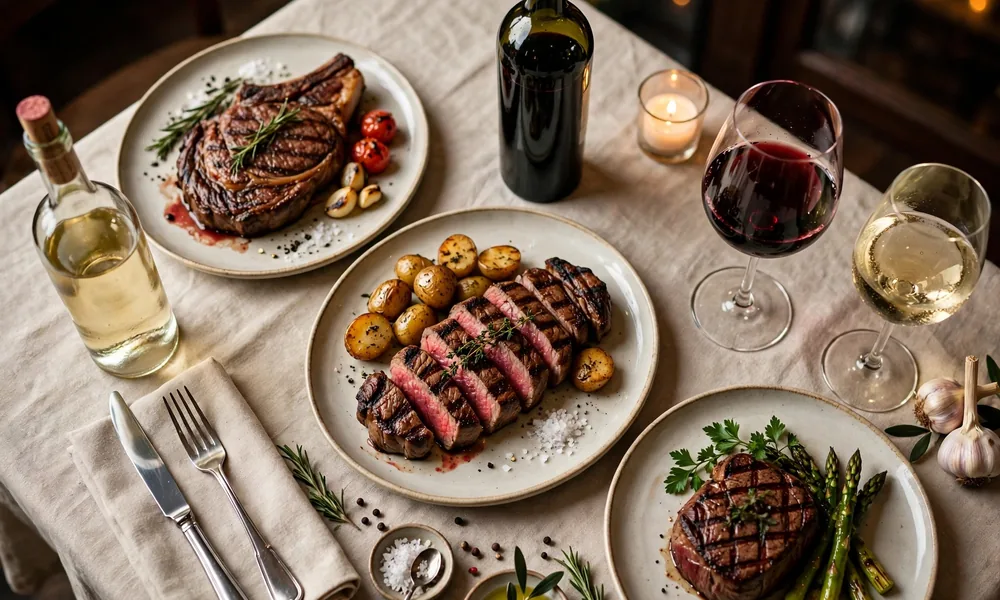
The cut of steak is the single biggest factor in the pairing, and it matters more than any general rule about red or white. A ribeye is marbled with fat, which calls for the tannin of a full-bodied red. A strip steak sits in the middle and works with a red or a fuller white. A filet mignon is lean and tender, with a delicate flavour that a big tannic red can crush.
Cooking method changes the answer too. A steak with a hard, dark sear from a hot grill develops bitter and smoky notes that love a bold red. A steak cooked gently, such as a reverse-seared filet or a steak finished in butter, keeps a softer, richer flavour that suits a creamy white. A medium-rare steak has the caramelised crust that red wine loves, while a rare steak can clash with heavy tannin.
Sauce and seasoning are the final piece of the puzzle. A peppery rub, a smoky barbecue sauce, or a mushroom sauce all point toward red. A lemon and herb dressing, a salsa verde, or a butter sauce all point toward white. When the sauce and the steak disagree, pair with the sauce.
How to Serve Wine with Steak Like a Pro
Good pairing is only half the job, and serving the wine well is the other half. These six steps cover the essentials.
- Chill red wine lightly for twenty minutes, so it lands around 16 to 18 degrees and the fruit stays fresh.
- Chill white wine thoroughly, to around 8 to 10 degrees, so its acidity feels crisp rather than sharp.
- Decant a young, tannic red for thirty to sixty minutes to soften it before it meets the steak.
- Use a large-bowled glass for red wine and a slightly smaller glass for white, so each wine gets the air it needs.
- Pour a small taste first and try it with a bite of steak, then adjust while the meal is still young.
- Keep the bottle on the table and let guests refill, because a steak dinner is meant to be relaxed, not formal.
If you are still deciding what to pour, our comparison of wine vs beer for dinner pairing looks at the broader drinks question.
Common Mistakes to Avoid
The most common mistake is reaching for the biggest, most tannic red without thinking about the cut. A heavy Cabernet can overwhelm a lean filet and leave the meat tasting thin and metallic. The opposite mistake is choosing a white so light that it vanishes next to the beef. Match the weight of the wine to the weight of the steak, and both will taste better.
Temperature is the other frequent error. Red wine served at warm room temperature tastes alcoholic and soupy, while white wine served ice cold loses its flavour entirely. Our roundup of the worst wine pairing mistakes at dinner covers more of these, and all of them are easy to avoid.
Frequently Asked Questions
Is red wine always better with steak?
Red wine is the best default for most steaks, but it is not always better. Lean cuts and buttery sauces can pair better with a full-bodied white.
What white wine goes best with steak?
An oaked Chardonnay is the safest white wine for steak, thanks to its creamy texture and full body. White Burgundy and aged white Rioja are excellent alternatives, while Viognier and dry Riesling suit lighter steak dishes.
What red wine goes best with steak?
Cabernet Sauvignon is the classic choice, with firm tannin and dark fruit that stand up to rich, fatty cuts. Malbec is rounder and fruitier, while Syrah adds pepper and smoke.
Can you drink white wine with a ribeye?
You can, but it is a harder pairing than red. A ribeye’s fat and richness usually need tannin, so choose a full-bodied white such as an oaked Chardonnay.
Should steak wine be expensive?
No, and a mid-priced bottle is often the sweet spot for a steak dinner. Spend enough to get a wine with real structure and flavour.
What temperature should wine with steak be served at?
Serve red wine slightly cool, around 16 to 18 degrees, after a short spell in the fridge. Serve white wine well chilled, around 8 to 10 degrees.
The Bottom Line
Red wine wins most steak dinners, and it deserves its reputation as the classic pairing. Its tannin and structure were made for rich, fatty cuts and bold sauces. But white wine is far from a mistake with steak, and for lean cuts and buttery sauces, a full-bodied white can be the better glass. The best choice is the one that matches your cut, your sauce, and your taste. Pour a small taste with the first bite, and let the steak tell you which glass it wants.


