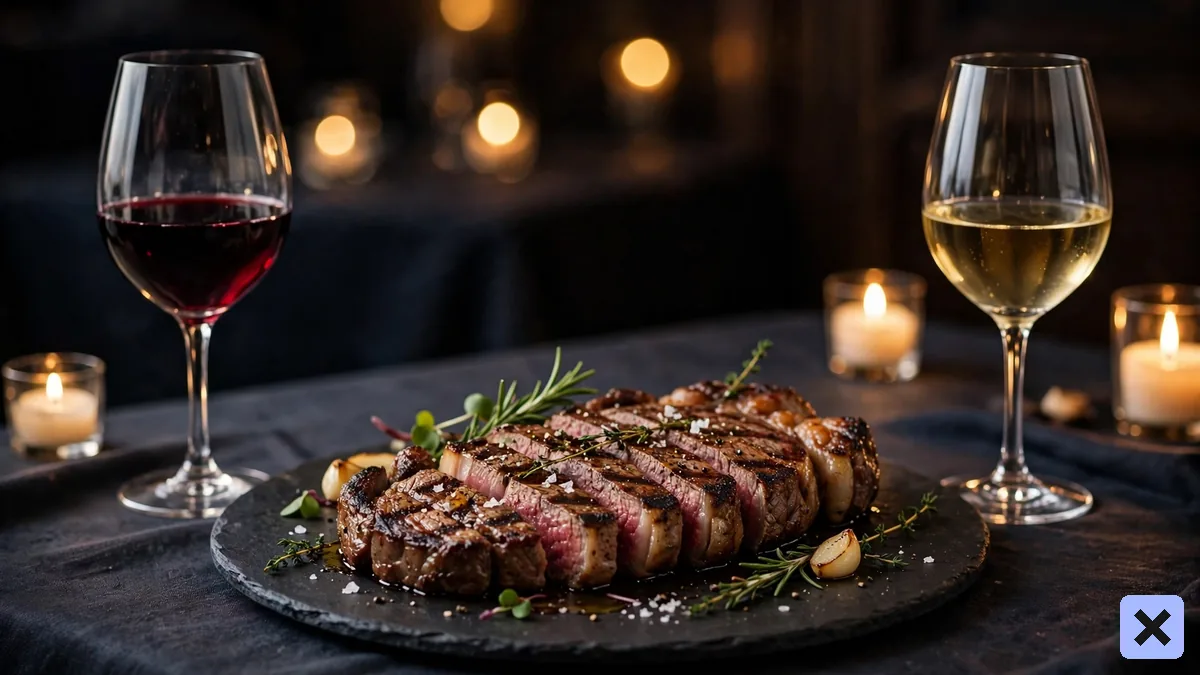
Wine vs beer for dinner pairing sounds simple until the food arrives. Both drinks have centuries of history at the table, and both can make a good meal better or a great meal worse. Neither wins every time. The right choice depends on the dish and whether the drink should lead or support.
Wine brings acidity, tannin, and aroma, with a long tradition of matching bottles to dishes. Beer brings carbonation, bitterness, and malt sweetness, in styles from light lagers to rich stouts. Wine lifts delicate flavours and cuts richness; beer refreshes the palate, tames spice, and stands up to bold, salty food.
This comparison looks at both drinks fairly, dish by dish: how each works with flavour, where each shines, and how to choose in seconds in front of a menu.
Key takeaways
- Wine usually wins with delicate dishes and creamy sauces, where acidity and aroma lift the food rather than compete with it.
- Beer usually wins with spicy, salty, and fatty dishes, because carbonation and bitterness refresh the palate between bites.
- Match intensity to intensity: light drinks with light food, bold drinks with bold food, and never let the drink overpower the dish.
- Acidity in wine and carbonation in beer both cut richness, but they do it in different ways and suit different cuisines.
- The best pairing makes both the food and the drink taste better, not the one that follows the strictest rule.

How Dinner Pairing Actually Works
A good pairing is about balance. Food has salt, fat, acid, sweetness, heat, and texture, and a drink adds its own version of those elements. When they work together, flavours feel clearer and richness feels lighter. When they fight, the food usually loses.
Three ideas explain most successful pairings: complement, where similar flavours support each other; contrast, where opposite qualities refresh each other, such as crisp lager against salty fried food; and intensity matching, where a delicate dish needs a delicate drink and a powerful dish needs a powerful one.
Texture matters as much as flavour. Carbonation scrubs the palate, which is why sparkling drinks feel refreshing with fried food. Tannin dries the mouth, which suits fatty meat. Acidity brightens food like lemon, while sweetness softens chilli heat.
Wine for Dinner: Where It Shines
Wine has the widest aromatic range of any dinner drink. A single glass can carry fruit, flowers, herbs, spice, oak, and earth, echoing flavours already on the plate. That is why wine feels so natural with dishes built around subtle seasoning and fresh herbs. It does not shout over the food.
Acidity is wine’s greatest strength at dinner. White wines such as Sauvignon Blanc and dry Riesling cut through butter, cream, and oil, and they brighten seafood, salads, and light pasta. Red wines use acidity and tannin together, which is why Chianti works with tomato sauce and Bordeaux works with roast lamb. The drink cleans up after the food and prepares the palate for the next bite.
Wine also excels across courses: a light white can open, a fuller red can carry the main, and a sweet wine can finish. There are limits, though. Tannic red can taste harsh with delicate fish and make spice feel hotter, while oaked white can overwhelm a lightly seasoned dish. Most bad wine pairings come from a small set of avoidable errors, so learning the common wine pairing mistakes at dinner is a useful shortcut.
Red Wine With Dinner
Red wine is at its best with red meat, roast dishes, tomato sauces, mushrooms, and hard cheese. Its tannin binds with protein and fat, softening the wine and making the food feel richer. A medium red such as Pinot Noir suits duck, salmon, and mushroom pasta, while a fuller red such as Malbec suits steak, lamb, and slow-cooked beef. Keep the wine’s weight close to the dish’s weight.
White and Sparkling Wine With Dinner
White wine suits seafood, chicken, salads, light pasta, and dishes with lemon, herbs, or cream. Sparkling wine goes further, because its bubbles add a cleansing quality that works with fried food, salty snacks, and sushi. A dry rosé sits between red and white, making it a forgiving choice when a table orders different dishes.
Beer for Dinner: Where It Shines
Beer is often underestimated at dinner, and that is a mistake. Modern brewing offers an enormous range, from crisp pilsners and wheat beers to hoppy pale ales, sour beers, and rich stouts. That range covers almost every flavour on the dinner table, and beer brings two qualities wine cannot match in the same way: lively carbonation and refreshing bitterness.
Carbonation is beer’s secret weapon. The bubbles lift fat from the tongue and reset the palate, which makes beer superb with fried chicken, burgers, pizza, and rich curries. Bitterness cuts through sweetness and richness, and beer handles spice better than most wine: chilli heat is softened by malt sweetness and cooled by carbonation.
Lagers, Wheat Beers, and Pale Ales
Light lagers and wheat beers suit salads, seafood, grilled chicken, and light Asian dishes. They are clean and refreshing, so they do not compete with delicate flavours. Pale ales and IPAs bring more hop character, which suits burgers, spicy food, strong cheese, and grilled meat.
Dark and Malty Beers
Darker beers suit darker food. Brown ales, porters, and stouts pair beautifully with roast meat, barbecue, stews, mushrooms, and chocolate desserts. Their roasted malt flavours echo the char on grilled food and the depth of slow-cooked dishes. A stout with a chocolate dessert is one of the most reliable pairings in food and drink.

Wine vs Beer: Head-to-Head Comparison
Wine and beer are not competing for the same job. They are two different tools, and the best choice depends on what the meal needs most. The table below summarises the main differences.
| Factor | Wine | Beer |
|---|---|---|
| Best with | Delicate dishes, creamy sauces, roast meat, seafood, fine dining | Spicy, salty, fried, and fatty dishes, barbecue, casual meals |
| Palate cleansing | Acidity and tannin refresh the palate and cut richness | Carbonation and bitterness scrub the palate between bites |
| Flavour range | Wide aromatic range, from crisp citrus to dark fruit and oak | Wide style range, from light lager to hoppy IPA and rich stout |
| With spice | Works with mild spice; can feel hotter with chilli | Handles heat well; malt and bubbles soften chilli |
| With dessert | Sweet wines suit fruit, cheese, and light desserts | Stouts and malty beers suit chocolate and caramel desserts |
| Formality | Formal, coursed, and celebratory dinners | Relaxed, generous, and shared meals |
| Cost per glass | Often higher, especially for well-known bottles | Often lower, with good options at modest prices |
| Ease of choice | Rewards knowledge; a wrong pick is more noticeable | More forgiving; most styles suit a wide range of food |
The table makes one point clear: wine wins on aroma and finesse, while beer wins on refreshment and versatility with bold food. What matters is which advantage the dish in front of you needs.
Choosing by Dish
Look at the main ingredient and the cooking method. Grilled or roasted food suits both drinks: wine picks up the savoury depth, while beer echoes the char and refreshes the palate. Fried food leans towards beer or sparkling wine, because bubbles and acidity cut fat. Creamy food leans towards wine, because acidity lifts the sauce without adding heaviness.
Seafood is classic wine territory, although a light lager suits fried fish well. Red meat is more evenly split: a good red wine is hard to beat with steak or lamb, yet a malty ale can be just as satisfying with a burger or barbecued ribs. Pizza is a beer classic, but a light red wine works well too.
Price, Value, and the Occasion
Price shapes the choice more than most people admit. A good bottle can cost several times as much as a good beer, and the difference is not always reflected in how much better the pairing feels. For a weeknight dinner, beer often gives better value. For a special occasion, wine often feels more appropriate, because the ritual of opening a bottle is part of the celebration.
Spend in proportion to the meal and the moment, not to a rule about which drink belongs where. The same thinking helps you get the best value from a fine-dining menu: match the drink to the food and the occasion, and avoid paying for prestige the plate does not need.

Common Mistakes to Avoid
The most common mistake is matching the drink to the occasion instead of the food. A grand red wine with delicate fish, or a heavy stout with a light salad, will feel wrong, however good the drink is on its own. The second mistake is overpowering the dish: a hoppy IPA can crush subtle flavours, just as a very oaky Chardonnay can dominate a lightly seasoned plate.
The third mistake is ignoring temperature: warm beer tastes flat, red wine served too warm tastes alcoholic, and white wine served too cold loses its aroma. The fourth is following a rule instead of tasting. Red with red meat and white with fish are starting points, not laws, and menus that try to do too much leave no clear partner for any drink, which is one reason they often lead to disappointing pairings.
Your Dinner Pairing Checklist
- Look at the main ingredient, then the sauce and seasoning, and choose a drink that suits all three.
- Match the drink’s weight to the dish’s weight so neither one disappears or dominates.
- Use acidity, tannin, carbonation, or bitterness to cut richness and refresh the palate.
- Choose beer for spice, salt, and fried food, and wine for delicate, creamy, and aromatic dishes.
- Serve each drink at the right temperature and in the right glass for its style.
- Taste the food and the drink together before deciding the pairing has failed.
Frequently Asked Questions
Is wine or beer better for dinner pairing overall?
Neither. Wine suits delicate, creamy, and formal dishes, while beer suits spicy, salty, fried, and casual dishes. The dish decides, not the drink’s reputation.
What is the safest pairing if I am unsure?
A dry rosé, a sparkling wine, or a light lager are all safe choices, because they are refreshing and suit a wide range of food. A pale ale is another good all-rounder when the food is bold.
Does beer really work with fine dining?
Yes, when chosen with the same care as a wine. A well-made saison, pale ale, or stout can match a fine-dining dish, especially when the food is rich, spiced, or roasted.
Can I drink red wine with fish?
You can, if the red is light and low in tannin, such as Pinot Noir, and the fish is rich or served with a tomato or mushroom sauce. A heavy, tannic red will clash with delicate white fish.
What should I drink with spicy food?
Beer is usually the better choice, because malt sweetness and carbonation soften chilli heat. A slightly sweet white wine such as off-dry Riesling can also work, but dry, tannic red wine often makes spice feel hotter.
Is it better to pair one drink with the whole meal or change between courses?
Changing usually works better, because a starter and a main often need different qualities. A light white for the starter and a fuller red or malty beer for the main is a natural progression.
The Bottom Line
Wine vs beer for dinner pairing has no single winner, and that is good news: you have two excellent options, and the choice is yours dish by dish. Reach for wine when the meal is delicate, creamy, aromatic, or formal, so the drink lifts the food with acidity and aroma. Reach for beer when the meal is spicy, salty, fried, or bold, so the drink refreshes the palate with carbonation and bitterness. Match weight to weight, let the food lead, and trust your own taste over any rule. When the food and the drink make each other taste better, you have chosen well, whichever glass is in your hand.