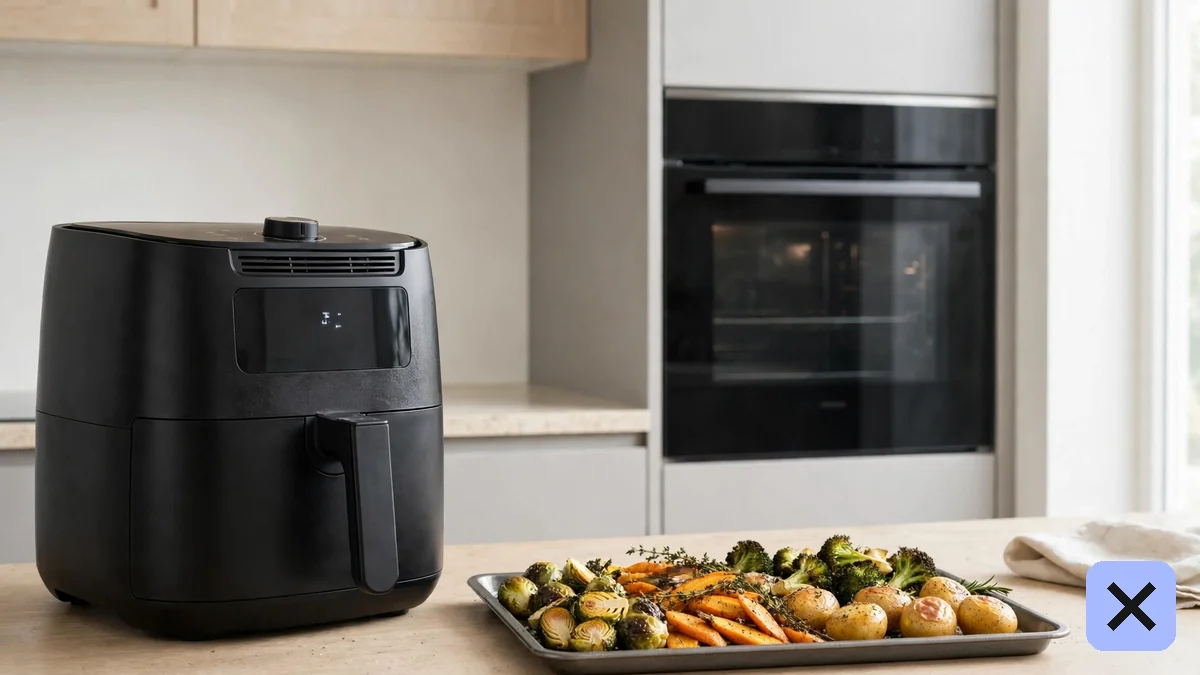
Air fryer vs oven for roasting is one of the most practical kitchen debates of 2026, because both appliances can turn raw vegetables and chicken into a golden, caramelised dinner, but they do it in very different ways. The air fryer is a small, powerful convection oven that blasts hot air around a compact basket, while a conventional oven heats a much larger cavity more gently. Both can roast beautifully, yet the winner changes with the food, the portion size and how much time you have. This guide compares them on speed, crispiness, capacity, energy use and cleaning, so you can pick the right tool for tonight’s dinner.
Roasting is not just about heat. It is about how heat reaches the food, how moisture escapes, and how much space the food has to breathe. Crowded food steams instead of roasting, which is why potatoes can turn out soggy in one appliance and shatteringly crisp in the other. The chamber size, fan strength and distance from the element all shape the result.
We compared the two the way a real household cooks. The verdict is not a simple win for either side. The air fryer takes the weeknight crown for speed and crispiness in small batches, while the oven remains unbeaten for large roasts and feeding a crowd. Below is the full breakdown, with a checklist to help you decide in under a minute.
Key takeaways
- The air fryer roasts small batches faster, usually in 15 to 25 minutes, with no real preheat and a crisper finish on potatoes, chicken pieces and vegetables.
- The oven wins for large quantities, whole chickens and even browning, because food can spread out in a single layer on a big tray.
- Air fryers use less energy per session, but the saving shrinks when you cook batch after batch for a crowd.
- Both need space around the food. Crowding is the single biggest cause of soggy roasting in either appliance.
- For most households, the best setup is both: air fryer for weeknights, oven for Sundays.
How Each One Actually Roasts
To choose well, it helps to know what each appliance is really doing. Both use hot air, but the scale and the airflow are completely different, and that changes everything from cooking time to texture.
The Air Fryer Way
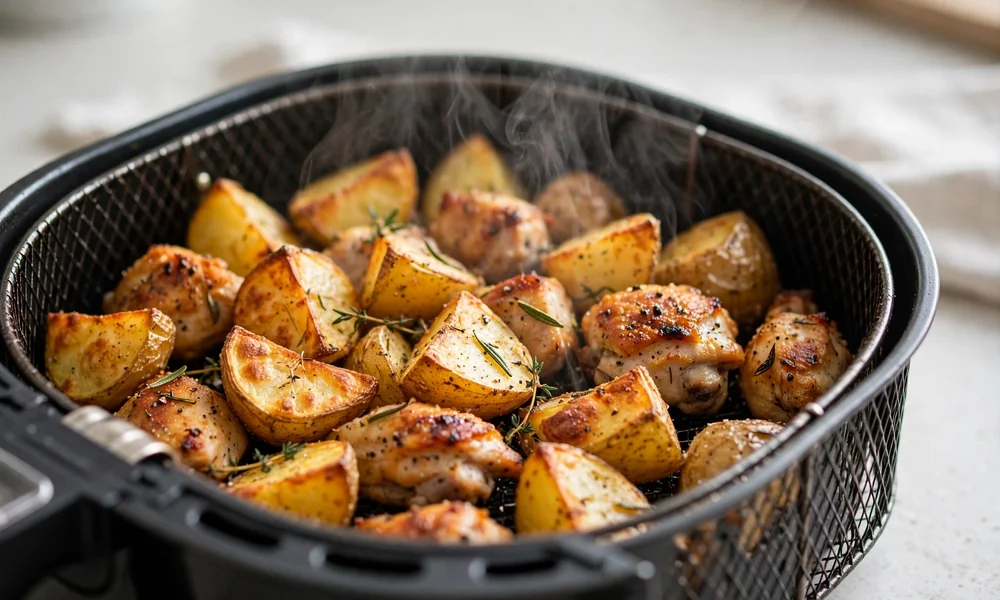
An air fryer is a compact convection cooker. A heating element sits very close to the food, and a strong fan circulates superheated air at high speed around a small basket. Because the chamber is tiny, it reaches temperature in two to three minutes, and the fierce airflow strips moisture from the surface quickly. The trade-off is space. A standard basket holds enough for two to four servings, and food piled in layers will steam in the middle while the top crisps. Shake the basket halfway through.
The Oven Way
A conventional oven heats a large cavity, usually with elements at the top and bottom, and the air inside moves slowly unless a fan is switched on. The food sits further from the heat, so browning is gentler and more even, and there is room for a full-size tray, a roasting pan and even a second shelf of vegetables. Preheating takes ten to fifteen minutes, and cooking times are longer, but the oven is far more forgiving. A whole chicken cooks through evenly without the outside drying out. If you are comparing models, our guide to the best air fryers of 2026 explains which sizes and features suit different households.
Speed and Preheat Time
Speed is the air fryer’s clearest win. It needs almost no preheating, and its small chamber means food starts crisping within minutes of switching it on. Diced potatoes that take 40 to 45 minutes in an oven, including preheat, are often done in 20 to 25 minutes in an air fryer. Chicken thighs, carrots and broccoli show a similar gap, typically finishing in roughly half the oven time.
Preheating gives you a window to prepare and season the food, and once the oven is hot, adding a second tray costs nothing in extra time. The air fryer, by contrast, must cook in batches for more than two people, and each batch adds ten to twenty minutes. By the third batch, the oven has usually caught up. So the speed verdict depends entirely on how many people are eating.
Crispiness and Browning
For pure crispiness in small portions, the air fryer is hard to beat. The intense airflow and the closeness of the element create a dry, hot environment that browns surfaces fast, and the perforated basket lets hot air reach the underside of the food too. Roast potatoes, sweet potato wedges, Brussels sprouts and chicken wings all come out with a crunch that a conventional oven struggles to match. A little oil helps, and choosing from the best olive oils for cooking can lift the flavour of everything you roast.
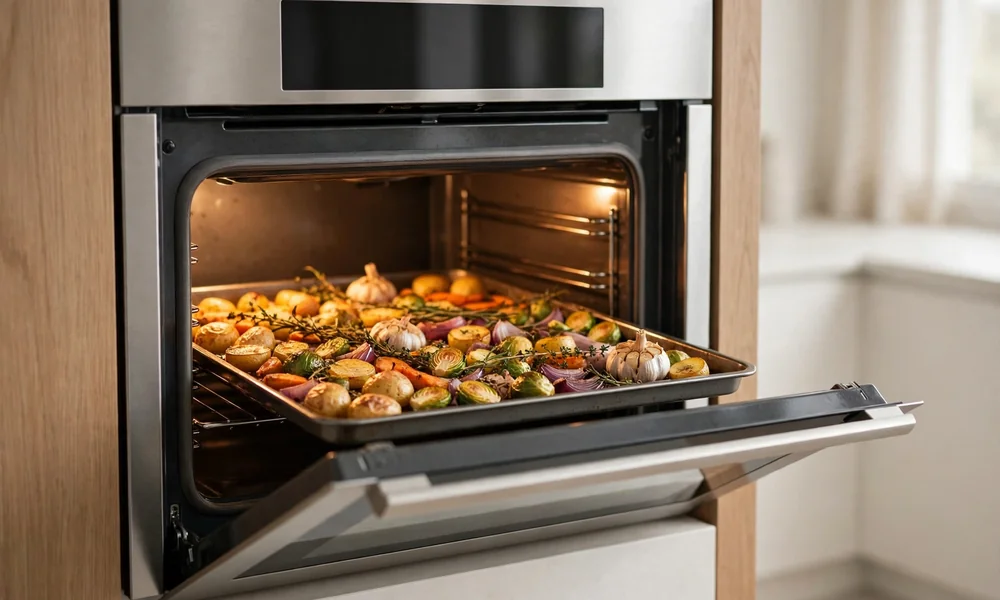
The oven still produces excellent browning, just differently. Its larger space means moisture escapes more slowly at first, so the early minutes are gentler, but a hot tray and a temperature of 200 to 220 degrees Celsius will deliver deep, even caramelisation across a whole tray. The oven also browns large, flat surfaces more uniformly, so a tray of root vegetables emerges evenly golden rather than crisp at the edges and pale in the middle. For a slow, deep roast, the oven’s steadier heat is better.
Capacity and Batch Size
Capacity is where the oven takes a decisive lead. A standard oven fits a roasting tray of 40 centimetres or more, plus a second shelf, which is enough for a whole chicken, a tray of potatoes and a tray of vegetables at once. That is a full Sunday roast in a single cook, with everything ready at the same time. An air fryer, even a large dual-drawer model, holds a fraction of that volume, and its tall, narrow basket makes it hard to spread food in a single layer.
Batch cooking in an air fryer creates its own problems. The first batch sits and cools while the second cooks, so the meal arrives in waves rather than together. For one or two people, this never matters. For four or more, it matters every time. When the crowd is too big for either, our comparison of gas vs charcoal grills covers summer cooking.
Energy Use and Running Costs
The air fryer is the cheaper appliance to run per session. It typically draws between 1,200 and 1,800 watts, but it runs for a much shorter time and heats a far smaller space, so the total energy per cook is usually lower than an oven session. For a single tray of vegetables for two people, the air fryer can use roughly half the energy of the oven.
The maths flips with scale. Two or three air fryer batches for a family use as much energy as one oven session, and the oven also warms the kitchen in winter. The real saving from an air fryer comes from avoiding the oven for small, fast cooks, not from replacing it entirely. For a household of four roasting most nights, the difference on the annual bill is modest.
Ease of Use and Cleaning
Day to day, the air fryer is the simpler appliance. It has a few buttons, a timer, and a basket that slides out for shaking and checking. There is no heavy tray to lift and no oven door to open into your knees. Most baskets and crisper plates are non-stick and dishwasher safe, and a quick wipe after cooking is usually enough. The daily routine is light, though grease builds up around the element over time.
The oven asks more of the cook. Trays are heavy when loaded, the door gets hot, and a roast leaves splatter on the oven walls that needs wiping before it bakes on. On the other hand, the oven needs no shaking and no batch juggling. You set the timer, close the door and get on with something else, which many cooks prefer for a relaxed Sunday.
Which Foods Roast Better Where
Small, sturdy pieces love the air fryer, while large or whole items belong in the oven. The table below is a quick reference for the most common roasting foods.
| Food | Better In | Why |
|---|---|---|
| Roast potatoes | Air fryer for two, oven for a crowd | Crisp shell in the fryer, even browning in the oven |
| Chicken pieces | Air fryer | Fast, crisp skin and juicy meat in small batches |
| Whole chicken | Oven | Even heat through the whole bird, room to baste |
| Root vegetables | Either | Fryer for speed, oven for a large single layer |
| Brussels sprouts | Air fryer | Charred edges and a tender centre in minutes |
| Whole squash | Oven | Needs slow, steady heat to soften through |
The pattern is simple. If the food is small and you want it crisp, reach for the air fryer. If the food is big, or there is a lot of it, use the oven. Matching the food to the tool removes the guesswork.

Checklist: Pick the Right Roaster for Tonight
Use this quick checklist to decide in under a minute, before you switch anything on.
- ☐ Cooking for one or two people? Choose the air fryer for speed and crispiness.
- ☐ Cooking for four or more, or a whole chicken? Choose the oven for capacity and even heat.
- ☐ Short on time after work? Choose the air fryer and skip the preheat.
- ☐ Want deep, even browning across a full tray? Choose the oven at 200 to 220 degrees.
- ☐ Roasting small, sturdy pieces like potatoes and sprouts? Choose the air fryer.
- ☐ Cooking two dishes at once? Choose the oven and use both shelves.
Frequently Asked Questions
Is an air fryer just a small oven?
Essentially, yes. An air fryer is a compact convection oven with a powerful fan and a heating element very close to the food. The small chamber and fast airflow are what make it quicker and crisper than a conventional oven.
Can you roast a whole chicken in an air fryer?
You can, if the chicken is small enough to fit with space around it for the air to circulate. A bird under about 1.5 kilograms works in a large basket, but a bigger chicken will not cook evenly. For a family-sized bird, the oven is safer.
Do you need oil when roasting in an air fryer?
A light coating of oil helps browning and stops food sticking, but you need far less than in an oven, usually about a teaspoon per portion. Dry vegetables can turn out papery without it.
Which uses less electricity, an air fryer or an oven?
For a small cook, the air fryer uses less, because it heats a tiny space for a short time. For a large family meal in several batches, the advantage disappears.
Can you put a metal tray in an air fryer?
Yes, if it fits and does not block the airflow. Small oven-safe dishes and foil trays work, but they slow crisping slightly, so save them for saucy foods.
Is roasting in an oven healthier than in an air fryer?
The health difference is small. Both roast with hot air, and the air fryer usually needs less oil, which can cut a little fat. What matters more is the food itself and how much oil and salt you add.
The Bottom Line
For roasting, the air fryer wins on speed, crispiness and cost for small weeknight cooks, while the oven wins on capacity, evenness and big family meals. Neither replaces the other. If you only buy one, choose the air fryer when you mostly cook for one or two, and the oven when you regularly feed a crowd. Give the food space, use a little oil, and let the heat do the work.


