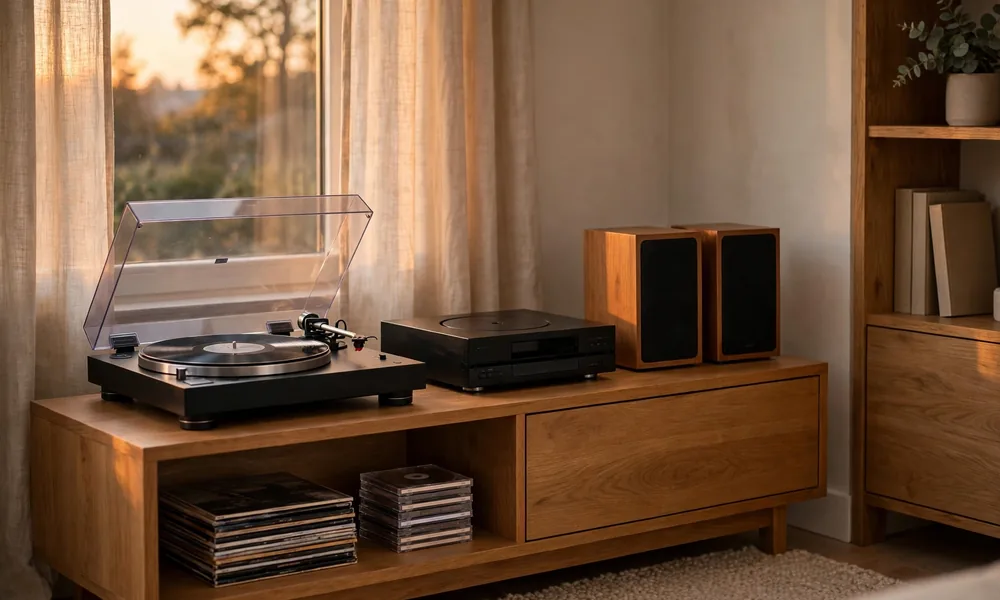
Vinyl vs CD collecting is one of those debates that never really ends, because both formats are genuinely good at different things. Vinyl gives you a large, tactile record, a sleeve you can actually read, and a listening ritual that slows the whole evening down. A CD gives you clean, quiet, consistent sound in a small case that fits on a shelf, in a car, or in a bag. New pressings and new CD editions are still being released in 2026, second-hand shops are full of both, and collectors keep arguing about which one sounds better.
The honest answer is that the sound difference is smaller than the argument suggests, and the collecting difference is bigger than most people expect. A well-pressed record on a decent turntable can sound warm, open, and alive. A well-mastered CD on a decent player sounds precise, silent between tracks, and exactly the same on the hundredth play as it did on the first. What changes the result most is not the format itself but the mastering, the pressing or disc quality, and the equipment you play it on.
This guide compares vinyl and CD collecting the way a collector actually experiences them: sound, cost, storage, durability, availability, and the simple pleasure of the hunt. By the end, you should know which format fits your budget, your space, and the way you like to listen
Key takeaways
- Vinyl sounds warm and engaging at its best, but surface noise, wear, and pressing quality vary a lot from record to record.
- CDs sound clean, quiet, and consistent, with no pops or crackle and no loss of quality over repeated plays.
- Vinyl costs more per album, takes up far more space, and needs a turntable, cartridge care, and regular cleaning.
- CDs are cheaper second-hand, easier to store, and simpler to play well on modest equipment.
- The best choice depends on how you listen: vinyl rewards slow, focused sessions, while CDs reward convenience and large collections.

How Each Format Actually Makes Sound
A vinyl record stores music as a continuous groove cut into plastic, and a stylus rides that groove, turning tiny physical wiggles into an electrical signal. It is an analogue process from start to finish, which is why vinyl fans talk about warmth and presence: nothing is chopped into samples, and the sound unfolds in one unbroken wave.
A CD stores music as digital data, read by a laser and converted back into sound by a digital-to-analogue converter. The format samples the audio 44,100 times per second at 16-bit resolution, which captures the full range of human hearing with room to spare. There is no physical contact with the playing surface, so nothing wears out while you listen.
What Vinyl Does Well
Vinyl’s strength is the experience around the sound as much as the sound itself. The large sleeve artwork, the printed inner sleeve, the act of lowering the needle, and the natural break between sides all encourage you to listen to a whole album in order. Many collectors say this ritual is the real reason they collect records: it turns listening from background noise into an activity.
What CDs Do Well
A CD’s strength is accuracy and silence. The background is black: no crackle, no hiss, no rumble from a motor, no pop when a speck of dust passes under the stylus. Dynamic range is wider than vinyl’s, so quiet passages stay quiet and loud passages hit harder without distortion. Channel separation is excellent, which gives recordings a clean, stable stereo image.
Sound Quality: What You Really Hear in 2026
Ask which sounds better and you will get a passionate answer, but the fairest answer is that it depends on the recording. A superbly mastered CD will beat a poorly pressed record every time, and a superbly pressed record will beat a carelessly mastered CD just as easily. Mastering quality, the source used, and the care taken in production matter far more than the format printed on the sleeve.
One practical point is often missed: vinyl degrades slightly with every play, while a CD does not. A record played hundreds of times will accumulate wear, and even careful handling cannot stop it entirely. A CD played hundreds of times sounds the same, provided the disc itself is not scratched or damaged. If you want a broader comparison of how listening habits have changed, our look at Vinyl vs Streaming: Which Way of Listening Wins in 2026? puts the physical formats in context against the way most people listen today.
The Collecting Experience
Collecting is where vinyl pulls ahead for most people, and it is not close. Record shops are social places: you flip through crates, talk to the staff, and find things you were not looking for. The large format makes the artwork part of the object, and a wall of records is a display in itself. Limited pressings, coloured vinyl, and numbered editions give collectors something to chase, and the second-hand market is enormous.
CD collecting is quieter but often more rewarding per pound spent. Because CDs fell out of fashion, second-hand copies of classic albums sell for very little, and you can build a large, high-quality collection quickly. Box sets, remasters with bonus tracks, and Japanese editions with extra material are plentiful. The hunt is less theatrical than crate digging, but the bargains are better, and the catalogue is deep.

Cost, Space, and Everyday Practicality
Money is where the two formats separate most sharply. A new vinyl LP in 2026 typically costs two to three times as much as the same album on CD, and the gap widens in the second-hand market, where used CDs are often cheaper than a coffee. The turntable itself is another cost: a decent entry-level setup with a good cartridge and phono stage costs several times more than a decent CD player, and records also need cleaning supplies, replacement styluses, and inner sleeves.
Space is the other big difference. A hundred LPs fill a whole shelf and weigh a considerable amount, while a hundred CDs fit in a single small cube. If you live in a flat, move house often, or simply like a tidy room, CDs are far easier to live with. Vinyl demands dedicated furniture and protection from heat and sunlight, which is part of its charm for some collectors and a genuine burden for others.
Day-to-day use favours CDs too. You press play, skip tracks instantly, and walk away. Vinyl asks you to flip the record halfway through, clean it before playing, and stay nearby. The speakers you pair with either format matter as well, and our guide to the best Bluetooth speakers of 2026 is a useful starting point if your listening setup needs an upgrade.
| Factor | Vinyl | CD |
|---|---|---|
| Typical new album price | Higher, often two to three times the CD price | Lower, and very cheap second-hand |
| Sound character | Warm, spacious, with surface noise | Clean, quiet, precise |
| Storage per 100 albums | A full shelf, heavy | A small cube, light |
| Player cost | Turntable, cartridge, phono stage | CD player or drive, modest cost |
| Wear from playing | Slight wear every play | None from normal playing |
| Best for | Ritual listening, artwork, display | Large libraries, convenience, value |
Durability and Longevity
Both formats can last decades, but they fail in different ways. Vinyl is physically tough: a record can survive a fall, a move, and years in a box, and light scratches often cause only a brief click. Its enemies are heat, which warps it, and dust and grit, which wear the groove. Stored upright, away from heat and sunlight, in clean sleeves, records last a lifetime.
CDs are more fragile in some ways and tougher in others. A deep scratch can make a disc skip or fail, and the reflective layer can degrade if the disc is poorly made or stored badly. Neither format is immortal, but both reward simple, careful storage.
Which Format Fits Which Listener
The best format is the one that matches how you actually listen. If you love sitting down for a full album, reading the sleeve notes, and making an evening of it, vinyl will give you more joy per album than any other format. It suits collectors who enjoy the object, the shop, and the ritual, and who are happy to pay more for fewer, better-chosen records. A good pair of speakers makes more difference than the format feeding them, so our round-up of the best smart speakers of 2026 is worth a look before you spend big on either format.
If you listen while you work, cook, or drive, or if you want to own a wide range of music without spending a fortune, CDs are the smarter choice. They suit completists, bargain hunters, and anyone building a library quickly. They also suit listeners who value silence between tracks and a sound that never changes, however many times the disc is played.
Checklist: Starting (or Restarting) Your Collection
- Pick your format first, based on your budget, space, and how you listen.
- Buy the player before the collection: a decent turntable or CD player makes every disc you own sound better.
- Start with ten albums you truly love, rather than fifty you only half like, and learn what great pressings sound like.
- Handle records by the edges, keep CDs in their cases, and store both upright, away from heat and sunlight.
- Clean vinyl before every play, because dust is the fastest way to damage a record.
- Set a monthly budget and stick to it, because both formats reward patience and punish impulse buying.
Frequently Asked Questions
Does vinyl really sound better than CD?
Not always. Vinyl can sound warm, spacious, and engaging, while CDs sound cleaner and more accurate. The mastering and pressing quality of a specific release matter more than the format.
Are CDs still worth collecting in 2026?
Yes, especially for value. New CDs are still released, and second-hand CDs are very cheap, so you can build a large, high-quality library for little money. They also take up far less space than vinyl.
How much does it cost to start collecting vinyl?
A decent entry-level turntable, cartridge, and phono stage cost several times more than a CD player, and new LPs cost two to three times as much as the same album on CD. Budget for cleaning supplies and replacement styluses too.
Do records wear out from playing?
Yes, slightly, with every play. A stylus in contact with the groove causes gradual wear, and dust makes it worse. Careful handling and regular cleaning slow the process greatly.
Can I collect both vinyl and CDs?
Absolutely, and many collectors do. Many buy vinyl for favourite albums and CDs for the wider library.
Which format holds its value better?
Vinyl generally holds its value better, especially limited pressings, first pressings, and records in excellent condition. Most CDs are worth little second-hand, although rare editions and out-of-print titles can be valuable.
The Bottom Line
Vinyl wins on ritual, artwork, and the joy of collecting; CDs win on sound consistency, value, space, and convenience. Neither format is the best for everyone, and the format that sounds better is the one played on good equipment, from a good master, in a room where you actually sit down and listen. If you love the ceremony, start with vinyl. If you love the music and the library, start with CDs. And if you love both, collect both, because the best collection is the one you actually play.