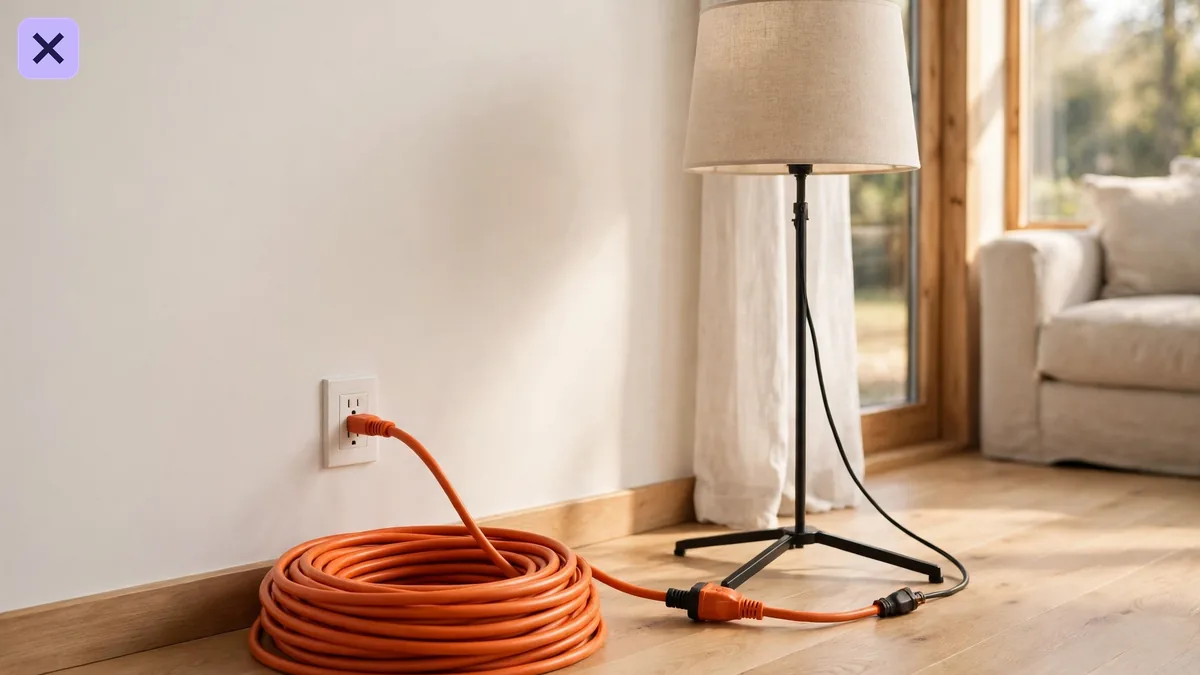
How to Pick an Extension Cord That Is Safe Indoors in 2026
An extension cord is the most ordinary object in the house, and the one most likely to be bought in a hurry. A lamp sits too far from the wall, a fan needs to reach the far side of the room, and the cheapest cord on the shelf solves the problem in seconds. That is exactly how trouble starts. A thin cord carrying a heavy load gets warm, a cord run under a rug gets warmer still, and a cord with a cracked plug keeps working right up until it does not. Picking a safe extension cord indoors is not complicated, but it does ask for five minutes of attention to gauge, length, rating and placement.
Key Takeaways
- Gauge matters more than price: a 14-gauge cord handles far more load than a 16-gauge cord of the same length, and 12-gauge is the right call for anything that heats or motors.
- Buy the shortest cord that reaches comfortably; a long cord coiled up or looped behind furniture traps heat and wastes power.
- Match the cord to the load: lamps and phone chargers are light work, while space heaters, air conditioners and large power tools need a heavy cord or no extension cord at all.
- Check for a recognised safety certification and a moulded, undamaged plug before you buy, and retire any cord that feels warm, smells hot or shows cracked insulation.
- Never run an extension cord under a rug, through a doorway, or across a walkway, and never plug one extension cord into another.

Why the Wrong Cord Is a Risk Indoors
Indoors, an extension cord lives a harder life than it looks. It gets stepped on, pinched by furniture, tugged by the plug instead of the body, and left in place for months at a time. Every one of those small insults matters, because a cord fails slowly: insulation thins where it is bent and strands break where it is yanked.
The physics is simple. A cord is a resistor, and a thinner or longer cord is a bigger resistor. Push too much current through it and the excess energy becomes heat along the whole length. A cord that feels warm to the touch is already telling you it is overloaded, and a cord that feels hot should be unplugged immediately. Heat also ages insulation faster, so an overloaded cord becomes a damaged cord even if nothing dramatic happens on the first day.
Space Heaters Deserve Special Care
A space heater is the single most common cause of extension-cord trouble indoors. Most portable heaters draw around 1,500 watts, close to the full capacity of an ordinary household circuit. Plug one into a light-duty cord and the cord becomes the weakest link in the chain. The safest answer is to plug a heater directly into a wall outlet. If that is genuinely impossible, use a short, 12-gauge cord rated for at least 15 amps, keep it fully uncoiled, and check it for warmth after the first hour.
What Counts as a Heavy Load
Anything that makes heat or spins a motor is a heavy load: heaters, hair dryers, air conditioners, vacuum cleaners, microwave ovens, irons and large power tools. Lamps, phone chargers, televisions, laptops and radios are light loads by comparison. Size the cord for the heaviest thing that will ever be plugged into it, not the lightest thing plugged in today.
Gauge: The Number That Matters Most
Gauge is the thickness of the copper inside the cord, and it works backwards: a lower number means a thicker wire and a higher safe load. A 16-gauge cord is fine for a lamp. A 14-gauge cord covers most household jobs. A 12-gauge cord is the heavy-duty choice for heaters and tools. The number is printed on the cord jacket itself, usually as 16/3, 14/3 or 12/3, where the second number is the count of conductors. If you cannot find a gauge marking on a cord, treat it as light-duty and use it only for the lightest loads.
Length matters just as much as gauge, because a longer cord has more resistance. A 25-foot 14-gauge cord can carry more than a 100-foot 14-gauge cord, and that is why long cords need thicker wire to do the same job. Keep indoor cords to 25 feet or less wherever possible. If the outlet is further away than that, move the appliance, use a different outlet, or have an electrician add one, rather than buying a 50-foot cord to cross a room.
| Cord type | Gauge | Typical length | Best for indoors | Typical price |
|---|---|---|---|---|
| Light-duty indoor | 16-gauge | 6–15 ft | Lamps, phone chargers, radios | $6–$12 |
| Medium-duty indoor | 14-gauge | 15–25 ft | Televisions, fans, vacuums | $12–$20 |
| Heavy-duty indoor | 12-gauge | 15–25 ft | Heaters, large tools, air conditioners | $20–$35 |
| Flat plug indoor | 16-gauge | 6–10 ft | Behind sofas and beds, tight spaces | $8–$15 |
| Surge-protected cord | 14-gauge | 6–12 ft | Electronics that need spike protection | $18–$30 |
| Reel cord | 14-gauge | 25–40 ft | Occasional use, never left coiled while loaded | $25–$45 |
Read the Label Before You Buy
A good extension cord tells you everything on its packaging or jacket: gauge, length, maximum amps, maximum watts, and whether it is rated for indoor or indoor and outdoor use. Look for a certification mark from a recognised testing laboratory, which means a sample of that cord was actually tested to a published standard. A cord with no certification mark, no gauge marking and no wattage rating is a cord whose maker did not want you to know those numbers.
The plug and socket ends deserve the same attention. A moulded plug, where the rubber body is formed around the cable in one piece, is far more durable than a plug that screws together. Three-prong grounded plugs belong on three-prong outlets; never cut off the ground pin or use a two-prong adapter to force a fit. If the plug feels loose in the outlet, the outlet itself may be worn, and a loose connection is a hot connection, so have the outlet checked rather than wedging the plug in tighter.

Placement: Where a Cord Should and Should Not Go
Where a cord runs matters as much as what it is made of. A cord laid flat along a baseboard, with a little slack and nothing resting on it, will last for years. A cord under a rug is a different story: rugs trap heat, hide damage, and get walked on all day, which is why running a cord under a rug or carpet is one of the most common causes of cord fires. The same applies to cords run through doorways, where the door pinches them every time it closes, and cords run under furniture legs, where the weight crushes the insulation.
Keep cords out of walkways wherever possible. A cord across a path is a trip hazard first and a damaged cord second, and it will be stepped on, vacuumed over and yanked by passing feet. If a cord must cross a room, run it along the wall, tuck it behind furniture, or use a proper cord cover that ramps over it. And never, ever daisy-chain: plugging one extension cord into another adds resistance at every joint and defeats the rating of both cords. One cord, one outlet, one job.
The Case for a Surge Protector Instead
For televisions, computers and games consoles, a plain extension cord is often the wrong tool. What those devices need is surge protection, which absorbs the voltage spikes that follow storms and grid switching. A surge-protected power strip does the job of an extension cord and adds that protection, and a good one tells you when its protection has worn out. Our guide to the best surge protectors that save your electronics in 2026 explains which ratings matter and which strips are worth the money.
How Long Should a Cord Last?
There is no fixed expiry date on an extension cord, but there is a simple inspection routine worth doing twice a year. Unplug the cord and run it through your hands from end to end. Feel for stiff patches, soft spots, or places where the jacket has gone flat. Look at the plug for cracks, bent prongs or discolouration, and look at the socket end for scorch marks or melted plastic. Flex the cord gently near each end, where damage concentrates, and listen for crackling. Any one of those signs means the cord is retired, not repaired with tape, and a taped cord is a cord that has already failed once.
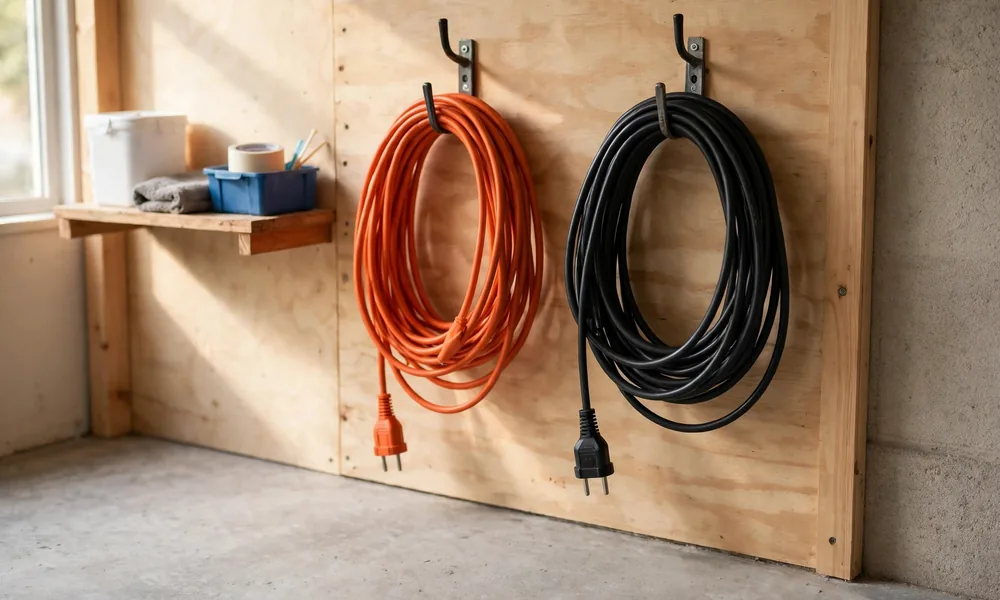
Storage matters too. Coil a cord in loose, wide loops rather than tight knots, and hang it on a hook or coil it in a box rather than stuffing it into a drawer where it kinks. Keep it out of damp places and away from heat sources. A cord that is stored well and inspected twice a year will outlast several cheaper cords that were bought, abused and thrown away.
Extension Cord Safety Checklist
- Match gauge to load: 16-gauge for light loads, 14-gauge for general use, 12-gauge for heaters and tools.
- Buy the shortest cord that reaches, and never leave a loaded cord coiled up.
- Check the label for gauge, amps, watts and a recognised safety certification before buying.
- Plug heaters directly into a wall outlet wherever possible, and never daisy-chain cords.
- Keep cords along baseboards and out of walkways, rugs, doorways and under furniture.
- Inspect cords twice a year and retire any cord that is warm, cracked, stiff, scorched or taped.
Frequently Asked Questions
Can I use an outdoor extension cord indoors?
Yes, an outdoor-rated cord is safe indoors, and its thicker jacket is actually more durable. The reverse is not true: an indoor cord should never be used outside, where rain, sun and temperature swings will damage it quickly.
Is a 16-gauge cord safe for a television?
Yes, for most televisions. A modern television draws far less power than older models, and a short 16-gauge cord handles it comfortably. If the television shares the cord with a soundbar, console and streaming box, step up to 14-gauge for the combined load.
Why does my extension cord feel warm?
Warmth means the cord is carrying close to its limit, or it is coiled, covered, or damaged. Unplug the load, let the cord cool, and check the wattage of what is plugged in against the cord rating. If it still gets warm with a light load, retire it.
Can I plug a power strip into an extension cord?
It is best not to. A power strip plugged into an extension cord invites overloading, because the strip makes it easy to add device after device to one thin cord. Plug the strip directly into the wall instead.
How do I know what gauge my cord is?
The gauge is printed on the cord jacket, usually as 16/3, 14/3 or 12/3. If the printing has worn away or was never there, treat the cord as light-duty and use it only for lamps and chargers.
Are flat-plug extension cords safe?
Yes, flat-plug cords are safe when they carry the same gauge and certification as a standard cord. They are designed to sit behind furniture without being crushed, which actually makes them safer than a standard plug jammed against a wall. The same rules apply: match the gauge to the load and keep the cord uncoiled.
The Bottom Line
A safe indoor extension cord is a short, thick, certified cord matched to the load it will carry, run along a wall and inspected twice a year. Spend the extra few pounds on 14-gauge or 12-gauge, keep heaters on wall outlets, and retire any cord that shows its age. If the cord is really feeding a desk full of chargers, our guides to the best USB-C cables for fast charging and data in 2026 and the top portable power stations for camping and blackouts in 2026 will help you sort the rest of the power setup too.


