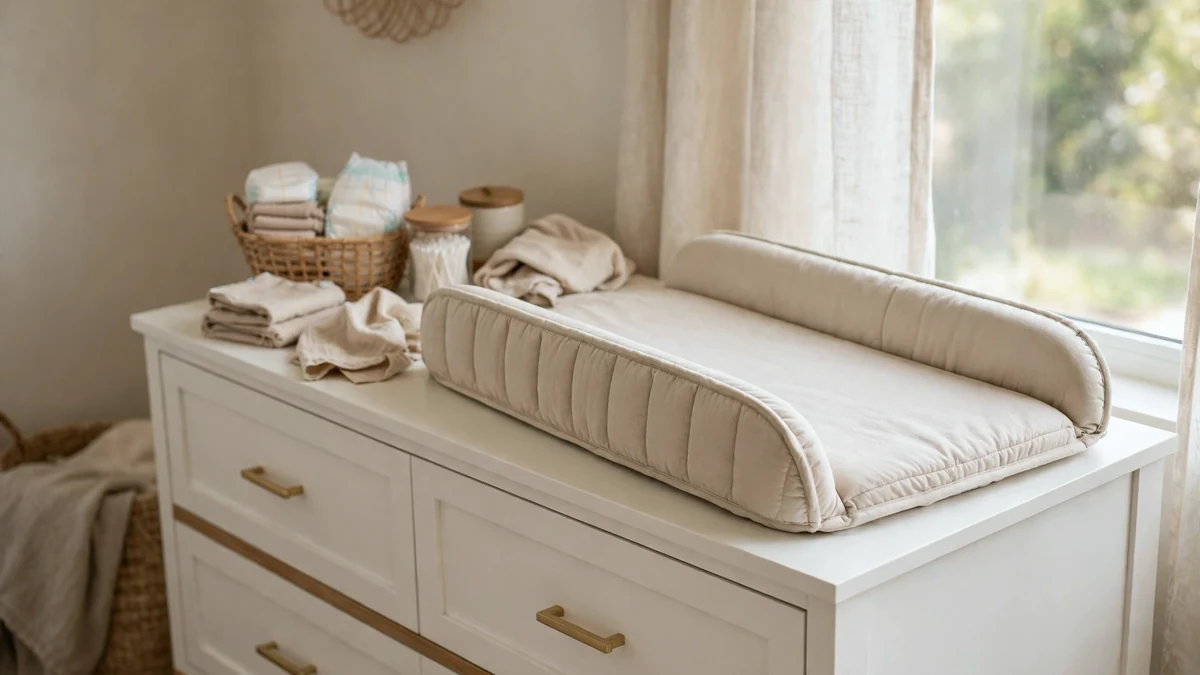
A baby changing pad is one of the smallest things in a nursery, and one of the most used. You will reach for it ten or twelve times a day in the early months, often at three in the morning, often with one hand free and a wriggling baby in the other. The best baby changing pads of 2026 make those moments calmer: a firm, comfortable surface that stays put, sides that keep a rolling baby centred, and a cover that wipes clean in seconds. The worst ones slide around, feel cold and hard, soak up every spill, or are simply too small once your baby starts to grow.

What Makes a Good Baby Changing Pad
Safety comes first, and it is mostly about shape. A contoured pad has raised sides that curve up around your baby, usually four to six inches high at the edges, and that gentle bowl shape is what stops a baby from rolling sideways. A flat pad has no such help, so it only works well inside a changing tray with raised edges of its own, or on a surface where you can keep both hands close. Whichever shape you choose, the pad should sit flat and stay put: a non-slip base, grippy underside or a safety strap that fixes it to the furniture underneath makes a real difference once your baby learns to kick and twist.
Size is the second thing that matters, and it is easy to get wrong. Most standard pads are about thirty-two inches long and sixteen inches wide, which suits a newborn comfortably and still fits most babies up to eighteen months. A pad much smaller than that feels cramped by six months, when legs get longer and every change becomes a small wrestling match. Measure your dresser or changing table before you buy, because a pad that overhangs the edge is unsafe, and a pad that leaves a wide gap at the sides wastes the very surface you paid for. If you plan to use the pad on top of a chest of drawers, check the depth as well as the width.
Comfort is third, and it is really about firmness. A changing pad should feel like a firm mattress, not a pillow and not a board. Too soft, and your baby sinks in and feels unstable; too hard, and the surface feels cold and unforgiving against bare skin. Foam pads with a dense core hit this balance best, while thin folding pads trade comfort for portability. The cover matters too: a smooth waterproof vinyl or polyurethane surface wipes clean, while a soft fabric cover feels warmer but needs washing after every accident. Many parents end up using both, a wipe-clean pad with a soft washable cover on top for everyday comfort.
The Main Types of Baby Changing Pad
Contoured pads are the most popular choice for a nursery, and for good reason. Their raised sides give you a margin of safety, their foam core is comfortable, and they come in standard sizes that fit most changing tables and dressers. They are not portable, and they take up a fixed spot, but for the ten changes a day that happen at home, they are hard to beat. Look for one with a safety strap underneath and a waterproof surface that does not crack or peel after months of wiping.
Portable and travel changing pads fold up small enough to fit in a nappy bag, and they are the pads you will actually use outside the house. The best ones open flat to a decent size, have a wipe-clean inner surface, and include a pocket or strap for a nappy and a pack of wipes. They are thinner than nursery pads, so they are best for short changes on a bed, a sofa, or a public changing table rather than as your main pad at home. If you travel often or spend long days out, a good travel pad earns its place in the bag within the first week.
How to Choose
Start with the surface, because you will clean it more than anything else in the nursery. A waterproof, wipe-clean surface is worth paying for: a damp cloth and a mild soap should be enough after most changes, with no soaking, no scrubbing and no damp smell left behind. Avoid pads whose seams trap moisture, because a seam that stays damp grows mould. If you prefer a fabric feel, choose a pad with a removable, machine-washable cover and buy a spare cover at the same time, so one can be in the wash while the other is in use.
Then think about height and weight limits. Most contoured pads are rated for babies up to about thirty pounds, which covers the first eighteen months for most children. A pad with a higher weight limit and a longer length will last into toddlerhood, when changes move from the nursery to the floor more often anyway. If your baby is already big for their age, buy the larger size now rather than replacing a small pad in three months. A pad that is too short forces your baby’s head or feet over the edge, which is uncomfortable and unsafe.
Consider how the pad fits your furniture. A contoured pad needs a flat, stable surface at least as wide as the pad itself, and it should be fixed in place with its strap or non-slip base. If your dresser top is narrow, a smaller pad or a changing tray that sits on top may be safer than a standard pad that overhangs. If you are buying a changing table as well, check that the pad and the table are made to fit together, because a pad that rocks or slides in its tray is worse than no pad at all. Our guide to the best and worst changing tables of 2026 covers tables and trays in detail, including which ones hold a standard pad securely.

The Best Baby Changing Pads 2026
The best overall contoured pad is a firm foam pad with raised sides, a waterproof wipe-clean surface, and a safety strap that fixes it to the furniture. It measures close to the standard thirty-two by sixteen inches, so it fits most dressers and changing tables, and its dense foam holds its shape after months of daily use rather than sagging in the middle. The surface wipes clean with a damp cloth, the seams are sealed so moisture cannot creep inside, and the cover is soft enough that a bare baby does not flinch on a cold morning. This is the pad to buy if you want one pad, bought once, that simply works every day.
The best budget pad is a simple flat foam pad with a waterproof surface and a non-slip base. It costs far less than a contoured pad, it is light enough to move between rooms, and it does the essential job well: a clean, cushioned surface at a safe height. Its weakness is the lack of raised sides, so use it inside a changing tray or on a low, wide surface, and keep a hand on your baby throughout. For a second changing spot, a grandparent’s house, or a tight budget, it is the sensible choice, and it is far better than changing a baby directly on a hard dresser or a bed.
The best travel changing pad is a folding pad that opens to a full-size surface, folds to the size of a small book, and slips into a nappy bag alongside the nappies and wipes. Look for one with a wipe-clean inner surface, a pocket that holds two nappies and a small pack of wipes, and a strap or clip that keeps it folded. The best travel pads have a lightly padded centre so a baby is not lying on a hard public changing table, and a waterproof outer that keeps the inside of your bag dry. Pair it with a well-packed bag and you will be ready for a change anywhere, and our guide to the best diaper bags of 2026 shows which bags carry a folding pad without a struggle.

What to Avoid
Avoid pads that are too soft. A pad that lets your baby sink deep into the middle feels cosy at first, but it makes rolling easier, it is harder to clean, and it wears out quickly, developing a permanent dip where your baby always lies. Press the centre with your palm before you buy: it should give a little and spring back, not stay dented. The same test applies to second-hand pads, which often look fine but have lost their firmness after a year of use.
Avoid pads with no fixing. A pad that slides on a smooth dresser top is a hazard, not a convenience, and a baby who kicks hard can shift an unfixed pad several inches in one change. If the pad has no strap and no non-slip base, add a non-slip mat underneath or choose a different pad. The same applies to pads used on top of a washing machine or a bed: a soft, uneven surface underneath makes the pad unstable, so use a firm, flat surface every time.
Setting Up Your Changing Station
Keep a spare cover and a spare set of clothes in the same place, because the change that needs them always comes when you are least ready. A waterproof liner under the pad protects the dresser, and a small towel on top of the pad on cold mornings takes the chill off the surface. If you have more than one floor in your home, consider a second, simpler station downstairs: a flat pad on a low chest or a folding pad kept in a basket, so you are not carrying a baby up and down stairs for every change. The nursery guide in our round-up of the best nursery essentials of 2026 covers the rest of the room, from the cot to the storage that keeps a changing station tidy.
Care and Replacement
Check the pad regularly for wear. Look for cracks in a vinyl surface, peeling waterproof layers, flattened foam, or a safety strap that has lost its grip. A pad that has been through a year of daily use and still holds its shape is a good pad; one that has gone soft in the middle or smells damp even after cleaning should be replaced. Most pads last well through one baby and often through a second, but do not pass on a pad that is cracked, stained through, or no longer firm, because the safety of the next baby depends on the same firmness yours did.
The Bottom Line
The best baby changing pad is not the most expensive one, and it is not the one with the most features. It is the one that fits your furniture, stays firmly in place, wipes clean in seconds, and feels comfortable enough that your baby settles rather than wriggles. A firm contoured pad with raised sides and a waterproof surface covers most families, a folding travel pad covers the rest of life outside the house, and a washable cover keeps the whole thing pleasant to use day after day. Buy the right size, fix it down, keep your supplies within reach, and never leave your baby alone on the pad, even for a second. Get those basics right and the humble changing pad quietly becomes one of the hardest-working things in your home.


