
Pond Pumps That Keep Water Clear in 2026
A pond pump is the quiet workhorse of a healthy garden pond. It circulates pond water day and night, pushing it through a filter, over a waterfall or through a fountain head, and back into the pond again. That constant movement is what keeps the water clear, oxygenated and alive. Without a pump, a pond quickly turns still, green and smelly, because oxygen falls, waste settles, and algae takes over. This guide explains how they work, how to size one, and which types are worth buying.
Clear water is not just about looks. Fish need oxygen, plants need moving water around their roots, and the helpful bacteria that break down waste need oxygen too, and a pond pump delivers all three at once. It stops the surface filming over in summer and keeps mosquitoes from breeding in still corners. A pump is not the same thing as a decorative water feature: a garden fountain is beautiful to look at, but a pond pump is the machine that circulates pond water and does the real work underneath.
Key takeaways
- A pond pump circulates pond water through a filter, keeping it clear and oxygenated.
- Size the pump to turn the pond volume over once an hour, twice with fish.
- Submersible pumps suit most garden ponds; external pumps suit large ponds and heavy fish loads.
- A pump with a built-in filter and UV clarifier is the simplest route to clear water.
- Clean the intake and pre-filter regularly; a clogged pump is the top cause of green water.
How a pond pump keeps water clear
A pond pump moves water in a loop. It draws water in through an intake, pushes it along a hose to a filter, and returns it to the pond, often over a waterfall. The filter traps solid waste such as leaves and fish droppings, while the biological filter media gives helpful bacteria a home. Those bacteria convert harmful ammonia from fish waste into nitrate, which plants absorb. Without circulation, that cycle stalls, waste accumulates, and algae blooms. Movement helps too: oxygen enters the water wherever it splashes and ripples.
Many modern pond pumps also include a UV clarifier, a small ultraviolet lamp that the water passes on its way through the unit. The UV light clumps the tiny algae that turn water green, so the filter can catch them. It does not harm fish or plants. If your pond turns pea-soup green every summer, a pump with a UV clarifier is usually the answer, provided the lamp is the right size and you replace the bulb each spring.
The main pond pump types, compared
| Type | Best for | Strengths | Watch out for |
|---|---|---|---|
| Submersible pump | Most garden ponds | Quiet, easy to install | Needs regular intake cleaning |
| Submersible with filter and UV | Small ponds, green water | All-in-one, clears green water | UV bulb needs yearly replacement |
| External pump | Large ponds, koi ponds | Powerful, easy to service | Costs more, needs dry housing |
| Solar pump | Small wildlife ponds, no mains power | No running cost | Weak when cloudy, stops at night |
| Fountain pump | Small ponds and container ponds | Cheap, adds a decorative spray | Low flow, no real filtration |
Best Overall: A Quiet Submersible Pump With a Big Pre-Filter
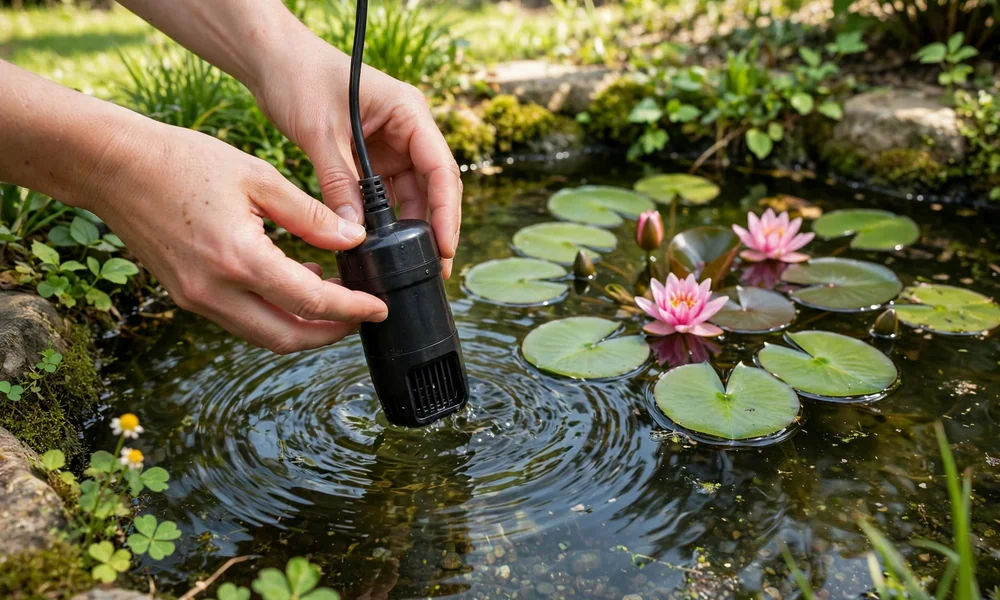
The best all-round pond pump for most gardens is a quiet submersible pump with a generous pre-filter cage. It sits on the pond floor, out of sight, and hums so quietly you will forget it is there. The large pre-filter stops leaves and debris from reaching the impeller, which keeps the pump running for months without attention. Look for a flow adjuster, so you can turn the waterfall down on a quiet evening and up again after a storm. Ceramic shafts last longer than steel ones. For a typical pond of one to two thousand litres, two to three thousand litres per hour is the sweet spot.
Best for Green Water: A Pump With a Built-In UV Clarifier
Green water is the most common pond complaint, and a pump with a built-in UV clarifier is the most reliable cure. The pump pushes water past the UV lamp before the filter, clumping the algae so the filter can trap it. Within a week or two, most ponds go from opaque green to clear enough to see the fish. Choose the UV wattage to match the pond size: nine watts suits up to about four thousand litres, larger ponds need eighteen watts or more. The lamp loses strength after a season even though it still glows, so a fresh bulb each spring is part of the routine.
Best for Koi and Large Ponds: An External Pump
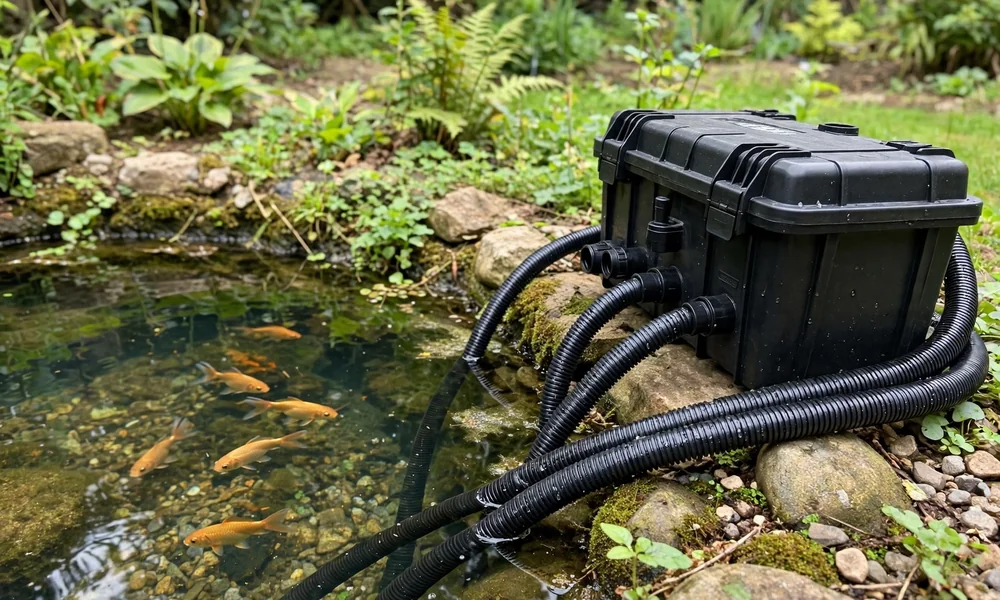
Big ponds and koi ponds need a different kind of pump. An external pump sits in a dry housing beside the pond, and it moves far more water for the electricity it uses. That matters when you are turning over ten thousand litres or more every hour. They are also easier to service: you can clean the strainer basket and check the impeller without wading into the pond. They cost more up front and need a weatherproof shelter and plumbing, but they last longer and run cheaper. If you keep koi, which produce far more waste than goldfish, an external pump with a proper pressure filter is the professional route.
Best for Small Ponds: An All-in-One Filter Pump
Small ponds, under a thousand litres, are best served by an all-in-one unit combining pump, filter and UV clarifier in a single box on the pond floor. One cable, one unit to clean, nothing to plumb. They work well provided you do not overstock them: two or three small goldfish are fine, a dozen are not. Rinse the filter foams every couple of weeks in summer, which takes five minutes with a bucket of pond water. Never rinse them in tap water: the chlorine kills the helpful bacteria that do the real cleaning.
Best for Wildlife Ponds: A Solar Pump
A wildlife pond has different priorities. Frogs, newts and dragonflies prefer still, shallow water, and a powerful pump can disturb them. A small solar pump is the gentle answer: it circulates just enough water to keep it fresh and oxygenated, costs nothing to run, and needs no mains cable. On a sunny day it drives a small fountain or a trickle over stones; on a cloudy day it slows, and at night it stops. That is fine for a wildlife pond, where the goal is light circulation rather than crystal clarity.
How to size a pond pump
Sizing starts with the pond volume. Multiply length, width and average depth in metres, then multiply by one thousand for litres: a pond two metres by one and a half metres and sixty centimetres deep holds about eighteen hundred litres. The pump should move the full volume at least once an hour, twice with fish. Then allow for height: every metre the water climbs to a waterfall or filter reduces the real flow, sometimes by a third, so choose a pump rated above your minimum.
Do not forget the hose. A narrow hose strangles a good pump, so match the hose diameter to the outlet and keep the run short and straight. Every bend and extra metre costs flow. Check the pump’s flow curve, not just its headline number, because the headline is measured at zero height with no hose attached.
Keeping your pump running well
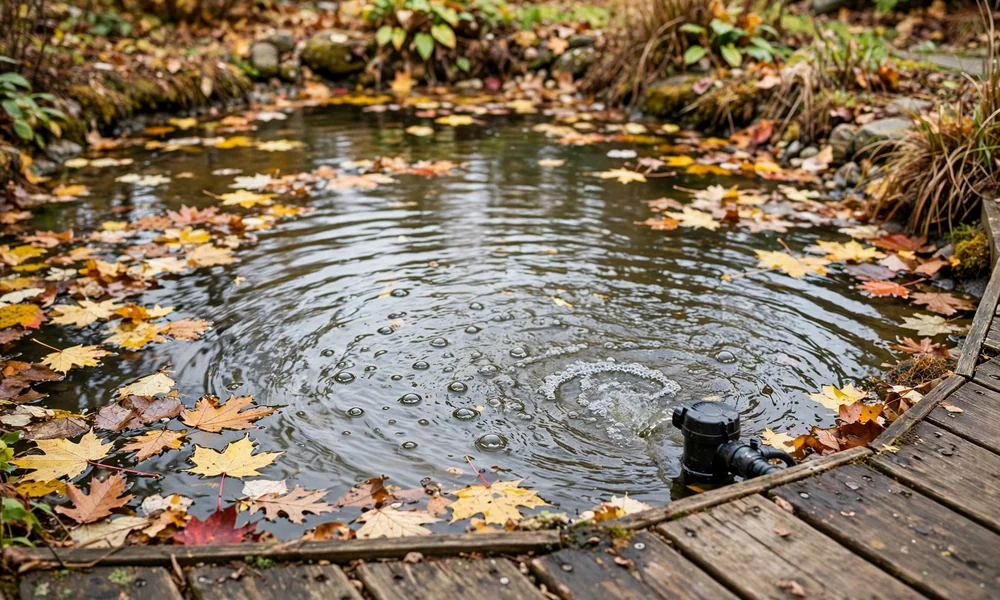
A pond pump is low maintenance, but it is not no maintenance. The intake and pre-filter should be checked every week or two in summer, when leaves, pollen and blanket weed are at their worst. Lift the pump, rinse the cage in a bucket of pond water, and clear weed from the intake. If the flow drops, check the impeller: switch the pump off, open the housing, and spin it by hand. A grain of grit can stop it. In winter, keep it running to stop the pond freezing over, or lift it out, clean it, and store it in a bucket of water indoors so the seals do not dry out.
Algae control works best as a routine rather than a rescue. Shade the water with floating plants such as water lilies, which starve algae of light. Do not overfeed fish: uneaten food rots and feeds algae. A rain barrel beside the house gives you soft, chlorine-free water for topping up. And if the pond sits near a bird bath, keep the two separate: a bird bath is a shallow dish where birds drink and bathe, while a pond pump circulates pond water through a filter to keep a whole pond clear.
Common pond pump mistakes
The most common mistake is buying a pump that is too small, because the headline flow rate is measured with no height and no hose, and your pond has both. The second is burying the pump in silt, where it sucks up mud and clogs in days; set it on a brick instead. The third is forgetting the filter: a pump without one just moves dirty water around faster. The fourth is running the pump only during the day, which lets oxygen fall overnight when fish need it most.
For decoration rather than filtration, a garden fountain is a decorative water feature, while a pond pump does the filtering work. A garden pond is simply an aquarium without walls, which is why the pump matters even more outdoors.
Checklist: choosing a pond pump
- Measure the pond and work out its volume in litres before you shop.
- Choose a pump rated to turn the volume over once an hour, twice with fish.
- Match the UV wattage to the pond size if green water is a problem.
- Check the hose diameter and keep the hose run short and straight.
- Pick a pump you can open and clean without tools.
- Set the pump on a brick, clear of silt on the pond floor.
Frequently asked questions
How long should a pond pump run each day?
Run it twenty-four hours a day. Fish, plants and filter bacteria all need oxygen overnight, and stopping the pump lets waste settle. Modern pumps cost little to run.
Why is my pond still green with a pump running?
Either the pump is too small, the UV lamp is old or the wrong wattage, or the foams are clogged. Check the flow, replace the bulb each spring, and rinse the foams in pond water.
Can a pond pump be too powerful?
Yes, if the flow stresses the fish. Choose a pump with a flow adjuster so you can turn it down, and give fish calm corners behind plants and stones.
Do I need a filter as well as a pump?
Yes, for any pond with fish. The pump moves the water, but the filter traps waste and houses the bacteria that break it down. A pump without a filter only circulates dirty water.
Should I run the pump in winter?
Usually yes. A running pump keeps a hole in the ice so gases can escape and oxygen can enter. In a hard freeze, raise the pump nearer the surface so it does not chill the deeper water.
How often should I clean a pond pump?
Check the intake every week or two in summer and monthly in winter. A quick rinse of the pre-filter in pond water is usually enough, with a deeper impeller clean once or twice a year.
The bottom line
The best pond pump matches your pond: big enough to turn the water over every hour, fitted with a filter and UV clarifier if green water is a problem, and easy enough to clean that you actually do it. Get the sizing right and keep the intake clear.


