
A toddler sock has a harder job than it looks. It has to stay on a foot that kicks, wriggles, runs, climbs and grows, keep small toes warm without overheating them, protect soft skin from rubbing inside a shoe, and survive being washed several times a week. The best toddler socks of 2026 do all of that quietly, and the worst ones announce themselves within an hour: one sock on, one sock lost down the side of the car seat, a heel twisted round to the top of the foot, and a cold little foot by bedtime.
What Makes a Toddler Sock Different
Toddler feet are not small adult feet. They are chubbier, with softer skin, shorter toes and arches that are still forming, and they sweat quickly inside warm shoes. A toddler also cannot explain what hurts, so a rubbing seam or a twisted heel usually shows up as a refusal to walk, a demand to be carried, or a sock pulled off and thrown across the room. The sock has to get it right without any feedback at all.
Age matters more here than it does for older children. A sock made for a five-year-old will bunch inside a toddler shoe, and a sock made for a baby will be outgrown before the packet is finished. Toddler socks are usually sized by shoe size rather than by age, and that is the system worth following, because two children of the same age can be two shoe sizes apart. If you are also buying shoes, our guide to the best toddler shoes of 2026 explains how to measure a moving foot and what to look for in a first pair.
How to Choose: The Five Things That Matter Most
Start with the cuff. It is the part that decides whether the sock stays on. Look for a cuff with enough elastic to grip gently without digging in, and a ribbed band that springs back after washing rather than going slack. A cuff that is too shallow will roll down inside a shoe, while a cuff that is too deep can fold over and create a ridge. Pull the cuff gently before you buy: it should stretch and return, not stay stretched out of shape.
Next, check the fit. The heel should line up with the heel, the toe should reach the end without pulling tight, and there should be no spare fabric bunching under the foot. The simplest test is to put the sock on, then the shoe, and watch the child walk across the room. If the child tugs at the sock, limps, or tries to take the shoe off, something is rubbing. A good fit disappears; a bad fit is the only thing the child can think about.
Fabric comes third, and it matters more than most parents expect. Cotton is soft and breathable, and it suits everyday wear in mild weather, but it holds moisture when a child sweats, and a damp cotton sock stays damp. Wool blends, especially fine merino mixed with nylon for strength and a little elastane for stretch, keep feet warm without overheating, wick moisture away from the skin, and keep insulating even when damp. Bamboo is soft and smooth, and it suits children with sensitive skin, while synthetics dry faster and cost less, making them a strong choice for wet days and nursery spares.
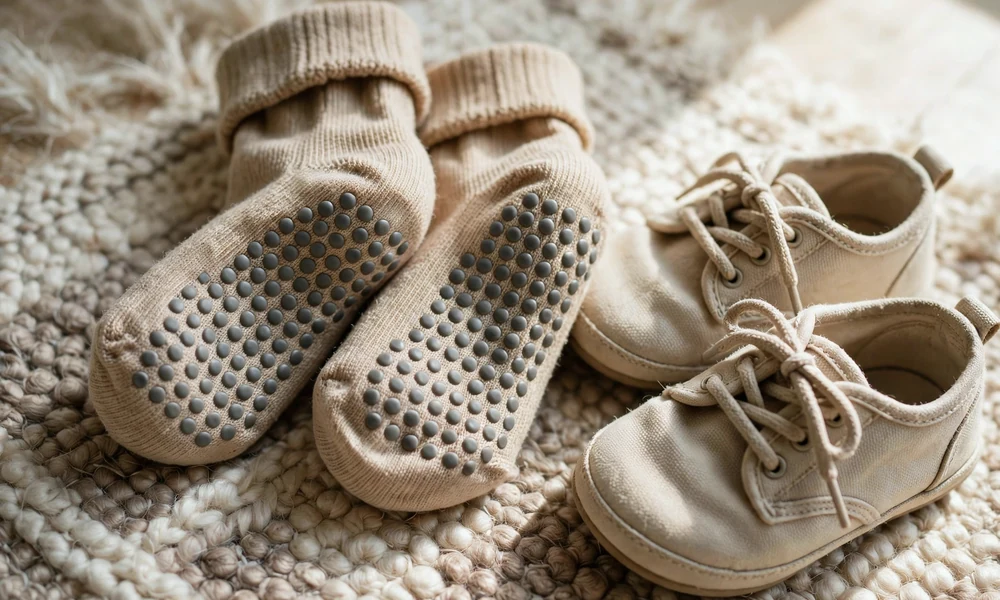
Grip is fourth, and it is the feature that matters most at home. A toddler spends a large part of the day in socks on a hard floor, and a plain sock on wood or tiles is a slip waiting to happen. Grip socks have small rubber dots or patterns on the sole that help little feet hold their ground, and they are worth having even if the child wears shoes outdoors. Check that the grips cover the heel and the ball of the foot, not just a small patch in the middle, and that they survive washing without peeling or cracking.
Finally, look at the toe seam. A thick, raised seam across the toes is one of the commonest causes of sore feet in toddlers, and it is also one of the easiest to avoid. Run a finger along the inside of the toe: it should feel smooth, or nearly so. Seamless toes cost a little more to make, but for a child who notices every small discomfort, they are worth it. The same goes for a smooth heel: a lumpy heel seam will rub with every step.
Sizing: By Shoe Size, Not by Age
Toddler sock sizing is confusing because brands use different systems, and age ranges on packaging are only a rough guide. Size by shoe size instead: match the sock’s stated shoe-size range to the shoes the child actually wears, and when the child sits between two sizes, choose the smaller one for a snug fit in shoes, and the larger one for loose bed socks. A sock that is slightly snug is usually more comfortable than a sock that is slightly loose, because loose fabric bunches and rubs.
Everyday Socks, Bed Socks and Outdoor Socks
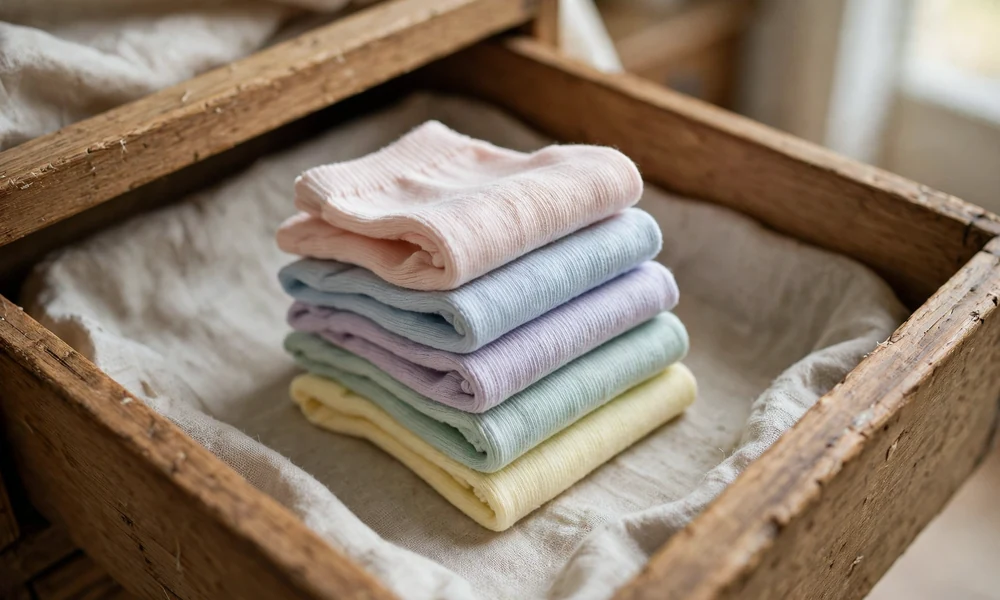
Not every toddler sock needs to do every job. Everyday socks are the workhorses: soft, breathable, with a reliable cuff and a flat toe seam, made to be worn inside shoes all day. They should be comfortable enough to forget, and tough enough to survive the washing machine several times a week. A multipack of plain, well-made everyday socks is usually better value than a drawer full of novelty pairs that are worn once and then refused.
Outdoor socks need to work harder. For cold weather, a thicker sock with a wool blend and a higher crew height keeps ankles warm inside boots and stops draughts. For wet weather, a sock that wicks moisture and dries quickly matters more than thickness, because a wet foot gets cold fast. For trails and rough ground, the same cushioning and grip that matter at home matter even more, and our guide to the best hiking socks for toddlers in 2026 covers cushioned, moisture-wicking pairs made for real family walks.

Fabric in Detail: What to Pick and What to Avoid
Merino wool sounds too warm for a toddler, but fine merino is different from the scratchy wool most adults remember. Its fine fibres trap air for warmth, wick moisture away from the skin, and keep insulating even when damp, so the best toddler socks blend it with nylon for durability and elastane for stretch. Merino blends cost more, but they last longer, smell less after a day of wear, and suit cold mornings and winter outings better than anything else in the drawer.
Bamboo is worth trying if a child has eczema or very sensitive skin. It is smooth, soft and breathable, and it rarely irritates. It is not as hard-wearing as a wool blend, so bamboo socks suit nursery days and quiet days at home better than rough outdoor play. Synthetics, meanwhile, are the practical choice for spares: they dry fast on a radiator or a washing line, they hold their colour, and they are cheap enough to keep a spare pair everywhere a toddler might need one.
Grip Soles and Staying Safe on Hard Floors
Hard floors are where most toddler falls happen, and grip socks are the simplest way to reduce them. The best grip socks have a generous pattern of soft rubber dots across the whole sole, from heel to toe, and the dots are flexible enough to bend with the foot. A sock with only a few dots in the middle of the sole grips less well than it looks, and a sock with hard, stiff grips can feel uncomfortable and make a child walk oddly.
Washing, Drying and Making Socks Last
Toddler socks live in the washing machine, so how they are washed matters as much as how they are made. Wash them inside out, on a normal warm cycle, and avoid fabric softener, which coats the fibres, reduces absorbency and can make grip dots peel. A laundry bag keeps small socks from disappearing into the machine, and it keeps pairs together, which is half the battle with toddler laundry.
What to Avoid When Buying Toddler Socks
Avoid socks bought only because they look cute. A novelty sock with a stiff applique, a hard seam or a scratchy label will be worn once, pulled off, and left in the drawer. Comfort comes first at this age, and a plain sock that fits well will be worn every day, while a pretty sock that rubs will not be worn at all. Save the novelty pairs for photographs, not for nursery.
How Many Pairs, and What to Spend
Price is a poor guide on its own. The cheapest multipack can be excellent if the cuff holds, the seam is flat and the fabric is soft, while an expensive pair can be a disappointment if it is made for looks rather than for feet. Judge a sock by how it feels inside, how it fits after washing, and whether the child keeps it on, not by the brand on the packet. And when a younger sibling arrives, remember that baby socks are a different size and a different fit: our guide to the best baby socks of 2026 covers the smaller, softer pairs that stay on tiny feet that kick even more than a toddler’s.
Teaching a Toddler to Put Socks On Alone
Learning to put socks on is one of the first dressing skills a toddler can master, and it is worth teaching slowly. Start with a sock that is a little loose, scrunch it down so the toe is easy to find, and help the child push their toes in first, then pull the heel into place. A sock with a coloured heel makes this easier, because the child can see where the heel should go, and a sock with a clear top and bottom is easier to learn with than a sock that looks the same all round.
Frequently Asked Questions
How often should toddler socks be replaced? As soon as the cuff loses its spring, the heel thins, or the child complains that they feel tight. For most toddlers, that means checking the fit every two or three months, and replacing the whole drawer roughly twice a year. Socks that are too small cause more trouble than socks that are slightly too big, so size up at the first sign of tightness.
Why does my toddler keep pulling socks off? Usually because something is uncomfortable: a tight cuff, a raised toe seam, a twisted heel, or a sock that is too hot. Check the fit, feel the inside of the toe seam, and try a different fabric or a looser cuff. Sometimes the answer is simply that the sock is too small, and a size up solves the problem overnight.
The best toddler socks are the ones a child forgets they are wearing. Choose a soft fabric, a cuff that stays up without squeezing, a flat toe seam, a heel that sits where it should, and grips that cover the whole sole, and the socks will simply do their job, day after day. Choose on looks alone, and you will be choosing again far sooner than you planned, with a drawer full of socks nobody wants to wear.


