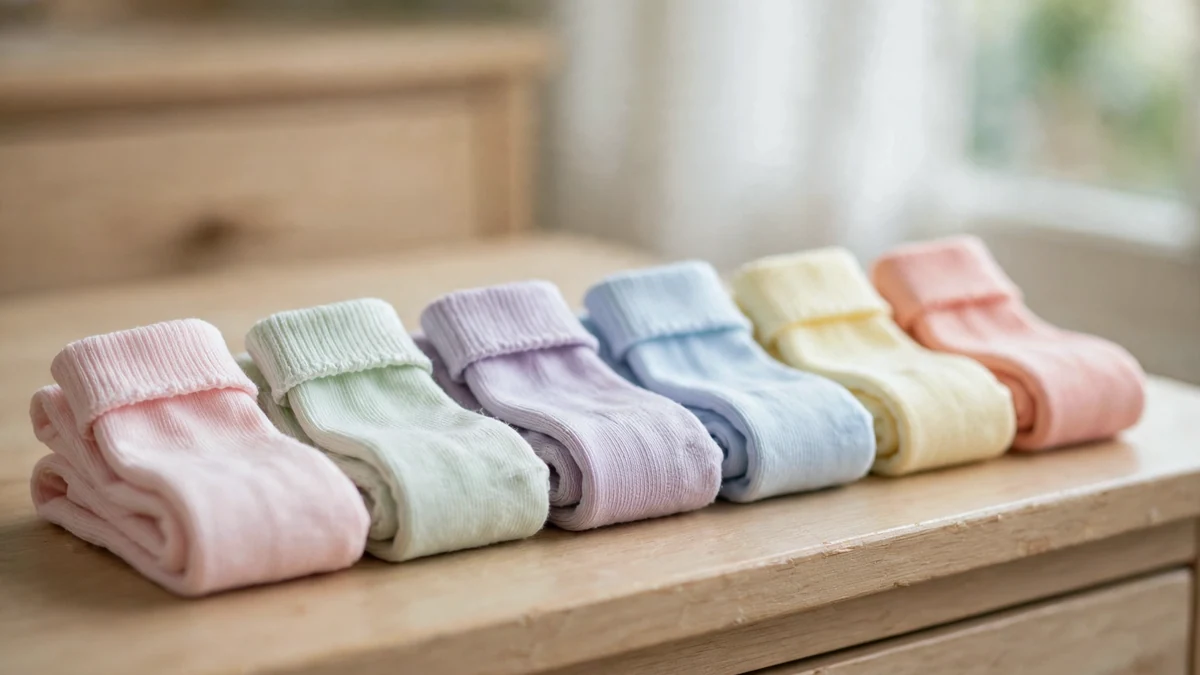
A baby sock has a harder job than it looks. It has to stay on a foot that kicks, wriggles and grows, keep tiny toes warm without overheating them, and survive being washed several times a week. The best baby socks of 2026 do all of that quietly, and the worst ones announce themselves within an hour: one sock on, one sock lost down the side of the car seat, and a cold little foot by bedtime.
The difference between a good baby sock and a frustrating one is rarely the price. It is the cuff, the fabric and the fit. A cuff that is too loose slides off before you reach the front door. A cuff that is too tight leaves a red ring around a chubby ankle. Cotton that is too thin wears through at the heel in a fortnight, while a heavy synthetic blend makes small feet sweat and then chill. Get those three things right and a sock becomes one of those small, unglamorous purchases that makes every day slightly easier.
What Makes a Great Baby Sock
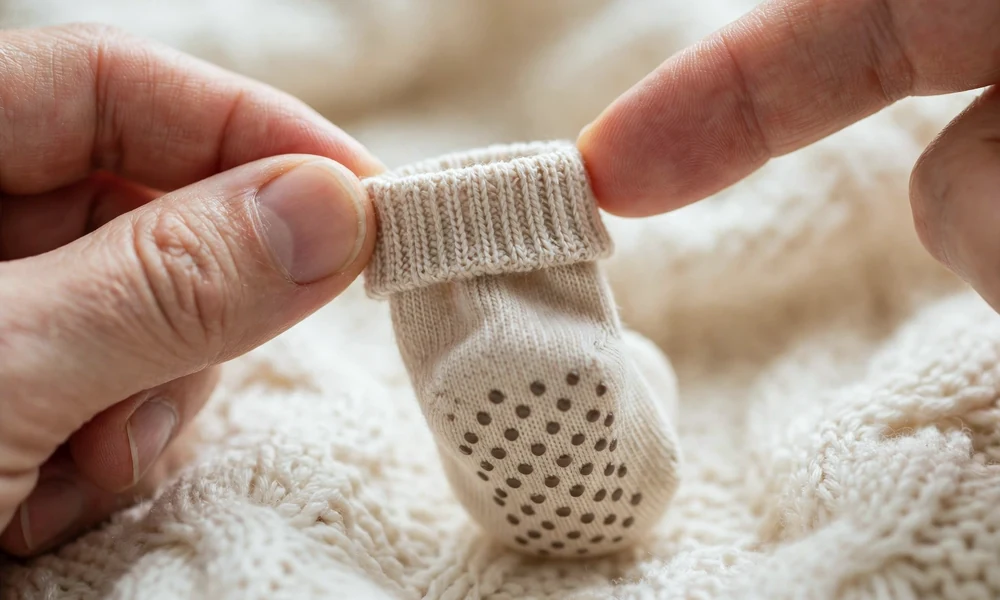
Start with the cuff. The best baby socks have a cuff that is deep enough to grip without squeezing, usually a ribbed band at least a couple of centimetres tall. A single thin elastic thread is not enough on a baby who is learning to kick, and a cuff that relies on a drawstring or a tight band is a poor idea for delicate skin. Look for a cuff that springs back when you stretch it and sits flat against the ankle rather than rolling down into a tight ring.
Next, look at the fabric. Soft combed cotton is the safest starting point for everyday wear: it breathes, it washes well and it rarely irritates sensitive skin. A small amount of stretch, usually from a touch of elastane, helps the sock hold its shape and stay on. Pure cotton with no stretch tends to bag out after a few washes and then slip off. Bamboo blends are a good option for warm weather because they wick moisture, while a cotton and wool blend suits cold winter days, provided the wool is fine and soft rather than scratchy.
Seams matter more on a baby sock than on an adult one. A raised seam across the toes can rub and irritate a baby who cannot tell you what is wrong, so the best socks use a flat or hand-linked toe seam that you can barely feel. Turn the sock inside out before you buy a multipack and run a finger along the toe. If you can feel a ridge, your baby will feel it too, and a fussy baby in scratchy socks is a problem that is easy to avoid.
How to Choose the Right Pair
Size is the first decision, and it is worth getting right rather than guessing. Baby socks are usually sold by age, from newborn to twelve months and beyond, but babies vary enormously, so check the size in centimetres as well. A sock that is a little too big will bunch up inside a shoe and slip off a bare foot; a sock that is too small will pinch the toes and leave marks. When in doubt, size up for a baby who is between sizes, and save the smaller pair for a few weeks later rather than forcing it on now.
Think about where the socks will be worn. For a baby who is crawling or taking first steps, grip soles are worth every penny. Small silicone dots or a patterned grip on the sole stop little feet sliding on wooden floors and tiles, and they make a real difference to a new walker finding their balance. For a newborn who spends most of the day in a cot or a sling, grip soles are unnecessary, and a simple soft sock is lighter and more comfortable. If your nursery has hard floors, our guide to the best nursery essentials of 2026 covers the rest of the room, from the cot to the changing mat, so the whole space works together.
The 7 Best Baby Socks of 2026
1. The Everyday Cotton Classic
This is the pair to buy first. A soft combed-cotton sock with a deep ribbed cuff, a flat toe seam and just enough stretch to stay put, it suits newborns through to toddlers and washes beautifully. The fabric is breathable enough for warm rooms and warm enough for cool mornings, and the cuff grips without leaving marks. It comes in plain colours that match everything, which matters more than it sounds when you are dressing a wriggling baby at seven in the morning. If you only buy one style, buy this one.
2. The Stay-On Sock for Kickers
Some babies treat socks as a personal challenge, kicking them off within minutes of getting dressed. This pick answers that with a taller cuff and a gentle elasticated band that sits higher on the calf, holding the sock in place through kicking, crawling and car-seat wriggling. The band is wide rather than narrow, so it spreads the pressure and does not dig in. Parents of determined sock-removers will know within a day whether this is the pair they have been looking for.
3. The Grip-Sole First Walker
Once a baby starts pulling up and cruising along furniture, grip soles become essential. This sock has a full pattern of soft silicone grips across the sole and heel, giving traction on wood, tile and laminate without making the sock stiff. The upper is a breathable cotton blend, and the cuff is snug enough to stay on through a whole morning of practice steps. It is the best choice for a baby who is on the move and for homes with hard floors.
4. The Organic Cotton Favourite
For babies with sensitive or eczema-prone skin, organic cotton is worth the small premium. This sock is made from certified organic cotton with no harsh dyes and a smooth, flat seam, and it feels noticeably softer than a standard cotton sock straight out of the packet. It holds its shape well in the wash and the colours stay gentle rather than fading to grey. It is a thoughtful choice for a newborn gift, too, since the fabric is kind from the very first wear.
5. The Lightweight Summer Sock
Hot weather needs a sock that breathes. This lightweight pair uses a thin bamboo and cotton blend that wicks moisture away from the foot, so feet stay dry rather than damp and clammy on a warm day. The cuff is low and soft, and the sock is thin enough to wear inside sandals without bunching. It dries quickly on the line, which is a genuine advantage in summer when the washing pile never seems to shrink. A good pick for holidays and for babies who run warm.
6. The Budget Multipack That Actually Lasts
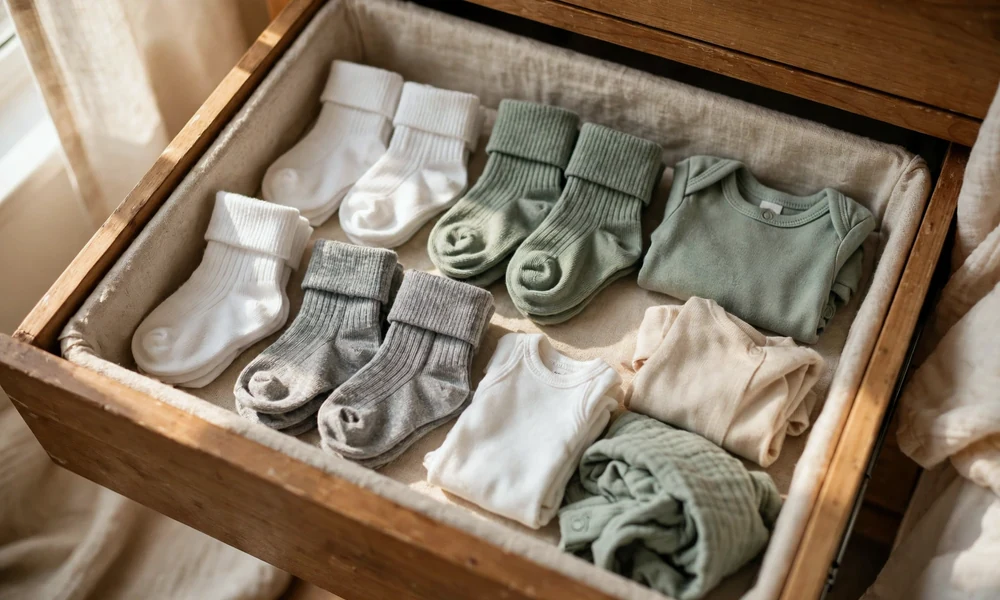
Buying baby socks in bulk only saves money if they survive the washing machine. This multipack is the exception to the rule that cheap socks fall apart: the cotton is a decent weight, the cuffs keep their stretch after dozens of washes, and the heels do not thin out in a month. The colours are simple and the sizing is honest, which is more than can be said for some multipacks. Buy two packs, keep one in the nursery and one in the changing bag, and stop worrying about the inevitable lost sock.
7. The All-Rounder for Toddlers
Toddlers are harder on socks than babies: they run, climb, drag their feet and insist on putting their own shoes on. This final pick is built for that stage, with a reinforced heel and toe, a sturdy grip sole and a cuff that stays up through a whole day at nursery. The sizing runs a little larger, which suits a toddler foot, and the colours are bright enough that a missing sock is easy to spot in a pile of toys. It is the pair to move to when your baby stops being a baby and starts being a small person in a hurry.
Sizing by Age: A Simple Guide
As a rough guide, newborn socks fit feet up to about nine centimetres long, zero to three months covers roughly nine to ten centimetres, three to six months covers ten to eleven, six to twelve months covers eleven to twelve, and twelve to twenty-four months covers twelve to fourteen. These are averages, and your baby may be ahead or behind them, so measure the foot from heel to longest toe and compare with the maker’s chart rather than trusting the age label alone. A sock that fits today may be too small in six weeks, so check the fit each time you do the washing and move up a size at the first sign of tight toes or a cuff that leaves a mark.
Keeping Socks On — and Clean
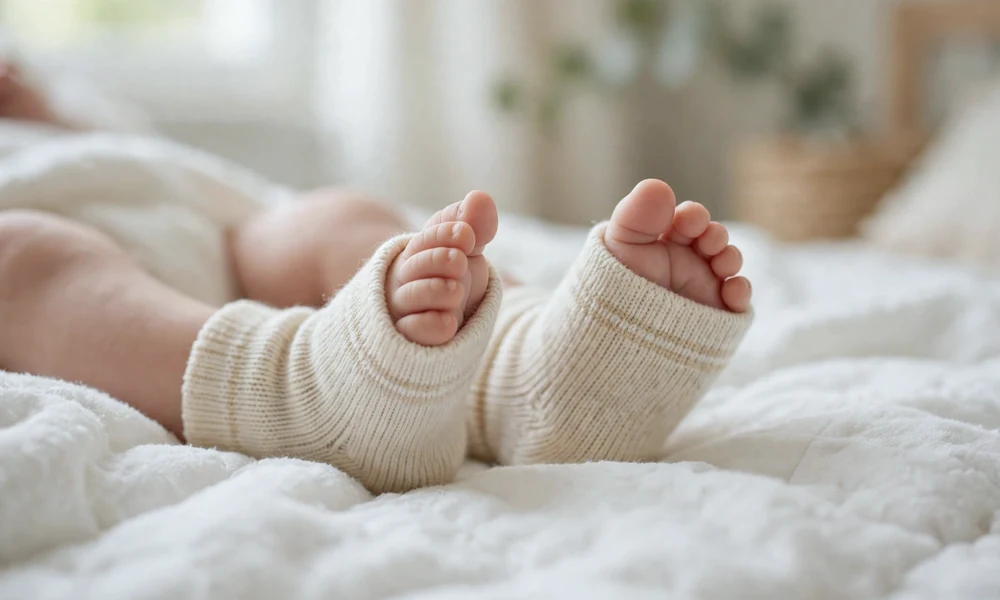
The classic trick for socks that will not stay on is to put the sock on first, then the sleepsuit or trousers over the top, so the cuff is trapped under the leg and cannot slide down. For older babies, a sock with a slightly longer cuff tucked under trousers works the same way. Avoid the temptation to buy a size too small in the hope that it will grip better; a tight sock is uncomfortable and more likely to be kicked off than a well-fitting one. If socks still vanish, check the car seat, the pram and the inside of sleepsuit legs before assuming the washing machine ate them.
Washing baby socks is straightforward, but a few habits make them last longer. Wash them inside out in a mesh laundry bag so they do not disappear into the machine, use a gentle detergent, and skip fabric softener, which coats the fibres and reduces both absorbency and grip. Socks dry quickly on a line or a radiator, and most cotton socks do not need ironing. A pair that has lost its stretch or gone thin at the heel has done its job and should be retired to the dressing-up box rather than kept in the drawer, and if you are restocking the whole nursery at once, our guide to the best diapers of 2026 sits naturally alongside this one in the weekly routine.
The Verdict
The best baby socks of 2026 are the ones you stop thinking about: soft cotton, a cuff that stays put, a flat seam and the right size for your baby’s foot today, not last month. Start with the everyday cotton classic, add grip soles when your baby starts moving, and keep a warm knit and a lightweight summer pair in the drawer for the seasons. Buy one pack to test the fit, keep spares in the changing bag, and retire pairs as soon as they thin out. And if your baby still kicks every sock off within minutes, you are not alone; the stay-on pick in this list exists precisely because so many parents have been there. For the night-time half of the routine, our guide to the best baby monitors of 2026 helps you keep an eye on things once those warm, dry feet are finally tucked up in bed.


