
A baby bottle looks clean long before it actually is. Milk film hides in the curve of the base, in the thread of the ring and inside the tiny hole of the nipple, and a quick rinse under the tap does nothing about any of it. The right cleaner changes the whole job: the brush reaches where fingers cannot, the soap lifts fat without leaving a taste behind, and the rack lets everything dry instead of sitting damp in a pile. Get the cleaning right and the bottles stop smelling stale, the nipples stay clear, and the nightly wash takes minutes rather than a quarter of an hour of scrubbing.
This guide covers the full cleaning kit rather than a single brush. Some parents want one good brush and a bottle of gentle soap; others want a complete set with a steriliser and a drying rack that holds a whole day of bottles. We tested the ideas that matter in real kitchens: whether the brush head reaches the bottom of a tall bottle, whether the bristles survive hot water, whether the soap rinses away completely, and whether the drying rack actually fits the bottles a family uses every day. The ten picks below are the cleaners that earned their place by working well, lasting well and making an unglamorous chore noticeably easier. The same thinking applies to the rest of the changing bag, including the nappies that share the space.
What makes a baby bottle cleaner worth buying
The first thing to check is reach. A brush that is shorter than the bottle leaves the bottom untouched, which is exactly where milk residue settles and turns. The head should be slightly wider than the bottle body so the bristles press against the walls as you twist, and slim enough to pass through a narrow neck without forcing. A separate tiny brush for the nipple matters just as much: the hole is too small for a standard head, and a blocked or cloudy nipple is usually a cleaning problem rather than a worn-out part.
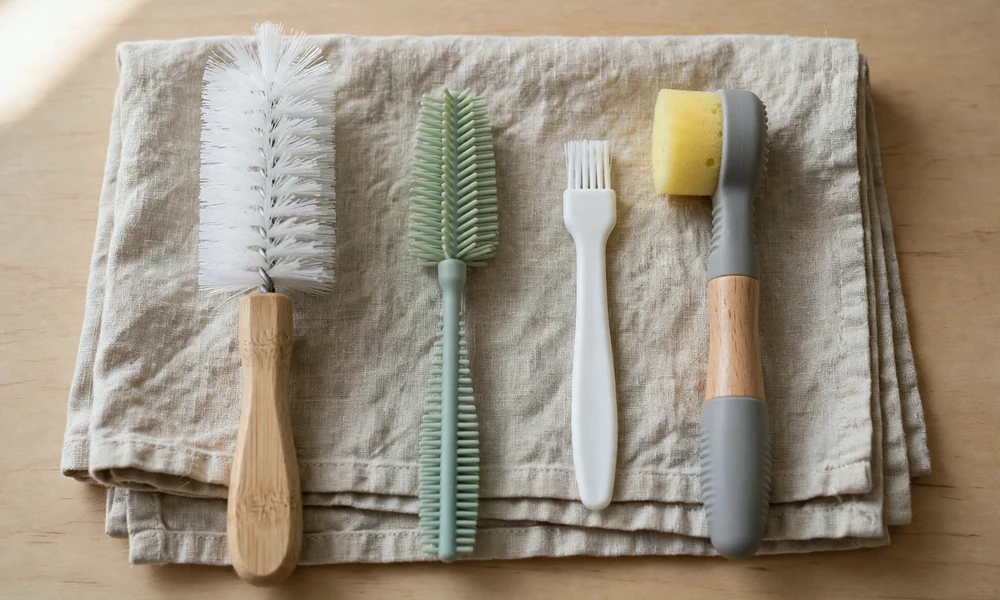
Material is the second decision. Nylon bristles scrub dried milk film best and hold their shape in hot water, while silicone bristles rinse cleanest, dry fastest and never shed stray hairs into a bottle. Sponge tips are gentle on delicate glass but they tear, hold smells and need replacing often. For soap, the rule is simple: it should be made for baby feeding gear, free of strong fragrance, and it should rinse away with no slippery film left on the plastic or glass. Anything that leaves a taste in the next feed has failed, however well it cleaned.
The 10 best baby bottle cleaners of 2026
These ten picks cover every part of the job, from the daily brush to the drying rack. They are ordered by how much difference they make to a real nightly routine, starting with the set most families should buy first.
1. The complete brush and drying rack set
This is the one purchase that replaces three separate ones. A long nylon bottle brush, a small nipple brush and a compact drying rack arrive together, and the rack is sized for four bottles plus their rings and nipples. The brush head is wide enough to scrub the base of a tall bottle in one twist, the nipple brush is stored in the handle so it never gets lost, and the rack drains into the sink rather than pooling water on the counter. It is the best starting point because it solves washing and drying in a single box.
2. The slim silicone bottle brush
Silicone is the easiest material to live with. This brush never sheds bristles, it rinses clean under the tap in seconds, and it dries standing in a cup without going musty. The slim head slips through narrow bottle necks that defeat wider nylon brushes, and the soft nubs are gentle on glass while still shifting dried milk. It will not scrub a baked-on film as fiercely as stiff nylon, but for bottles washed the same day it is the lowest-effort option and the one most parents reach for first.
3. The long-handled nylon brush with a nipple brush
When a bottle has sat in the bag all afternoon, only stiff nylon will do. This brush has a long handle that keeps hands out of hot soapy water, a head dense enough to scour the base, and a small wire-handled nipple brush clipped to the handle. It is the workhorse of the list: cheap, replaceable every couple of months, and strong enough for the bottles that other brushes give up on. Keep one by the sink and one in the nappy bag.
4. The gentle fragrance-free bottle soap
Ordinary washing-up liquid is too harsh and too perfumed for feeding gear, and it leaves a film that babies can taste. This soap is made specifically for bottles, nipples and pump parts: it cuts milk fat quickly, it has no added fragrance, and it rinses away completely with no slippery residue. A single pump is enough for a sink of bottles, so the bottle lasts for months. It is the quiet hero of this list, because the best brush in the world cannot do its job in plain water.
5. The electric steam steriliser
For newborns, premature babies and any household where someone is unwell, a steam steriliser adds a layer of reassurance that washing alone cannot. It holds six bottles and their parts, runs a cycle in about ten minutes, and keeps the contents sterile for a day if the lid stays shut. It is not a replacement for washing: every bottle still needs brushing first, since steam cannot remove milk film. Used after a proper wash, though, it is the most thorough finish available at home.
6. The two-tier drying rack
A good rack is really a storage system. This two-tier design holds bottles on the lower pegs and nipples, rings and dummies on the upper tray, so nothing touches the counter and nothing rolls away. The pegs are spaced for both wide and narrow bottles, the base has a drip tray that empties easily, and the whole thing folds flat when visitors come. Families who wash six or more bottles a day will notice the difference immediately: everything dries, everything has a place, and the counter stays clear.
7. The travel cleaning kit
Bottles still need cleaning on a weekend away, and this compact kit is built for exactly that. A folding brush, a small bottle of concentrated soap and a zip bag that doubles as a drying mat fit into a changing bag pocket. The brush extends to full length when open and collapses short enough to pack, and the soap is concentrated so a few drops do a whole sink. It will not replace the home setup, but it stops a holiday turning into a hunt for a clean bottle.
8. The sponge-tip brush for glass bottles
Glass bottles scratch more easily than plastic, and stiff bristles can leave fine marks over time. This sponge-tip brush cleans with a soft, dense head that wipes the inside wall rather than scouring it, and the slim handle reaches the base of even tall glass bottles. The trade-off is lifespan: sponge heads need replacing every few weeks and must be dried fully between uses, or they start to smell. For families who chose glass, it is still the safest daily tool.
9. The bottle and nipple brush duo
Sometimes two simple tools beat one clever one. This duo pairs a full-size bottle brush with a dedicated nipple brush that has a thin wire stem and a tiny head shaped for the nipple hole and the valve slit. The nipple brush is the detail most kits get wrong, and this one gets it right: it clears the hole without stretching it, which keeps the flow rate steady as the baby grows. Buy two duos and rotate them so one is always dry.
10. The dishwasher basket for bottle parts
For families who run a dishwasher daily, this lidded basket is the easiest way to clean small parts safely. Rings, nipples, valves and caps sit in separate compartments so they cannot fall onto the heating element, and the mesh is fine enough that nothing slips through. It does not suit every bottle, since some manufacturers advise against dishwashers, and a brush is still needed for dried milk. As a backup for busy days, though, it turns a machine most kitchens already own into a bottle cleaner.
Which type of cleaner do you actually need?
Start with the daily routine, not the shopping list. A family washing four to six bottles a day needs a long brush, a nipple brush, gentle soap and a rack — that is the whole core kit, and it costs less than a week of ready-made formula. Add a steriliser only if there is a newborn, a premature baby or a medical reason to be extra careful; for older babies who are eating solids, thorough washing and air drying is enough. The travel kit is worth it only if bottles regularly leave the house, and the dishwasher basket only if the dishwasher already runs every day.
How to clean a baby bottle, step by step
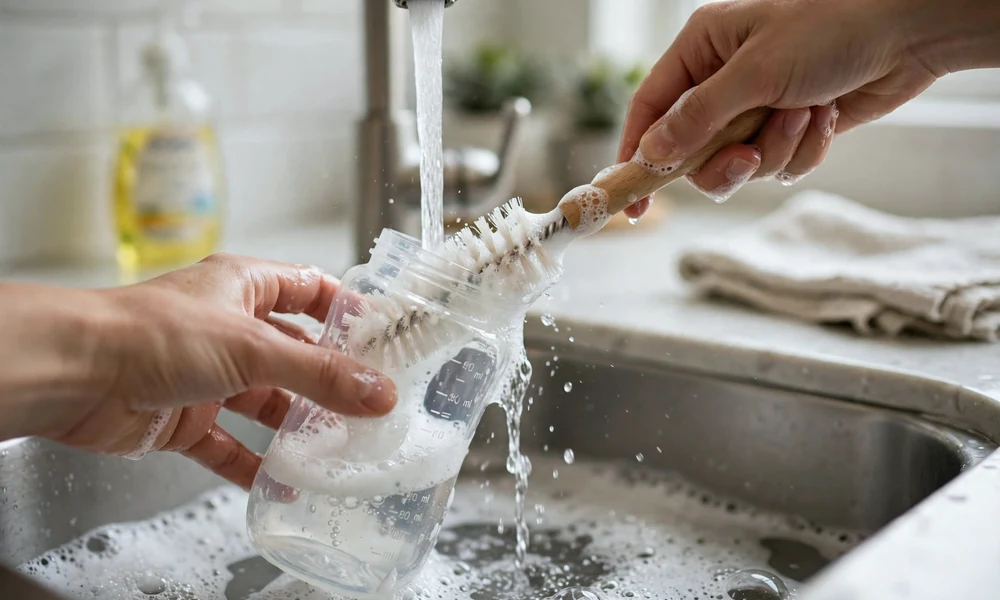
The method matters as much as the tools. Rinse the bottle straight after the feed so milk never dries on, then take it fully apart: bottle, ring, nipple and any valve or vent piece. Wash every part in hot water with a drop of baby bottle soap, using the bottle brush on the inside walls and base, and the nipple brush through the hole and around the valve. Rinse each part under running water until no soap remains, then shake off the water and set everything upside down on the drying rack with air circulating around it.

The verdict
The best baby bottle cleaner is not a single product but a small, well-chosen kit: a long brush that reaches the base, a nipple brush that clears the tiny hole, a gentle soap that rinses away completely, and a rack that lets everything air dry. If you buy one thing, buy the complete brush and drying rack set at the top of this list, then add the fragrance-free soap. That combination handles the daily wash for most families at a modest price, and the rest of the picks are upgrades for specific situations rather than essentials.
Clean bottles are one of those invisible wins of early parenthood: nobody notices them when they are right, and everyone notices when they are not. Spend a little on the right tools, wash every part every time, and the nightly routine becomes quick, calm and done properly. For the bottles themselves, our comparison of the best and worst baby bottles is a useful companion read, and if you want the wider picture of what a good brush can and cannot do, the general bottle brush guide covers the whole household. Keeping the kit small, replacing brushes on time and letting everything dry fully is the whole secret — and it works from the first bottle to the last.


