The best diapers in 2026 are the ones you stop thinking about. They stay dry through the night, they do not rub a raw patch onto soft skin, they fit without gaping at the legs or digging at the waist, and they hold up when a wriggling baby decides that changing time is the least interesting thing in the world. A good diaper is quiet work. A bad one announces itself at two in the morning, in the car seat, and halfway through a walk when there is nowhere sensible to change a baby.
Parents change somewhere between six and ten diapers a day in the early months, which means the choice you make is repeated thousands of times before your child is out of them. That repetition is exactly why the small differences matter so much. A slightly better leg cuff, a softer waistband, a wetness indicator you can actually read in dim light, a tab that does not tear when your hands are damp: none of these sounds dramatic on a packet, and all of them matter at the changing table. This guide looks at what separates the best diapers of 2026 from the rest, how to match a diaper to your baby’s size and skin, and where it is worth spending more and where it is not.
What makes a diaper one of the best
Absorbency comes first, and it is not only about how much liquid a diaper can hold in a laboratory test. It is about how quickly the top layer pulls wetness away from the skin, how evenly the core spreads it so the diaper does not sag into a heavy lump at the front, and whether the diaper still feels dry on the outside after a long nap. The best diapers of 2026 use a thin, fast-wicking top sheet over a gel core that locks moisture away, so the surface your baby sits against stays noticeably drier than the cheaper alternatives that feel clammy within the hour.
Fit is the second test, and it is the one most parents get wrong at first. A diaper that is too small leaves red marks at the waist and thighs and leaks at the legs, while a diaper that is too big gaps at the back and lets everything escape upwards. The right size sits with the waistband just below the belly button, the leg cuffs lying flat against the thighs with no ruffles tucked inside, and two fingers fitting comfortably under the waistband. Weight ranges on the packet are a starting point, not a rule: a long, lean baby and a short, sturdy baby of the same weight often need different sizes, and a baby who is between sizes usually does better in the larger one.

Disposable diapers
Disposable diapers are the default for most families, and for good reason. They are fast, they are hygienic when changed often, and they travel well. Modern disposables are far thinner than the bulky versions of a generation ago, and the best of them stay slim even when full. Their weakness is cost over time and waste: a baby can go through two thousand or more disposables before potty training, so the per-diaper price deserves real attention rather than a shrug at the checkout.
Sizing, and when to move up
Most diaper ranges run from newborn through size six, with weight guides printed on every pack. Newborn sizes fit babies up to about five kilograms, size one covers roughly four to six, size two covers five to eight, size three covers seven to eleven, size four covers nine to fourteen, size five covers twelve to seventeen, and size six covers sixteen kilograms and above. These ranges overlap deliberately, because babies grow in their own shapes. Use the overlap as permission to try the next size up rather than as a puzzle to solve perfectly.
The clearest signs that it is time to move up are leaks that appear without any other change, red marks that linger after the diaper comes off, tabs that barely reach the front panel, and a waistband that rides low no matter how you position it. Blowouts up the back are the classic signal: they almost always mean the diaper is too small or the back of the waistband is sitting too low. Move up one size, check the leg cuffs again, and give it two days before judging. A single bad night is usually a fluke; a pattern across a week is a size problem.
Overnight diapers and leak protection
Leaks are the complaint that drives most diaper switches, and they have a small number of usual causes. The most common is a leg cuff that is tucked inward instead of flared outward; run a finger around each leg after fastening and the problem often disappears. The second is a diaper that is too small, as above. The third is a baby who has outgrown the absorbency of a daytime diaper at night, which is where an overnight version earns its place. The fourth is a fit issue at the back, fixed by pulling the back of the diaper a little higher before fastening the tabs.

Sensitive skin and nappy rash
Nappy rash is common, it is usually mild, and it is rarely a sign that you have done something wrong. It happens when skin stays damp, when friction rubs the same spot, or when a baby’s digestion changes and stools become more irritating for a few days. The best response is boring and effective: change often, clean gently with water or fragrance-free wipes, pat dry rather than rubbing, and leave the diaper off for a few minutes of air time whenever you can. A thin layer of barrier cream at each change helps while the skin recovers.
If rash keeps returning, look at the diaper itself. Some babies react to a particular brand’s fragrance, lotion, or the material of its top sheet, and switching to a fragrance-free, hypoallergenic option often settles the problem within a few days. Keep the change simple: switch one thing at a time, give it three or four days, and note what happens. Changing the diaper, the wipes, the cream, and the wash routine all at once tells you nothing about which one helped. If the rash blisters, spreads, or does not improve after a week of gentle care, ask your doctor or health visitor rather than trying another packet.
What the best diapers cost, and how to save
Diaper prices look small per pack and large per year, which is why the per-diaper cost is the number to compare. Work it out by dividing the price of the pack by the number of diapers inside, and compare that figure across brands and pack sizes rather than comparing pack prices. Larger packs almost always cost less per diaper, and subscription deliveries often beat supermarket prices by a useful margin, provided you are not locked into a size your baby has already outgrown.
Do not overbuy newborn sizes. Babies grow out of them fast, often within the first few weeks, and an unopened pack is easy to return or pass on while an opened one is not. Buy one small pack of newborn and one of size one before the birth, then buy as you go. The same caution applies to any brand you have not tried: a single small pack tells you everything a bulk box cannot, including whether the tabs hold, whether the scent bothers you, and whether the fit suits your baby’s shape.
Choosing for your baby, not the packet
Every baby is shaped differently, and diaper brands are cut differently too. One brand runs narrow in the legs, another runs generous at the waist, and a third is longer in the body. That is why one family’s favourite diaper leaks on another family’s baby, and why recommendations from friends are a starting point rather than a verdict. Try two or three brands in the same size, use each for at least two full days, and judge them on leaks, red marks, and how dry the skin feels at change time. The best diaper for your baby is the one that passes those three tests, whatever its price or reputation.
Think about your daily life as well. If you are out most days, a slim diaper that fits under clothes and a bag that carries the day’s supply matter more than the last drop of absorbency. If you are mostly at home, comfort and cost per diaper may matter more. If your baby goes to nursery, check what the nursery prefers: some ask for a specific style, and all of them appreciate a diaper that fastens securely and comes off cleanly. The right choice fits your routine as well as your baby.
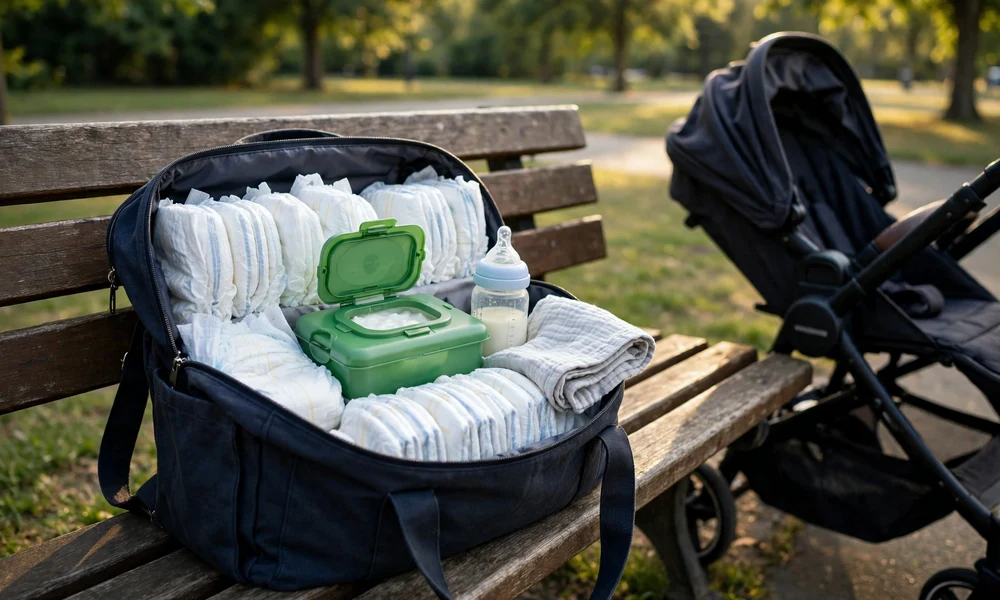
For days out, the rest of the kit matters too. A good diaper bag keeps clean diapers, wipes, and a change of clothes organised so a change away from home is quick rather than chaotic. Feeding gear deserves the same thought, and our guide to the best baby bottles of 2026 covers the bottles that pair with long days out. And the surface you change on at home shapes the routine as well, which is why the best changing tables of 2026 are worth choosing with the same care as the diapers themselves.
Common mistakes worth avoiding
The first mistake is buying in bulk before you know the brand or the size. The second is ignoring the leg cuffs: they are the main defence against leaks, and a cuff tucked inside the diaper is no defence at all. The third is fastening the tabs too tightly in the hope of preventing leaks, which does the opposite by creating gaps at the legs and pressure marks at the waist. Snug is right; tight is wrong, and you should be able to slip two fingers under the waistband.
The fourth mistake is changing too rarely overnight in the hope of not waking the baby. A baby who sleeps through a wet diaper is lucky, not typical, and most wake damp and uncomfortable. An overnight diaper plus a barrier cream at bedtime is a better plan than hoping for the best. The fifth mistake is treating every rash as an allergy and switching brands every two days, which never gives any diaper a fair trial and never gives the skin a chance to settle. Change one variable, wait, and observe.
The verdict
The best diapers of 2026 are not the most expensive ones, and they are not the ones with the loudest packaging. They are the ones that absorb fast and stay dry, fit your baby’s shape without gaps or marks, treat sensitive skin gently, and hold through the night without a leak. Start with the fit, test two or three brands for a few days each, size up the moment leaks or marks appear, and keep an overnight option for long sleeps. Get those four things right and the diaper stops being a daily problem, which is exactly what the best ones are for. The rest is just keeping the shelf stocked and the bag packed, so that when changing time comes, everything you need is already within reach.