
Bottle Brushes That Reach Every Corner in 2026
The best bottle brushes in 2026 reach every corner: the bottom, the shoulder where the neck widens, and the rim where residue collects. A reusable bottle that looks clean can still smell stale — a film of old drink clinging to a spot no sponge or dishwasher jet ever touches. This guide compares the brush types that clean narrow-neck bottles, explains what matters when you buy one, and shows how to use it.
Key Takeaways
- Length decides everything: the brush must be longer than the bottle is tall, with a head that reaches the bottom.
- Match the head to the bottle: slightly wider than the body, slim for narrow necks and baby bottles.
- Nylon bristles scrub dried residue best, silicone rinses cleanest and dries fastest, sponge tips suit delicate glass.
- A brush that cannot dry will smell: hang it head-down and replace it every three to six months.
- Hot water and a drop of dish soap beat a long soak — two minutes of scrubbing beats an overnight soak.
Why the Right Brush Matters
A bottle is a difficult shape to clean: tall, narrow at the top, wide at the bottom, with corners a hand cannot reach and a dishwasher cannot see. Water swirls through it, but swirling does not scrub — the film on the inside wall, from coffee, juice, shakes, or milk, needs contact to come off. Left alone, that film turns into a smell, then a taste.
That is the whole job of a bottle brush: a long handle carries a scrubbing head down into the bottle, the bristles press against the walls, and a few twists do what rinsing cannot. The differences between a good one and a bad one are simple — length, head size, bristle stiffness, and whether it dries properly. Get those right and a stale bottle comes clean in two minutes.
Bottle Brushes vs Other Brushes
Not every similar-looking brush does the same job. A bath brush is built for skin: long handle, soft bristles, a head made to glide over a back. A pastry brush spreads liquid in a thin film, with fine bristles that hold egg wash or glaze. A toilet brush is built for porcelain, with a curved head for under the rim. None belongs inside a drinking bottle — the bristles are the wrong stiffness, the heads the wrong shape, and in the toilet brush’s case, the hygiene is obviously wrong.
A bottle brush is different in two ways. First, the head is narrow and cylindrical, sized to slide through a bottle neck and expand against the walls. Second, the handle is long and thin, often with a twisted wire core that flexes slightly, so the head can angle into the shoulder of the bottle — the curve just below the neck where residue hides. A dish brush, the nearest relative, is too short and too wide: it cleans plates well and bottles badly.
When shopping, check the overall length, the head diameter, and the neck size it is meant to fit. A brush two centimetres too short is not a bargain; it cannot finish the job.

The Main Types of Bottle Brush Compared
Most bottle brushes fall into five types, each suiting a different bottle, each with a weakness worth knowing.
| Brush type | Best for | Scrubbing power | Drying | Downside |
|---|---|---|---|---|
| Nylon bristle, wire core | Everyday bottles, dried residue | Excellent | Good | Bristles splay |
| Silicone bristle | Glass bottles, daily use | Good | Excellent | Weak on dried film |
| Sponge tip | Delicate glass, decanters | Gentle | Slow | Sponge tears, holds smells |
| Slim mini brush | Baby bottles, straws, vases | Good | Good | Too small for wide bottles |
| Brush set, mixed heads | Households with many bottles | Varies | Good | Small heads get lost |
The nylon bristle brush with a twisted wire core is the workhorse: cheap, effective, available in every length, and its stiff bristles cut through dried coffee and protein shake residue that softer brushes slide over. Its weakness is wear — after months of use the bristles splay, the head stops pressing evenly, and the brush starts missing spots. When that happens, replace it rather than pressing harder.
Silicone brushes solve the drying problem: silicone does not absorb water, so the brush rinses clean, dries fast, and never goes mouldy. It is gentler than nylon, ideal for glass bottles you do not want scratched, but less effective on residue that has dried hard. Sponge-tipped brushes are gentlest of all and suit decanters and thin glass, but the sponge fails first — it tears, and it holds smells if not dried properly.
What Makes a Good Bottle Brush
Length and reach
The brush must be longer than the bottle is tall — at least five centimetres longer, so your hand stays clear of the neck while the head reaches the bottom. Measure your tallest bottle first: a water-bottle brush may be too short for a tall vase. A handle that flexes slightly helps the head reach the shoulder, where residue collects.
Head size
The head should be slightly wider than the inside of the bottle’s body, so the bristles press against the walls as you twist. Too narrow and the bristles never touch the glass; too wide and the head will not fit through the neck. For baby bottles and narrow vases, a slim head of two to three centimetres is right; for wide-mouth steel bottles, four to five.
Bristle stiffness
Stiff bristles scrub, soft bristles polish. Nylon sits in the middle and suits most bottles, while silicone is softer and better for glass. Avoid bristles so stiff they scratch plastic, and so soft they bend flat without scrubbing. In the shop, press the head against your palm — it should resist firmly, then spring back.
Handle
Wood handles feel good and grip well when wet, but they need drying or they crack. Plastic handles are lighter and waterproof, though cheaper ones flex too much. Stainless steel handles are the most durable and easiest to keep clean, but they can be slippery. Look for a hanging hole at the end — a brush that hangs dries, and a brush that dries lasts.
Drying and storage
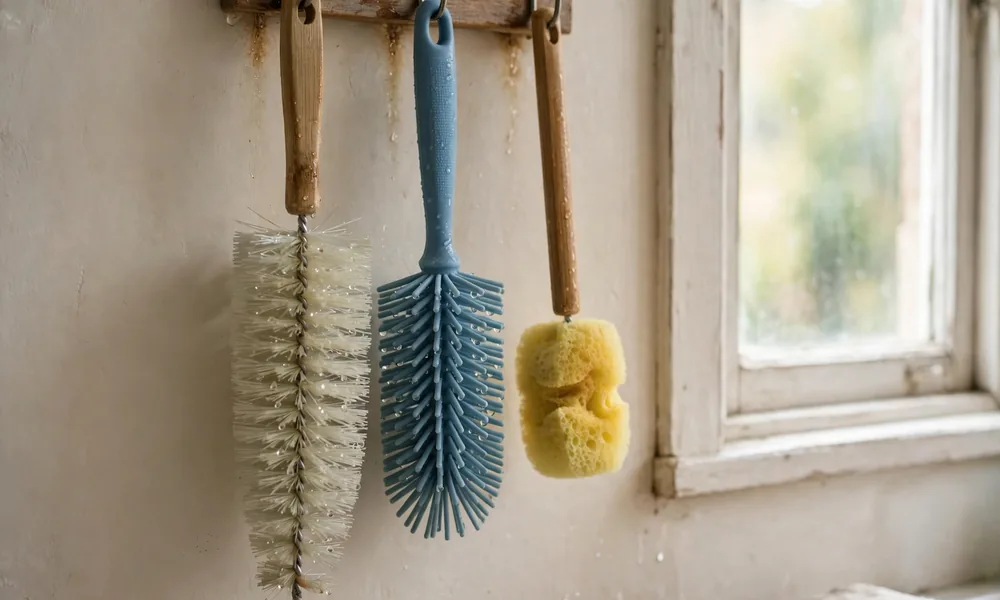
A bottle brush is a cleaning tool that needs cleaning itself. After use, rinse it under hot running water until the water runs clear, shake it hard, and hang it where air can reach it. Never store it head-up in a closed cup, and never leave it sitting in a bottle: both keep it damp, and a damp brush grows smells within days.
How to Clean a Bottle Properly
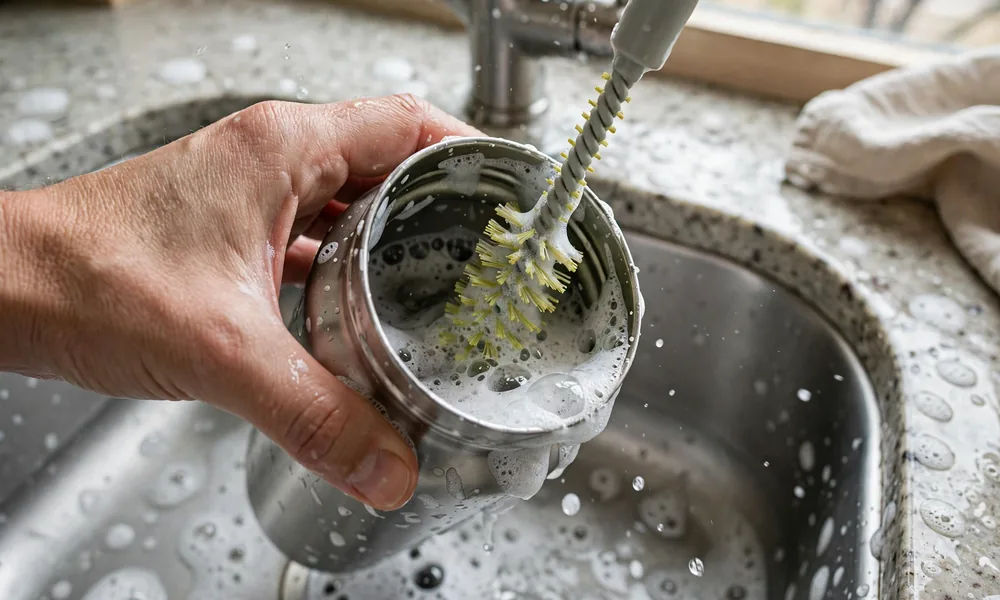
Start with hot water and a drop of dish soap, which cuts grease without leaving a scent. Fill the bottle a third full, add soap, and swirl to coat the walls. Then push the brush in, work the head to the bottom, and twist slowly while moving it up and down. Pay attention to the shoulder just below the neck and the base, where residue settles — the two spots a quick rinse always misses.
Give it two minutes, not twenty seconds: dried film needs contact time and a few passes, and rushing leaves a thin layer that smells by tomorrow. When the walls feel smooth rather than slick, the bottle is clean. Rinse three times with hot water, shaking hard, then leave it upside down to drain and air-dry before the lid goes back on. A lid closed on a damp bottle traps moisture, and moisture makes a clean bottle smell stale.
Which Brush for Which Bottle
Different bottles want different brushes. Reusable water bottles — steel or hard plastic, wide mouth, used daily — suit a long nylon brush with a head four to five centimetres across. Baby bottles need the opposite: a slim mini brush and a tiny nipple brush, both soft enough not to scratch, replaced more often, since milk residue turns quickly.
Vases and decanters are the delicate case: narrow necks, thin glass, and a stiff wire-core brush can scratch them. Use a sponge-tipped or soft silicone brush and let the soapy water do most of the work. Hydration packs and straws need the slimmest brushes of all — a long, thin wire brush that passes through a drinking tube — and they should be cleaned after every use, because a damp tube is the fastest place in the kitchen for smells to start.
Keeping the Brush Itself Clean
A dirty brush cleans nothing. Once a week, soak the head in hot water with a splash of white vinegar, then rinse and dry. If the bristles have gone grey or the brush smells after rinsing, it is finished — replace it. A daily-use brush lasts three to six months. Store brushes hanging, and keep one brush per job: a bottle brush should never double as a dish brush.
Checklist: Before You Buy
- Measure your tallest bottle, then buy a brush at least five centimetres longer.
- Match the head to the bottle: slightly wider than the body, slim enough to pass the neck.
- Choose nylon for scrubbing power, silicone for fast drying, sponge for delicate glass.
- Check the handle grip when wet, and look for a hanging hole at the end.
- Make sure the head reaches the shoulder and base — the spots rinsing misses.
- Plan to replace the brush every three to six months, sooner if bristles splay or smell.
Frequently Asked Questions
Can I just put bottles in the dishwasher instead?
Sometimes. Wide-mouth bottles often survive the dishwasher, but narrow-neck bottles do not clean properly in one — the jets cannot reach the bottom or the shoulder, and the bottle comes out warm but still filmed. A brush takes two minutes and scrubs.
How often should I clean a reusable bottle?
Every day if it held anything but water, and at least every few days for water alone. Milk, juice, coffee, and shakes leave residue that smells within a day. A quick brush after each use takes a minute and stops the smell starting.
Why does my bottle still smell after washing?
Usually because the shoulder or base was never scrubbed, or the bottle was closed while damp. Scrub both spots, rinse three times with hot water, and dry the bottle upside down with the lid off. If the smell survives, the seal or lid may hold it — wash those separately.
Are silicone brushes as good as nylon ones?
For daily cleaning of glass bottles, yes — and they dry faster and never go mouldy. For dried-on residue, nylon is better, its stiffer bristles cutting through film silicone slides over. Many households keep both: silicone for the daily wash, nylon for the weekly deep clean.
How do I clean the brush itself?
Rinse it under hot running water after every use until the water runs clear, shake it hard, and hang it head-down to dry. Once a week, soak the head in hot water with a splash of white vinegar. Replace the brush when bristles splay, discolour, or smell after rinsing.
Can one brush clean every bottle in the house?
Almost. A long nylon brush covers water bottles, sports bottles, and vases, but baby bottles need a slim mini brush, and straws and tubes need a thin wire brush of their own. A small set with two or three heads covers a whole household for little more than a single brush.
The Bottom Line
The best bottle brushes in 2026 reach every corner: long enough to touch the bottom, wide enough to press the walls, stiff enough to lift the film rinsing leaves. Match the brush to the bottle — nylon for scrubbing, silicone for fast drying, sponge for delicate glass — and keep the brush clean and dry, hanging head-down. A bottle brushed for two minutes after use never gets the chance to smell. For the bottles themselves, a dish rack that lets them drain upside down is the natural partner: brush, rinse, and leave the bottle to dry before the lid goes back on.


