
A Guide to Mattress Cleaners for a Fresher Bed in 2026
A guide to mattress cleaners for a fresher bed in 2026 starts with an uncomfortable fact: your mattress is the dirtiest thing you sleep on. Every night it absorbs sweat, body oils, dead skin and dust, and over months that builds into stains, smells and a home for dust mites. You cannot put a mattress in a washing machine, and a fitted sheet hides the problem instead of solving it. A mattress cleaner is the tool that fixes it: a machine, a steamer or a spray that lifts stains and odours out of the mattress itself, leaving the bed genuinely fresh. Here is how to choose and use one without soaking the bed through.
It helps to be clear about what a mattress cleaner is not. It is not a mattress protector, which is a thin fitted cover that stops spills reaching the mattress in the first place, and it is not a mattress topper, which is a thick comfort layer that changes how a bed feels. A protector prevents the mess and a topper changes the comfort; a cleaner removes the mess that is already there. If you want to stop the next stain before it happens, our guide to the best mattress protectors of 2026 covers the covers worth buying. If your bed feels wrong rather than dirty, our guide to the best mattress toppers of 2026 covers comfort layers instead.
Key Takeaways
- A mattress cleaner removes stains, sweat and odours from the mattress itself, while a protector prevents them and a topper changes comfort, so the three do different jobs.
- Portable extractors suit most mattresses best, because they spray, scrub and suck dirty water out instead of pushing it deeper.
- Steam cleaners kill dust mites and freshen a mattress with almost no chemicals, but they must be used lightly so the mattress does not get soaked.
- Vacuum the mattress first and treat stains before washing, or the cleaner will spend its energy on dry dirt instead of the stain.
- Dry the mattress fully with air moving over it before making the bed, because a damp mattress breeds mustiness and mites.
Mattress Cleaners 2026 at a Glance
| Best for | Cleaner type | Water use | Standout strength |
|---|---|---|---|
| Stains and spills | Portable extractor | Moderate | Pulls dirty water out of the mattress |
| Dust mites and freshness | Steam cleaner | Low | Heat kills mites with few chemicals |
| Odours and sweat | Enzyme spray and powder | Very low | Breaks down the source of the smell |
| Quick refresh | Upholstery vacuum | None | Fast dry clean between deep cleans |
| Deep old stains | Extractor with stain tool | Moderate | Repeated passes on set-in marks |
What a Mattress Cleaner Actually Does
A mattress cleaner works in three stages. First it applies water and cleaning solution, or steam, to the surface of the mattress. Then a brush, a powered head or the steam itself loosens the dirt, sweat and oils that have soaked into the top layers. Finally, strong suction pulls the dirty water back out, so the dirt leaves the mattress instead of being pushed deeper into it. That last stage is what separates a good mattress cleaner from a disappointing one.
A mattress cleaner cannot fix a sagging mattress, remove a stain that has been there for years, or replace a mattress that has reached the end of its life. If your mattress dips in the middle, smells even after a thorough clean, or leaves you aching every morning, the problem is the mattress itself, not the dirt on it. Our guide to the best versus worst mattresses of 2026 will help you judge whether it is time for a new one.
The Main Types of Mattress Cleaner
Mattress cleaners fall into a few clear types.
Portable Extractors
The portable extractor is the most useful mattress cleaner for most homes. It is a compact machine with a hose, a cleaning head and two tanks, one for clean solution and one for dirty water. You work in small sections across the mattress, spraying lightly, scrubbing gently and sucking the dirty water straight back out. Watching the tank turn grey-brown is proof of how much a mattress holds, even one that looks clean under the sheets. Extractors suit stains best: spilled tea, a child’s accident, sweat marks that have yellowed the top of the mattress over time. The key skill is restraint: spray lightly, make a second suction-only pass with the spray switched off, and never flood the mattress.
Steam Cleaners
A steam cleaner uses hot vapour instead of a bucket of water, which makes it the gentlest deep clean a mattress can get. The heat kills dust mites and bacteria, loosens sweat and oils, and leaves almost no chemical residue, which matters for a surface you sleep on for eight hours a night. Steam suits allergy sufferers best, and anyone who wants a fresh mattress without strong detergents. The trade-off is that steam does not suck dirty water out, so you must follow it with a thorough vacuum once the mattress is dry, and you must keep the steamer moving so no patch gets soaked.
Enzyme Sprays and Powders
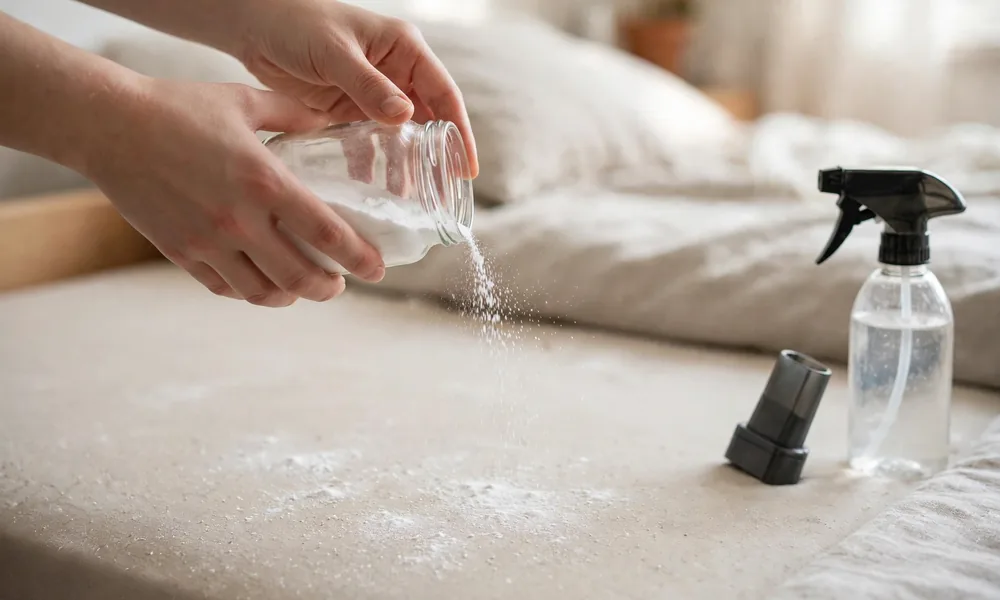
Some mattress problems are smells, not stains. Sweat, urine and body odour soak into a mattress and stay there, because the source is organic matter that ordinary soap cannot fully break down. Enzyme cleaners solve that: they contain biological agents that digest the proteins causing the smell, instead of covering it with perfume. Spray the stain lightly, leave it to work for the time on the bottle, and blot it away. Baking soda works the same way for general freshness: sprinkle it over the bare mattress, leave it for several hours, and vacuum it off.
Upholstery Vacuums
An upholstery vacuum is a dry cleaner, not a washer, and it has a job every mattress needs: removing the dry dirt before any wet cleaning begins. A mattress holds an astonishing amount of dust, dead skin and mite debris in its top layers, and washing that dry dirt in place just makes mud. A vacuum with a motorised upholstery head, or a handheld vacuum with a brush nozzle, lifts that layer out in minutes. Use it once a month when you change the sheets, and always before a wet clean. It is the quickest refresh a mattress can get, and it costs nothing but a few minutes.

How to Choose a Mattress Cleaner
Choosing a mattress cleaner means matching the machine to the problem, the mattress and the person sleeping on it.
Start With the Problem
A mattress with fresh stains needs an extractor, because only suction pulls the stain out. A mattress that smells but looks clean needs an enzyme spray and a baking soda treatment first. A mattress in an allergy sufferer’s bedroom needs steam, because heat is what kills dust mites. A mattress that is simply dusty needs a good upholstery vacuum. Most homes need two of these, not one: an extractor for stains and a vacuum for regular care, with a bottle of enzyme spray in the cupboard for accidents.
Suction First, Brushes Second
Suction is the single most important quality in a mattress cleaner that uses water, even though it is rarely printed on the box. Strong suction pulls dirty water out of the top layers of the mattress, where the smell and the yellow marks live. Weak suction leaves the mattress damp, and a damp mattress in a closed bedroom gets musty fast. A machine that leaves a mattress dry to the touch within a few hours has done its job.
Match the Cleaner to the Mattress
Mattress types decide how much water a bed can take. A sprung mattress with a thick comfort layer can cope with a light extractor clean, because the springs allow air to move through it. Memory foam absorbs water like a sponge and dries slowly, so it needs the lightest possible spray, the strongest suction, and plenty of drying time, or a steam clean instead. A latex mattress resists water better but hates harsh detergents, which can break down the latex. Check the label and test the solution on a hidden corner first.
Cleaning a Mattress Step by Step
A good mattress clean is a sequence, not a single pass, and skipping a step is usually why a bed still smells a week later. Start by stripping the bed completely and vacuuming the mattress slowly, in overlapping passes, including the sides. Next, treat visible stains with an enzyme spray or a small amount of solution, and leave it to work for ten to fifteen minutes. Blot, never rub, because rubbing pushes a stain deeper into the mattress and roughs up the fabric.
Then clean in sections with your extractor or steamer, working from one side to the other so you never lean on a wet patch. Go slowly over stained areas, and make a second slow suction-only pass with the spray switched off to pull out as much water as possible. Finally, let the mattress dry completely with air moving over it: open a window, run a fan, and do not make the bed until the surface feels dry to the touch.

Mattress Cleaner Checklist
- Strip the bed and vacuum the mattress slowly, including seams, sides and piping, before any wet cleaning.
- Treat stains first with an enzyme spray, blot instead of rubbing, and use cold water on blood.
- Choose suction over brush count, and finish every wet clean with a suction-only pass.
- Use the least water that works, and match the method to the mattress type: foam needs the lightest touch.
- Sprinkle baking soda after cleaning, leave it for hours, and vacuum it off for lasting freshness.
- Dry the mattress fully with moving air, and do not make the bed until it feels dry to the touch.
Frequently Asked Questions
How often should I clean my mattress?
Vacuum your mattress once a month when you change the sheets, spot-clean spills straight away, and deep-clean it every six months. Allergy sufferers should steam-clean every three months.
Can I use a carpet cleaner on a mattress?
A portable carpet extractor works well on a mattress, because it sprays lightly and sucks the dirty water out. A big upright carpet machine is too heavy and too wet, so use a compact extractor or handheld spot cleaner instead.
Is steam cleaning safe for a memory foam mattress?
Yes, if you keep the steamer moving and the mattress only lightly damp. Memory foam absorbs water and dries slowly, so use short passes and give the mattress a full day to dry before making the bed.
How do I get urine smell out of a mattress?
Blot up as much as possible first, then apply an enzyme cleaner generously and leave it to work for the time on the bottle. Blot, repeat if needed, and finish with baking soda left on for hours before vacuuming.
Can a mattress cleaner remove dust mites?
Steam cleaning kills dust mites with heat, and a thorough vacuum removes many of the rest, but no home clean removes them all. Regular steam cleaning, hot bedding washes and a protector together keep numbers low.
When should I replace a mattress instead of cleaning it?
Replace it if it sags in the middle, still smells after two thorough cleans, leaves you aching every morning, or is more than eight to ten years old. Cleaning restores freshness; it cannot restore worn-out support.
The Bottom Line
The best mattress cleaner for a fresher bed in 2026 is a portable extractor with strong suction for stains, backed by a steam cleaner for dust mites and a bottle of enzyme spray for smells. Vacuum first, treat stains before washing, use as little water as you can, and dry the mattress fully before making the bed. Do that twice a year, and the bed you sleep in will smell, feel and look as fresh as the day it arrived.


