
The best mattress protector is the one you never notice until the day it saves your mattress. It sits quietly under your sheets, blocking spills, sweat, dust mites and accidents. A mattress is hard to clean and expensive to replace, so a thin layer of protection is one of the cheapest insurance policies in your home, and the right one does its job without changing how your bed feels.
This guide explains what a mattress protector actually does, compares the main types of 2026, and shows you how to choose one that fits your mattress, your sleep and your household. The best mattress protector for your bed in 2026 is not the thickest or the most expensive one. It is the one that protects fully, breathes well, stays silent, and survives the washing machine.
Key Takeaways
- A protector guards against spills, sweat and allergens; it is not a comfort layer, and it should never change how your mattress feels.
- Fully waterproof protectors use a thin membrane that blocks liquid but lets air through; water-resistant ones only slow a spill down.
- A deep pocket and a strong elastic skirt matter more than thread count: a protector that slips off in the night protects nothing.
- Quiet protectors use a cotton or bamboo top with a thin TPU membrane; cheap vinyl protectors crinkle, trap heat and crack.
- Machine washable matters, because a protector you cannot wash is a protector that stops protecting.
What a Mattress Protector Actually Does
A mattress protector is a thin, fitted cover that goes over your mattress and under your fitted sheet, and it has one job: to keep everything that should not reach your mattress from reaching it. Sweat, body oils, spills, pet accidents and dust mites all soak into an unprotected mattress. A protector stops them at the surface, where they can be washed away, and a good one does it without adding heat, noise or a plastic feel.
It is worth understanding what a protector is not. It is not a mattress topper, which adds a thick layer of comfort and changes how your bed feels, and it is not a mattress pad, which adds a little softness. The best mattress protectors of 2026 are the ones you forget are there, until the morning a glass of water tips over and your mattress stays perfectly dry underneath.
Waterproof, Water-Resistant and Encasements
Waterproof and water-resistant are not the same thing, and the difference matters most on the worst night. A waterproof protector has a membrane that liquid cannot pass through, so a spill pools on the surface until you mop it up. A water-resistant protector only slows liquid down, which is enough for a few drops of sweat but not for a full glass of water or a child’s accident. If anyone in the house is a child, a pet, or a restless sleeper with a drink on the nightstand, buy fully waterproof and be done with it.
An encasement is a different product again: it zips all the way around the mattress, top, bottom and sides, and it is the right choice for bed bug protection or severe dust mite allergy. Encasements are harder to remove and wash, so most households are better served by a fitted waterproof protector, which covers the top and sides and comes off in seconds.

Best Mattress Protectors 2026 Compared
There is no single best mattress protector for every bed, because the right one depends on your mattress depth, your household, and whether you sleep hot. The table below compares the main protector types of 2026 so you can see the trade-offs at a glance.
| Protector Type | Best For | Waterproofing | Noise | Typical Price |
|---|---|---|---|---|
| TPU membrane, cotton top | Everyday use, all sleepers | Fully waterproof | Silent | $40–$100 |
| TPU membrane, bamboo top | Hot sleepers, soft feel | Fully waterproof | Silent | $50–$120 |
| Vinyl | Tight budgets, short term | Fully waterproof | Crinkly | $15–$40 |
| Water-resistant cotton | Light protection, cool sleep | Partial | Silent | $30–$70 |
| Zippered encasement | Bed bugs, severe allergies | Fully waterproof | Quiet | $60–$150 |
| Cooling phase-change | Very hot sleepers | Fully waterproof | Silent | $80–$160 |
Price is a rough guide, not a rule. Some excellent TPU protectors cost under fifty dollars, while some expensive ones add little more than a brand name. A protector that costs sixty dollars and keeps your two-thousand-dollar mattress clean for eight years is the best value in your bedroom.
TPU Membrane Protectors: The Best All-Rounders
TPU, or thermoplastic polyurethane, is the membrane inside almost every good mattress protector sold in 2026, and it is the reason modern protectors are both waterproof and breathable. The membrane is a microscopically thin layer bonded to the underside of a soft fabric top: liquid cannot pass through it, but water vapour can, so sweat escapes instead of pooling under you.
The top fabric decides how a TPU protector feels. Cotton tops are crisp, cool and familiar, and they wash well for years. Bamboo tops are softer, smoother and slightly cooler, and they suit people who notice texture. Polyester tops are cheaper and dry faster, but they can feel slick and warm.
Vinyl Protectors: Cheap but Unpleasant
Vinyl protectors are the cheapest fully waterproof option, and they are also the least pleasant to sleep on. Vinyl blocks liquid completely, but it also blocks air, so it traps heat and sweat, and it crinkles loudly every time you move. It can crack with repeated washing and it can feel clammy against bare skin. Vinyl still has a place: a short-term rental, a child’s bed during toilet training, or a mattress in storage. For a bed you sleep in every night, it is a false economy, because a protector you hate sleeping on is a protector you will take off.
Fit, Depth and Noise
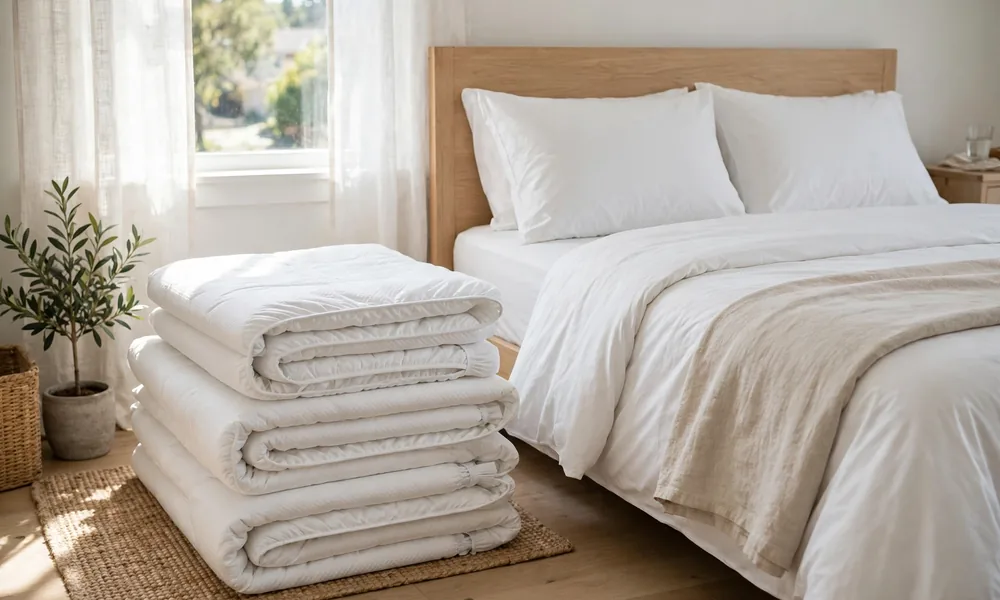
Fit is where most mattress protectors fail, and it is the first thing to check. A protector must match your mattress depth: a standard pocket fits mattresses up to about 35 centimetres, while deep-pocket versions fit up to 45 centimetres or more, and a protector that is too shallow will pop off the corners in the night. Measure your mattress, including any topper you use, before you order, because a topper adds five to ten centimetres and turns a standard pocket into a too-small one.
Noise is the second test, and it is easy to check in the shop or on the first night. Scrunch the protector in your hands: a good TPU protector is almost silent, while a vinyl one crackles like a crisp packet. Lie on it and roll over: if you hear it, you will hear it every night, and your partner will too.
How to Choose the Best Mattress Protector for Your Bed
Start with your household, not the product page. If you have children or pets, buy fully waterproof with a deep pocket and a tough skirt, because that protector will be tested often and washed often. If you sleep hot, buy a cotton or bamboo top and avoid vinyl entirely, because a protector that makes you sweat is worse than no protector at all.
Next, think about the layers above and below the protector, because they all work together. A topper changes how your bed feels and adds depth the protector must fit over, and our guide to the best mattress toppers of 2026 explains how to match thickness and material to your sleep position, which decides the pocket depth your protector needs. The pillow above it matters too, and our guide to the best pillows of 2026 covers the loft and firmness that keep your neck aligned while the protector keeps your mattress clean. And the cover that goes over the whole bed changes how it feels and how often you wash, so our guide to the best duvet covers is worth reading before you buy anything that touches your skin at night.
Washing and Care
A mattress protector only works if you wash it, and most people wash theirs far too rarely. Wash a TPU protector every one to two months, or monthly if you have allergies, pets or children, and wash it immediately after any spill or accident. Use a gentle cycle with mild detergent and cold or warm water, never bleach, and never use fabric softener, because both damage the membrane.

Common Mistakes When Buying a Mattress Protector
The first mistake is buying water-resistant when you need waterproof. A water-resistant protector handles sweat and nothing more, and the first real spill will teach you the difference at the cost of your mattress. The second mistake is ignoring pocket depth: a protector that fits your mattress but not your topper will pop off every night, and a protector that is too loose will bunch under your sheets. The third mistake is choosing vinyl to save money, when a TPU protector costs only a little more and sleeps incomparably better.
Mattress Protector Buying Checklist
- Choose fully waterproof TPU, not water-resistant, unless your household is completely spill-free.
- Measure your mattress depth including any topper, and buy a pocket at least five centimetres deeper.
- Pick a cotton or bamboo top for quiet, cool sleep, and avoid vinyl for any bed you sleep in nightly.
- Scrunch the protector and roll on it before you keep it; if you can hear it, you will hear it every night.
- Wash every one to two months on a gentle cycle, never with bleach or fabric softener, and dry on low heat.
- Keep a spare protector so the bed is never unprotected while one is in the wash.
Frequently Asked Questions
Do mattress protectors make you sleep hot?
A good TPU protector with a cotton or bamboo top adds almost no heat, because the membrane lets water vapour through while blocking liquid. Cheap vinyl protectors do make you sleep hot, because they block air as well as water.
Can you wash a waterproof mattress protector?
Yes, and you should wash it every one to two months. Use a gentle cycle with mild detergent and cold or warm water, never bleach or fabric softener, and dry on low heat.
What is the difference between a mattress protector and a topper?
A protector is a thin, fitted cover that guards your mattress against spills, sweat and allergens without changing how it feels. A topper is a thick comfort layer, usually five to ten centimetres, that changes the firmness and feel of your bed.
How do I know what size protector to buy?
Measure your mattress width, length and depth, including any topper, then buy the matching bed size with a pocket at least five centimetres deeper than your total depth. A standard pocket fits mattresses up to about 35 centimetres, while deep-pocket versions fit up to 45 centimetres or more.
Do mattress protectors stop dust mites?
A tightly woven protector with a full membrane blocks dust mites from reaching your mattress, which helps allergy sufferers, but mites can still live in the protector itself. Wash it monthly in warm water to keep mite numbers down.
How long does a mattress protector last?
A good TPU protector lasts two to four years with regular washing, and often longer with a spare in rotation. Replace it when water stops beading on the surface, when the fabric feels stiff or cracked, or when a spill soaks through.
The Bottom Line
The best mattress protector for your bed in 2026 is a fully waterproof TPU protector with a quiet cotton or bamboo top, a pocket deep enough for your mattress and topper, and a price that lets you buy a spare. It will simply sit there, night after night, keeping the most expensive thing in your bedroom clean, and the day a spill happens you will be very glad it is there.


