The best oven mitts of 2026 are the ones you never have to think about. You pull a tray of roast potatoes out of a 220-degree oven, your hands stay cool, the tray stays steady, and nothing slips. That is the whole job, and yet most oven mitts fail at it. They look thick in the shop, they feel soft in your hand, and then the heat comes straight through the moment you hold something heavy for more than a few seconds. A good oven mitt is not a fashion accessory for the kitchen. It is a piece of safety equipment, and it deserves to be chosen like one.
Key Takeaways
- Heat protection is about thickness and insulation, not just the material name: a mitt needs enough padding to hold a hot tray for at least ten seconds without heat reaching your skin.
- Silicone grips stop trays slipping, but a silicone shell alone is not enough: the best mitts pair a grippy outside with a thick insulating lining.
- Length matters as much as padding: a mitt that covers your wrist and part of your forearm protects you from oven racks and rising steam.
- Steam burns are the most common kitchen burn, so mitts must resist damp heat, not just dry heat, and should never be used soaking wet.
- Replace a mitt when the lining thins, the seams split or the grip wears smooth, because a worn mitt protects you far less than a new one.
Why Most Oven Mitts Fail When It Matters
Most oven mitts fail for the same reason: they are designed to look good hanging on a hook, not to work inside a hot oven. A thin cotton mitt with a single layer of padding feels fine when you touch a warm plate, but it has almost no thermal mass. Heat travels through it in seconds. The moment you lift a heavy roasting tin, your fingers press the padding flat, the insulation disappears, and the heat reaches your skin. That is why so many people end up using a folded tea towel instead: a towel, doubled over, often has more padding than a cheap mitt.
What Actually Protects Your Hands
Heat ratings and what they really mean
Many mitts now carry a heat rating, often somewhere between 200 and 350 degrees Celsius. Treat those numbers with care. There is no single standard test that every maker uses, so one brand’s 300 degrees is another brand’s 250, and a rating usually refers to brief contact, not holding a tray for a minute. The more useful test is thickness: press the mitt between your thumb and fingers, and if you can easily feel your fingers through it, the padding is too thin for serious oven work.
Steam is the burn most people forget
Steam burns are worse than contact burns at the same temperature, because steam carries far more energy and it finds every gap. It pours out of a covered pot the moment you lift the lid, and it soaks into a damp mitt and carries the heat straight to your skin. A mitt that is wet, even slightly damp from washing, protects you far less than a dry one, because water conducts heat far better than air. Keep your mitts dry, keep a dry spare hanging by the oven, and never grab a steaming pot with a wet tea towel.
The Main Types of Oven Mitt Compared
There is no single best oven mitt for everyone, because the right choice depends on how you cook. Someone who bakes bread every weekend needs different protection from someone who mostly reheats trays of vegetables. The table below compares the main types on the things that matter.
| Type | Heat protection | Grip | Steam resistance | Best for |
|---|---|---|---|---|
| Quilted cotton | Good when thick | Fair | Poor when damp | Everyday baking, light trays |
| Silicone-coated cotton | Good | Excellent | Good | Most home cooks, the best all-rounder |
| Full silicone | Very good | Excellent | Excellent | Heavy trays, grills, steam-heavy cooking |
| Long gauntlet mitt | Very good | Good | Good | Deep ovens, large roasts, rack burns |
| Mini mitt and pot holder | Fair | Fair | Poor | Quick grabs, lids, small dishes |
Quilted cotton mitts
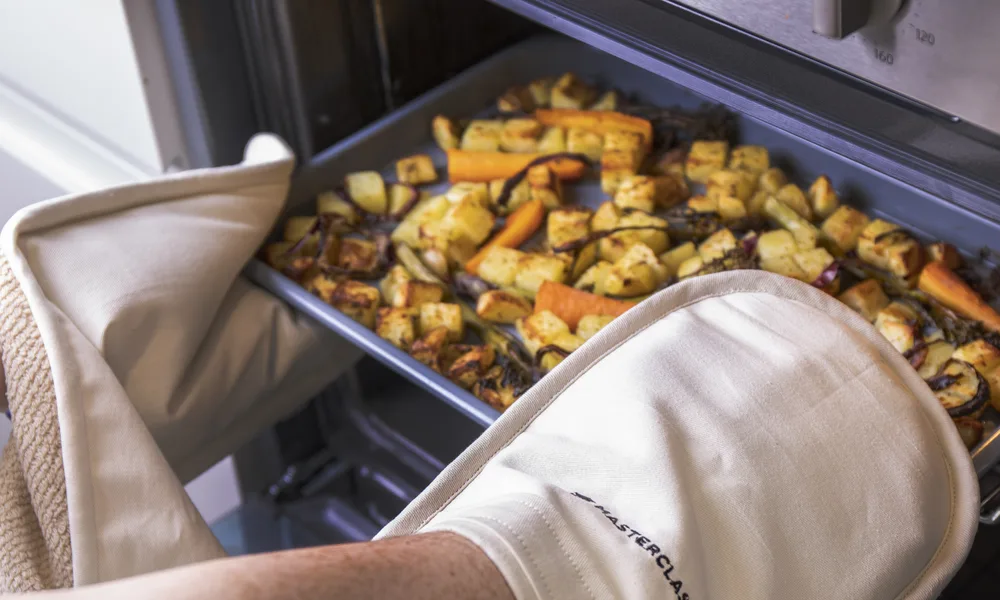
Quilted cotton mitts are the classic choice, and the good ones are genuinely good. They are comfortable, they wash easily, they come in every colour, and a thick one with a proper insulating layer protects well for everyday baking. Their weakness is steam and damp: cotton absorbs water, and a damp cotton mitt loses much of its protection. Choose a quilted mitt with thick, even padding and a lining that does not bunch up inside, and keep it dry.
Silicone-coated and full silicone mitts
Silicone-coated mitts are the best all-rounders for most kitchens. The cotton body gives comfort and insulation, the silicone palm and fingers give grip and steam resistance, and the combination handles almost everything a home cook does. Full silicone mitts go further: they are waterproof, they shrug off steam and grease, and they wash in seconds. Their trade-off is feel, because thick silicone can be stiff. For heavy trays and grill work, that trade is worth it.
Long gauntlet mitts
Gauntlet mitts extend past the wrist and partway up the forearm, and they solve the most common oven injury: the wrist burn from the rack. If you cook large roasts, pull heavy trays from a deep oven, or have ever caught your forearm on the rack, a gauntlet is the answer. They are slightly clumsier than a short mitt, and they take up more space on a hook, but the extra coverage is real protection, not decoration. Mini mitts and pot holders, by contrast, are accessories for quick grabs, not your main protection.
How to Choose Oven Mitts for Your Kitchen
Start with how you actually cook. If you bake most weekends, you need a mitt that handles heavy trays and long holds. If you mostly reheat and roast, a silicone-coated mitt with good grip will cover you. If you cook with a lot of steam, from stews and covered pots, steam resistance matters more than raw heat rating. And if your oven is deep, length matters more than anything else. Two mitts are the minimum: one in use, one in the wash or drying. Three is better, because it means you always have a dry pair ready.
Think about your kitchen as a system, not a single purchase. Your mitts work alongside your towels, your trays and your oven, and the pieces should make sense together. Our guide to the best kitchen towels for everyday use in 2026 covers the cloths that back your mitts up, because a dry towel is your second line of defence and a damp one is a liability. Consider washing too: cotton mitts go in the machine, silicone mitts wipe clean or go in the dishwasher, and a mitt that needs hand washing will spend half its life out of action.
Fit, Length and Care
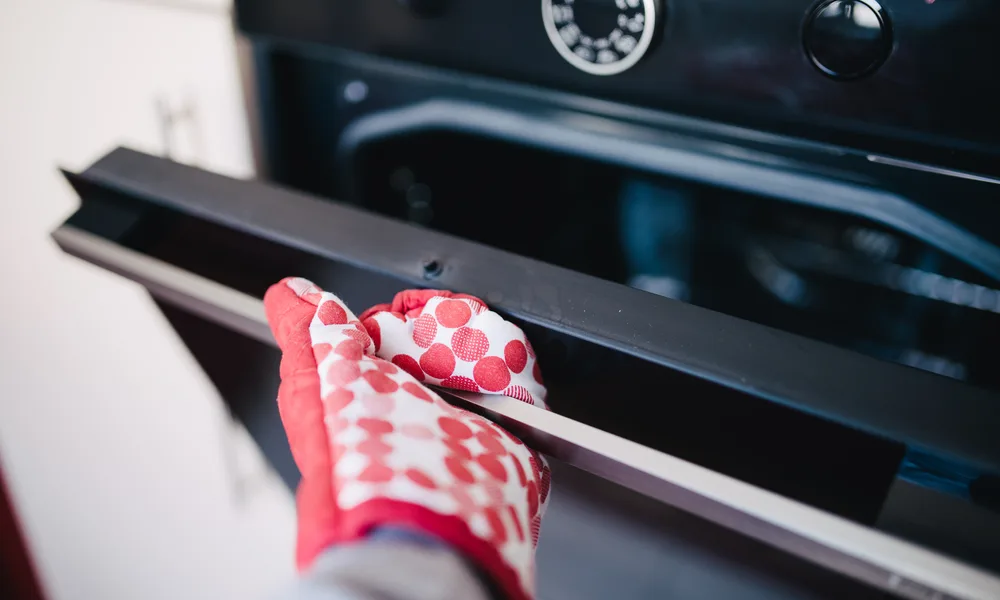
Oven mitts wear out, and a worn mitt is a dangerous mitt. The lining thins with every wash, the seams weaken, the grip wears smooth, and the padding compresses until it no longer insulates. Inspect your mitts every few months by holding them up to the light: if you can see thin spots, if the lining has shifted, or if the seams are splitting, it is time for a new pair. Store mitts on a hook right beside the oven, where they stay dry and you can reach them without thinking. Your trays matter too: a warped tray rocks on the rack and slides in your grip, so our comparison of the best vs worst baking sheets of 2026 is worth a look, because good mitts and good trays together are far safer than either one alone.
The Mistakes That Cause Most Oven Burns
The most common mistake is using a wet mitt or a wet towel, because water conducts heat and a damp mitt is barely better than a bare hand. The second is reaching too far into a hot oven without protection on your forearm. The third is rushing: most burns happen when someone pulls a tray out one-handed, lifts a lid with a fingertip, or grabs a dish with a tea towel because the mitts are across the kitchen. Slow down, use both hands, keep your mitts beside the oven, and set hot trays down on a trivet, not on the worktop.

Your Oven Mitt Checklist
- Check the padding: press the mitt between thumb and fingers, and make sure you cannot easily feel your fingers through it.
- Check the length: the mitt should cover your wrist, and a gauntlet should reach partway up your forearm.
- Check the grip: the palm and fingers should have a textured, grippy surface that works on a greasy tray.
- Check the fit: your fingers should reach the end, your thumb should sit comfortably, and the cuff should close without a gap.
- Keep a dry spare: one pair in use, one pair dry and ready, because a damp mitt protects you far less than a dry one.
- Inspect and replace: check for thin lining, split seams and worn grip every few months, and retire a mitt that has lost its padding.
Frequently Asked Questions
What is the best material for oven mitts?
There is no single best material, because the best mitt pairs a grippy, steam-resistant outside with thick insulation inside. Silicone-coated cotton is the best all-rounder for most kitchens. Full silicone is better for heavy, steamy cooking, and thick quilted cotton is fine for light baking if it stays dry.
How hot can oven mitts get before they fail?
Most good mitts handle a tray straight from a 200 to 250-degree oven for ten seconds or more. No mitt protects you indefinitely, and every mitt lets heat through eventually. Heat ratings are rough guides, not guarantees, because there is no single standard test.
Are silicone oven mitts better than cotton ones?
Silicone mitts grip better, resist steam and grease better, and clean more easily. Cotton mitts feel softer, wash in the machine, and give you finer control. For most home cooks, a silicone-coated cotton mitt gives you the best of both.
Should oven mitts be long or short?
Long, if you have the choice. A gauntlet mitt that covers your wrist and part of your forearm protects you from the oven rack, which is the most common cause of wrist burns. Short mitts are fine for quick jobs, but they leave the spot that gets burned most often exposed.
Can I use a tea towel instead of an oven mitt?
You can, but you should not. A tea towel has less padding than a proper mitt, it slips on a greasy tray, it leaves your wrist exposed, and if it is damp it conducts heat straight to your skin. Keep your mitts beside the oven so you never have to improvise.
How often should I replace my oven mitts?
Every one to two years for a mitt in regular use, and sooner if the lining thins, the seams split or the grip wears smooth. Wash them regularly, keep them dry, and inspect them every few months by holding them up to the light and pressing the padding.
The Bottom Line
The best oven mitts of 2026 are not the prettiest ones on the hook. They are the thick, grippy, long ones that keep your hands cool on a heavy tray, resist steam, and stay dry and ready beside the oven. Choose silicone-coated cotton for everyday cooking, full silicone for heavy work, and a gauntlet length if you roast. If you are sorting out the rest of your oven kit, our guide to the best toaster ovens that actually earn counter space in 2026 is a good next stop.