The best kitchen towels for everyday use are the quiet workhorses of the kitchen. They dry your hands a dozen times a day, mop up spills before they reach the floor, polish glasses until they shine, and pull hot trays from the oven when the oven mitts are in the wash. A good one feels like a small luxury, while a bad one just pushes water around and starts smelling stale by Wednesday.
Choosing well matters more than most people think. The wrong towel leaves streaks on glassware, sheds lint onto clean plates, and stays damp long enough to grow a musty smell. The right towel absorbs fast, dries quickly between uses, and survives hundreds of washes.
This guide covers the fabrics that work hardest, the sizes and weaves that suit different jobs, how many towels you need, and how to care for them.
Key Takeaways
- Cotton and linen are the best all-round fabrics, offering strong absorbency, durability and a lint-free finish.
- Waffle weave towels dry fastest and stay fresh longest, ideal for humid kitchens.
- Choose towels around 18 by 28 inches, with a medium weight that absorbs well without staying soggy.
- Keep separate towels for hands, dishes and surfaces.
- Wash in hot water without fabric softener, and replace towels that thin out, fray or stop absorbing.

What Makes a Great Everyday Kitchen Towel
Absorbency That Actually Keeps Up
A good everyday kitchen towel should soak up a spilled glass of water in one or two passes, not smear it into a wider puddle. Natural fibres such as cotton and linen excel here because they draw water in rather than repelling it. Flour sack cotton absorbs surprisingly well for its thinness, while thicker terry cotton holds the most water per square inch. New towels often carry a factory finish that repels water at first, but one or two washes remove it.
Drying Speed and Freshness
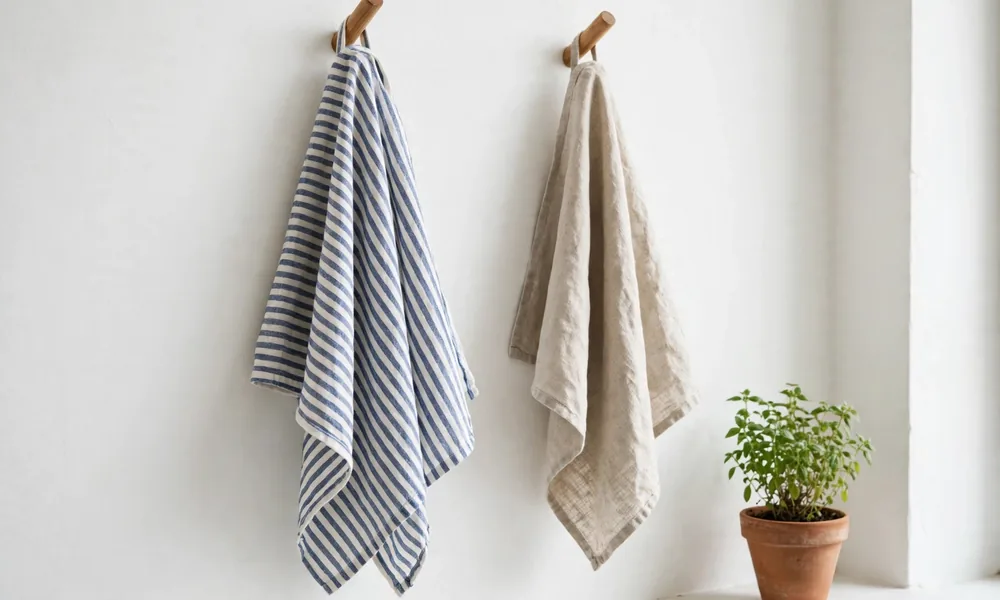
A towel that dries slowly is a towel that smells. Kitchens are warm and humid, and a damp towel can develop a musty odour within a day. Linen and waffle weave dry noticeably faster than heavy terry cotton because air moves through their open structure. Hanging matters too: a towel spread over a hook dries far faster than one bunched up.
Size, Weight and Feel
The sweet spot is roughly 18 by 28 inches: large enough to dry a stack of plates or wrap around a hot tray, yet small enough to hang neatly and fold into a drawer. Weight, in grams per square metre, tells you how thick a towel feels. Light towels (200 to 300 GSM) dry fast and suit glassware, medium towels (350 to 450 GSM) are the best all-rounders, and heavy towels (above 500 GSM) absorb the most but dry slowly.
The Best Kitchen Towel Fabrics Compared
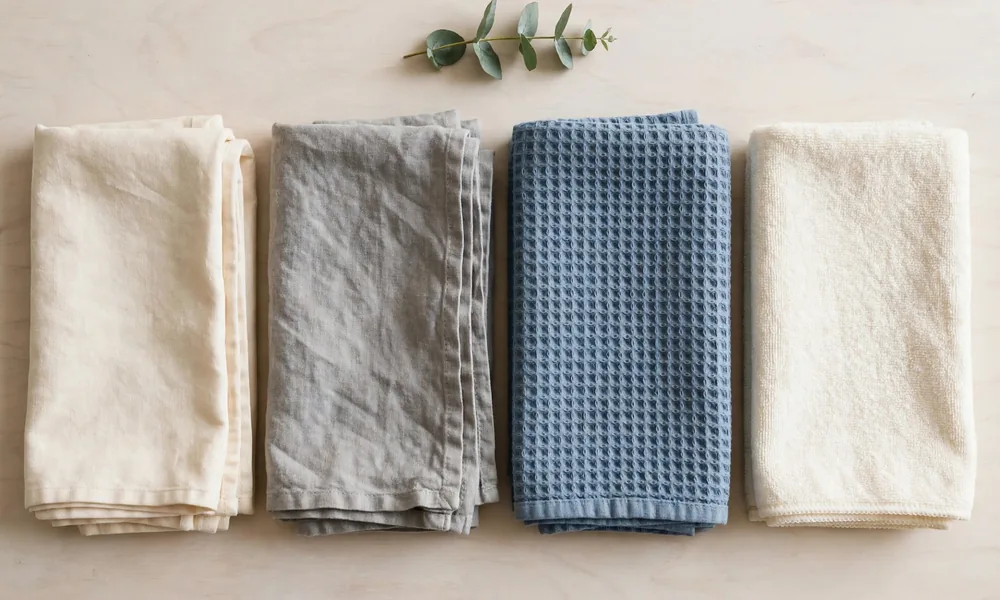
Fabric decides almost everything about how a kitchen towel behaves, and the best choice depends on what you do most in your kitchen. The table below compares the four main fabrics.
| Fabric | Absorbency | Drying Speed | Lint | Best For |
|---|---|---|---|---|
| Cotton | High | Medium | Low | Everyday all-round use |
| Linen | High | Fast | Very low | Glassware and polishing |
| Waffle weave | Medium to high | Fast | Very low | Hand drying in humid kitchens |
| Microfiber | Very high | Medium | None | Streak-free surfaces and spills |
Cotton: The Reliable All-Rounder
Cotton is the default kitchen towel fabric for good reason: it absorbs well, softens with every wash, handles heat safely, and comes in every weave from thin flour sack to plush terry. Cotton also tolerates hot washing, which matters for sanitising. Its main weakness is drying speed: thick cotton stays damp longer than linen or waffle weave, so keep a few in rotation.
Linen: The Polisher’s Choice
Linen towels are the quiet stars of the kitchen. Made from flax fibres, they absorb quickly, dry faster than cotton, and leave almost no lint, which makes them the best choice for drying wine glasses and stainless steel. Linen feels crisp at first, softens with time, and naturally resists odours better than cotton. It costs more, but for a streak-free finish it is hard to beat.
Waffle Weave: The Fast Drier
Waffle weave towels get their name from the small square pockets woven into the fabric. Those pockets trap air and water, giving the towel a light, springy feel and excellent drying speed. Waffle weave is a great pick for hand drying: it feels pleasant on the skin and rarely develops a damp-towel smell, though it is less plush than terry cotton.
Microfiber: The Spill Specialist
Microfiber towels absorb an impressive amount of water for their weight and leave surfaces completely streak-free, which makes them excellent for wiping counters and tackling big spills. They dry reasonably fast and never shed lint. The trade-off is feel: microfiber can feel grabby on dry hands, and it must not be washed with fabric softener or dried on high heat. Keep one or two for cleaning jobs.
How to Choose Kitchen Towels for Your Home
Choosing kitchen towels is easier once you match the towel to how you cook and clean, so a mixed set usually beats a matching set.
Match the Towel to the Job
Hand drying calls for a soft, fast-drying towel, so waffle weave or light linen works best. Drying dishes needs absorbency and a lint-free finish: flour sack cotton or linen. Wiping counters and handling spills rewards a thicker, thirstier towel, so medium-weight cotton or microfiber is the right pick. White towels can be bleached and hot-washed, while dark towels hide stains better.
How Many Towels You Really Need
Most households do well with eight to twelve kitchen towels in rotation: two for hands, two for dishes, two for surfaces and spills, and a few spares for laundry day and guests. A single person might manage with six, while a large family that cooks three meals a day may want fourteen or more. Buying in sets usually saves money, but check that the set matches your needs. The same fabric rules apply beyond the kitchen, as our guide to the best bath towels of 2026 shows.
The Best Kitchen Towels for Everyday Use in 2026
The best kitchen towels for everyday use in 2026 are not a single product but a small team of towels, each chosen for the job it does best. The picks below cover the six roles that matter most in a working kitchen, each the best version of its type rather than a brand name.
Best Overall: Medium-Weight Cotton
A medium-weight cotton towel, around 350 to 400 GSM, is the best all-rounder for everyday use. It absorbs generously, feels soft, handles dishes and spills equally well, and survives hot washes without complaint. Look for a tight weave with reinforced edges and a hanging loop.
Best for Drying Dishes: Flour Sack Cotton
Flour sack towels are thin, flat-weave cotton cloths that dry dishes brilliantly. Their smooth surface leaves no lint on plates and glasses, and they dry fast on a hook. They are less plush than terry towels, but for drying dishes they are unmatched.
Best Lint-Free Option for Glassware: Linen
For wine glasses, crystal and stainless steel, nothing beats linen: its smooth fibres leave no lint and no streaks, and it polishes to a shine with little effort. A linen towel feels crisp when new and grows softer and more absorbent with every wash.
Best Quick-Drying Towel: Waffle Weave
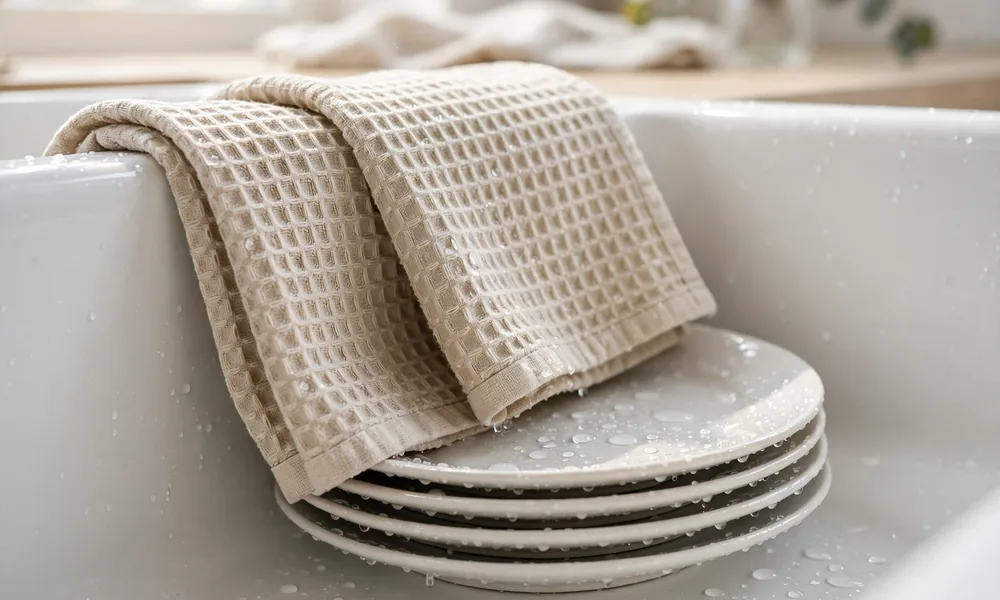
In a humid kitchen, waffle weave is the smartest pick. Its open pockets let air circulate, so it dries far faster than flat cotton of the same weight and stays fresh between uses. It feels light in the hand and looks good enough to leave hanging on display.
Best Budget Multi-Pack: Everyday Cotton Blend
A good multi-pack of everyday cotton towels is the most practical buy for a busy kitchen: enough towels to rotate freely, so none stays damp for long, at a price that makes replacing a worn one painless. Look for finished edges and a hanging loop on each towel.
Best Heavy-Duty Towel: Thick Terry Cotton
For big spills and heavy drying jobs, a thick terry cotton towel is the right tool. Its loops hold a large volume of water, and its weight feels reassuring when drying a roasting tray or mopping up a spill. Keep one or two thick towels in the drawer for the messy jobs.
Kitchen Towel Care: Keeping Them Fresh and Absorbent
Even the best kitchen towels lose their edge if washed badly. Fabric softener is the biggest culprit: it coats fibres in a waxy layer that repels water. Hot water, a good detergent and proper drying keep towels absorbent and fresh for years.
Washing Rules That Protect Absorbency
Wash kitchen towels in hot water, ideally 60 degrees Celsius, with regular detergent and no fabric softener or dryer sheets. The heat kills bacteria and dissolves grease, while skipping softener keeps fibres open and thirsty. Add white vinegar to the rinse occasionally to strip away detergent residue, and dry towels fully before folding.
When to Replace a Kitchen Towel
A kitchen towel is finished when it stops absorbing, no matter how well you wash it. The signs are easy to spot: the fabric feels thin and papery, the edges fray, stains no longer wash out, or the towel smells musty even when freshly laundered. Most good towels last two to three years of daily use, while linen towels often last longer. Keeping the kitchen stocked is part of the same home care that keeps the rest of the house running, much like choosing the best bath towel sets for families in 2026 keeps the bathroom running smoothly.
Everyday Kitchen Towel Checklist
- Pick natural fibres first: cotton or linen, with waffle weave for fast drying.
- Choose around 18 by 28 inches, in a medium weight of 350 to 450 GSM.
- Keep separate towels for hands, dishes and surfaces.
- Stock eight to twelve towels so a clean, dry one is always available.
- Wash in hot water with no fabric softener.
- Replace any towel that thins out, frays, smells musty, or stops absorbing.
Frequently Asked Questions
How often should you wash kitchen towels?
Wash kitchen towels every one to two days, and daily after handling raw meat. Towels used only for drying clean dishes can go a little longer.
Are white kitchen towels better than coloured ones?
White towels can be bleached and washed at high temperatures, making them the most hygienic choice. Coloured towels hide stains better.
Why do new kitchen towels not absorb water?
New towels often carry a factory finish that repels water. Wash them once or twice in hot water with detergent and no softener. If a towel still beads water after several washes, the fabric is the problem.
Is linen or cotton better for kitchen towels?
Both are excellent. Linen dries faster, leaves less lint and polishes glassware better, while cotton absorbs slightly more, feels softer and costs less. Many kitchens use both.
How do you stop kitchen towels from smelling?
Wash in hot water without softener, dry fully before folding, and hang spread out so air can circulate. White vinegar in the rinse helps strip away the residue that traps odours.
Can you use kitchen towels as oven mitts?
A thick, folded cotton towel can handle a hot tray in a pinch, but it is no substitute for proper oven mitts. Thin towels conduct heat quickly, and a damp towel is worse because steam carries heat through.
The Bottom Line
The best kitchen towels for everyday use are medium-weight cotton for all-round work, linen for glassware, waffle weave for fast drying, and thick terry for big messes. Buy eight to twelve, keep separate towels for hands, dishes and surfaces, wash hot without softener, and replace worn ones. A well-chosen towel set is one of the simplest upgrades a kitchen can have, alongside the other everyday essentials, from the tools you cook with, like the best knife sets for home cooks in 2026, to the towels that keep it all clean and dry.


