The best bike pedals in 2026 are the ones you stop thinking about. They hold your feet where you want them, they do not slip when the road turns wet, and they let you push hard without a hot spot building under your foot. Pedals are small and easy to overlook, yet your feet touch them on every turn of the cranks.
Get them wrong and every ride feels awkward. Get them right and the whole bike feels better, even though nothing else has changed. This guide compares the main types, explains what actually matters, and helps you match a pedal to the riding you really do.
A pedal is a different thing from the shoe that goes on it. Shoes are worn on your feet, and a good shoe supports your foot and spreads pressure. Pedals are the bike component bolted to the crank, and they decide how that shoe connects to the bike.
Key Takeaways
- Flat pedals suit commuting, mountain biking and anyone who wants to put a foot down fast, while clipless pedals suit road riding and long climbs where efficiency matters most.
- Platform size and pin grip matter more than weight for most riders, because a foot that slips wastes far more energy than a few grams ever save.
- Match your cleats to your pedals before you buy, because a road cleat will not fit a mountain pedal and a mountain cleat will not fit a road pedal.
- Sealed bearings last longer in rain and mud, and a pedal you can service will outlast a sealed unit you cannot open.
- Try the pedal with the shoes you actually ride in, not with a different pair, because sole stiffness and tread change how a pedal feels.
What a Bike Pedal Actually Does
A pedal is a small platform on a spindle, and the spindle screws into the crank arm. Your foot presses down on the platform, the spindle turns, and the crank drives the chain. The platform spreads your weight, the pins or the clip hold your foot in place, and the bearings decide how smoothly the pedal spins.
When a pedal spins freely with no grinding and no wobble, your effort goes into the bike instead of into friction. When the bearings are rough, or the platform is too small for your shoe, your foot moves around, your ankle works harder than it should, and your knees can start to ache.
The Main Types of Bike Pedal
Most pedals fall into three groups: flat, clipless and hybrid. Each one suits a different kind of riding, and each one has a clear trade-off. Knowing the groups makes the choice much easier, because you can rule out two of them in a minute.
Flat Pedals
Flat pedals are open platforms with pins or a textured surface. You put any shoe on them and ride. Commuters like them because ordinary shoes work fine. Mountain bikers like them because a foot can come off instantly on a steep section. The best flat pedals have a wide platform, replaceable pins and sealed bearings.
Clipless Pedals
Clipless pedals lock onto a cleat bolted to the sole of a cycling shoe. The name is confusing, because you do clip in, but it comes from the old toe-clip straps they replaced. Once clipped in, your foot is held in a fixed position, and you can pull up as well as push down, which helps on climbs. You need the right shoes, and you must learn to twist your heel to release.
Hybrid Pedals
Hybrid pedals have a flat platform on one side and a clip mechanism on the other. They suit riders who sometimes wear cycling shoes and sometimes wear ordinary shoes, such as commuters who ride to work in trainers and ride longer at the weekend in cycling shoes. They are a practical compromise, although they are heavier than a dedicated pedal.

How to Choose the Best Bike Pedals for You
Start with the riding you do most, not the riding you dream about. A commuter who rides three miles to work needs a different pedal from a rider who climbs for three hours on a Sunday. The questions below will narrow the choice quickly.
Match the Pedal to Your Riding
Commuting and city riding favour flat pedals, because you stop often, you wear normal shoes, and you want to put a foot down without thinking. Road riding favours clipless pedals, because efficiency and a fixed foot position matter over long distances. Mountain biking is split: downhill riders often choose flat pedals for fast exits, while cross-country riders often choose clipless pedals for climbing.
Platform Size and Grip
Platform size matters more than most buyers expect. A platform that supports the whole width of your shoe spreads pressure and stops hot spots. A platform that is too small lets your foot rock, which wastes effort and can hurt. Pins add grip, and replaceable pins are worth having, because a bent pin can be swapped instead of scrapping the pedal.
Bearings and Durability
Bearings decide how long a pedal lasts. Sealed cartridge bearings keep water and grit out, and they are the best choice for wet weather and muddy trails. Loose ball bearings can be serviced and adjusted, which suits riders who like to maintain their own bike, but they need attention more often. A chromoly steel spindle is stronger than a basic steel one, and worth the small extra cost if you ride hard.
Weight and Fit
Weight matters, but not as much as grip and fit. A light pedal feels good on a road bike, where every gram is noticed on a climb, but a heavier pedal with a bigger platform is often better on a mountain bike, where grip matters more. Float is the small sideways movement a clipless pedal allows before it releases. A little float is kind to knees, because your foot can find its natural angle.

Best Bike Pedals Compared
The table below compares the main pedal types side by side, so you can see the trade-offs at a glance. Use it to rule out the types that do not fit your riding, then choose within the type that does.
| Pedal type | Best for | Grip and control | Ease of use | Needs special shoes |
|---|---|---|---|---|
| Flat platform | Commuting, trails, beginners | Very good with pins | Very easy | No |
| Clipless road | Road riding, long climbs | Locked in, very efficient | Needs practice | Yes, road cleats |
| Clipless mountain | Cross-country, gravel | Locked in, walkable cleats | Needs practice | Yes, mountain cleats |
| Hybrid | One bike, two uses | Good on both sides | Easy, but heavier | Only on the clip side |
| Toe clip and strap | Classic bikes, gentle riding | Moderate hold | Easy once adjusted | No |
No type wins on every row. The best pedal is the one whose strengths match your riding.
Fitting Your New Pedals
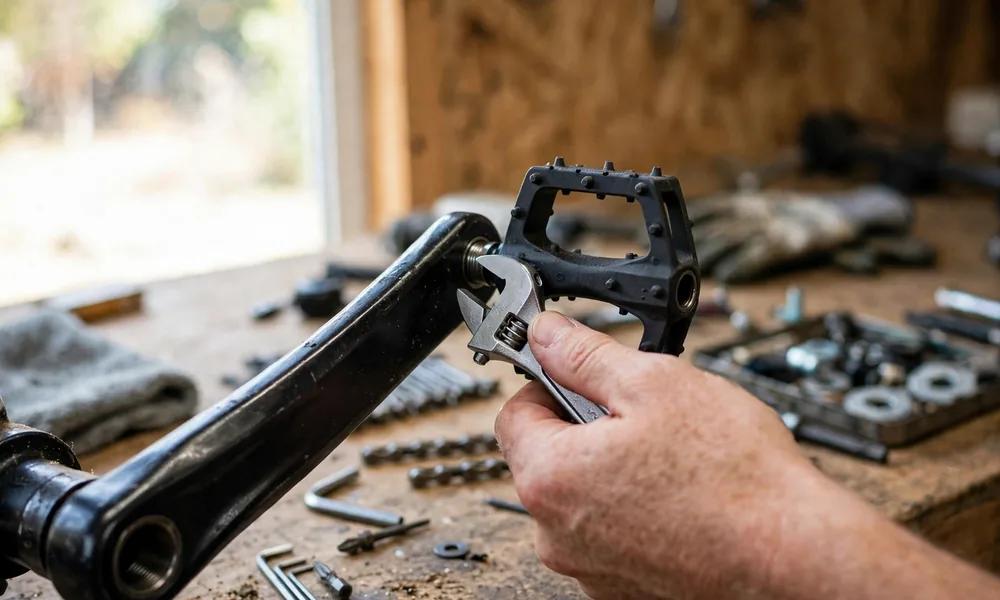
Fitting pedals is a simple job, but one detail catches almost everyone the first time: the left pedal has a reverse thread. The right pedal tightens clockwise, as normal, but the left pedal tightens anticlockwise. The pedals are usually marked L and R, and the left one often has a groove around the spindle. If a pedal will not screw in smoothly, stop and check the side, because forcing the wrong thread will damage the crank.
Put a little grease on the threads before you fit the pedals, tighten them firmly with a pedal spanner or a long hex key, and check them again after your first ride, because new pedals can settle slightly. Set clipless release tension to the loosest setting while you are learning, then tighten it gradually as you get confident.
Mistakes to Avoid When Buying Bike Pedals
The most common mistake is buying a pedal for the bike you wish you had, rather than the bike you ride. A featherweight road pedal on a heavy hybrid bike saves nothing and feels slippery in normal shoes. A big downhill pedal on a road bike adds weight and catches the ground on corners. Match the pedal to the bike and the riding, and the choice gets easy.
The second mistake is ignoring the shoe. A clipless pedal without the right shoes is useless, and a flat pedal with a smooth-soled shoe will slip in the wet no matter how good the pins are. Budget for shoes and cleats together with the pedal, and try the whole combination before you commit. A soft trainer sole will bend around a small pedal and hurt on a long ride.
Your Bike Pedal Checklist
- Choose the pedal type for the riding you do most, not the riding you do least.
- Check platform size against your shoe, so the ball of your foot is fully supported.
- Match cleats to pedals exactly, and budget for shoes and cleats together.
- Pick sealed bearings if you ride in rain or mud, and a steel spindle if you ride hard.
- Fit the left pedal anticlockwise, grease the threads, and re-check after the first ride.
- Test the whole setup on a quiet road before you ride in traffic or on a trail.
Frequently Asked Questions
Are flat pedals or clipless pedals better for beginners?
Flat pedals are better for most beginners, because there is nothing to learn and you can put a foot down instantly. Clipless pedals are more efficient, but they need practice and the right shoes.
Do I need special shoes for clipless pedals?
Yes. Clipless pedals need shoes with cleats bolted to the sole, and the cleats must match the pedal system. Road cleats and mountain cleats are different, so check the system before you buy either the pedal or the shoe. You can read more about the shoe side in our guide to the best cycling shoes in 2026.
How do I know which pedal is left and which is right?
Pedals are marked L and R, and the left pedal usually has a groove around the spindle. The right pedal screws in clockwise and the left pedal screws in anticlockwise. If a pedal will not turn smoothly, stop and check the side, because forcing it can damage the crank thread.
How often should I replace my bike pedals?
A good pedal lasts several years with basic care. Replace it when the bearings grind, the spindle wobbles, or the platform is bent or cracked. Replace clipless cleats more often, usually every few thousand miles. Our guide to the top bike tools for home repairs in 2026 covers the spanners and hex keys you need for the job.
Can I use flat pedals on a road bike?
Yes, and many riders do, especially for short rides and commuting. You lose some efficiency compared with clipless pedals, but you gain comfort and convenience. A wide flat pedal with good pins works well on a road bike, and it lets you wear any shoes you like.
Why do my feet hurt after a long ride?
Foot pain usually comes from pressure, not from the pedal itself. A small platform, a soft shoe sole, or a foot position that puts pressure on one spot can all cause hot spots. A wider platform, a stiffer shoe, and the ball of your foot over the spindle usually fix it. Seat position matters too, as explained in our guide to why the right bike seat changes every ride in 2026.
The Bottom Line
The best bike pedals in 2026 are the ones that fit your riding, your shoes and your bike, and then disappear from your thoughts. For most riders that means a wide flat pedal with good pins and sealed bearings, or a clipless pedal matched carefully to the right cleats. Choose grip and platform size before weight, fit the pedals correctly, practise before you ride in traffic, and look after the bearings.