
A mattress is a big, expensive commitment, and most of us keep ours far longer than we should. The best mattress toppers 2026 offer a smarter way out: a thick comfort layer that sits on top of your existing mattress and changes how it feels tonight, for a fraction of a new bed’s price. The right topper can soften a mattress that feels like a park bench or cool a bed that leaves you sweating at night.
But toppers are not all the same, and the wrong one can make a bad bed worse: soft foam on a sagging mattress adds a deeper hole, and a feather topper on a hot sleeper’s bed adds unwanted warmth. The difference between a topper you love and one that ends up in a cupboard comes down to matching material, thickness, and firmness to your body and sleep position.
This guide does that matching: how toppers work, the main types compared, the best pick for each sleeper, plus the thickness, cooling, and care questions that decide if a topper is money well spent.
Key Takeaways
- A topper changes comfort, not support: it softens a sound mattress but cannot rescue one that sags.
- Memory foam suits side sleepers and aching shoulders; latex suits hot sleepers who want a responsive, cooler feel.
- Two to three inches suits most people — thinner toppers barely register, and four inches can swallow lighter sleepers.
- Cooling claims are mostly marketing: open-cell foam, latex, and wool sleep cooler, while dense memory foam traps heat.
- A washable cover, a proper trial, and an exact size fit matter more than any brand name.
Best Mattress Toppers 2026 at a Glance
| Topper Type | Best For | Feel | Cooling | Durability |
|---|---|---|---|---|
| Memory foam | Side sleepers, pressure relief | Slow, contouring sink | Poor unless open-cell or gel | 3–5 years |
| Latex | Hot sleepers, back sleepers | Responsive, buoyant lift | Good | 5–8 years |
| Feather and down | Softness lovers, guest beds | Plush, cloud-like | Good airflow, warm fill | 2–4 years |
| Wool | Temperature regulation | Firm, gentle cushion | Excellent | 4–6 years |
| Gel-infused foam | Hot sleepers on a budget | Foam feel, cooler start | Moderate | 3–5 years |
| Fibre fill | Allergy sufferers, low budgets | Soft, light, flattening | Moderate | 1–3 years |
How a Mattress Topper Actually Changes Your Bed
A topper is a removable comfort layer, usually two to four inches thick, that sits on top of your mattress under the fitted sheet. It does one job: it changes the surface you sleep on. Your mattress still does the heavy work of holding your spine level. The topper only decides how that support feels against your shoulders, hips, and knees.
What a topper adds depends on its material. Foam moulds around you, then springs back. Latex pushes back at once, so you sleep on it rather than in it. Feather and down feel luxurious but need a daily shake to recover. Wool barely changes shape yet manages temperature all night. Knowing which behaviour you want is the whole buying decision. If the mattress underneath is the real problem, our guide to the best vs worst mattresses of 2026 explains how to tell a tired mattress from a merely firm one.
Memory Foam Toppers: Best for Pressure Relief
Memory foam is the most popular topper material for a reason: nothing else relieves pressure quite like it. It softens with body heat and moulds around your shoulders and hips, so side sleepers often wake without the numb arms and aching hips they had before. For a mattress that feels too hard, a two- or three-inch memory foam topper is usually the fastest fix.
Who Should Buy One
Side sleepers benefit most, followed by lighter sleepers and anyone with sore joints who needs cushioning without a new bed. Medium-density foam, around three to four pounds per cubic foot, gives the best balance: soft enough to contour, dense enough to last. Very cheap low-density foam feels wonderful for a month, then goes flat — so check density before price.
What to Watch Out For
Heat is the honest drawback: dense memory foam traps body warmth, and hot sleepers may trade aching shoulders for sweaty nights. Open-cell and gel-infused foams sleep cooler, though the effect fades during the night. The slow, sinking feel also makes turning over harder. New foam can smell for a day or two, so air it out first.
Latex Toppers: Best for Hot Sleepers
Latex is the quiet overachiever of the topper world. It cushions pressure points almost as well as memory foam, but it responds instantly instead of slowly sinking, so you never feel stuck. It sleeps cooler because its open structure lets air move through it, and it lasts longer than foam — a good latex topper can serve five to eight years, roughly twice the life of a budget foam one.
The feel is buoyant: you sleep on top of latex rather than inside it, which back and stomach sleepers prefer, and restless sleepers find it far easier to roll over. Natural latex also resists dust mites and mould. The trade-offs are price and weight — a queen-size latex topper is heavy — and firmness: if your mattress feels like concrete and you want a cloud, latex alone may not soften it enough.
Feather and Down Toppers: Best for Pure Softness
Nothing feels quite like sinking into a feather and down topper. It is the hotel-bed effect: a plush, pillowy surface that makes an ordinary mattress feel expensive. Feather toppers are the cheaper, slightly firmer version, while down toppers are softer, lighter, and considerably dearer. Both breathe well, so they suit sleepers who like a soft surface without the heat of foam.
The catch is maintenance and support. Feather toppers flatten where you sleep and need regular shaking to recover. They add softness but almost no support, so they do nothing for a mattress that lets your hips sink. A stray quill can poke through the cover, and anyone with a feather allergy should avoid them. Buy feather for comfort and luxury, not as a fix for a bad mattress.
Wool Toppers: Best for Temperature
Wool is the most underrated topper material. It does not contour like foam or billow like down, but it regulates temperature better than anything else, wicking moisture when you are warm and insulating when you are cool. A wool topper adds gentle cushioning and a dry, fresh feel, and naturally resists dust mites and odours.
Gel and Cooling Toppers: Do They Work?
Cooling is the most oversold promise in the topper market. Gel-infused foam feels cooler when you first lie down, because the gel absorbs body heat — but after an hour or two the gel warms up and the advantage mostly disappears. That first cool hour helps if you struggle to fall asleep, but it will not keep a hot sleeper cool all night.
How Thick Should a Topper Be?
Thickness is where most buyers go wrong in both directions. A one-inch topper is barely noticeable — it adds a little softness and not much else, and it is only worth buying if your mattress is nearly right already. Two inches is the minimum that genuinely changes how a bed feels, and it suits most people who want to take the edge off a firm mattress.
Three inches is the sweet spot for side sleepers and anyone softening a hard bed, giving pressure points room to sink without bottoming out. Four inches suits very firm mattresses or heavier sleepers who would compress a thinner topper flat. Going too thick has risks: lighter sleepers can feel swallowed, and a thick topper on a soft mattress can throw your spine out of line. As a rule, firm mattress plus thick topper works; soft mattress plus thin topper works; soft plus thick usually does not.
What a Topper Cannot Fix
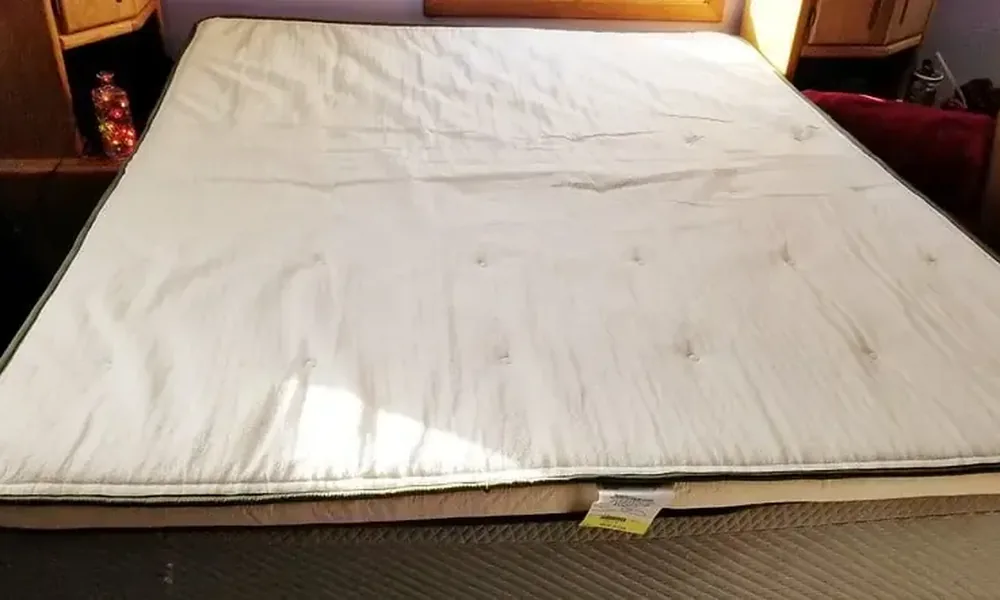
A topper is a comfort layer, not a repair. If your mattress sags visibly in the middle, dips where you sleep, or has springs you can feel through the padding, no topper will fix it. The topper simply follows the shape underneath, so you end up with a soft sag instead of a hard one, and your back still spends the night out of line.
The test is simple: strip the bed and look. If the mattress is flat and even, a topper is a great buy. If it has a visible hollow, lump, or slope, save the money toward a replacement. If you are unsure, our round-up of the best mattresses of 2026 covers replacements from budget foam to premium hybrids, so you can compare the cost of a topper against starting fresh.
How to Choose the Right Topper in Ten Minutes
- Check the mattress first: if it sags visibly, buy a new mattress instead.
- Match material to sleep position: memory foam for side sleepers, latex for back and hot sleepers, feather for softness.
- Pick two to three inches for most beds, three to four only if the mattress is very firm.
- Measure your mattress exactly and buy the same size: a short topper slides, a wide one bunches.
- Look for a removable, washable cover and straps that keep the topper in place.
- Buy from a seller with at least a 30-night trial and a clear return policy; keep the packaging until you are sure.
Looking After Your Topper
A topper lasts far longer with a little care. Use a washable protector, because most toppers cannot be machine washed and a spill will stain foam permanently. Air it out every few months and rotate it end to end twice a year so it wears evenly.
Feather toppers need a daily shake and a weekly airing. Never fold latex or foam toppers sharply or store them compressed, as that can crease or crack them. Keep every topper dry: moisture is the enemy of all fill types. Fresh, breathable bedding helps too, and our guide to the best bed sheets of 2026 covers the cottons and linens that keep a topped bed cool.
Frequently Asked Questions
Will a topper make a firm mattress softer?
Yes — that is what toppers do best. A two- to three-inch soft topper, especially memory foam or feather, takes the hard edge off a firm mattress from the first night, even though the support underneath stays the same.
Can a topper fix a sagging mattress?
No. A topper follows the shape beneath it, so a sag becomes a softer sag and your spine stays out of line. A sagging mattress needs replacing, not topping.
How long does a mattress topper last?
It depends on the material: fibre one to three years, memory foam three to five, wool four to six, and latex five to eight. Rotating the topper and using a protector stretches its life.
Do mattress toppers sleep hot?
Some do. Dense memory foam is the worst offender, while latex, wool, and feather breathe far better. If you sleep hot, choose latex or wool and pair the topper with breathable cotton bedding.
Topper or a new mattress — which should I buy?
Buy a topper if your mattress is flat, even, and under eight years old but feels too firm or too hot. Buy a new mattress if it sags, has lumps, is over ten years old, or leaves you aching every morning.
Do I need a special fitted sheet for a topper?
Usually yes. A topper adds two to four inches to your bed’s height, so a standard fitted sheet may pop off. Look for deep-pocket sheets that cover your mattress plus the topper.
The Bottom Line
The best mattress toppers of 2026 are a practical, affordable fix for a bed that is nearly right. Memory foam wins for pressure relief, latex for cooling and durability, feather for luxury softness, and wool for year-round temperature control. Match the material to your sleep position, buy two to three inches thick, and check the mattress underneath first — and a topper can give you several more years of good sleep for a fraction of the price of replacing the bed.


