The best paper towels of 2026 are the ones that clean up a spill in one pass, without falling apart in your hand. A glass of water tips over, you grab a sheet, and the puddle is gone. That is the whole job, and yet most paper towels fail at it. They tear when they get wet, they leave a trail of damp lint across the worktop, or they soak through so fast that the spill ends up on your fingers instead of in the towel. A good paper towel is not a luxury. It is the most-used cleaning tool in the kitchen, and the difference between a good roll and a bad one shows up a dozen times a day.
Key Takeaways
- Absorbency is the first test: a good paper towel should soak up a spilled glass of water in one or two sheets, not smear it into a wider puddle.
- Strength when wet matters more than strength when dry: a towel that tears the moment it touches liquid is useless for real spills.
- Two-ply towels usually beat one-ply for kitchen work, but ply count alone does not guarantee quality, because the fibre and the embossing matter too.
- Sheet size and perforations decide how much you use: half-size sheets and good perforations cut waste without cutting cleaning power.
- Paper towels are for spills, grease and glass; reusable cloths are better for everyday wiping, and the smartest kitchens use both.
Why Most Paper Towels Disappoint
Most paper towels disappoint for the same reason: they are made to feel soft and thick in the hand, not to work when they are wet. Softness sells, so makers use short fibres and a loose structure that feels plush on the shelf. But the moment that soft towel touches a spill, the fibres separate, the sheet tears, and you are left holding a soggy fragment while the puddle spreads. The towel that felt luxurious in the shop is the towel that falls apart on the worktop.
What Makes a Paper Towel Actually Work
Ply: what the numbers really mean
Ply is the number of layers in each sheet. Two-ply towels are the standard for kitchen work: they absorb more, they hold together better when wet, and they feel substantial without being wasteful. One-ply towels are thinner and cheaper, and they have their place, for light jobs like drying hands, but they tear more easily and often need two sheets to do the work of one two-ply sheet. Three-ply towels are impressively thick, but they cost more per sheet and are overkill for most jobs, except heavy grease and large spills.
Texture and embossing
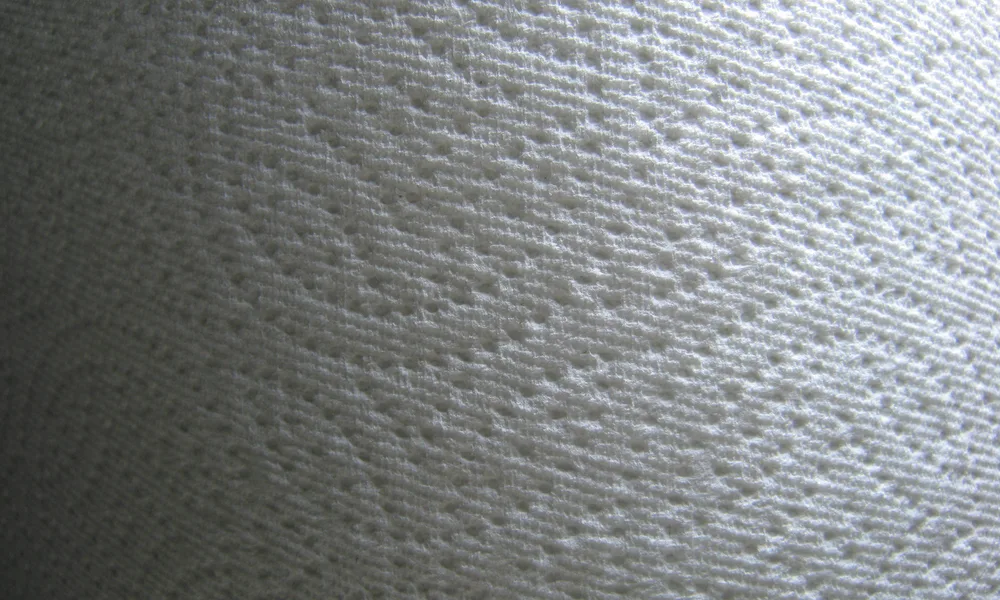
Texture is not a gimmick. A paper towel with a deep quilted pattern absorbs faster and holds more than a smooth one, because the pattern creates pockets that trap liquid and channels that draw it in. The pattern also gives the sheet grip, so it does not slide across a wet worktop. A smooth, flat towel may look neat, but it pushes water around instead of picking it up. The trade-off is lint: a very rough towel can leave fibres on glass, so if you clean a lot of glass, look for a low-lint towel and test it on a mirror.
Sheet size, perforations and value
Sheet size decides how much of the roll you use. A standard sheet is about 11 inches square, which is far more than you need for a small spill. Half-size sheets let you tear off half a sheet for a small job, and they cut waste dramatically: if your household goes through a roll a week, switching to half-size sheets can stretch it to ten days. Perforations are the other half of value. Good perforations tear cleanly, every time, so you get exactly the sheet you wanted. Bad ones tear unevenly, so you pull off one and a half sheets, or the roll unravels.
The Main Types of Paper Towel Compared
There is no single best paper towel for every kitchen, because the right choice depends on what you clean most. A household with children and pets needs maximum absorbency and wet strength. A household that mostly wipes counters and dries hands can use a lighter towel. The table below compares the main types.
| Type | Absorbency | Wet strength | Lint | Best for |
|---|---|---|---|---|
| Standard two-ply | Good | Good | Low | Everyday spills, the best all-rounder |
| Premium quilted two-ply | Excellent | Excellent | Very low | Big spills, grease, glass and mirrors |
| One-ply value | Fair | Fair | Medium | Light jobs, drying hands, tight budgets |
| Three-ply thick | Excellent | Excellent | Low | Heavy grease, large spills, workshops |
| Half-size select-a-size | Good | Good | Low | Small spills, cutting waste, careful users |
Standard two-ply: the everyday workhorse
Standard two-ply towels are the default for a reason. They absorb well, they hold together when wet, they do not leave much lint, and they cost a sensible amount per sheet. For a household that uses paper towels for everyday spills, wiping counters and drying hands, a good standard two-ply is all you need. Look for one with a clear embossed pattern and clean perforations, and buy it in bulk, because the per-roll price drops sharply in larger packs.
Premium quilted: worth it for heavy use
Premium quilted towels cost more per roll, but they earn it in households that clean a lot. They absorb faster, they hold together better, and they do the work of two standard sheets on a big spill, which means you use fewer of them. The maths is simple: if a premium sheet replaces two standard sheets, and it costs less than twice as much, it is cheaper per spill. For families with children, pets, or a lot of cooking, premium towels are usually the better value, not the luxury option.
Paper Towels vs Cloths: Use Both, Wisely
The smartest kitchens do not choose between paper towels and cloths. They use both, each for what it does best. Paper towels are for spills, grease, raw meat juices and anything you want to throw away afterwards. Cloths are for everyday wiping, drying dishes and polishing, where reuse makes sense. Using a paper towel to dry your hands a dozen times a day is wasteful. Using a cloth to mop up raw chicken juice is a hygiene risk. The division is simple: if it is dirty, greasy or potentially germy, use paper and bin it. If it is clean water and a clean surface, use cloth.
Our guide to the best kitchen towels for everyday use in 2026 covers the reusable side of this partnership, and it is worth reading alongside this one, because the two guides together describe a complete kitchen. A good cloth towel dries your hands and polishes your glasses. A good paper towel handles the spill, the splatter and the mess. Together, they cover everything, and each one lasts longer because the other is doing half the work.
Choosing Paper Towels for Your Household
Start by counting how you use them. A single person who mostly wipes counters can use a lighter, cheaper towel. A family with children needs maximum absorbency and wet strength, because the spills are bigger and more frequent. A household with pets needs a towel that handles muddy paws and water bowls without disintegrating. And a household that cooks a lot needs a towel that deals with grease, because oil soaks through fast and weakens the fibres. For the floors and the bigger cleaning jobs that follow a spill, a good mop matters as much as a good towel: our guide on how to pick a steam mop that actually lifts grime in 2026 covers the tool that takes over where paper towels stop.
The Mistakes That Waste Paper Towels
The most common mistake is using too many sheets. A spill that needs one sheet gets three, because the first sheet was a cheap one that tore, or because the perforations failed and the roll gave up half a dozen. Better towels and better perforations fix this directly. The second mistake is using a paper towel for a job a cloth would do better: drying hands, wiping a clean counter, polishing a glass. Those jobs are free with a cloth and expensive with paper. The third mistake is buying on price per roll instead of price per use. A cheap roll that needs three sheets per spill costs more than a premium roll that needs one, and it leaves more waste behind.

Your Paper Towel Checklist
- Test wet strength: wet a sheet under the tap and pull it gently, and make sure it stretches slightly instead of tearing straight away.
- Check the embossing: a deep, even quilted pattern absorbs faster and grips better than a flat, smooth sheet.
- Choose two-ply for everyday kitchen work, and save one-ply for light jobs and three-ply for heavy grease.
- Pick half-size sheets if you want to cut waste: a small spill needs half a sheet, not a full one.
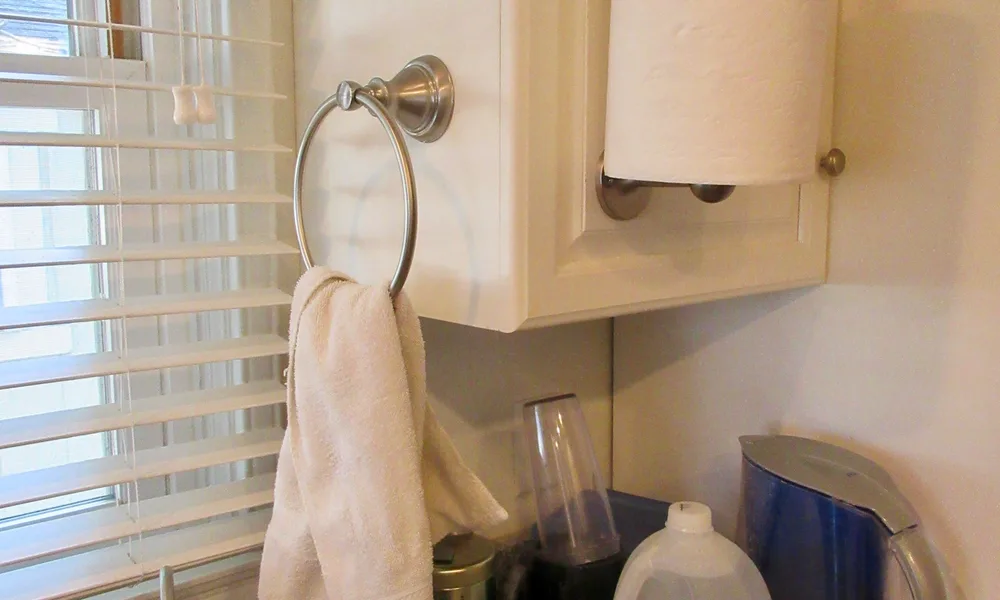
- Keep the roll on a holder, dry and within reach, with a spare roll stored upright in a dry cupboard.
- Use paper for spills, grease and raw meat, and cloth for clean wiping and drying: each tool for the job it does best.
Frequently Asked Questions
What is the best paper towel for everyday spills?
A good standard or premium two-ply towel with a deep embossed pattern and clean perforations. It should soak up a spilled glass of water in one or two sheets, hold together when wet, and tear cleanly from the roll. Two-ply is the sweet spot for most kitchens.
Are expensive paper towels worth it?
Often, yes, because the price that matters is the price per spill, not the price per roll. A premium towel that cleans up a spill with one sheet is cheaper than a value towel that needs three sheets for the same job, and it leaves less waste.
What is the difference between one-ply and two-ply paper towels?
One-ply towels have a single layer, so they are thinner, cheaper and weaker when wet. Two-ply towels have two layers bonded together, so they absorb more, hold together better, and usually do the work of two or three one-ply sheets.
Do paper towels leave lint on glass and mirrors?
Cheap ones do, good ones do not. Lint comes from short fibres and a loose structure, so a towel with longer fibres and a tighter bond leaves far less residue. Premium quilted towels are usually the best choice for glass.
Can paper towels be composted or recycled?
Clean, unused paper towels can usually be composted, and many councils accept them in food waste. Used towels that have mopped up grease, chemicals or raw meat should go in general waste. Never put paper towels in the paper recycling bin: their fibres are too short to recycle.
How should I store paper towel rolls?
Upright, in a dry place, with the working roll on a holder near the sink. A damp roll tears and clumps, so keep it off the worktop and away from splashes. If you are kitting out the kitchen properly, our guide to the best vs worst cutting boards of 2026 is worth a look too, because a good board and good towels together make the daily clean-up far quicker.
The Bottom Line
The best paper towels of 2026 are not the cheapest rolls on the shelf. They are the two-ply, well-embossed towels that soak up a spill in one sheet, hold together when wet, tear cleanly, and leave no lint behind. Choose two-ply for everyday use, half-size sheets to cut waste, and premium quilted towels if your household cleans a lot. Keep the roll on a holder, keep a dry spare, and use cloths for the clean jobs so your paper towels last for the messy ones. Get those few things right, and the most-used tool in your kitchen will finally do its job properly.