A kitchen towel has one of the simplest jobs in the house, and one of the easiest to get wrong. It has to dry your hands, mop up a spill, polish a glass, and sometimes pull a hot tray from the oven, all without leaving a trail of lint or a musty smell behind. Yet most of us live with towels that fail at the basics: the one that pushes water around instead of soaking it up, the one that stays damp for a day and smells stale by Wednesday,
The best kitchen towels of 2026 do their work so quietly that you barely think about them. They absorb fast, dry quickly between uses, leave glassware streak-free, and survive hundreds of washes without thinning out or fraying. The worst look fine folded on a shelf and then disappoint the moment they get wet: they smear spills into wider puddles, leave lint on everything, stay soggy for hours, and start smelling after a day or two. This comparison separates the towels worth keeping in your kitchen from the ones that belong in the rag bag.
Key Takeaways
- The best kitchen towels absorb a spill in one or two passes, instead of pushing the water around the worktop.
- Linen and cotton are the best all-round fabrics: absorbent, durable, and lint-free when the weave is right.
- Waffle weave towels dry fastest and stay fresh longest, which makes them ideal for humid kitchens.
- A towel that stays damp grows a musty smell within a day, so drying speed matters as much as absorbency.
- Avoid thin microfibre towels that smear, cheap printed towels that shed, and heavy terry towels that never dry out.
How This Comparison Was Judged
We judged kitchen towels the way they are actually used: grabbed with wet hands a dozen times a day, thrown over a spill, wrapped around a hot dish, and washed again and again. So the judging started with absorbency. Does the towel soak up a spilled glass of water in one pass, or does it smear the puddle into a wider one?
After absorbency came drying speed and freshness: how long the towel stays damp after use, and whether it smells musty the next day. Then durability: does it thin out, fray at the edges, or lose its absorbency after twenty washes? We also looked at size and weight, because a towel that is too small cannot dry a stack of plates and a towel that is too heavy never dries out. The best towels here earn their place on absorbency first and freshness second; the worst fail on absorbency and then fail again on smell and lint.
The Best Kitchen Towels of 2026
The best kitchen towels share a quality that is easy to miss in a shop and impossible to miss at the sink: they work with water instead of fighting it. Natural fibres draw water in rather than repelling it, a good weave holds that water instead of letting it run off, and the towel dries out between uses so it stays fresh. They feel substantial without being heavy, and they get better with washing instead of worse.
Linen Towels: The Best All-Rounder for Glassware
Linen is the quiet champion of the kitchen towel drawer. It absorbs surprisingly well for such a thin fabric, it dries faster than almost anything else, and it leaves virtually no lint, which makes it the best choice for polishing glasses and drying plates. A good linen towel feels crisp at first and softens with every wash, and it can last for years without thinning. But if you dry a lot of glassware, or your kitchen runs humid, a set of linen towels is the best money you can spend on the drawer.
Cotton Flour Sack Towels: Cheap, Absorbent, and Hard to Beat
Flour sack towels are the plain, thin cotton towels that look unremarkable and outperform almost everything else. They are made from a tight, flat weave of cotton that absorbs fast, dries quickly, and leaves almost no lint. They are also cheap enough to buy by the dozen, so you can keep separate towels for hands, dishes, and surfaces without feeling extravagant. For everyday drying and wiping, though, they are hard to beat, and they survive hundreds of washes without falling apart.
Waffle Weave Towels: The Fastest to Dry
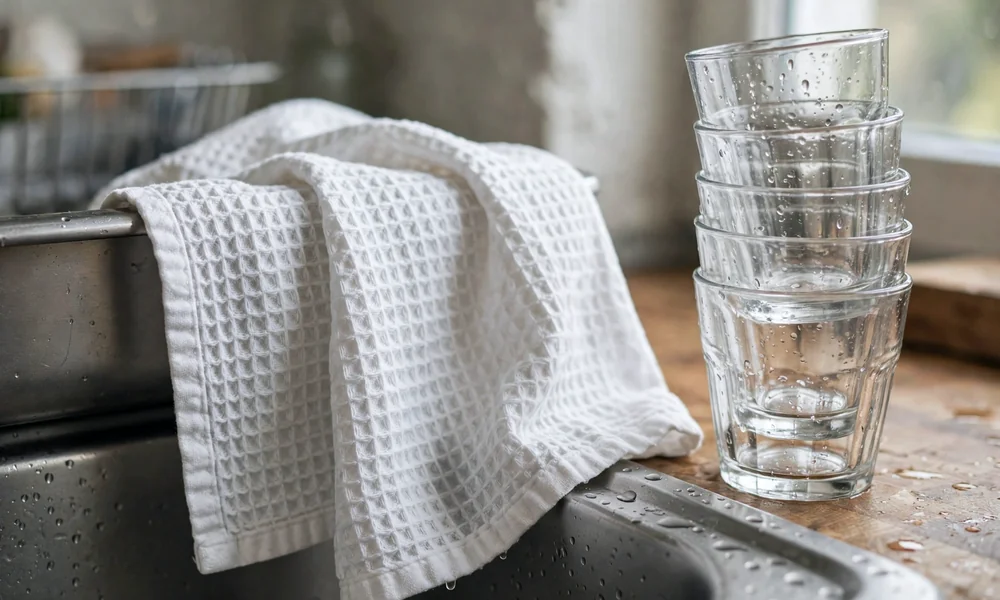
Waffle weave towels are woven with a raised grid pattern that traps air and gives water somewhere to go. The result is a towel that absorbs well, dries noticeably faster than flat cotton, and stays fresh longer between washes. The open weave also makes them light, so they hang neatly and fold into a drawer without taking up much space. If your towels keep smelling musty, switching to waffle weave is the simplest fix.
Medium-Weight Terry Cotton: The Best for Big Spills
When a full glass of water hits the floor, you want a towel with real bulk, and that is where medium-weight terry cotton earns its place. The looped pile holds more water per square inch than any flat weave, so one towel can deal with a spill that would take two flour sack towels. The trick is weight: aim for the middle range, roughly 350 to 450 grams per square metre, which absorbs well without staying soggy for hours. A medium terry towel, kept for spills and drying hands, is the workhorse every kitchen needs.
The Worst Kitchen Towels of 2026
The worst kitchen towels fail in ways that only become obvious after you have bought them. They look convincing folded on a shelf: bright colours, a soft hand, a low price. Then the first spill exposes them. The towel pushes the water around instead of picking it up, or it soaks through so fast the spill ends up on your fingers. A bad towel is worse than no towel, because it gives you false confidence while it spreads the mess.
Thin Microfibre Towels That Smear Instead of Absorbing
The single worst flaw in a kitchen towel is a fabric that repels water instead of absorbing it, and thin microfibre is the usual culprit. Microfibre is made from synthetic fibres that are excellent at picking up dust and grease on a dry surface, but many thin microfibre towels simply push a spill across the worktop instead of soaking it up. They also hold on to smells: once a microfibre towel has picked up cooking grease, it can smell stale even straight out of the wash. If you want a towel for spills, choose cotton or linen, and keep the microfibre for polishing, as our guide to the best paper towels for everyday spills shows, disposable options have their own place for the messiest jobs.
Cheap Printed Novelty Towels That Shed Lint
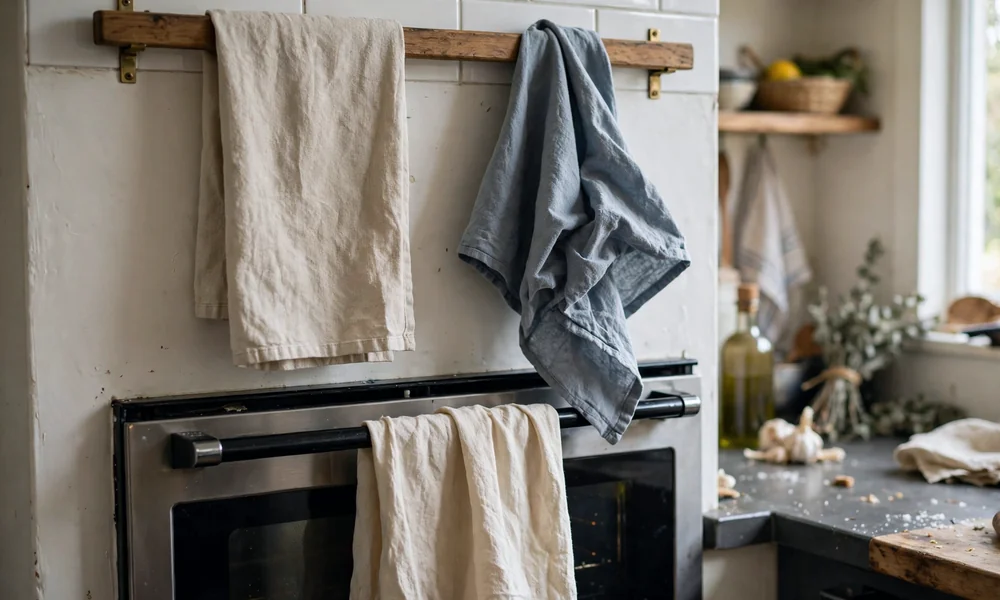
Cheap novelty towels, the kind with bright printed slogans and seasonal pictures, are usually made from short, loose fibres that shed from the first wash. They leave a trail of lint on plates, glasses, and cutlery, and the print itself often makes the fabric less absorbent, because the printed side repels water. They also tend to be thin and small, so they cannot cope with a real spill, and the edges fray quickly. They look cheerful hanging on the oven handle, but as a working towel they are a poor choice. If you love the look, hang one for decoration and keep a plain linen or cotton towel beside it for the actual work.
Heavy Terry Towels That Never Dry Out
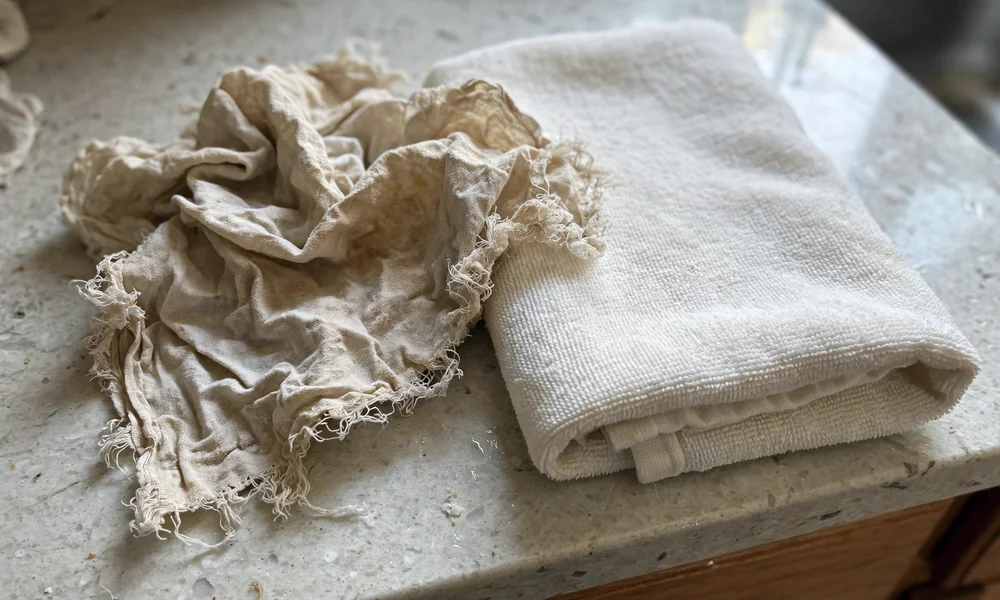
Heavy terry towels feel luxurious in the shop, thick and plush and soft, but in a real kitchen they have a serious flaw: they stay damp. A towel above 500 grams per square metre can take a full day to dry in a humid kitchen, and a damp towel is a towel that smells. The musty odour comes from bacteria growing in the damp fibres, and once it sets in, even hot washing does not always remove it. If you love the feel of terry, choose a medium weight instead, and hang it where air can reach it rather than bunched on a hook.
Single-Ply Tea Towels That Fall Apart in the Wash
The worst towels of all are the single-ply tea towels that cost almost nothing and last almost as long. They are so thin that they soak through on the first pass, so a spill ends up on your hands instead of in the towel. The weave is loose, so they fray at the edges after a handful of washes, and they thin out in the middle until you can see through them. They are also too small for most jobs: drying a stack of plates takes two or three of them. A towel that needs replacing every month is not a bargain, however cheap it was. Spend a little more on a decent cotton or linen towel, and it will still be working a year later.
Kitchen Towels at a Glance
The table below sums up the divide: the best towels are defined by natural fibres and a weave that dries fast, the worst by synthetic fabric and cheap construction.
| Feature | Best towels | Worst towels |
|---|---|---|
| Absorbency | Soaks up a spill in one pass | Pushes water around the worktop |
| Drying speed | Dry between uses, stays fresh | Stays damp, smells musty by morning |
| Lint | Almost none on glassware | Sheds fibres onto plates and glasses |
| Durability | Survives hundreds of washes | Frays and thins within weeks |
| Fabric | Linen, cotton, waffle weave | Thin microfibre, cheap printed cotton |
How to Choose the Right Towels for Your Kitchen
Start with what you do most. If you dry a lot of glassware, buy linen first, because nothing else leaves glass as streak-free. If you want one towel that does everything, a set of cotton flour sack towels is the best value: cheap, absorbent, lint-free, and easy to keep separate for hands, dishes, and surfaces. If your kitchen runs humid and your towels keep smelling, add waffle weave towels, which dry fastest. Keep one medium-weight terry towel for big spills, and keep the rest of the drawer flat and fast-drying.
Then think about care, because even the best towel fails if it is washed badly. Wash kitchen towels in hot water without fabric softener, because softener coats the fibres and cuts absorbency. Hang towels spread out where air can move, not bunched on a hook, and replace a towel when it thins, frays, or stops absorbing. If you want a fuller picture of the everyday kitchen, our guide to the best kitchen towels for everyday use covers fabrics and sizes in more depth, and the right dish soap for greasy hands matters just as much as the towel you dry them with.
Verdict
The best kitchen towels of 2026 are the ones you reach for without thinking: linen for glassware, cotton flour sack towels for everyday drying, waffle weave for humid kitchens, and a medium-weight terry towel for big spills. They absorb fast, dry quickly, leave no lint, and survive hundreds of washes. The worst are the thin microfibre towels that smear, the cheap printed towels that shed, the heavy terry towels that never dry out, and the single-ply tea towels that fall apart. Buy natural fibres, keep separate towels for separate jobs, wash them hot without softener, and replace them the moment they stop absorbing.