
A cutting board looks like the simplest thing in the kitchen, which is why it is so easy to get wrong. A good board protects your knives, keeps food safe, and makes cooking faster. A bad one dulls blades, slides across the worktop, and harbours bacteria in deep scars no washing can reach. The gap between the best and worst boards of 2026 is wider than most expect, decided by material, size, thickness, and care.
This comparison puts the best cutting boards of 2026 against the worst, judging them as you would live with them: kindness to edges, stability, ease of cleaning after raw meat, and lifespan. The best cutting boards of 2026 show what a well-made board looks like; this guide uses them as the benchmark, including the boards to avoid.
Key Takeaways
- Wood boards are kindest to knives and last for years; plastic boards are best for raw meat because they go in the dishwasher.
- Buy the largest board your worktop and sink can handle: at least 18 by 12 inches.
- End-grain wood is the premium choice: it resists deep cuts and shows fewer marks.
- A board that slides is a hazard; choose grip feet, heavy weight, or a damp cloth underneath.
- Replace plastic boards once scars turn deep and dark; grooves trap bacteria washing cannot reach.
What Separates the Best Cutting Boards From the Worst
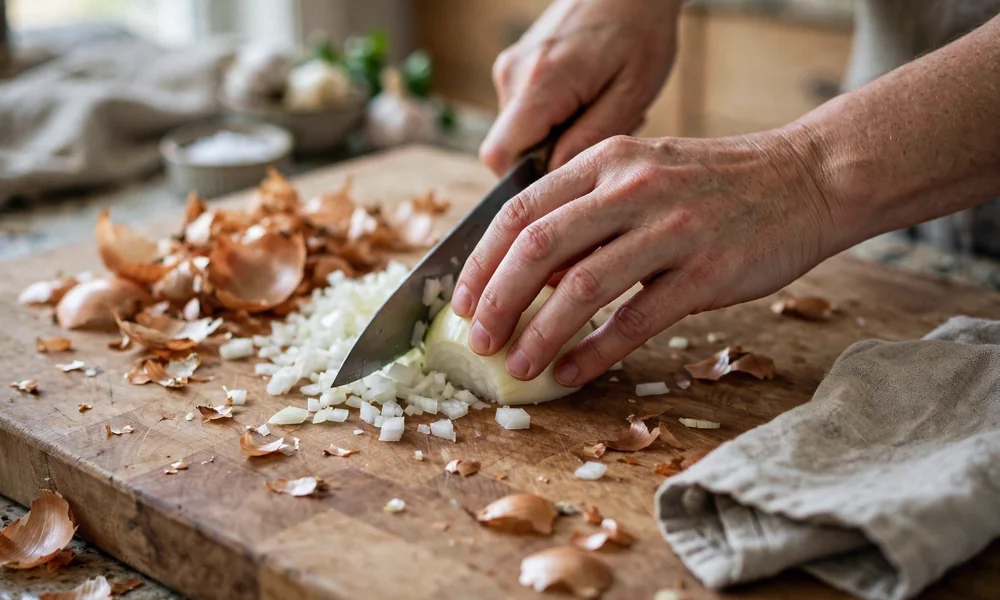
Material comes first. Hardwoods such as maple, walnut, and teak cushion a knife edge, and wood fibres have natural antibacterial properties that help the surface stay hygienic. End-grain boards, where fibres point upward like brush bristles, are gentlest on knives and close up after a cut, hiding marks that would scar edge-grain. Plastic boards of high-density polyethylene are the workhorses: light, cheap, dishwasher-safe, and easy to sanitise. Bamboo sits between the two: harder than most woods and very durable, but that hardness dulls knives faster than maple or walnut.
Size and thickness matter more than most buyers think. Most supermarket boards are too small: a 12 by 9 inch board leaves no room to pile chopped vegetables, so food ends up on the worktop. Thickness matters too: under half an inch, a board flexes and warps; at one to two inches it feels solid and stays flat for years. Stability is the third divide: a board that moves while you chop is dangerous, and the best stay put through weight, rubber feet, or a damp tea towel. The worst are light, thin, and smooth underneath, skating across the worktop at the worst moment.
The Best Cutting Boards of 2026
The best boards make chopping feel calm: the knife bites cleanly, the board stays put, and there is room to work. They still look good after a year of daily use, with a surface that can be oiled, sanded, or scrubbed back to health.
End-Grain Wood: The Premium Choice
End-grain boards are the best boards most cooks will ever use. Because fibres stand upright, the knife edge slips between them instead of cutting across, so the blade stays sharper and the board shows fewer scars. A thick end-grain maple or walnut board, properly oiled, can last decades; sanding and oil bring a tired surface back. The trade-off is care: wash by hand, dry upright, oil every few weeks, and never soak or machine-wash wood. For cooks who enjoy looking after tools, that ritual is part of the pleasure, repaid with years of quiet service.
Edge-Grain Wood and Bamboo
Edge-grain boards, where fibres run sideways, are the sensible middle ground: cheaper than end-grain, kinder to knives than plastic or bamboo, and easy to care for. A good edge-grain maple board is the board most home cooks should buy first. Bamboo is a different bargain: fast-growing, smart-looking, and more water-resistant than most woods, so it needs less oiling. The catch is hardness: bamboo dulls knives faster than maple, and cheap bamboo can split along the grain if it dries out. A good bamboo board is still fine for light daily chopping, especially vegetables, but not the kindest home for an expensive chef’s knife. The best knife sets of 2026 deserve a board that treats edges gently, and wood does that best.
Plastic: The Practical Workhorse
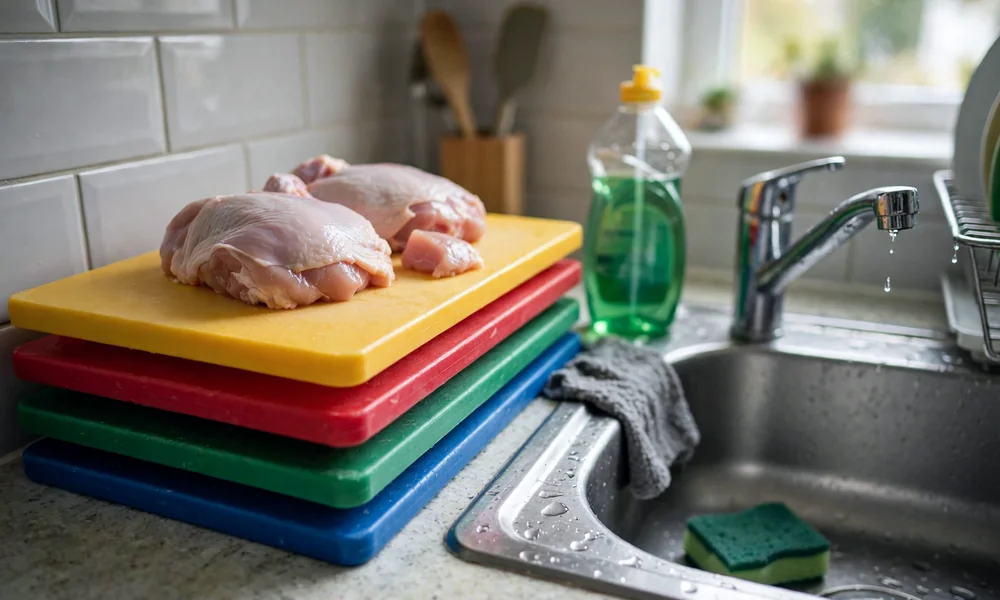
Plastic boards earn their place in every kitchen. High-density polyethylene is soft enough not to wreck knife edges, light enough to carry to the sink, and the only common board material for the dishwasher, making it the safest choice for raw chicken and fish. Colour-coded sets help stop cross-contamination. The best plastic boards are thick, at least half an inch, with a textured surface and rubber feet or a non-slip edge. They are not beautiful and will not last as long as wood, but they are honest, hygienic, and cheap to replace.
Size, Weight, and Stability
The best boards are big and heavy, and that is a feature, not a flaw: an 18 by 12 inch board gives room to chop and pile, so nothing falls off and the knife never runs out of board mid-cut. Weight keeps the board still: thick wood does not move under a rocking cut, and plastic with grip feet stays put too. Juice grooves are worth having for roasts or tomatoes: they catch liquid that would run onto the worktop. A reversible board, flat on one side and grooved on the other, gives you both. The test is simple: put the board down, press a corner, and try to slide it. If it does not move, trust it.
The Worst Cutting Boards of 2026
The worst boards do not look dangerous: cheap, light, brightly coloured, promising convenience. The problems show up at home, slowly: the board warps and rocks, the surface scars and traps food and smells, and the edge dulls your best knife in weeks. A bad board does not just cook worse; it makes cooking less safe, quietly, one annoyance at a time.
Thin, Warped, and Sliding
The classic bad board is thin, light, and flat underneath: under half an inch, it flexes and warps when wet on one side and dry on the other. A warped board rocks, so every cut wobbles and the knife can slip at the wrong moment. Worse, thin boards have no weight to hold them still and no grip underneath, so they skate across a smooth worktop when you chop quickly. Some add a handle hole for hanging, which is handy, but a handle that unbalances the board is worse than none. If a board feels flimsy in the shop, it will feel worse at home; no care fixes a board that was too thin to begin with.
Glass, Marble, and Stone
Glass, marble, and stone boards look beautiful and are terrible to cut on: the edge rolls, chips, and dulls in days, and a good knife can be ruined in one session. They are also loud, slippery when wet, and unforgiving to anything knocked against them. Some are sold as serving boards, a fair use: marble is lovely for cheese or pastry. But any glass or stone board marketed for chopping does not understand its own job. The best chef knives of 2026 will not survive a glass board, and neither will your patience. Keep stone and glass for serving; cut on wood or plastic.
Scarred Plastic Past Its Best
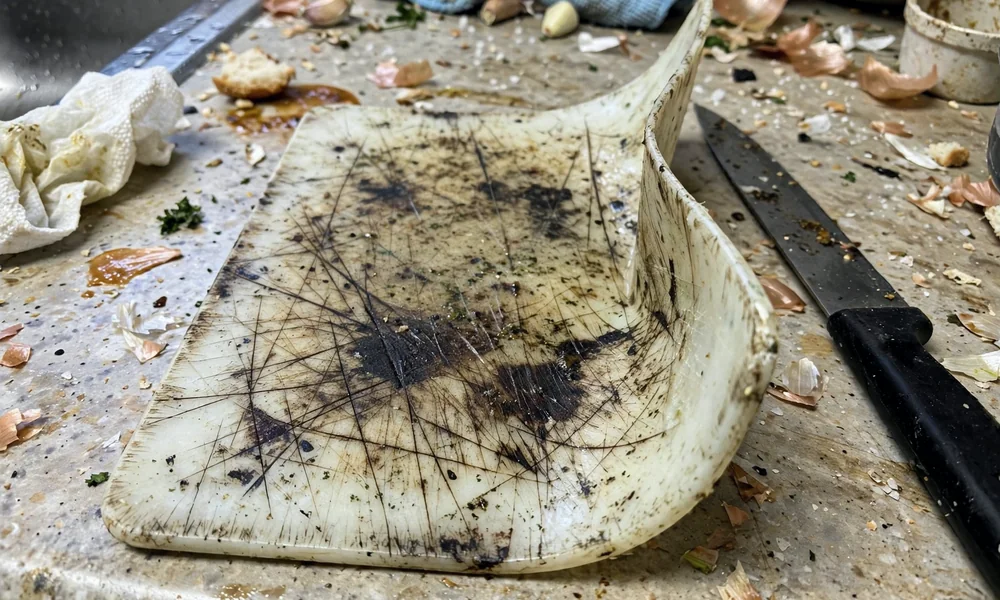
Plastic boards fail gradually, and the failure is easy to miss: fresh plastic is smooth and easy to clean, but every cut leaves a groove, and over months those grooves deepen and darken. Once scars are deep and dark, they trap bacteria washing cannot reach, and the board smells even after a hot wash. A board in that state should be replaced, not kept out of habit, yet many kitchens keep the same boards for years, long past hygienic. Warning signs: deep grooves you can feel, dark staining inside the cuts, and a smell that survives the dishwasher. A cheap plastic board is a consumable; treating it as a lifetime purchase is the mistake. Replace it, and your food will be safer.
Tiny Boards and Gimmicks
A board that is too small fights you: tiny space-saver boards leave no room to work, so food piles up and falls off, and the knife runs out of board mid-cut. They suit nobody except a cook with a truly tiny kitchen, and even then a medium board used well beats a small one used badly. Gimmicks are the other trap: built-in colanders, folding sides, or knife slots that dull the blade every time it slides in. If a board needs a gimmick to justify its price, you are buying the gimmick, not the board. Buy the biggest plain board your worktop and sink can handle, and spend the rest on a better knife.
Head-to-Head: Best vs Worst at a Glance
Put the two sides together and the pattern is clear. The best boards invest in material and size: thick wood or plastic, a large area, and a surface that stays flat and still. The worst invest in looks and convenience: thin, light, glossy, and cheap, with gimmicks instead of substance. A good board is kind to knives, stays put, cleans properly, and lasts years. A bad board dulls knives, slides, warps, and harbours bacteria in uncleanable scars. The best boards also cost less over time: a good wooden board lasts a decade or more, while a cheap thin board replaced yearly costs more and cooks worse.
The test takes thirty seconds in a shop. Pick it up: solid and heavy for its size is a good sign. Press a corner on a flat surface: if it rocks, walk away. Wood should feel smooth and oiled, plastic thick and textured, and glass or stone left on the serving shelf. At home, chop an onion: on a good board the knife bites cleanly and the board stays still; on a bad one the knife skates, the board slides, and dinner takes twice as long.
The Verdict
The verdict: buy the biggest good board you can fit, in the right material for the job. A thick wooden board is the best all-round choice for vegetables, bread, and everyday chopping; thick plastic is the right partner for raw meat. Avoid glass and stone for cutting, avoid thin boards that warp and slide, and replace scarred plastic once its grooves turn deep and dark. Spend on material and size, not gimmicks, and look after wood with oil and hand-washing. The worst boards are not a bargain at any price: a board that dulls your knives and risks your food is a hazard hiding in plain sight on your worktop.
Who Each Side Is For
The best boards are for anyone who cooks at home, from a first-kitchen buyer to a keen cook with a set for every job: wood for vegetables, plastic for meat, a big board for roasts. They suit families who chop daily and cooks who care about their knives. The worst boards are for nobody, except one narrow case: a board kept purely for serving cheese or bread, where no knife work happens. Even there, wood beats glass. If you cook rarely, one good medium board is still better, because a stable board makes even simple cooking faster, safer, and more pleasant.
Buying Checklist and Care
Before buying, measure your worktop and sink, then buy the largest board that fits both. Choose wood for chopping, plastic for raw meat, and never cut on glass or stone. Check the weight, press the corners for rocking, and use grip feet or a damp cloth underneath. Care for wood by hand-washing, drying upright, and oiling every few weeks with mineral oil. Wash plastic in the dishwasher after meat, and replace it when scars turn deep and dark. Do that, and a good board will still be flat, stable, and kind to your knives in ten years, while the cheap thin board will be long forgotten in a cupboard.


