A knife block is the piece of kitchen equipment you touch every time you cook, yet it is the one most people never think about until something goes wrong. A good block keeps your knives sharp, within reach, and safely out of the way. A bad one dulls the very edges it is meant to protect, wobbles when you pull a knife out, and quietly gathers crumbs and moisture in slots you can never properly clean.
The gap between the best and the worst knife blocks in 2026 is wider than the price tags suggest. The best blocks are built around the blade: wide slots that let steel slide in without scraping, a heavy base that stays put, and materials that dry out instead of trapping damp. The worst look tidy in the shop and fail at home, with slots too tight for a chef’s knife, a base so light it slides across the worktop, and plastic that cracks within a year.
Key Takeaways
- Slot width matters most: a good block lets a blade slide in and out without scraping the edge, while a tight slot dulls a knife a little every day.
- Weight is safety: a heavy block stays put when you pull a knife out, while a light one slides, tips, or needs a second hand to hold it steady.
- Wood and bamboo blocks dry out naturally and last for years, while cheap plastic traps moisture and cracks.
- A magnetic strip can beat a countertop block entirely if you are short on worktop space.
- Count the slots you will actually use, not the slots on the box: a block with six honest slots beats one with twenty you will never fill.

What Makes a Knife Block Good or Bad
A knife block has one job above all others: protect the edge. Every time a blade scrapes against wood, plastic, or another blade, the edge loses a little of its sharpness. A good block gives each knife its own slot, wide enough that the cutting edge never touches the sides as it goes in or comes out. Wide slots for wide blades matter too: a chef’s knife and a bread knife need more room than a paring knife, and a block that forces them through the same narrow gap will dull them both.
Stability is the second test, and it is the one you feel every day. A block should sit flat and heavy on the worktop, so you can pull a knife out with one hand while the other holds a chopping board or a pan handle. A light block slides forward, tips toward you, or needs to be held down, which means one hand is busy at exactly the moment the other is holding a sharp blade.
Hygiene is the third test, and it is the one most buyers never check. Knife slots are dark, narrow, and hard to clean, which makes them a perfect home for crumbs, moisture, and mould. A good block is made from a material that dries out, has slots you can see into and shake clean, and sits on feet that let air underneath. A bad block traps damp at the bottom of every slot, where you cannot see it and cannot reach it. Over months, that damp stains the wood, smells stale, and can even mark the blades.
The Best Knife Blocks of 2026
The best knife blocks share a simple quality: they disappear into the background of cooking. The knives slide in and out without a thought, the block never moves, and nothing about it gets in the way of the meal. What they share is honest construction, sensible slots, and materials chosen to last rather than to look good in a photograph.
Solid Wood Blocks: The Best All-Rounder
A solid hardwood block is still the best knife block for most kitchens. Hardwood is heavy enough to stay put, kind to a blade’s edge, and naturally resistant to the damp that builds up around a sink. The best wooden blocks use wide, smooth slots with rounded openings, so the blade glides in without catching. Look for a block made from thick, well-joined boards, with a base wide enough that it cannot tip forward when you pull the chef’s knife out. A good wooden block will last a decade or more with a light oiling once or twice a year.
Bamboo Blocks: The Best Value
Bamboo blocks are the best value in 2026, and the best ones are genuinely good rather than merely cheap. Bamboo is hard, dense, and naturally resistant to moisture, which makes it well suited to a kitchen that gets steamed up daily. A good bamboo block is heavier than it looks, with slots cut cleanly and sanded smooth inside, so blades do not catch on rough edges. The weakness to watch for is glue: the cheapest bamboo blocks are made from thin strips glued together, and the joints can split if the block is left wet. Buy one that feels solid and heavy, with no gaps you can see daylight through, and it will serve as well as a hardwood block for a fraction of the price.
Magnetic Strips: The Best for Small Kitchens
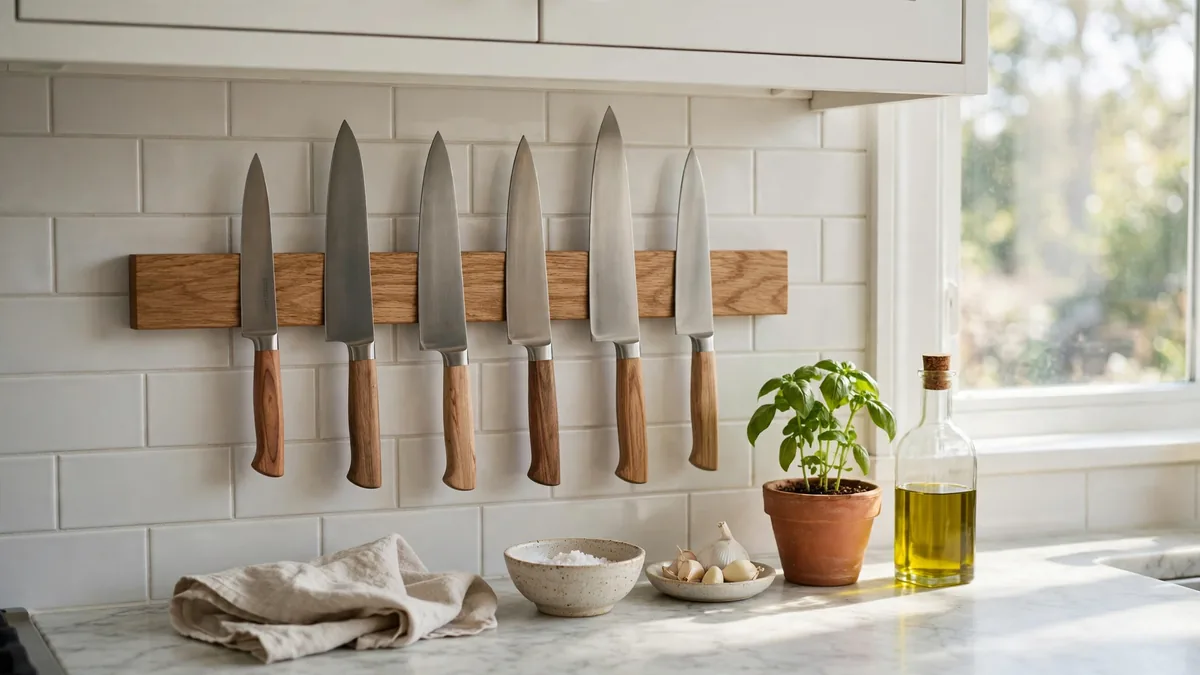
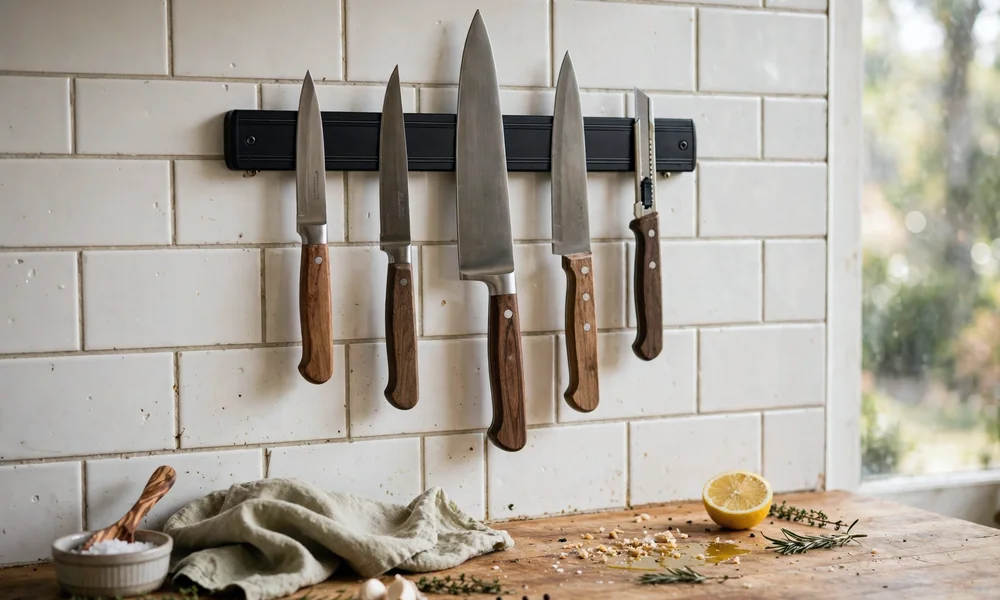
A magnetic strip is not a block at all, and that is exactly why it wins for small kitchens. Mounted on the wall, it takes up no worktop space, keeps every blade visible and dry, and lets the edge touch nothing at all. The best strips use a strong, full-length magnet hidden behind wood or steel, so knives stay put even when a cupboard door slams. There are two things to get right: mount the strip firmly into the wall, not just into plaster, and place it where children cannot reach it. A strip also exposes the blades, so it suits a household without small children better than a busy family kitchen. For the right home, though, it is the storage that protects edges best of all, because the blade never slides through a slot at all.
The Worst Knife Blocks of 2026
The worst knife blocks do not announce themselves. They arrive in a handsome box, they look tidy on the worktop, and the price feels like a bargain next to the wooden blocks. Then the chef’s knife starts scraping on the way in, the block slides when you pull a knife out, and a year later the plastic is cracked and the slots smell stale.
Cheap Plastic Blocks: The Worst Buy of All
A cheap plastic block is the worst knife block you can buy, and it is the most common. The plastic is thin and light, so the block slides across the worktop and tips forward when you pull a knife out. The slots are moulded, not cut, which means they are often too narrow for a real chef’s knife and too rough inside, scraping the edge every time the blade goes in. Worse, plastic traps moisture at the bottom of each slot, where it cannot dry out, and the damp breeds a stale smell that no amount of wiping removes. A plastic block might look like a bargain, but it costs you the sharpness of every knife you own.
Blocks With Slots Too Tight for Real Knives
Some blocks fail on a single detail: the slots are too tight. This is common in blocks sold as part of a cheap knife set, where the slots are sized for the thin blades in the box and nothing else. The moment you replace one of those knives with a proper chef’s knife, it will not fit, or it fits only if you force it, scraping the edge against the slot every time. Before you buy, check the widest slot against your widest blade, and slide the knife in and out a few times. If you feel any catching or scraping, walk away. A tight slot does not just annoy you; it dulls the blade a little with every single use, which is exactly the opposite of what a block is for.
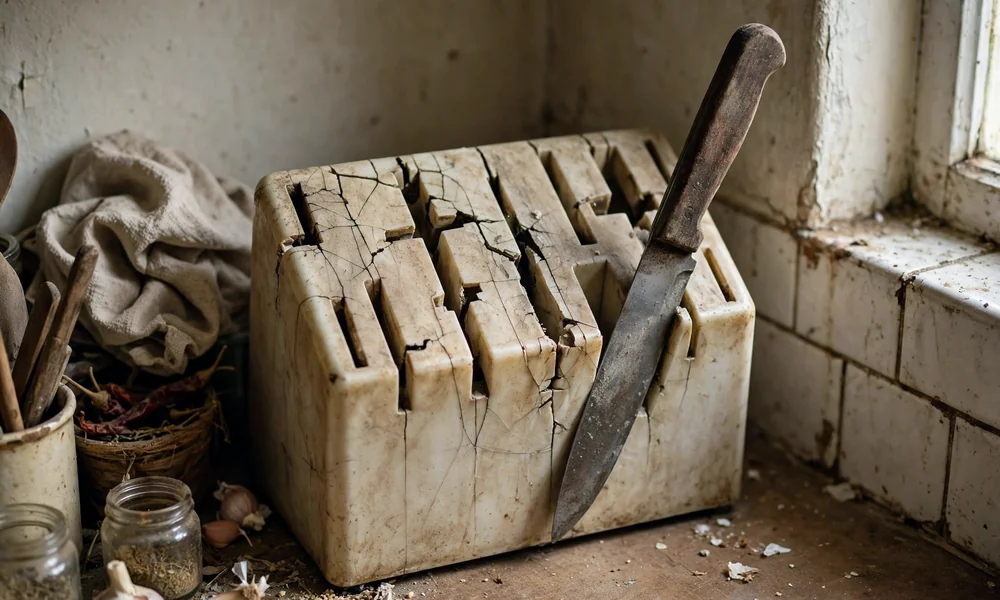
Head-to-Head: Best vs Worst at a Glance
Put the two sides next to each other and the pattern is clear. The best blocks invest in solid material, wide slots, and weight, and spend little on size or gimmicks. The worst blocks invest in looks and slot count, and spend little on the material that actually touches the blade. A good block arrives heavy, stays put, and lets a knife slide in silently. A bad block arrives light, slides when you pull a knife out, and scrapes the edge every time. The best blocks also cost less over time: one good wooden block lasts a decade, while a cheap plastic block replaced every year costs more and dulls every knife it holds.
The Verdict
The verdict is straightforward: buy the smallest good block you can afford rather than the biggest cheap block you can find. A solid wood or bamboo block with six honest slots, from a maker who builds for real knives, serves a home cook better than any twenty-slot plastic tower. If you are short on worktop, a magnetic strip beats a bad block entirely. And remember that the block is only half the story: the knives inside it matter just as much, so if you are starting from scratch, read our comparison of the best vs worst knife sets before you buy either.
Who Each Side Is For
The best blocks are for anyone who cooks a few times a week or more, from a first-kitchen buyer to a keen cook investing in blades for life. A solid wood block suits a family kitchen with room on the worktop, and a magnetic strip suits a small flat. They all suit anyone who owns a decent chef’s knife and wants it to stay sharp. The worst blocks are for nobody, except one narrow case: a short-term rental where the block will be abused and replaced within a year. If you cook rarely, a small good block is still the better buy, because a sharp knife makes even simple cooking faster and safer.
Buying Checklist and Care
Before buying, slide your widest knife into the widest slot and pull it out again, checking for scraping. Pick the block up: it should feel heavy and solid, not hollow. Count the slots you will use and ignore the rest. Check that the block sits flat and does not rock, and that it fits your worktop with room for the chopping board beside it. Look inside the slots for rough edges, and check the base for feet that let air underneath. At home, keep the block dry: wipe knives before putting them away, shake crumbs out of the slots once a week, and oil a wooden block once or twice a year.
Frequently Asked Questions
Should knives be stored blade-up or blade-down in a block?
Blade-up is better in a traditional slotted block, because the edge rests against the slot rather than pressing down onto the bottom.
How do I clean a knife block properly?
Turn it upside down and shake out the crumbs, then use a thin bottle brush or a pipe cleaner to reach inside each slot. Wipe the outside with a damp cloth and dry it at once.
Is a magnetic strip safer than a knife block?
A strip is safe when it is mounted firmly and placed out of reach of small children, and it protects edges better than any block because the blade touches nothing.