
A knife set is the most-used tool in almost every kitchen, and the gap between good and bad is easiest to feel and hardest to see in the shop. A great set turns vegetables into dinner in minutes. A bad set fights you at every step: tomatoes crush instead of slicing, onions tear, herbs bruise into a wet mess, and the edge that felt sharp on day one is gone within a month. Some costly sets are poor, while modest sets last a decade.
This comparison puts the best knife sets of 2026 head to head against the worst, judging them as you would live with them: sharpness, edge life, handle comfort, and how much of the set you will ever use. The best knife sets of 2026 show what a well-made set looks like; this guide uses them as the benchmark, including the traps to walk away from.
Key Takeaways
- Three good knives beat twenty mediocre ones: a chef’s knife, a paring knife, and a bread knife do almost all the work.
- High-carbon stainless steel holds an edge longest; very soft steel goes dull within weeks and cannot be sharpened back.
- Forged knives are heavier and tougher, stamped knives lighter and cheaper; either can be excellent if the steel is honest.
- A full tang, a comfortable handle, and a balanced blade matter more than piece count or brand name.
- Painted and fake-patterned blades usually hide poor steel, and giant bargain blocks are mostly filler.
What Separates the Best Knife Sets From the Worst
A knife is mostly steel and heat treatment, and neither is visible. Two blades can look identical, yet one holds an edge for months and the other is blunt after a fortnight. The difference is made in the factory, in the grade of steel and the way it is hardened. Honest makers name the steel and hardness; poor ones hide behind unregulated phrases like surgical steel.
Weight and balance are the second divide. A good chef’s knife sits almost level balanced on a finger at the bolster. A poor knife is often clumsily blade-heavy, or handle-heavy because the tang inside is short and the handle is hollow plastic. After ten minutes of chopping, a poor knife tires your wrist and makes cooking feel like a chore. Third, a good set gives you a few useful blades and protective storage, while a bad set counts pieces instead of quality.
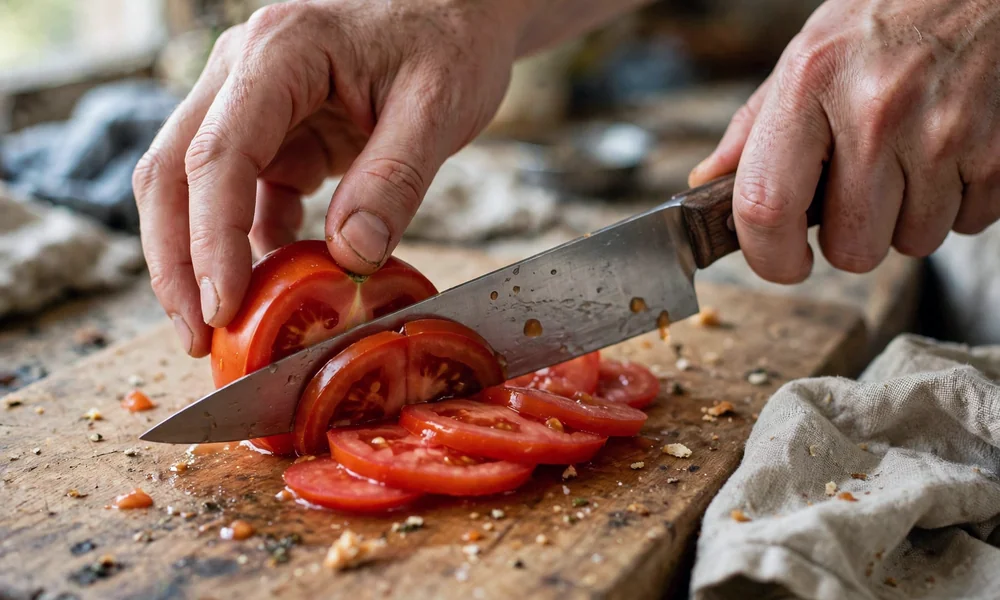
The Best Knife Sets of 2026
The best knife sets share a simple quality: they disappear into the background of cooking. The blades arrive genuinely sharp and stay sharp through weeks of daily use. Handles feel secure even when wet, storage keeps edges safe, and nothing is included only to inflate the piece count.
Sharpness That Lasts
A good set starts sharp and stays sharp, and that is mostly about the steel. High-carbon stainless steel, hardened to around 58 to 60 on the Rockwell scale, takes a keen edge and holds it through a month of regular cooking before it needs more than a quick hone. Japanese-style sets run harder, around 60 to 62, and get sharper still, though they can chip if twisted or used on frozen food. German-style forged sets run softer, around 56 to 58, and are tougher and easier to sharpen at home. A good set also sharpens well, instead of staying blunt forever because soft steel cannot take an edge.
Comfort, Balance, and Control
Comfort is not a luxury in a knife; it is safety. A good handle fits the hand without forcing the fingers into one position, and it stays grippy when wet, which is exactly when a knife is most dangerous. Wooden handles feel warm and age well if sealed; synthetic handles are tougher, though the best knives should still be hand-washed. The bolster should be smooth, the spine comfortable under a guiding finger. Balance matters just as much: a chef’s knife that is slightly blade-forward helps the rocking cut, while a handle-heavy knife feels vague and makes the tip wander. The best chef knives of 2026 prove the same point, and a set is only as good as its chef’s knife.
Honest Construction
Look inside a good knife and you find a full tang: the steel runs the whole length of the handle, usually visible as a strip along the edge, held by two or three rivets. That stops a blade working loose. Stamped knives can be excellent too, but the tang should still run deep and the handle should be solid, not hollow. A good set has a sensible number of pieces: a chef’s knife, a paring knife, a bread knife, a utility knife, perhaps a santoku, plus a honing steel and a block that keeps edges apart. Everything in the box earns its place, and nothing rattles loose.
Storage That Protects the Edge
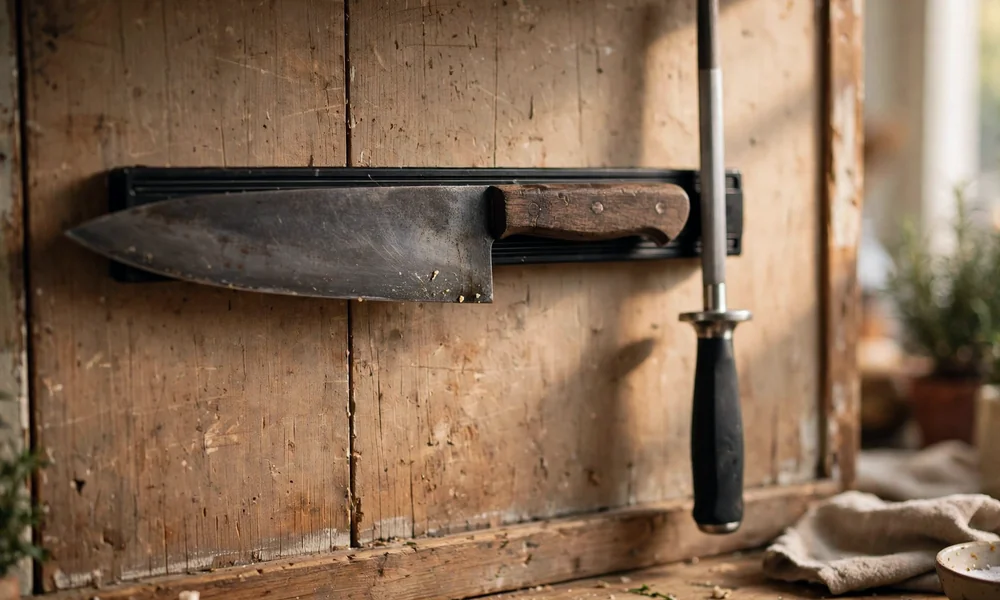
A knife is only as good as its storage, because an edge that knocks against other steel in a drawer is dulled a little every day. The best sets come with a block with slots wide enough that blades slide in without scraping, or they are designed for a magnetic strip or an in-drawer tray. A heavy block matters too: a light one that slides when you pull a knife out invites accidents. Some of the best sets skip the block and use a magnetic strip, keeping edges visible, dry, and untouched. Either way, a good set protects the edge you paid for.
The Worst Knife Sets of 2026
The worst knife sets do not announce themselves. They arrive in a handsome box, the blades gleam under the kitchen lights, and the price feels like a bargain next to the famous brands. Then a tomato’s skin folds instead of parting, an onion crushes into a mess, and by week three the edge is gone. The worst sets are not always the cheapest; some cost real money and still fail at the one job a knife exists to do.
The Ultra-Cheap Block Set
Eight or ten knives in a block for the price of a takeaway is the classic trap. The arithmetic gives it away: a set that sells for the price of a single decent chef’s knife has to cut corners somewhere, and you only discover them at home. The steel is soft and thin, often below 52 Rockwell, so it dulls within weeks and no honing brings it back. The handles are hollow plastic on a short tang, so blades work loose, and the block is often the most expensive part. The chef’s knife is usually the worst piece in the box, thin and flexible where it should be stiff.
Painted, Coated, and Fake-Patterned Blades
If a blade is painted black, coated in a bright colour, or printed with a fake Damascus pattern, treat it as a warning. Good steel needs no disguise. Coatings chip into food, and the pattern is often printed on soft steel that would not sell alone. Claims of surgical steel or samurai heritage are marketing, not specifications. Real Damascus is folded steel and costs accordingly; a printed swirl is a photograph of quality, not quality itself. The worst knife sets of 2026 are full of these disguises, easy to spot once you know the trick.
Handles That Betray You
A handle that is slippery, hollow, or badly balanced is a safety problem, and it cannot be fixed after purchase. Cheap sets often have slick plastic handles with no texture, so wet hands let the knife twist in your grip. Others are too light for the blade, making the knife tip-heavy, or have sharp moulding seams that blister hands. If you cannot hold the display knife comfortably, or the handle feels like an empty shell, walk away whatever the deal.
Sets That Are Mostly Filler
Giant fifteen to twenty piece sets are usually filler. You pay for steak knives used twice a year, shears you already own, and a honing rod too soft to hone anything, while the chef’s knife is an afterthought. The oversized block takes half the worktop, and half its slots stay empty once you know which three knives you use. Worse, filler pieces break first: a loose steak knife, blunt shears, a splitting block. Three good knives beat twenty mediocre ones, and a small set from a proven maker outlasts a bargain block by years. If a set needs a long list to justify its price, you are buying the list, not the knives.

Head-to-Head: Best vs Worst at a Glance
Put the two sides next to each other and the pattern is clear. The best sets invest in the chef’s knife and the steel, and spend little on packaging and piece counts. The worst sets invest in the box and the count, and spend little on the steel. A good set arrives sharp, stays sharp for weeks, feels steady, and sharpens well. A bad set fools you at first, goes dull within a month, feels vague, and never takes a proper edge again. The best sets also cost less over time: one good set lasts a decade, while a cheap set replaced yearly costs more and cooks worse.
The test that separates them takes thirty seconds in a shop. Hold the chef’s knife and check the balance at the bolster, look at the tang, then ask what steel it is and how hard it is. Clear answers and a steady feel mean a good set; vague answers, a hollow handle, and a big piece count mean a bad one. At home, a good knife slices a ripe tomato under its own weight; a bad one needs force, and force is where cuts happen.
The Verdict
The verdict is straightforward: buy the smallest good set you can afford rather than the biggest cheap set you can find. A three or four piece set with a genuinely good chef’s knife, paring knife, and bread knife, from a maker who names its steel, serves a home cook better than any twenty piece block. Spend the money on the blade, not the box, and learn to hone and sharpen, because even the best knife needs care. The worst sets are not a bargain at any price: a knife that cannot cut is a hazard that makes every meal slower, messier, and less safe.
Who Each Side Is For
The best sets are for anyone who cooks a few times a week or more, from a first-kitchen buyer to a keen cook investing in blades for life. They suit families who chop daily and cooks who batch-cook on Sundays. The worst sets are for nobody, except one narrow case: a short-term rental where knives will be abused and replaced within a year. Even there, one decent chef’s knife and a paring knife cost little more and cook far better. If you cook rarely, a small good set is still the better buy, because a sharp knife makes even simple cooking faster and safer.
Buying Checklist and Care
Before buying, hold the chef’s knife, check the balance, look for a full tang, and ask for the steel and hardness. Count the pieces you will use; ignore the rest. Choose storage that protects edges, wash knives by hand, and dry them at once; dishwashers dull edges and loosen handles. Hone before each big cooking session and sharpen a few times a year, or have a professional do it. Do that, and a good set will still slice tomatoes cleanly in ten years, while the cheap block set will be long forgotten in a drawer.


