
The best chef knives 2026 prove a simple truth: one great knife beats a drawer full of mediocre ones. A single well-made chef knife handles roughly 90 percent of everything you cut, from dicing onions to slicing roasts, and when that blade is sharp, balanced and comfortable, cooking gets faster, safer and far more enjoyable.
This guide is not about knife sets. It is about finding the single best chef knife for your hand, your cooking style and your budget, and keeping it sharp for years. We compared the leading 8-inch chef knives of 2026 on steel, edge retention, balance, handle comfort and real cutting performance, so you can buy once and cook happily for a decade.
Whether you are replacing a dull supermarket knife or upgrading to your first serious blade, the nine knives below cover every budget and every style, from heavy forged German steel to feather-light Japanese blades.
Key Takeaways
- One great 8-inch chef knife does about 90 percent of kitchen cutting, so spend your money on a single excellent blade before buying a set.
- High-carbon stainless steel is the best all-round choice, holding a sharp edge while resisting rust and staining.
- German forged knives are heavier and tougher, while Japanese knives are lighter and sharper, so the right choice depends on your grip and cutting style.
- Balance matters more than brand: a knife should feel steady at the bolster, not heavy at the tip or the handle.
- A sharp knife is a safe knife, and a quick weekly hone plus a proper sharpening twice a year keeps any good blade performing like new.
How We Chose the Best Chef Knives
We judged every knife the way a home cook actually uses one: daily chopping, slicing and dicing across full weeks of real meals. Sharpness out of the box mattered, but so did how long the edge lasted and how the handle felt after twenty minutes of prep.
We also weighed the steel, the construction, the weight, the price and how easy each knife is to maintain. If you are weighing a single knife against a full block, our guide to the best knife sets of 2026 lays out when a set makes sense and when it does not.
Blade Steel: What Actually Matters
Steel decides how sharp a knife gets, how long it stays sharp and how much care it needs. High-carbon stainless steel is the sweet spot for most cooks: it takes a keen edge, holds it well and shrugs off rust. Harder Japanese steels, around 60 to 62 Rockwell, get sharper and stay sharp longer but can chip if you twist the blade or cut frozen food. Softer German steel, around 56 to 58 Rockwell, is tougher and easier to sharpen at home.
Damascus cladding looks beautiful, but what matters is the core steel and the heat treatment behind it, not the pattern on the side of the blade.
Balance, Weight and Handle Comfort
Balance a knife on your finger at the bolster, where blade meets handle: a good one sits almost level. Blade-heavy knives tire your wrist during long prep, while handle-heavy knives can feel vague when slicing. Most cooks are happiest between 200 and 260 grams, heavy enough to help the cut but light enough to control.
Wood handles feel warm but need occasional oiling, while modern composite handles are grippy when wet and practically maintenance-free, which is why most of our top picks use them.
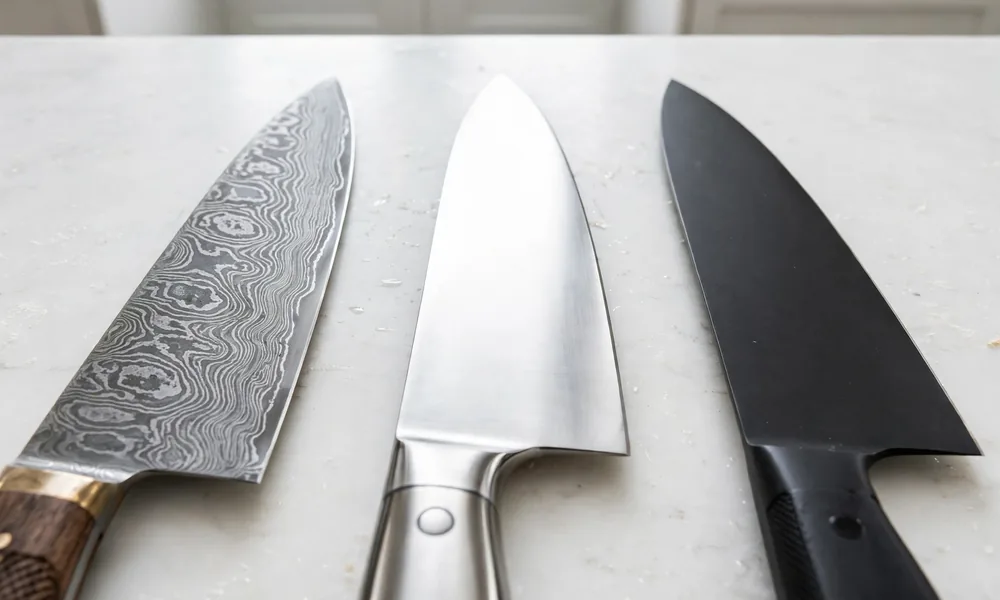
The Best Chef Knives of 2026 at a Glance
| Knife | Steel | Blade | Weight | Best For |
|---|---|---|---|---|
| Wüsthof Classic 8-Inch | High-carbon stainless | 20 cm | 260 g | All-round excellence |
| Shun Classic 8-Inch | VG-MAX Damascus | 20 cm | 215 g | Razor-sharp slicing |
| Global G-2 8-Inch | Chromium stainless | 20 cm | 180 g | Light, fast prep |
| Victorinox Fibrox Pro 8-Inch | High-carbon stainless | 20 cm | 190 g | Best value |
| Mercer Culinary Genesis 8-Inch | German stainless | 20 cm | 240 g | Serious cooks on a budget |
| Mac Mighty 8-Inch | High-carbon stainless | 20 cm | 185 g | Precision and control |
| Dalstrong Gladiator 8-Inch | High-carbon German steel | 20 cm | 280 g | Bold design and heft |
| Zwilling Professional S 8-Inch | Special formula steel | 20 cm | 250 g | Precision and durability |
| Tojiro DP 8-Inch | VG-10 core | 21 cm | 200 g | Japanese steel on a budget |
Best Chef Knife Overall: Wüsthof Classic 8-Inch
The Wüsthof Classic remains the benchmark other chef knives are measured against. Each blade is forged from a single piece of high-carbon stainless steel, with a full tang and a comfortable riveted handle. The 8-inch blade glides through onions, powers through root vegetables and slices tomatoes without crushing them.
At 260 grams it has real presence, and the weight does much of the cutting work for you. It is not the cheapest knife here, but it is the one most cooks will still be reaching for in ten years, and it pairs beautifully with the best cookware sets of 2026.
Best Japanese Chef Knife: Shun Classic 8-Inch
If you love precision, the Shun Classic is hard to beat. Its VG-MAX core, clad in 68 layers of Damascus steel, takes an edge so fine that herbs come out cleanly cut rather than bruised and fish slices in one smooth draw.
At 215 grams it is lighter than the German knives, and the D-shaped pakkawood handle sits beautifully in the hand. Treat it kindly, no frozen food or bones, and it will reward you with years of extraordinary sharpness.
Best Lightweight Chef Knife: Global G-2 8-Inch
The Global G-2 is the knife for cooks who prep for an hour and want their wrist to feel fresh at the end of it. At just 180 grams, with one-piece stainless construction and a dimpled handle, it is fast and nimble, and the thin blade excels at slicing and fine dicing.
The handle divides opinion, so try one in a shop if you can: if the grip suits you, this is one of the most enjoyable knives you will ever use.
Best Value Chef Knife: Victorinox Fibrox Pro 8-Inch
The Victorinox Fibrox Pro is the quiet overachiever of this list. It costs a fraction of the premium knives, yet professional kitchens rely on it every day. The blade arrives very sharp, the textured handle stays grippy when wet, and the knife is light and easy to manoeuvre.
It will not hold an edge as long as a Shun or a Wüsthof, but a quick hone brings it right back. For a first serious knife, nothing else comes close for the money.

Best Budget Forged Chef Knife: Mercer Culinary Genesis 8-Inch
The Mercer Culinary Genesis brings forged German construction to a price that used to buy only stamped blades. The full-tang blade is sturdy and well balanced, the handle comfortable and slip-resistant, and the edge genuinely impressive for the money.
For cooks who want the feel of a forged knife without the premium price, the Genesis is the smartest buy in this guide.
Best Precision Chef Knife: Mac Mighty 8-Inch
The Mac Mighty is a favourite among cooks who value control above all else. Its thin blade and 185-gram weight make it feel like an extension of your hand, and it excels at fine work: chiffonade, brunoise and paper-thin slices of garlic.
The handle is simple rather than luxurious, but for pure cutting precision at a fair price, the Mac Mighty earns its place.
Best Bold Chef Knife: Dalstrong Gladiator 8-Inch
The Dalstrong Gladiator makes a statement before it cuts anything. Its substantial 280-gram forged blade and G10 handle give it a bold, modern presence, and it powers through dense vegetables and large cuts of meat with confidence.
It is the heaviest knife here, so cooks with smaller hands should try it first. If you like heft, the Gladiator delivers it well below the classic German brands.
Best All-Rounder Runner-Up: Zwilling Professional S 8-Inch
Zwilling’s Professional S has been a kitchen staple for decades. Its ice-hardened steel holds a durable edge, the three-rivet handle is comfortable for long sessions, and the 250-gram weight sits right between power and control.
It sits in the premium bracket, but it is built to last a lifetime and is one of the easiest premium knives to sharpen at home.
Best Japanese Steel on a Budget: Tojiro DP 8-Inch
The Tojiro DP packs a VG-10 core, the same steel family found in knives costing three times as much, into a simple package. The edge is superb, holding sharpness far longer than most budget blades, and the 200-gram weight feels balanced and lively.
The handle is plain and the finish workmanlike, but the cutting performance is outstanding. For cooks who care about the edge more than the looks, the Tojiro DP is a genuine bargain.
How to Keep Your Chef Knife Sharp
A great knife is only great while it is sharp. Hone the edge with a steel before or after each heavy session: a few light strokes per side at roughly 15 degrees keeps the knife cutting cleanly for weeks.
Sharpen properly twice a year, on a whetstone or with a professional service. Never put a good knife in the dishwasher, where heat, detergent and rattling dull and chip the edge. Hand wash, dry immediately and store it on a magnetic strip or in a blade guard.

What to Avoid When Buying a Chef Knife
Skip knives sold mainly on looks: coloured blades, gimmicky coatings and celebrity branding rarely cut better than plain, well-made steel. Avoid very cheap sets that promise ten knives for the price of one good one, because the steel is usually soft and dulls within weeks.
Also beware of oversized blades: most home cooks control an 8-inch blade far better, and control is what keeps your fingers safe. For everyday cooking, 8 inches is the sweet spot.
Buying Checklist
- Choose an 8-inch blade unless you regularly cut very large items, and hold the knife before you buy if you possibly can.
- Pick high-carbon stainless steel for the best balance of sharpness, edge retention and easy care.
- Check the balance at the bolster: the knife should sit almost level on your finger.
- Make sure the handle feels secure when wet, with no sharp edges or loose rivets.
- Budget for a honing steel and a whetstone or sharpening service, because a sharp knife is a safe knife.
- Plan your storage before the knife arrives: a magnetic strip, a block slot or a blade guard protects the edge.
Frequently Asked Questions
What size chef knife is best for most home cooks?
An 8-inch blade suits most home cooks: long enough for large vegetables and roasts, short enough to control precisely. Taller cooks or those who break down large cuts may prefer a 9 or 10-inch blade.
Are expensive chef knives worth it?
Up to a point, yes. A knife in the 100 to 200 dollar range usually offers noticeably better steel, balance and edge retention than a 30 dollar knife. Beyond that, you are paying for craftsmanship and finish rather than cutting performance.
German or Japanese chef knives: which is better?
Neither is better overall. German knives are heavier, tougher and more forgiving, ideal for dense food and for cooks who want one rugged blade. Japanese knives are lighter and sharper, ideal for precision work, but they need gentler handling.
How often should I sharpen my chef knife?
Hone it weekly and sharpen it once or twice a year. If the blade slides off a tomato skin instead of biting in, it is time to sharpen.
Can I put my chef knife in the dishwasher?
No. Dishwasher heat and detergent dull the edge, and rattling against plates chips it. Hand wash, dry immediately and store it safely.
Is one chef knife really enough?
For most cooking, yes. A good 8-inch chef knife plus a small paring knife covers almost everything, and a serrated bread knife handles crusty loaves and soft tomatoes. That trio is a complete kitchen for most cooks, and a best pressure cooker rounds out the setup for fast weeknight meals.
Bottom Line
The best chef knife 2026 for most cooks is the Wüsthof Classic 8-Inch: forged, balanced and durable. If you want razor precision, choose the Shun Classic; if you want the best value, the Victorinox Fibrox Pro is unbeatable. Buy one great knife, keep it sharp, and enjoy cooking more every day.


