
The best pressure cookers in 2026 do something no other kitchen appliance can: they turn dinner from a two-hour project into a thirty-minute one, without giving up the deep flavour of a long, slow cook. Sealed steam and a little pressure transform tough beef shin into melting stew, dried chickpeas into creamy hummus, and a whole chicken into falling-off-the-bone tenderness.
Pressure cooking used to have a reputation for being fiddly and a little frightening, thanks to the rattling stovetop pots of a generation ago. The best pressure cookers of 2026 have left that behind. Modern electric models are quiet, digital and packed with safety locks, while the best stovetop models are precision-engineered and far faster than anything electric.
Key Takeaways
- Pressure cooking cuts cooking times by up to 70 percent: dried beans in 30 minutes, beef stew in 35, risotto in 6.
- Electric multi-cookers are the easiest choice for beginners, with preset programs and automatic pressure release.
- Stovetop models cook faster and reach higher pressure, which suits confident cooks who want maximum control.
- A 6-litre cooker suits most families of four; 8 litres for batch cooking, 3 litres for one or two people.
- Every good 2026 model has locking lids, pressure valves and automatic shut-offs built in.
How Pressure Cooking Works, and Why It Is So Fast
A pressure cooker is a sealed pot. As liquid inside heats, steam builds up and cannot escape, so the pressure inside rises and the boiling point of water climbs from 100 degrees to around 115 to 120 degrees. Food cooks in that hotter, steam-filled environment, which is why a pressure cooker can do in half an hour what an oven does in two hours.
That speed is what separates a pressure cooker from its closest neighbour, the slow cooker. A slow cooker asks for eight hours of gentle heat and a morning of planning; a pressure cooker asks for thirty minutes and a decision made at six o’clock. If you want to compare the two approaches, our guide to the best slow cookers of 2026 covers the set-it-and-forget-it side of the kitchen, while this guide is for cooks who want dinner fast.
What Pressure Does to Flavour
Speed is not the only benefit. Because the pot is sealed, almost no moisture or aroma escapes, so stocks taste richer, sauces stay full-bodied and vegetables keep more colour than they do after an hour of open boiling. Tough cuts benefit most: heat, steam and pressure break down collagen into gelatin far faster than any other method.
There is a trade-off: fish, soft vegetables and anything you want browned and crisp need a different approach, although most electric models include a saute function for browning meat first.
Electric or Stovetop: Which Pressure Cooker Suits You?
Electric pressure cookers, usually sold as multi-cookers, plug in, heat themselves and run preset programs. Stovetop pressure cookers sit on your hob and rely on you to control the heat. Both cook brilliantly, but they suit different cooks.
Electric Multi-Cookers: The Easy Default
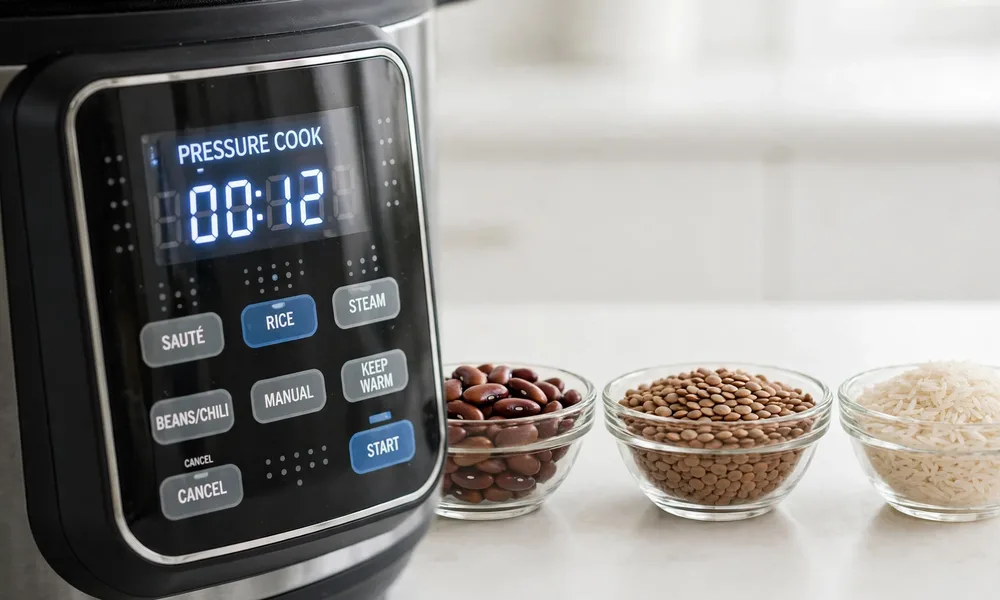
An electric multi-cooker is the right choice for most people in 2026. You press a button for stew, rice, beans or yoghurt, and the cooker handles the pressure, the timing and the release. Most models also steam, slow cook, saute and make rice, so one appliance replaces four or five, and they keep food warm automatically when cooking finishes.
The compromise is speed: electric models run at 10 to 12 psi, so they cook five to ten minutes more slowly on a long cook. For a busy household, that trade is well worth it.
Stovetop Pressure Cookers: Faster, Hotter, More Control
A stovetop pressure cooker reaches 15 psi, cooks faster than any electric model, and gives an experienced cook complete control over heat and timing. It is simpler mechanically, so there is less to go wrong and the pot often lasts decades.
The cost is attention: you watch the heat, listen for the valve, and time the release yourself, with no presets and no keep-warm function. If you enjoy cooking and want the fastest results, a stovetop model is the better tool.
How to Choose the Right Pressure Cooker
Once you have picked electric or stovetop, three decisions remain: size, safety and functions.
Pick the Right Size
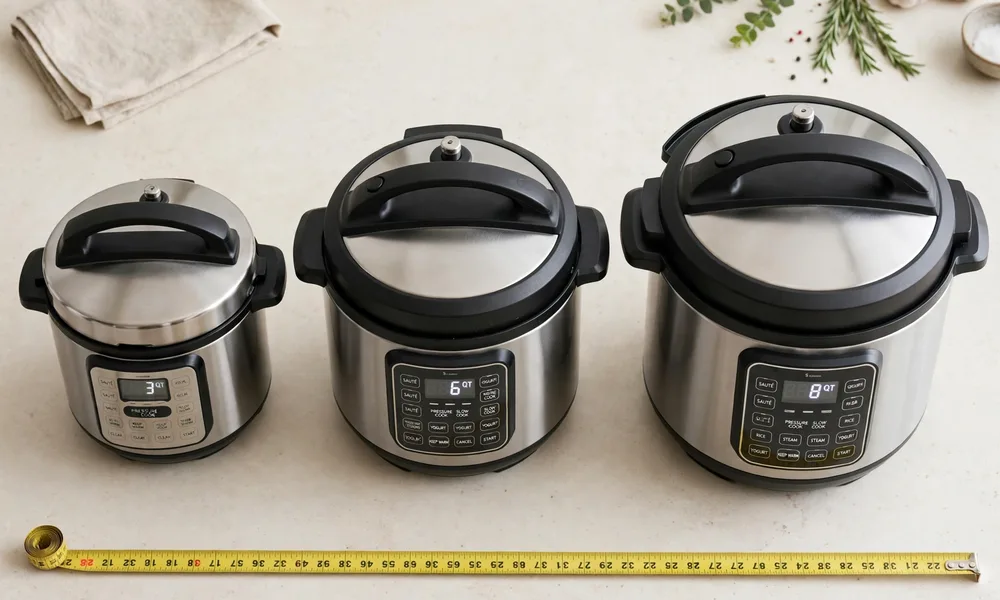
Never fill a pressure cooker more than two-thirds full, or half full for foods that expand, like beans and grains. A 3-litre cooker suits one or two people and small kitchens. A 5.7 to 6-litre cooker suits most families of three or four, big enough for a whole chicken or a batch of stew. An 8-litre model suits large families and batch cookers. If you can only buy one, buy the 6-litre.
Safety Features Worth Paying For
Every 2026 pressure cooker should have a locking lid, a pressure release valve, a backup safety valve, and a seal that stops pressure building if the lid is not seated correctly. Electric models add automatic shut-off if the pot runs dry or overheats. Check the sealing ring and valves on any second-hand cooker: a worn ring is the most common cause of failure to reach pressure.
The Best Pressure Cookers in 2026
We judged every cooker below on speed, cooking evenness, safety, ease of cleaning and value.
Best Overall: Instant Pot Pro 6-Litre
The Instant Pot Pro is the most complete electric pressure cooker you can buy in 2026. The 6-litre capacity suits most families, the stainless steel inner pot is durable and dishwasher safe, and the saute function gets genuinely hot, so you can brown meat properly before sealing the lid.
Best Stovetop: Kuhn Rikon Duromatic 6-Litre
The Kuhn Rikon Duromatic is the stovetop benchmark. It reaches full pressure faster than any electric cooker, its spring-loaded valve is quiet and precise, and the two-stage pressure setting lets you cook delicate vegetables gently and tough meat at full power. The stainless steel body is built to last decades.
Best Premium: Ninja Foodi 14-in-1 Multi-Cooker
The Ninja Foodi is the most versatile cooker on this list, and the premium pick for cooks who want one appliance to do everything. It pressure cooks, air fries, steams, bakes, slow cooks and makes yoghurt, and the crisping lid means you can finish a pressure-cooked chicken with golden skin without moving it to the oven. If you want to compare the air frying side, our guide to the best air fryers of 2026 covers the dedicated machines in detail.
Best Budget: Cosori 6-Litre Electric Pressure Cooker
The Cosori proves that a good electric pressure cooker does not need a premium price. It covers all the essential programs, pressure cooks just as fast as models costing twice as much, and the non-stick inner pot is easy to clean. For a first pressure cooker, it is hard to beat.
Best Small: Instant Pot Duo Mini 3-Litre
The Duo Mini is the best pick for one or two people, because it is sized for real portions rather than a family batch. It runs the same programs as its bigger siblings, heats up faster because there is less to pressurise, and fits in a small cupboard. A 3-litre pot will not fit a whole chicken, but for grains, beans, soups and stews for two, it is the right size.
What to Cook First in Your New Pressure Cooker
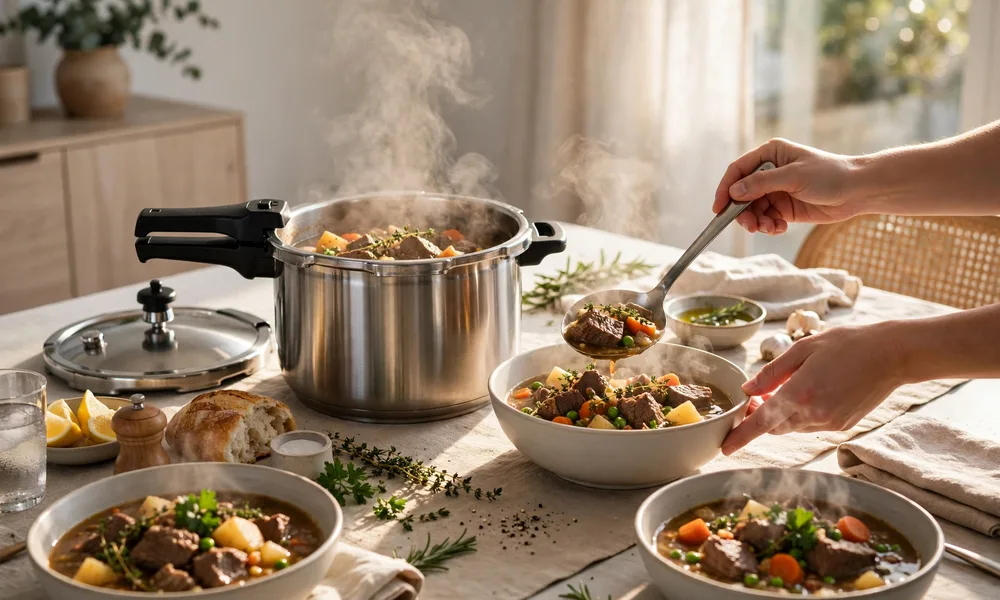
The fastest way to fall in love with a pressure cooker is to cook the foods that show off its strengths. Dried beans are the classic first cook: chickpeas go from dry to creamy in about 30 minutes with no overnight soaking. A beef stew that takes two and a half hours in the oven is ready in 35 minutes under pressure. Risotto, which normally demands twenty minutes of stirring, cooks in six minutes under pressure.
Grains are another easy win. Brown rice cooks in 20 minutes instead of 45, and quinoa is done in a single minute at pressure.
Pressure Cooker Safety and Care
Modern pressure cookers are safe when used as instructed. Three habits keep yours safe and long-lived. First, check the sealing ring is seated properly and the valve is clear before you close the lid. Second, never fill the pot more than two-thirds full, and only half full for beans, grains and anything that foams. Third, let the pressure release naturally for at least ten minutes after cooking meat and beans.
Cleaning is simple. The inner pot and most accessories go in the dishwasher, and the sealing ring should be washed after every use, since it absorbs smells. Replace the ring every twelve to eighteen months, or sooner if the cooker struggles to reach pressure.
Best Pressure Cookers Compared
| Pressure Cooker | Type | Capacity | Best For | Typical Price |
|---|---|---|---|---|
| Instant Pot Pro | Electric multi-cooker | 6 litres | Most families, everyday cooking | £110–£140 |
| Kuhn Rikon Duromatic | Stovetop | 6 litres | Fastest cooking, confident cooks | £130–£170 |
| Ninja Foodi 14-in-1 | Electric multi-cooker | 7.5 litres | One appliance that does everything | £180–£230 |
| Cosori 6-Litre | Electric multi-cooker | 6 litres | Best value first cooker | £60–£85 |
| Instant Pot Duo Mini | Electric multi-cooker | 3 litres | One or two people, small kitchens | £55–£75 |
Pressure Cooker Buying Checklist
- Choose electric for ease and presets, or stovetop for maximum speed and control.
- Pick 6 litres for a family of four, 3 litres for one or two people, 8 litres for batch cooking.
- Check for a locking lid, a pressure release valve and a backup safety valve before buying.
- Make sure the inner pot is dishwasher safe and a spare sealing ring is easy to buy.
- Check that the model fits your hob type if you are buying stovetop, especially induction.
- Budget for a steamer basket and a spare sealing ring.
Frequently Asked Questions
Are modern pressure cookers safe?
Yes. Every reputable 2026 model has multiple safety systems, including a locking lid that cannot open under pressure, pressure release valves and automatic shut-off on electric models. Follow the fill limits and keep the valve clear, and it is one of the safest appliances in the kitchen.
How much faster is a pressure cooker really?
Most dishes cook in about a third of the time they take by conventional methods. Dried beans take 30 minutes instead of two hours, beef stew takes 35 minutes instead of two and a half hours, and risotto takes 6 minutes instead of twenty.
Can a pressure cooker replace a slow cooker?
Mostly, yes, since most electric pressure cookers include a slow cook function. The slow cook setting on a multi-cooker heats only from below, so if you slow cook every day, keep a dedicated model.
Do I need to soak beans before pressure cooking?
No soaking is needed. Dried beans cook from dry in 25 to 35 minutes under pressure, depending on the variety. Cover them with water, never fill the pot more than half full, and let the pressure release naturally for ten minutes.
What size pressure cooker should I buy?
A 6-litre cooker suits most families of three or four and is the best default choice. Buy 3 litres for one or two people or a small kitchen, and 8 litres if you batch cook or regularly feed six or more.
Can I cook rice in a pressure cooker?
Yes, and it is one of the easiest wins. White rice cooks in about 4 minutes at pressure, brown rice in about 20, and the results are consistently fluffy. Use a one-to-one rice-to-water ratio, rinse the rice first, and let the pressure release naturally for ten minutes. If rice is a daily staple, our guide to the best rice cookers of 2026 compares the dedicated machines.
The Bottom Line
The best pressure cookers in 2026 are the fastest route to a proper home-cooked dinner. An electric multi-cooker like the Instant Pot Pro suits most households, a stovetop model like the Kuhn Rikon Duromatic suits cooks who want maximum speed, and a budget pick like the Cosori proves you do not need to spend much to eat well. Choose the right size, respect the safety basics, and start with beans, stew or risotto.


